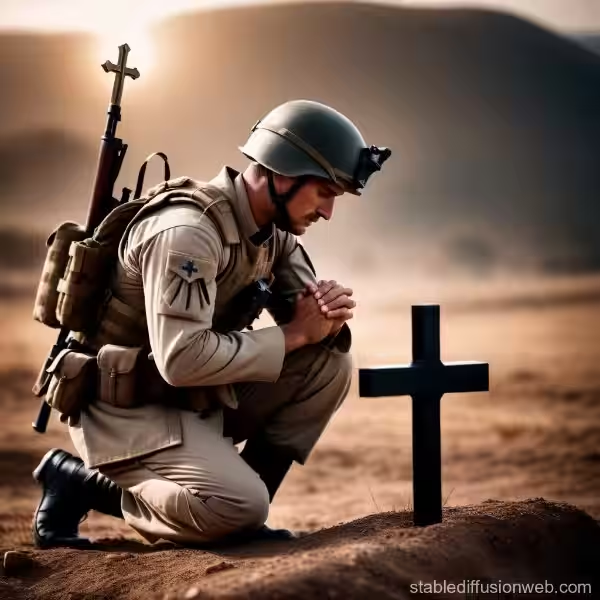
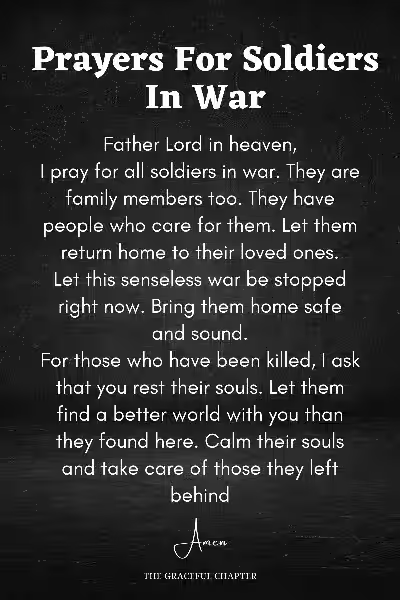
The thunder of cannons, the crackle of gunfire, the acrid smell of smoke – these are the visceral realities of the battlefield. Yet, amidst the chaos and fear, a silent, potent force has always been at play: battlefield prayer. It’s a practice as old as human conflict itself, a desperate, hopeful reaching out to something greater than oneself in moments of profound vulnerability. This isn’t just a ritual; it’s a deeply human response, a testament to our innate need for solace, strength, and meaning when faced with the ultimate test. From the ancient hoplites invoking their gods before a phalanx charge to the modern soldier whispering a plea for survival, prayer on the battlefield serves as an unseen ammunition, bolstering spirits and shaping the very fabric of courage.
Religion, in its myriad forms, has always been intertwined with the human experience of war. It provides frameworks for understanding suffering, for justifying conflict, and, perhaps most importantly, for finding resilience in the face of overwhelming odds. The soldier’s prayer is a direct manifestation of this intersection, a deeply personal dialogue with the divine that transcends cultural and denominational boundaries. It’s in these moments of extreme pressure that faith, whether deeply ingrained or newly discovered, can become a bedrock of stability, offering a sense of purpose and a connection to something eternal when earthly existence hangs precariously in the balance.
The Genesis of the Soldier’s Plea: Why Pray When Bullets Fly?
The instinct to pray on the battlefield is not born of abstract theology, but of raw, primal fear and a desperate yearning for protection. Imagine a young recruit, fresh from civilian life, suddenly thrust into the maelstrom of combat. The sheer sensory overload – the noise, the dust, the screams – can be paralyzing. In such moments, the mind, stripped of its usual defenses, often seeks a familiar anchor, a connection to something that promises order and safety. For many, that anchor is their faith, and their prayer becomes an immediate, instinctual cry for help.
This is not about questioning the efficacy of military training or the bravery of soldiers. Rather, it acknowledges a fundamental aspect of the human psyche under duress. When faced with the possibility of imminent death, the logical mind can falter. It’s in these junctures that battlefield prayer becomes an act of psychological self-preservation, a way to quiet the panic and focus on the task at hand. It allows individuals to tap into a source of inner strength that might otherwise remain dormant, fostering a sense of calm and resolve that can be as crucial as any physical preparedness.
The forms of battlefield prayer are as diverse as the soldiers who utter them. Some may be intensely private, a silent, heartfelt plea for their own survival or the safety of their comrades. Others might be more formal, reciting familiar religious texts or participating in group prayers led by chaplains or fellow soldiers. Think of a small group huddled in a foxhole, their faces illuminated by a flickering flashlight, reciting the Lord’s Prayer together. This collective act of faith can foster an unbreakable bond, a shared sense of vulnerability and hope that transcends the individual.
These shared moments of religion on the battlefield can create a powerful sense of solidarity. It’s a recognition that no one is truly alone, even in the most isolating of circumstances. This can be particularly impactful for those who are far from home and family, finding solace and connection in the shared rituals of their faith. The simple act of praying together can reinforce group cohesion, offering a spiritual bulwark against the psychological toll of combat.
The Multifaceted Impact of Battlefield Prayer: More Than Just a Plea
The influence of battlefield prayer extends far beyond the immediate moment of a soldier’s supplication. It can have profound and lasting effects on their mental fortitude, their moral compass, and their ability to reintegrate into civilian life. For many, prayer is not just a request for protection, but a way to process the horrors they witness and experience, to find meaning in the senselessness of war.
This internal dialogue with the divine can provide a much-needed outlet for the immense stress and trauma of combat. It allows soldiers to grapple with complex ethical dilemmas, to seek guidance on difficult decisions, and to find a sense of peace amidst the turmoil. The act of prayer can offer a framework for understanding their experiences, preventing the erosion of their humanity and helping them to maintain their moral integrity in the crucible of conflict.
Bolstering Courage and Resilience
One of the most significant impacts of battlefield prayer is its ability to fortify courage and resilience. When faced with the stark reality of death, the knowledge that one is not alone, that a higher power may be watching over them, can instill a profound sense of bravery. This is not to say that prayer eliminates fear, but it can help soldiers to manage and overcome it.
Consider a soldier advancing under heavy fire. The primal urge to seek cover is overwhelming. However, if that soldier has a deep-seated faith and has engaged in battlefield prayer, they may find the resolve to press on, not out of recklessness, but out of a conviction that they are part of something larger and that their actions have a purpose, divinely ordained or otherwise. This spiritual grounding can be the difference between succumbing to panic and fulfilling their duty with unwavering determination.
In the chaotic environment of war, where lines between right and wrong can become blurred, religion on the battlefield often serves as a crucial moral compass. Soldiers may turn to prayer to seek guidance on how to act justly, how to treat prisoners, and how to uphold their values even when surrounded by brutality. This internal ethical deliberation, often facilitated by prayer, is vital for maintaining their humanity.
Imagine a soldier in a situation where they witness or are ordered to perform an action that conflicts with their deeply held moral beliefs. Battlefield prayer can provide the space for introspection, for seeking strength to either refuse a morally reprehensible order or to find a way to act with compassion and restraint within the confines of their mission. This spiritual reflection helps to prevent moral injury and preserve the soldier’s sense of self.
Facilitating Post-Combat Healing and Reintegration
The psychological scars of war can be deep and lasting. For many veterans, battlefield prayer continues to play a role in their healing and reintegration process. The same faith that sustained them in combat can offer solace and a pathway to understanding their experiences and finding peace.
Many veterans find that returning to their faith community or continuing their prayer practices helps them to process the trauma of war. It provides a sense of continuity and belonging, connecting them to a community that understands their struggles and offers support. This spiritual continuity can be a vital component in rebuilding lives shattered by conflict, allowing them to find purpose and hope beyond the battlefield.
The Enduring Legacy of Battlefield Prayer: A Universal Human Experience
The practice of battlefield prayer is a testament to the enduring power of faith and the deep-seated human need for connection, even in the most extreme circumstances. It transcends specific religions, manifesting as a universal impulse to reach for something beyond the immediate reality of conflict.
Whether it’s a whispered plea for safety, a communal recitation of scripture, or a silent meditation on one’s purpose, prayer on the battlefield has historically served as an indispensable tool for soldiers. It has been an unseen ammunition, bolstering courage, providing moral direction, and ultimately, helping to preserve the humanity of those who serve. The echoes of these prayers, carried on the winds of history, remind us of the profound interplay between religion and the human spirit when faced with the ultimate test.
Frequently Asked Questions: Battlefield Prayer and Religion
What is battlefield prayer?
Battlefield prayer refers to the practice of praying in a military context, particularly during times of conflict or combat. It can be a personal act of faith, a communal ritual, or a request for divine intervention, protection, or guidance.
Yes, prayer has been a significant aspect of military life across various cultures and historical periods. Soldiers from diverse religious backgrounds have historically turned to prayer for comfort, courage, and a sense of connection to something larger than themselves, especially in the face of extreme adversity.
Can soldiers of any religion practice battlefield prayer?
Absolutely. Battlefield prayer is not exclusive to any single religion. Individuals from Christian, Muslim, Jewish, Buddhist, Hindu, and many other faith traditions, as well as those with non-denominational spiritual beliefs, may engage in prayer. The form and content of the prayer will vary according to their specific beliefs.
What is the purpose of battlefield prayer?
The purposes of battlefield prayer are varied and deeply personal. They can include seeking strength and courage, asking for protection for oneself and comrades, expressing gratitude, finding solace and peace amidst chaos, maintaining hope, and connecting with a higher power. For some, it’s also a way to process the moral and emotional challenges of war.
How is battlefield prayer conducted?
Battlefield prayer can take many forms. It might be a silent, personal reflection, a spoken invocation, a group recitation of a prayer or scripture, or participation in religious services held during wartime. It can be private or public, formal or informal, depending on the circumstances and the individual’s preference.
Are there religious services on the battlefield?
Yes, military organizations often provide chaplains and religious support to service members. Chaplains from various faiths conduct services, offer counseling, and provide spiritual guidance to those on the front lines and in deployed environments.
Does military policy support religious freedom, including prayer?
Most modern militaries uphold principles of religious freedom and accommodate the religious practices of their service members, including prayer, as much as operational requirements allow. This often includes providing access to chaplains and spaces for worship.
How does religion influence a soldier’s experience of war?
Religion can profoundly influence a soldier’s experience of war, offering a framework for understanding suffering, providing moral guidance, fostering camaraderie through shared faith, and giving a sense of purpose or meaning to their service and sacrifices. It can be a source of resilience and a coping mechanism.
Can prayer help with mental health in the military?
For many service members, prayer and faith can be a vital component of their mental health and well-being. It can provide comfort, reduce anxiety, offer a sense of control in uncontrollable situations, and help in processing trauma. Chaplains often play a role in providing spiritual and psychological support.