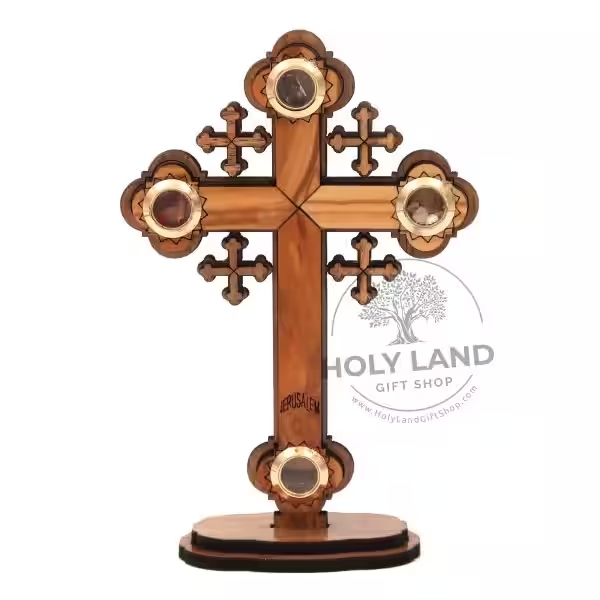
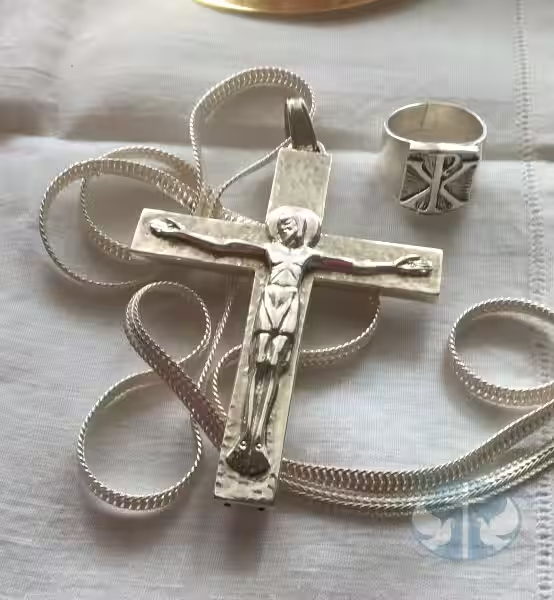
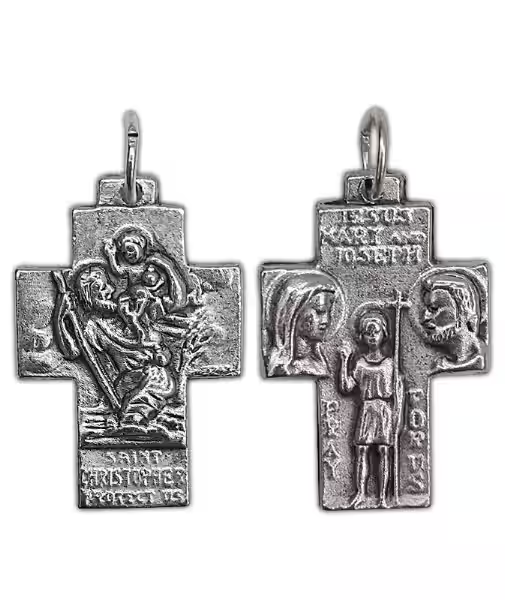
The cross, for centuries a potent symbol of Christian faith, is undergoing a fascinating evolution. In our increasingly interconnected and diverse world, the meaning and perception of the modern cross are expanding, resonating with individuals across various backgrounds and belief systems. It’s no longer solely confined to steeples and crucifixes; instead, it’s appearing in unexpected places, sparking conversations, and offering a beacon of hope and connection in a complex society. This article will explore how the modern cross is being reinterpreted, its new meanings, and its relevance in our contemporary lives.
Understanding this shift requires acknowledging the multifaceted nature of symbols. While its core Christian identity remains, the modern cross has become a signifier for broader concepts like resilience, sacrifice, unity, and even secular humanism. Its adaptability allows it to speak to a wider audience, transcending strict religious dogma and offering a sense of shared humanity. We’ll delve into how this transformation is happening and what it signifies for individuals seeking meaning and belonging in the 21st century.
Beyond the Sanctuary: The Cross in Contemporary Culture
The presence of the modern cross has moved far beyond the confines of traditional religious institutions. Its visual presence is now woven into the fabric of our everyday lives, appearing in art, fashion, and even public spaces, often stripped of its overt religious context. This diffusion has led to a broader interpretation of its symbolism, making it accessible and relevant to a wider demographic.
Think about the ubiquitous nature of jewelry. A modern cross pendant, once exclusively a statement of Christian devotion, is now a popular fashion accessory, worn by people of all faiths and no faith. This isn’t necessarily a rejection of its original meaning, but rather an embrace of its aesthetic and the underlying themes of strength and enduring spirit it can represent. Similarly, in contemporary art, artists might use the cross as a visual motif to explore themes of suffering, redemption, or even societal structures, inviting viewers to engage with its form on a deeper, more personal level. This widespread visibility has allowed the modern cross to become a more approachable symbol.
Art and Expression: The Cross as a Canvas for New Narratives
Contemporary artists are actively engaging with the modern cross, transforming it into a dynamic medium for exploring a plethora of themes. They are not just replicating traditional imagery; instead, they are recontextualizing the cross, infusing it with new narratives that reflect the complexities of our time. This artistic reinterpretation is crucial in shaping how we perceive and understand the modern cross today.
Consider a sculpture depicting intertwined figures forming a subtle cross shape, representing interdependence and shared struggle. Or a painting where the cross is fragmented, symbolizing the challenges and fragmentation of modern identity. These artistic expressions don’t diminish the Christian significance but rather expand its interpretive possibilities, allowing it to resonate with universal human experiences. Artists are using the familiar form of the modern cross as a starting point to spark dialogues about social justice, personal journeys, and the search for meaning.
Fashion and Personal Identity: Embracing the Cross as a Statement
The fashion industry has embraced the modern cross, transforming it into a powerful accessory that allows individuals to express personal style and sometimes, a broader set of values. This trend highlights how symbols can be adopted and adapted to fit evolving cultural landscapes and individual self-expression. The modern cross in fashion is a testament to its enduring visual appeal and its capacity to carry multiple meanings.
From minimalist pendants to bold statement pieces, the modern cross is a popular choice for jewelry. For some, it might still signify their Christian faith, but for others, it can represent strength, protection, or a connection to something larger than themselves. This personal adoption allows the modern cross to become a unique marker of identity, a tangible representation of beliefs or aspirations, even if those are not strictly religious. It’s a way of saying, “This is what I stand for,” using a universally recognized form.
Interreligious Dialogue and the Modern Cross
In an era increasingly defined by interfaith understanding and ecumenical dialogue, the modern cross is also finding new relevance as a bridge between different religious traditions. While its primary association remains with Christianity, its universal themes of compassion, sacrifice, and hope are being recognized and appreciated by people of diverse spiritual backgrounds. This opens up exciting avenues for interreligious connection and mutual respect.
The modern cross can serve as a conversation starter, a point of common ground for individuals from different faith journeys. When people engage with its symbolism on a deeper level, they often discover shared values that transcend doctrinal differences. This understanding fosters a more inclusive and harmonious society, where symbols can be appreciated for their broader humanitarian messages.
Shared Values: Finding Common Ground in the Cross’s Symbolism
The power of the modern cross in interreligious dialogue lies in its ability to embody universal human values that resonate across faiths. While the theological interpretations may differ, the underlying concepts of love, selfless giving, and the overcoming of adversity are shared tenets in many spiritual traditions. This allows for a meaningful exchange of ideas and perspectives.
For instance, the Christian concept of sacrifice inherent in the cross can find parallels in the Buddhist notion of compassion and detachment from self, or the Islamic emphasis on submission to a higher purpose. By focusing on these shared ethical frameworks, the modern cross can act as a catalyst for understanding and empathy, fostering a sense of global community. This shared appreciation for sacrifice and love is a potent element in building bridges.
Symbol of Peace and Understanding: Bridging Divides
In a world often marked by division and conflict, the modern cross can also emerge as a surprising symbol of peace and understanding between different religious and cultural groups. Its widespread recognition, coupled with its potential for broader interpretation, allows it to transcend its denominational origins and speak to a more universal desire for harmony and reconciliation.
When individuals from different backgrounds encounter the modern cross in a context of interfaith dialogue or humanitarian aid, they are often encouraged to look beyond its specific religious meaning. This can lead to a deeper appreciation for the universal messages of peace and goodwill that it can represent. For example, a humanitarian organization using a stylized modern cross in its logo might be seen as a symbol of aid and support for all, regardless of their faith. This subtle shift in perception can be incredibly powerful in fostering a sense of shared humanity.
The Spiritual Resonance of the Modern Cross
Beyond its cultural and interreligious implications, the modern cross continues to hold profound spiritual significance for millions. Even as its interpretation broadens, its core essence as a symbol of faith, redemption, and divine love remains potent. For many, it is a constant reminder of hope in the face of suffering and a testament to enduring spiritual strength.
The personal journey of faith is deeply intertwined with the symbolism of the cross. It represents a path of commitment, a belief in something greater than oneself, and the promise of eternal life. This enduring spiritual resonance ensures that the modern cross will continue to be a source of solace and inspiration for generations to come.
A Personal Journey of Faith and Resilience
For individuals who identify as Christian, the modern cross is an deeply personal symbol, representing the sacrifice of Jesus Christ and the promise of salvation. It’s a constant companion on their spiritual journey, offering comfort during trials and celebrating moments of joy and spiritual growth. The modern cross serves as a tangible anchor to their beliefs.
Encounters with the modern cross can be deeply moving, sparking reflection on one’s own life, values, and commitment to faith. Whether it’s a quiet moment of prayer before a personal crucifix or a public display of faith, the modern cross has the power to inspire introspection and reinforce a sense of purpose and belonging. It’s a reminder of unconditional love and the possibility of renewal.
Hope in the Face of Adversity: The Enduring Power of the Symbol
In times of struggle and uncertainty, the modern cross can serve as a powerful emblem of hope and resilience. Its historical association with suffering and crucifixion, followed by resurrection, imbues it with a profound message of overcoming adversity and the promise of a brighter future. This enduring narrative offers solace to those facing challenges.
Think of the modern cross displayed in a hospital wing, a symbol of comfort and healing for patients and their families. Or consider its use in memorials, honoring those who have made sacrifices for the greater good. In these contexts, the modern cross transcends its specific religious meaning and becomes a universal representation of endurance, courage, and the triumph of the spirit. It reminds us that even in the darkest of times, light and hope can prevail.
Frequently Asked Questions About Modern Cross-Religion
What is “modern cross-religion”?
Modern cross-religion refers to the contemporary practice of engaging with and integrating elements from multiple religious or spiritual traditions in a personal and often non-institutionalized way. It’s about drawing wisdom, practices, and perspectives from diverse sources to create a unique spiritual path.
Is modern cross-religion the same as syncretism?
While similar, modern cross-religion is often a more conscious and individualistic approach to blending traditions. Syncretism can sometimes refer to the merging of religions that occurs more organically through cultural interaction. Modern cross-religion emphasizes personal choice and intentional spiritual exploration across different faiths.
Why might someone choose a modern cross-religious path?
Individuals may choose this path for various reasons: to find answers that resonate more deeply than a single tradition offers, to bridge perceived gaps between different spiritual worldviews, to access a wider range of contemplative or ethical teachings, or to honor the diverse spiritual heritage they feel connected to.
Are there any organized “modern cross-religion” movements?
While there are many individuals who practice this way, formal, large-scale organized movements specifically labeled “modern cross-religion” are less common. Instead, it’s often a personal journey, though some interfaith organizations and communities may offer spaces for such exploration.
How does modern cross-religion differ from simply being open to other religions?
Being open to other religions is about tolerance and respect. Modern cross-religion goes a step further by actively incorporating practices, beliefs, or rituals from multiple traditions into one’s own spiritual life and identity.
Is modern cross-religion disrespectful to individual religions?
For many who practice it, modern cross-religion is approached with deep respect for the wisdom traditions they draw from. The intention is usually to find universal truths and practices that can enrich one’s spiritual life, rather than to dilute or disrespect the original contexts of those traditions.
Are there any potential challenges with modern cross-religion?
Potential challenges can include navigating different theological or philosophical frameworks, potential misunderstandings from followers of specific monolithic religions, and the personal effort required to deeply understand and meaningfully integrate diverse practices and beliefs.