Embarking on a linguistic and spiritual journey into Korea is an enriching experience, one that often begins with the simple yet profound act of greeting. The Korean language, with its elegant script and nuanced expressions, offers a fascinating window into the nation’s soul. Beyond the everyday pleasantries, a deeper understanding of Korean words, greetings, and their connection to religion reveals a rich tapestry of beliefs that have shaped Korean society for centuries. Whether you’re a seasoned traveler, a language enthusiast, or simply curious about the world’s diverse spiritual practices, this exploration will illuminate the profound interplay between language, social interaction, and faith.
From the initial “안녕하세요” (Annyeonghaseyo) – the ubiquitous and polite “Hello” – to the more intimate “안녕” (Annyeong) used among close friends, the act of greeting in Korean is imbued with respect and awareness of social hierarchy. This inherent politeness extends beyond mere words; it reflects a cultural emphasis on harmony and consideration for others. As we delve deeper, we’ll discover how these everyday interactions are often intertwined with the spiritual underpinnings of Korean life, revealing a world where greetings can carry blessings and where faith subtly informs daily conversations.
The Foundation: Everyday Korean Greetings and Their Significance
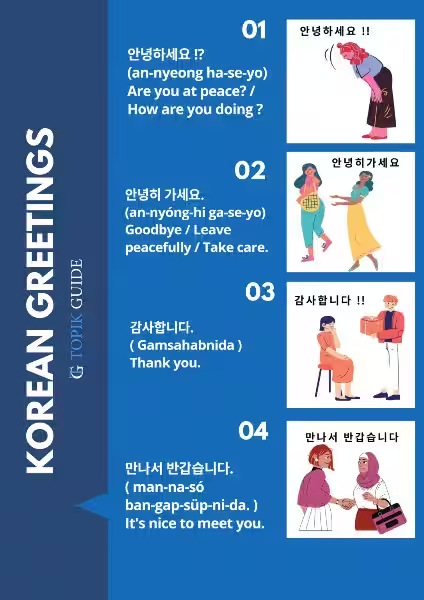
The most fundamental aspect of engaging with Korean culture is mastering its basic greetings. “안녕하세요” (Annyeonghaseyo) is your go-to for almost any situation, from entering a shop to meeting someone for the first time. It’s a versatile phrase that conveys respect and goodwill. For those a bit more familiar with the language or interacting with younger individuals or peers, “안녕” (Annyeong) serves as a casual “Hi” or “Bye.” Understanding these distinctions is crucial for navigating social interactions smoothly and demonstrating cultural sensitivity. A simple nod or a slight bow often accompanies these greetings, adding a layer of non-verbal communication that reinforces politeness and humility.
Beyond the initial “Hello,” other essential greetings include “감사합니다” (Gamsahamnida) for “Thank you,” a phrase you’ll find yourself using frequently, and “죄송합니다” (Joesonghamnida) for “I’m sorry.” These expressions are more than just polite filler; they are the building blocks of respectful relationships. Imagine being in a bustling market in Seoul, being offered a delicious sample of street food. A heartfelt “감사합니다!” will not only acknowledge the kindness but also foster a positive connection. The ability to express gratitude and apologize sincerely are deeply valued in Korean society, reflecting a communal spirit where acknowledging one’s actions and their impact is paramount.
Expressing Well Wishes: Greetings as Blessings
The concept of wishing someone well is deeply embedded in Korean culture, and this often manifests in greetings that carry spiritual undertones. When you wish someone a good day, you’re not just stating a pleasantry; you’re sending a positive energy their way. For instance, “좋은 하루 보내세요” (Joeun haru bonaeseyo) translates to “Have a good day,” a simple yet powerful sentiment. This extends to more specific occasions as well. During holidays like Chuseok (Korean Thanksgiving) or Seollal (Lunar New Year), traditional greetings are exchanged, often carrying wishes for prosperity and good fortune. These greetings are not rote phrases; they are genuine expressions of care and hope for the recipient’s well-being.
Even in seemingly secular contexts, the echoes of spiritual beliefs can be heard. When a friend sets off on a journey, you might say “안전하게 다녀오세요” (Anjeonhage danyeooseyo), meaning “Go and come back safely.” This isn’t just about physical safety; it can also implicitly carry a wish for protection and a smooth passage, hinting at a broader belief in forces that can influence our journeys. These well-wishes, woven into everyday language, serve as subtle reminders of the interconnectedness of people and the underlying hope for positive outcomes, often influenced by a culture that has a long history of spiritual practices.
The Spiritual Fabric: Religion in Korean Society
Korea’s religious landscape is a fascinating mosaic, characterized by a dynamic interplay of traditional beliefs and imported faiths. For centuries, Buddhism has played a significant role, with its teachings on mindfulness, compassion, and karma deeply influencing art, philosophy, and social customs. Ancient temples, often nestled in serene mountain settings, stand as testaments to this enduring legacy. The practice of bowing, a common gesture of respect, can be seen as a physical manifestation of humility and reverence, concepts central to many Buddhist teachings. Many Koreans, even if not devout practitioners, acknowledge the wisdom and ethical framework that Buddhism has provided.
Alongside Buddhism, Confucianism, while not a religion in the strictest sense, has profoundly shaped Korean ethics and social structures. Its emphasis on filial piety, respect for elders, and harmonious social relationships continues to resonate. This is evident in the formal language used in greetings and the importance placed on family. Then came the introduction of Christianity, which has seen remarkable growth in recent decades, becoming a significant force in Korean society. Churches, from grand cathedrals to smaller community gatherings, are vibrant centers of activity, offering spiritual guidance and social support. This diverse religious environment means that conversations about faith can be nuanced and respectful of different perspectives.
Buddhism’s Influence: From Temples to Daily Life
The spiritual principles of Buddhism have permeated Korean culture in ways that are both overt and subtle. The concept of “karma” – the idea that actions have consequences – influences a sense of responsibility and mindfulness in daily life. When people strive to act with kindness and integrity, it’s partly an internalization of Buddhist teachings about cause and effect. The practice of meditation, though often associated with monks and nuns, has also gained popularity among the general population as a tool for stress reduction and self-awareness, reflecting a desire for inner peace that aligns with Buddhist ideals.
Visiting a Buddhist temple, like Bulguksa or Haeinsa, offers a profound sensory experience. The chanting of monks, the scent of incense, and the serene architecture all contribute to an atmosphere of contemplation. Even for those who don’t actively practice Buddhism, these spaces are often seen as havens of tranquility and historical significance. The reverence shown towards Buddhist artifacts and the respect for monastic communities highlight the enduring impact of this ancient faith on the Korean psyche. The gentle inclination of the head when passing a Buddha statue is a silent acknowledgment of respect, mirroring a broader cultural appreciation for spiritual heritage.
Christianity, particularly Protestantism, has experienced a remarkable surge in South Korea, becoming one of the largest religious groups. The numerous churches across the nation are not just places of worship; they are often community hubs that offer social services, educational programs, and a strong sense of belonging. The emphasis on prayer and faith offers solace and guidance to many, particularly during challenging times. The vibrant praise and worship music heard in many services reflects a passionate and expressive form of devotion.
The influence of Christianity can be seen in various aspects of Korean society, from charitable organizations to the values espoused by many individuals. The concept of “love thy neighbor” is often translated into active participation in community service and missionary work. While the rapid growth of Christianity has brought about significant social and cultural changes, it has also fostered a spirit of interfaith dialogue and mutual understanding. Many Koreans navigate their faith with a blend of personal conviction and respect for other belief systems, acknowledging the shared human desire for meaning and connection.
Bridging the Gap: Greetings and Spiritual Reflections
The way Koreans greet each other can often carry an unspoken spiritual resonance. When you hear someone say “평안하세요” (Pyeong-an-haseyo), meaning “Please be at peace,” it’s more than just a polite farewell. It’s a genuine wish for the recipient’s inner calm and well-being, a sentiment deeply rooted in spiritual traditions that value tranquility. This phrase is particularly common in more formal settings or when expressing sincere concern for someone.
Consider the act of offering a small gift or a meal. It’s often accompanied by phrases like “맛있게 드세요” (Masitge deuseyo), meaning “Please eat well.” While a practical instruction, it also carries an implicit blessing for nourishment and health, reflecting a holistic view of well-being that encompasses physical and spiritual sustenance. These everyday expressions demonstrate how deeply ingrained the desire for good fortune and peace is, often finding its roots in the spiritual heritage of the nation.
Everyday Blessings and Spiritual Nuances
Even in casual conversations, spiritual undertones can emerge. When someone is about to embark on a venture, you might hear “잘 되기를 바랍니다” (Jal doegireul baramnida), which translates to “I hope it goes well for you.” This isn’t just a simple expression of optimism; it can carry a subtle prayer or wish for divine favor or positive cosmic alignment. The belief in fortunate circumstances and the desire for success often intertwine with deeply held spiritual hopes.
The concept of “행운을 빌어요” (Haeng-un-eul bil-eo-yo), meaning “I wish you luck,” is another example. While “luck” might seem secular, in a culture with a rich spiritual history, it can also imply a broader sense of good fortune orchestrated by unseen forces or a positive destiny. These seemingly simple phrases act as conduits for sending positive energy and well-wishes, reflecting a worldview where human endeavors are often seen as being supported by something greater.
In modern Korea, understanding its religious landscape is key to appreciating the nuances of its culture. You’ll encounter individuals who identify as Buddhist, Christian, or perhaps follow Shamanistic traditions, alongside those who are agnostic or atheist. This diversity means that conversations about faith are often approached with a degree of sensitivity and respect. When engaging with Koreans, it’s important to be mindful of their personal beliefs without making assumptions. Acknowledging the presence of various faiths fosters a more inclusive and understanding environment.
Even for those who don’t actively participate in organized religion, the ethical frameworks and philosophical insights derived from these traditions continue to shape their worldview. The emphasis on filial piety from Confucianism, the compassion taught in Buddhism, and the charity encouraged in Christianity all contribute to a shared moral compass. Therefore, when discussing important matters or expressing shared values, you might find that the underlying principles resonate across different spiritual backgrounds, creating a sense of common ground and mutual understanding.
In conclusion, the journey into Korean words, greetings, and religion is a deeply rewarding one. From the foundational “안녕하세요” to the heartfelt “평안하세요,” language serves as a vibrant thread woven through the spiritual fabric of Korea. By understanding these connections, we gain not only linguistic proficiency but also a more profound appreciation for the rich cultural heritage and the enduring human quest for meaning and connection that transcends mere words.
Korean Words: Greetings & Religion – Frequently Asked Questions
What are some common Korean greetings?
안녕하세요 (Annyeonghaseyo): This is the most common and versatile greeting, meaning “Hello” or “How are you?”. It can be used in most situations, formal and informal.
감사합니다 (Gamsahamnida): This means “Thank you.” It’s a formal way to express gratitude.
네 (Ne): This simple word means “Yes” but can also be used as an informal greeting like “Hi” or “Okay” when acknowledging someone.
안녕 (Annyeong): This is an informal way to say “Hello” or “Goodbye,” typically used among close friends or people younger than you.
미안합니다 (Mianhamnida): This means “I’m sorry.” It’s a formal apology.
죄송합니다 (Joesonghamnida): This is a more formal and apologetic way to say “I’m sorry.”
What are the main religions in Korea?
South Korea has a diverse religious landscape. The two largest religious groups are Buddhism and Christianity (which includes both Protestantism and Catholicism). There are also a significant number of people who identify as irreligious or non-religious.
Are there other religions practiced in Korea?
Yes, while Buddhism and Christianity are the most prevalent, other religions are also practiced in Korea, including Shamanism, Confucianism, Won Buddhism, Cheondoism, and various other minority faiths.
What is the religious makeup of South Korea?
According to statistics, a substantial portion of the South Korean population identifies as irreligious. Among those who do identify with a religion, Buddhism and Christianity (Protestantism and Catholicism combined) are the most common.