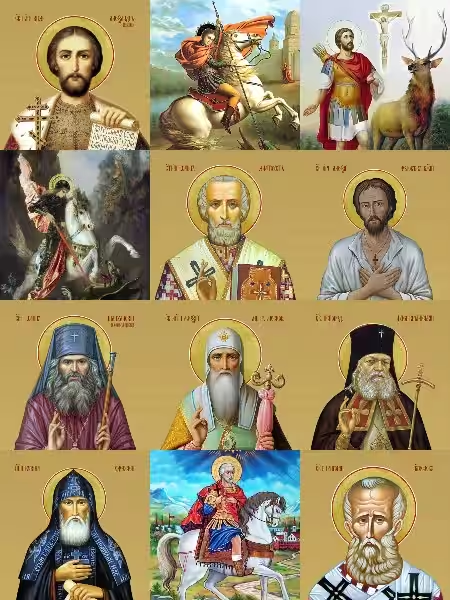
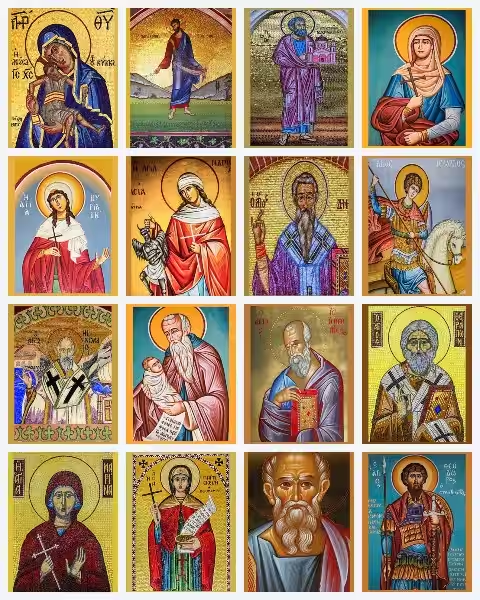
In the vast tapestry of Christian history, certain figures stand out not just for their extraordinary lives, but for the enduring light they continue to cast upon the path of faith. These are the male Catholic saints, men who, in their unique journeys, demonstrated profound love for God, unwavering commitment to their beliefs, and a deep compassion for humanity. Their stories are not mere historical anecdotes; they are living testaments to the power of faith, offering practical guidance, profound inspiration, and a relatable blueprint for navigating the complexities of life. From the early days of the Church to the modern era, these holy men have shaped religious thought, inspired countless individuals, and continue to serve as powerful intercessors and role models for millions around the globe.
Exploring the lives of male Catholic saints is akin to discovering a rich heritage of spiritual wisdom and practical virtue. They remind us that holiness is not an abstract concept reserved for a select few, but a journey accessible to all who strive to live lives of love, service, and devotion. Their struggles, their triumphs, and their unwavering trust in divine providence offer profound comfort and encouragement, particularly in times of personal challenge. By understanding their experiences, we can gain a deeper appreciation for the Catholic faith and find renewed purpose in our own spiritual walk. This article will delve into the multifaceted contributions of these holy men, illuminating their enduring relevance in today’s world.
The nascent years of Christianity were forged in the crucible of persecution and profound theological development, and it is here that we find some of the most foundational male Catholic saints. Figures like Saint Peter, the fisherman from Galilee, who despite his human frailties, became the rock upon which Christ promised to build His Church, exemplify the transformative power of faith and forgiveness. His journey from denial to unwavering devotion is a powerful narrative of redemption and leadership. Then there is Saint Paul, initially a persecutor of Christians, whose dramatic conversion on the road to Damascus led him to become the most prolific apostle, spreading the Gospel throughout the Roman Empire and shaping much of Christian doctrine through his epistles.
These early saints faced immense challenges, often at the cost of their own lives. Their willingness to suffer martyrdom for their faith sent a powerful message about the truth and importance of the Gospel. Consider the courageous stand of Saint Stephen, the first martyr, who, even as he was being stoned to death, prayed for his executioners, demonstrating an extraordinary level of charity. Their lives are a testament to unwavering conviction and the profound belief that their earthly suffering was a pathway to eternal glory. These men laid the groundwork for the Church’s expansion, their courage and intellectual prowess shaping its early identity and its enduring mission.
Apostles and Evangelists: Spreading the Word
The Apostles of Jesus form the very bedrock of the Catholic Church. Beyond Peter, we have Saint John, the “beloved disciple,” who lived to an old age and whose Gospel offers a deep, theological understanding of Christ’s divine nature. His writings emphasize the importance of love as the core of Christian life. Then there’s Saint Andrew, Peter’s brother, who was the first to be called by Jesus and who faithfully brought others to Christ, embodying the spirit of evangelization. These men were not just followers; they were eyewitnesses to Christ’s miracles and teachings, entrusted with the monumental task of spreading His message to the ends of the earth.
Their individual ministries, though diverse, all pointed towards the same ultimate goal: making Christ known. Saint Thomas, often remembered for his initial doubt, became a fervent believer and a missionary to India, demonstrating that even those who struggle with faith can find profound conviction and become powerful witnesses. The acts of the Apostles, detailed in scripture, paint a vivid picture of their tireless efforts, their journeys fraught with peril but fueled by an unshakeable faith. These early evangelists, through their preaching, their writings, and their sacrificial lives, established the foundation upon which the global Church would be built and continue to flourish.
Guardians of the Faith: Doctors and Theologians
As Christianity matured, so too did its intellectual and theological landscape, shaped by brilliant minds who dedicated their lives to understanding and articulating the mysteries of faith. The Doctors of the Church, a title bestowed upon saints recognized for their profound theological learning and sanctity, include numerous exemplary male figures. Saint Augustine of Hippo, a man whose early life was marked by intellectual searching and moral struggle, ultimately became one of the Church’s most influential thinkers. His Confessions remain a timeless exploration of sin, grace, and the human desire for God, offering solace and understanding to those grappling with their own past mistakes.
These intellectual giants meticulously studied scripture, tradition, and philosophical thought to defend and elucidate Christian dogma. Saint Thomas Aquinas, arguably the most prominent example, synthesized Aristotelian philosophy with Christian theology in his monumental work, the Summa Theologica. His clear and systematic approach to understanding God and His creation continues to inform Catholic teaching and inspire theological inquiry. Their rigorous scholarship, coupled with their deep piety, provides a robust intellectual framework for believers, demonstrating that faith and reason are not opposing forces, but complementary paths to truth. Their writings offer a rich treasury of wisdom for those seeking to deepen their understanding of Catholic doctrine.
Living the Commandments: Virtuous Lives and Service
Beyond intellectual pursuits, many male Catholic saints are celebrated for their exemplary lives of virtue and their dedication to serving the less fortunate. Saint Francis of Assisi, who renounced his wealthy upbringing to embrace a life of poverty and radical devotion to Christ, is a universally beloved figure. His love for all creation, from his famous Canticle of the Sun to his gentle interactions with animals, serves as a powerful reminder of our interconnectedness with the natural world. His mendicant order, the Franciscans, continues to this day, dedicated to apostolic poverty and service to the poor.
The lives of saints like Saint Vincent de Paul highlight the practical outworking of faith through charitable works. He dedicated himself to serving the poor, the sick, and the abandoned, founding organizations that continue to alleviate suffering. His tireless efforts to bring relief to those in need demonstrate that true faith is active and seeks to embody Christ’s compassion. These saints exemplify the Beatitudes in action, finding joy and fulfillment in serving others and living lives of profound humility and selfless love. Their examples encourage us to look beyond ourselves and to actively engage in works of mercy within our own communities.
Models of Resilience: Saints in Challenging Times
History is replete with periods of immense upheaval, persecution, and moral compromise, and it is in these challenging times that the lives of certain male Catholic saints shine even brighter as beacons of hope and resilience. Saint Thomas More, a devout layman, statesman, and scholar, famously refused to compromise his conscience and his loyalty to the Pope, even when faced with the wrath of King Henry VIII. His unwavering commitment to his faith, even unto death, makes him a powerful symbol of religious integrity and the courage to stand for truth against overwhelming pressure. His life reminds us that faith is not just a private matter, but a guiding principle for public life.
During times of intense religious conflict and persecution, such as the Reformation, many male Catholic saints demonstrated extraordinary fortitude. Saint John Fisher, a bishop who also opposed King Henry VIII’s divorce, stood firm in his convictions, facing imprisonment and execution with grace. Their stories are not about seeking martyrdom, but about their unwillingness to abandon their core beliefs when faced with immense personal cost. These saints, through their steadfastness, offer profound lessons in spiritual fortitude, demonstrating that even in the darkest of hours, faith can provide the strength to persevere and to remain true to one’s conscience and to God.
Living the Virtues: Practical Examples for Today
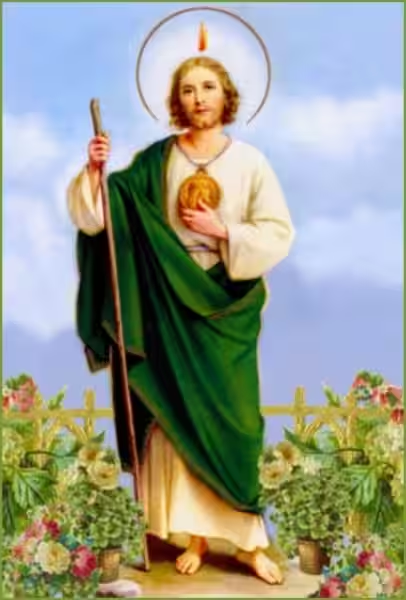
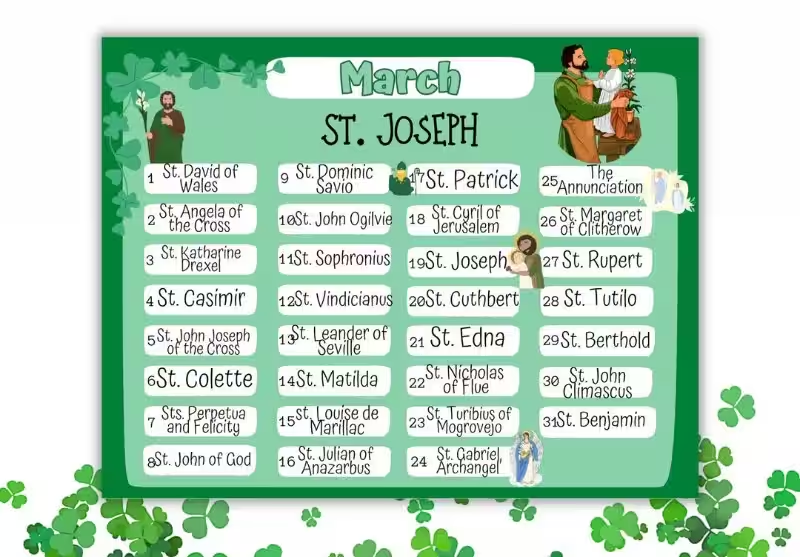
The lives of male Catholic saints offer a rich tapestry of practical virtues that remain incredibly relevant for navigating the complexities of modern life. Consider Saint Joseph, the earthly father of Jesus. Though scripture says little about him, his silent, steadfast presence, his dedication to his family, and his willingness to embrace God’s plan, even in the face of uncertainty, make him a powerful role model for fathers, husbands, and all who strive for quiet integrity and dependable love. His example teaches us the profound importance of fidelity and responsibility in everyday life.
The virtues exemplified by these saints are not abstract ideals but actionable principles. Humility, as demonstrated by countless saints who sought no personal glory, teaches us the importance of putting others first and recognizing our dependence on God. Patience, a virtue tested in the lives of many who endured suffering, encourages us to persevere through difficulties with grace. Courage, not the absence of fear but the willingness to act despite it, is a vital quality in standing up for what is right. By studying the lives of these holy men, we can find practical guidance for developing these virtues in our own lives, transforming our daily experiences into opportunities for spiritual growth and for embodying the love of Christ in tangible ways.
The Enduring Legacy: Saints as Intercessors and Inspirations
The influence of male Catholic saints extends far beyond their earthly lives; they continue to serve as powerful intercessors in heaven and enduring sources of inspiration for believers across generations. The Catholic Church teaches that saints, now in the presence of God, can pray for us, offering their unique perspectives and closeness to the divine to aid us in our own spiritual journeys. This belief fosters a profound sense of communion of saints, where we are connected to those who have gone before us in faith, their prayers a constant support.
Whether it is seeking the guidance of Saint Anthony of Padua, known for helping people find lost items (both material and spiritual), or invoking the protection of Saint Michael the Archangel, the warrior angel who defends against evil, the intercessory power of saints is a cornerstone of Catholic devotion for many. Beyond intercession, their lives serve as living examples of how to live a faithful life, offering encouragement and demonstrating that holiness is attainable. Their stories, filled with both human struggle and divine grace, remind us that we are not alone in our pursuit of faith and that the path of righteousness, though challenging, is ultimately one of profound fulfillment and eternal reward. The enduring light of male Catholic saints continues to illuminate the way for countless souls seeking to draw closer to God.
Frequently Asked Questions About Male Catholic Saints
Who are male Catholic saints?
Male Catholic saints are men who have been officially recognized by the Catholic Church as having lived lives of exceptional holiness and virtue, and are believed to be in heaven with God. They are venerated as exemplars of Christian faith and are often invoked for intercession.
How does someone become a Catholic saint?
The process of becoming a saint, known as canonization, is a rigorous investigation by the Catholic Church. It typically involves several stages: a person must be deceased, a cause for canonization is opened, they are declared “Servant of God,” then “Venerable” if their heroic virtue is recognized, followed by beatification if a miracle attributed to their intercession is confirmed. Finally, a second verified miracle is usually required for canonization as a saint.
What are some examples of well-known male Catholic saints?
Some of the most widely known male Catholic saints include Saint Peter, one of Jesus’ apostles; Saint Paul, an early Christian missionary; Saint Francis of Assisi, known for his love of nature and poverty; Saint Augustine of Hippo, a theologian and philosopher; Saint Thomas Aquinas, a prominent philosopher and theologian; and Saint Joseph, the earthly father of Jesus.
What is the role of male Catholic saints in the Church?
Male Catholic saints serve as role models and intercessors for Catholics. Their lives offer examples of how to live a virtuous Christian life, and believers can ask them to pray to God on their behalf. They are honored and remembered through feast days and veneration.
Can anyone invoke male Catholic saints?
Yes, any Catholic can ask for the intercession of male Catholic saints. This is done through prayer, asking them to pray for specific intentions or for general guidance and protection.
What does “veneration” of saints mean?
Veneration means showing deep respect and honor to saints. It is distinct from worship, which is reserved for God alone. Catholics venerate saints because they believe they are in God’s presence and can intercede for believers on Earth.
Are there specific patron saints for certain professions or causes?
Yes, many male Catholic saints are recognized as patron saints for specific professions, activities, or causes. For example, Saint Joseph is the patron saint of workers and fathers, Saint Francis of Assisi is the patron of animals and the environment, and Saint Sebastian is the patron saint of athletes.
Is it mandatory to believe in saints?
The Catholic Church teaches that saints are in heaven and can intercede for us. While belief in their intercession is a common practice and encouraged, the core of Catholic faith rests on belief in God and the teachings of Jesus Christ.