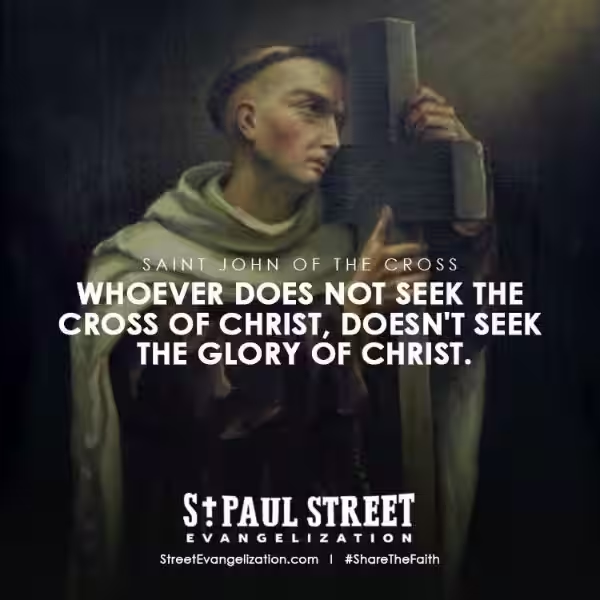
In a world that often feels chaotic and uncertain, the wisdom of those who have walked closest to God offers a profound and steadying anchor. For centuries, Catholic saints have shared their experiences, their struggles, and their profound insights into the nature of faith, love, and the divine. These are not mere historical artifacts; they are living words of encouragement, guidance, and inspiration, resonating with a power that transcends time. They offer us a glimpse into the heart of God, as understood and lived by those who dedicated their entire beings to Him.
These venerable figures, through their lives and their writings, provide us with a rich tapestry of spiritual truth. They faced their own unique challenges, from the temptations of the world to the profound mysteries of suffering, and their reflections offer us practical wisdom and profound comfort. As we navigate our own spiritual journeys, encountering moments of doubt or seeking deeper understanding, the words of these holy individuals act as compass points, guiding us towards a more authentic and fulfilling faith.
Finding Solace in the Face of Adversity
Life, as we all know, is rarely a smooth path. We encounter setbacks, heartaches, and moments where the weight of the world seems unbearable. It is precisely in these challenging times that the words of saints shine brightest, offering us solace and a renewed sense of hope. They understood that suffering is an inherent part of the human condition, but they also knew that it could be a powerful catalyst for spiritual growth when offered with faith.
Consider the wisdom of St. Paul, who, despite enduring immense persecution, wrote, “When I am weak, then I am strong” (2 Corinthians 12:10). This seemingly paradoxical statement reveals a profound truth: it is often in our moments of greatest vulnerability that we are forced to rely on God’s strength, discovering a resilience we never knew we possessed. Similarly, St. Teresa of Ávila reminded us, “Do not be discouraged by the burden of your trials, for you are not alone in carrying them.” Her words encourage us to recognize that even in our most isolating moments, we are held by a divine presence, a comforting truth that can transform despair into a quiet determination.
Practical Applications for Everyday Struggles
It’s easy to dismiss these profound statements as beautiful sentiments, but their true power lies in their transformative potential for our daily lives. When faced with a difficult coworker, a financial worry, or a personal disappointment, we can recall the lessons learned by these spiritual giants. For instance, when feeling overwhelmed by a daunting task, we can remember the humility and perseverance exemplified by St. Francis of Assisi. His radical commitment to poverty and service, born from a deep love for God, teaches us that true fulfillment often comes not from worldly possessions but from serving others and embracing simplicity.
Let’s think about a common scenario: feeling frustrated with a family member’s habits. Instead of succumbing to anger, we can reflect on the virtue of patience championed by St. Monica, who prayed tirelessly for the conversion of her son, Augustine. Her unwavering faith and gentle persistence are a powerful reminder that love and prayer are potent tools in navigating interpersonal challenges. Her example encourages us to cultivate understanding and compassion, even when faced with frustration, and to trust in the power of persistent, faithful action.
Cultivating a Deeper Relationship with God
Beyond navigating difficulties, the quotes from Catholic saints offer profound insights into the very essence of our relationship with God. They speak of a love that is both personal and all-encompassing, a connection that can be nurtured through prayer, contemplation, and the practice of virtues. These saints didn’t just believe in God; they lived in constant communion with Him, and their words invite us to do the same.
St. Augustine of Hippo, in his immortal words, captured this profound longing when he wrote, “You have made us for yourself, O Lord, and our heart is restless until it rests in you.” This famous declaration resonates with the innate human desire for meaning and belonging, a yearning that finds its ultimate fulfillment in God. He reminds us that our deepest desires are not for fleeting earthly pleasures but for the eternal peace and love found in divine union.
The Importance of Prayer and Contemplation
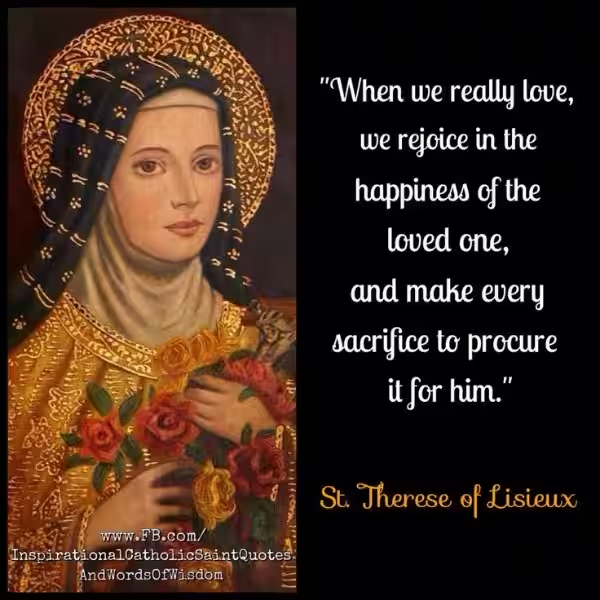
Prayer is not merely a set of recited words; it is a two-way conversation with the divine. The saints understood this intimately, and their teachings emphasize the importance of both formal prayer and the informal, constant awareness of God’s presence. St. Thérèse of Lisieux, with her “Little Way,” showed us that even the most ordinary actions, performed with love for God, can become profound acts of prayer. She famously said, “For me, prayer is a surge of the heart; it is a simple upward glance sent toward heaven, a cry of grateful love in the midst of trial as well as joy.“
This perspective liberates us from the notion that prayer must be grand or complicated. It can be found in a quiet moment of gratitude, a silent plea for strength, or a simple acknowledgment of God’s presence in our daily tasks. Contemplation, a more deep and silent form of prayer, allows us to listen to God’s whispers and to grow in our understanding of His will. The saints’ lives are a testament to the power of this inner dialogue, where the soul communes with the divine, finding clarity, peace, and unwavering love.
At the heart of Catholic teaching and the lives of the saints lies the paramount virtue of love – love for God and love for our neighbor. This is not a passive emotion but an active, transformative force that should guide our every action. The saints did not simply preach love; they embodied it, often in radical and self-sacrificing ways.
St. Mother Teresa of Calcutta, a modern beacon of this love, dedicated her life to serving the poorest of the poor, demonstrating that true holiness is found in compassion and selfless service. Her profound understanding of Christ’s call to love is captured in her simple yet powerful statement: “Not all of us can do great things. But we can do small things with great love.” This quote is a profound reminder that even the seemingly insignificant acts of kindness we perform daily can have an eternal impact when infused with genuine love.
Embracing Charity and Compassion in Daily Life
The call to charity and compassion is not confined to grand gestures. It is woven into the fabric of our everyday interactions. When we choose to listen with patience, to offer a helping hand, or to forgive an offense, we are actively participating in the divine mission of love. St. Vincent de Paul, known for his tireless work with the poor and marginalized, exemplified this active charity. His life was a testament to the idea that faith without works is dead (James 2:17), urging us to translate our beliefs into tangible acts of kindness and justice.
Consider the impact of a simple smile offered to a stranger, a word of encouragement to a struggling friend, or a moment of patience with a child. These are all small seeds of love that, when consistently planted, can yield a harvest of immeasurable good. The saints’ lives and their words serve as a constant invitation to examine our hearts and our actions, challenging us to live out our faith not just in our thoughts and prayers, but in the very way we engage with the world around us. Their legacy is a powerful reminder that the path to holiness is paved with acts of love, mercy, and unwavering devotion.
Frequently Asked Questions About Quotes from Catholic Saints
What are Catholic saints?
Catholic saints are individuals who have been recognized by the Catholic Church as having lived a life of exceptional holiness and virtue, and who are believed to be in heaven. They are considered role models for believers and are often invoked in prayer for their intercession.
Where can I find quotes from Catholic saints?
Quotes from Catholic saints can be found in various sources. These include their biographies, letters, theological writings, spiritual journals, and collections of their sayings. Many websites dedicated to Catholic spirituality and saints also feature extensive quote databases.
What kind of topics do Catholic saints quote about?
Catholic saints quote about a wide range of spiritual and theological topics. These commonly include faith, love, prayer, the Eucharist, the Blessed Virgin Mary, humility, suffering, virtue, sin, God’s mercy, the afterlife, and the importance of living a life pleasing to God.
Are quotes from Catholic saints considered dogma?
No, quotes from Catholic saints are generally not considered dogma. Dogma refers to fundamental truths of the Catholic faith that are divinely revealed and have been infallibly defined by the Church. While saintly quotes offer profound spiritual wisdom and insight, they represent personal reflections and teachings, not official Church doctrines.
How can I use quotes from Catholic saints in my spiritual life?
You can use quotes from Catholic saints as inspiration for prayer, meditation, or personal reflection. They can offer guidance during difficult times, encouragement to grow in virtue, or a deeper understanding of your faith. Many people find comfort and motivation by reflecting on the wisdom and experiences of these holy individuals.
Are all quotes attributed to saints historically accurate?
While many quotes are well-documented and attributed to specific saints, it’s always good to approach them with discernment. Sometimes, quotes can be misattributed or taken out of context. For important spiritual guidance, it’s beneficial to research the origin of the quote or consult reliable sources that verify their authenticity.