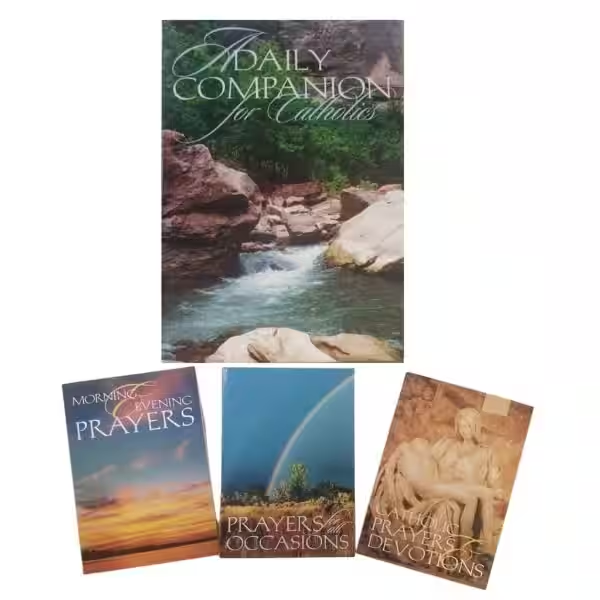
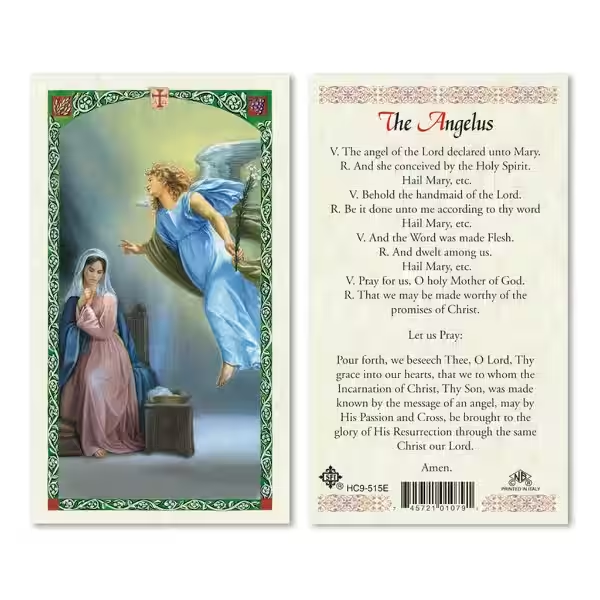
The Missellette: A Quiet Companion on the Journey of Faith
In the hushed reverence of a church, amidst the ancient stones and the soaring melodies, there exists a seemingly small, yet profoundly significant item: the missellette. For many, it’s a familiar sight, a booklet tucked away in pews, waiting to be unfolded and embraced. But what truly is a missellette, and what role does it play in the vibrant tapestry of religious practice? It’s more than just paper and ink; it’s a guide, a companion, and for many, a bridge connecting the personal spiritual journey with the communal act of worship. Understanding the missellette can deepen one’s appreciation for the liturgy and the rich heritage of religious expression.
The word “missellette” itself hints at its purpose. Derived from “missal,” the liturgical book containing the texts and rubrics for the celebration of Mass, a missellette is essentially a condensed, often simplified, version. It’s designed to be accessible to the congregant, offering them a way to actively participate in a service that can sometimes feel intricate and layered. Whether you are a lifelong attendee or a curious newcomer, the missellette serves as an invaluable tool, demystifying the flow of worship and illuminating the prayers and readings that form its core. This article will delve into the multifaceted nature of the missellette, exploring its content, its importance, and how it enhances the religious experience for individuals across various traditions.
At its heart, a missellette is a curated collection of essential elements for a religious service, most commonly associated with Christian worship, particularly within Catholic and some Anglican traditions. Think of it as a tailored program specifically for that particular day’s worship. It typically includes the order of the service, outlining each significant moment from the opening procession to the final blessing. This structured approach allows worshippers to anticipate what comes next, fostering a sense of continuity and order within the sacred space. The inclusion of prayers, readings, and even hymns provides a roadmap for active engagement, ensuring that participants can follow along and internalize the spiritual message being conveyed.
The specific contents of a missellette can vary, but key components often include:
The Liturgical Calendar: Indicating the specific feast day or season, which influences the readings and prayers.
The Order of Mass/Service: Detailing the sequence of prayers, responses, and actions.
Scripture Readings: The chosen passages from the Old and New Testaments for that day.
The Psalm: Often a responsorial psalm, meant to be sung or recited.
The Creed: The statement of faith, recited by the congregation.
The Prayer of the Faithful: Intercessory prayers for various needs.
Hymns and Songs: Lyrics for congregational singing, often chosen to complement the theme of the day.
These elements work in concert, creating a rich and meaningful experience for anyone holding a missellette in hand.
The Missellette as a Bridge: Fostering Participation and Understanding
One of the most significant contributions of the missellette is its ability to foster active participation. In a world often characterized by passive consumption, religious services invite a different kind of engagement. The missellette empowers individuals to move beyond being mere spectators and become integral participants in the liturgy. By providing the text for prayers and responses, it allows everyone to voice their faith, their hopes, and their petitions in unison. This shared vocalization can create a powerful sense of community and solidarity, a collective expression of belief that resonates deeply within the sacred atmosphere. It’s like being part of a choir, where each voice, though distinct, contributes to a harmonious whole.
Furthermore, the missellette serves as a crucial tool for understanding. For those less familiar with the nuances of liturgical language or the specific theological themes of a particular day, the missellette offers clarification. The scripture readings, often presented in their entirety or with helpful footnotes, allow individuals to engage with the sacred texts directly. This personal encounter with scripture can spark reflection, prayer, and a deeper comprehension of the religious message. For example, if the reading is about the parable of the Good Samaritan, the missellette provides the very words that illustrate acts of compassion, prompting personal consideration of how one can emulate such behavior in their own life. The missellette, therefore, acts as an accessible gateway, opening up the profound meanings embedded within religious services to a wider audience.
Beyond the Pew: The Enduring Relevance of the Missellette
While primarily associated with communal worship, the missellette’s influence extends beyond the church walls. Many individuals find solace and spiritual nourishment in revisiting its pages during their personal prayer time. The familiar prayers and readings can serve as a comforting anchor in the midst of life’s challenges, offering a sense of connection to something greater than oneself. The missellette becomes a tangible reminder of faith, a quiet companion that can be consulted at any moment, providing spiritual sustenance and a renewed sense of purpose. It’s akin to having a favorite devotional book that you can turn to for inspiration and comfort whenever the need arises.
In an era of digital everything, the enduring presence of the printed missellette speaks volumes. While electronic versions and apps exist, the tactile experience of holding a missellette, turning its pages, and marking important passages offers a unique and grounding connection to tradition. This simple booklet, often overlooked, plays a vital role in shaping the religious experience for countless individuals. It’s a testament to the enduring power of shared ritual and the accessible delivery of profound spiritual truths. The missellette, in its unassuming form, continues to be a faithful guide on the ongoing journey of faith for people around the globe, a silent testament to the power of shared prayer and sacred scripture.
Frequently Asked Questions About Missalettes and Religion
What is a missalette?
A missalette, also known as a bulletin or worship aid, is a booklet or pamphlet distributed during religious services, particularly Christian ones. It typically contains the liturgy for the day, including readings from scripture, prayers, hymns, and sometimes explanations of the readings or feast day.
Missalettes are designed to help participants follow along with the service. They provide the text for responses, prayers, and songs, ensuring everyone can actively engage in the liturgy. They also offer context or background information that can deepen understanding of the service’s meaning.
Are missalettes specific to certain religions or denominations?
While the term “missalette” is most commonly associated with Roman Catholic Masses, similar worship aids are used in many Christian denominations, including Anglican, Lutheran, and some Protestant churches. The content and format will vary depending on the specific tradition and liturgical calendar.
Where can I get a missalette?
Missalettes are usually provided at the entrance of a church or place of worship before a service begins. Some churches may also make them available online through their websites, or they can be purchased from religious bookstores.
Can I take my missalette home with me?
Generally, yes. Missalettes are often produced for a specific period (e.g., a week or a month) and are meant to be taken home. Some people use them for personal prayer or reflection during the week. However, some churches may ask for them to be returned for reuse.
What is the religious significance of the readings and prayers in a missalette?
The readings and prayers found in a missalette are central to the religious experience of the service. They are chosen to align with the liturgical calendar and theological teachings of the faith tradition. They aim to connect worshippers with scripture, tradition, and God.
Do all religious services use missalettes?
Not all religious services necessarily use missalettes. Some traditions may rely on spoken liturgy, sung responses from memory, or other forms of worship aids. The use of missalettes is a practical tool to facilitate participation in services with a set structure and specific texts.