The Western Wall, or Kotel, in Jerusalem stands as a hallowed testament to millennia of Jewish history and faith. It’s not merely an ancient structure; it’s a living, breathing monument, a focal point for spiritual yearning and communal connection. For countless individuals, approaching the Wall for prayer is an experience that transcends the ordinary, a pilgrimage to the very heart of their religious identity. The sheer weight of history that permeates the air, the murmurs of Western Wall prayer rising from every corner, create an atmosphere unlike any other on Earth.
Imagine standing before a wall that has witnessed the rise and fall of empires, heard the prayers of generations, and felt the touch of countless hands seeking solace or expressing devotion. This is the Western Wall. Its stones, weathered by time and infused with the collective emotion of billions of prayers, serve as a tangible link to the past and a beacon for the future. The act of Western Wall prayer becomes a deeply personal yet universally shared ritual, a moment where the individual spirit connects with a continuum of faith stretching back to biblical times.
The Ritual of Western Wall Prayer: A Personal Journey
The act of Western Wall prayer is as varied as the individuals who partake in it. Some arrive with meticulously prepared prayer books, their lips moving in silent recitation of ancient liturgy. Others, perhaps less familiar with formal prayers, simply place their hands on the stones, their hearts overflowing with unspoken hopes, gratitude, or pleas. The beauty lies in its inclusivity and adaptability, allowing each person to connect in their own authentic way. It’s a space where individual devotion meets collective spiritual energy, creating a powerful and often overwhelming sensation.
For many, the Western Wall prayer experience involves writing a personal prayer or wish on a small slip of paper and tucking it into one of the wall’s countless crevices. This practice, deeply rooted in tradition, symbolizes entrusting one’s deepest desires and concerns to the divine. These folded prayers, nestled amongst each other, become a silent testament to the universal human need for connection, hope, and divine intervention. The sheer volume of these notes speaks volumes about the enduring power of faith and the profound importance of Western Wall prayer in the hearts of so many.
Understanding the Divine Connection: Faith and Tradition
The religious significance of the Western Wall is intrinsically linked to the destruction of the Second Temple. It is the last remaining remnant of the Holy Temple Mount, the holiest site in Judaism. Therefore, Western Wall prayer is seen as a direct plea to God from a place of immense holiness and historical importance. This connection to the Temple’s past imbues the act of praying at the Wall with a special potency, a sense of proximity to the divine that is unparalleled in other religious sites.
This sacred connection isn’t just about historical preservation; it’s about active engagement with faith. When someone engages in Western Wall prayer, they are participating in a tradition that has been passed down through generations. It’s an affirmation of their identity as part of the Jewish people, a collective embracing of their heritage and their relationship with God. The enduring nature of Western Wall prayer is a testament to this deep-seated connection, a spiritual anchor in an ever-changing world.
The Universal Appeal: Beyond Religious Boundaries
While primarily a site of Jewish pilgrimage, the Western Wall also holds a profound resonance for people of other faiths and backgrounds. The sheer historical and spiritual weight of the location can inspire awe and contemplation in anyone who stands before it. Many visitors, regardless of their personal religious beliefs, feel a sense of deep respect and reverence when witnessing the Western Wall prayer rituals. It becomes a moment of shared humanity, a recognition of the universal quest for meaning and connection.
The experience of the Western Wall, even for those not actively engaged in prayer, is often transformative. The atmosphere of devotion, the visible expressions of faith, and the ancient stones themselves contribute to a powerful sensory and emotional encounter. This universal appeal underscores the idea that while Western Wall prayer is a deeply religious act, the Wall itself serves as a powerful reminder of our shared human journey and our innate desire for something greater than ourselves.
Practicalities and Etiquette for Western Wall Prayer
For those planning to visit and participate in Western Wall prayer, understanding the customs and etiquette is essential to ensure a respectful and meaningful experience. The Wall is divided into sections for men and women, and it’s important to adhere to these distinctions. Dress modestly, covering shoulders and knees, as a sign of respect for the sacred site. This simple act of consideration allows for a more focused and undisturbed Western Wall prayer experience.
When approaching the Wall, it’s customary to walk towards it backwards, turning to face the stones as you get closer, as a sign of approaching holiness. While there is no prescribed order for Western Wall prayer, many find it helpful to start with a moment of quiet reflection before beginning their prayers. Remember that the Wall is a place of intense spiritual activity, so maintaining a hushed demeanor and respecting the space of others is paramount. The shared experience of Western Wall prayer is enhanced when all visitors contribute to a peaceful and reverent atmosphere.
Respect the Gender Separation: The Wall is divided, with separate areas for men and women.
Dress Modestly: Cover shoulders and knees out of respect.
Approach with Reverence: Walk backwards towards the Wall and turn to face it.
Observe Silence and Serenity: Maintain a quiet demeanor to allow for personal reflection and prayer.
Tuck in Your Prayers: If you write a prayer, gently place it in a crevice.
The Western Wall prayer is more than just an act of religious observance; it is a deeply personal and communal journey of faith, a connection to history, and a testament to the enduring power of the human spirit. It is a place where whispers of devotion echo through the ages, inviting all who approach to partake in its sacred embrace.
Frequently Asked Questions: Western Wall Prayer
What is the Western Wall and why is it significant for prayer?
The Western Wall, also known as the Kotel, is the last remnant of the retaining wall of the ancient Temple Mount complex in Jerusalem. It is considered the holiest accessible site in Judaism, as it is the closest point to the Holy of Holies within the Temple. For Jewish people, praying at the Western Wall is a profound spiritual experience, a physical connection to the ancient Temple and a place of deep personal devotion and communal prayer.
Who can pray at the Western Wall?
Anyone can pray at the Western Wall, regardless of religious affiliation or background. However, it is primarily a site of Jewish prayer, and visitors are expected to dress modestly and behave respectfully.
Are there separate areas for men and women to pray?
Yes, the Western Wall plaza is divided into two sections: one for men and one for women. This separation is in accordance with traditional Jewish practice.
What are the customs for praying at the Western Wall?
Common customs include:
* Dressing Modestly: Covering shoulders and knees is required for both men and women. Men are encouraged to wear a kippah (head covering), which are usually available at the entrance.
* Facing the Wall: Praying or standing facing the Wall.
* Placing Notes: Many people write prayers or requests on small pieces of paper and tuck them into the cracks between the stones of the Wall. These notes are periodically collected and buried in accordance with religious tradition.
* Touching the Wall: Some individuals touch the stones as a physical connection to the ancient site.
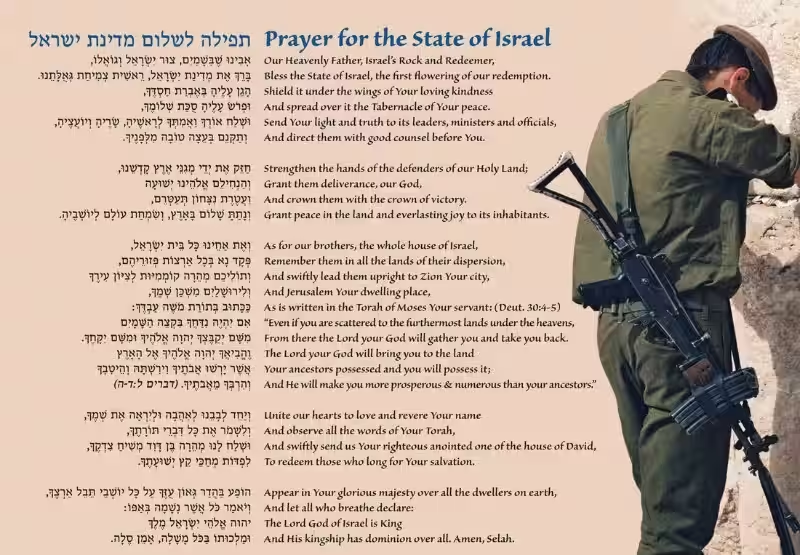
* Reciting Prayers: Many people recite traditional Jewish prayers such as the Shema, Amidah, and Psalms.
Can I bring a prayer book to the Western Wall?
Yes, you can bring your own prayer book (siddur). There are also prayer books available for loan at the site.
What is the significance of placing notes in the Wall?
Placing notes in the Wall is a long-standing tradition believed to convey prayers and requests directly to God. It is a way of leaving a personal message at this sacred site.
Is there a dress code for visiting the Western Wall?
Yes, a modest dress code is enforced. This means covering your shoulders and knees. For men, it is customary to wear a head covering (kippah), and these are provided at the entrance if you do not have one.
Can I take photographs or videos at the Western Wall?
Photography and videography are generally permitted in the public areas of the Wall, but it is important to be respectful and avoid disturbing those who are praying. Some individuals may request that you do not photograph them directly.
What about Shabbat (Sabbath) and Jewish holidays?
During Shabbat and Jewish holidays, the Western Wall plaza remains open, but the atmosphere is even more sacred and solemn. Visitors are expected to be particularly mindful of the sanctity of these times and to refrain from any activities that would violate Shabbat, such as using electronic devices.