The idea of a meeting with the Pope conjures images of grandeur, hushed reverence, and perhaps a once-in-a-lifetime encounter. For many, it represents the pinnacle of a spiritual pilgrimage, a moment to stand in the presence of the Vicar of Christ. But beyond the iconic photographs and the solemnity of the Vatican, what does such a meeting truly signify, not just for the individual, but for the broader tapestry of religion and its influence in the world today? This article delves into the profound significance of a papal audience, exploring its multifaceted dimensions and offering insights into what makes it such a deeply meaningful experience.
While a meeting with the Pope might seem like an event reserved for heads of state or prominent religious figures, the reality is far more inclusive. The Catholic Church, under papal leadership, actively seeks to connect with people from all walks of life. Whether through public audiences, private blessings, or specific encounters, opportunities arise for individuals and groups to experience this unique spiritual connection. Understanding the different avenues for such a meeting can demystify the process and highlight the Church’s commitment to accessibility.
At its core, a meeting with the Pope is a deeply spiritual event. It’s an opportunity to connect with the living embodiment of religion for over a billion Catholics worldwide. This connection transcends mere admiration; it’s about experiencing a tangible link to centuries of tradition, faith, and the teachings of Jesus Christ. The Pope, as the Successor of Saint Peter, holds a unique position in the Church, and being in his presence can be an incredibly moving and faith-affirming experience, regardless of one’s personal background or level of religious observance.
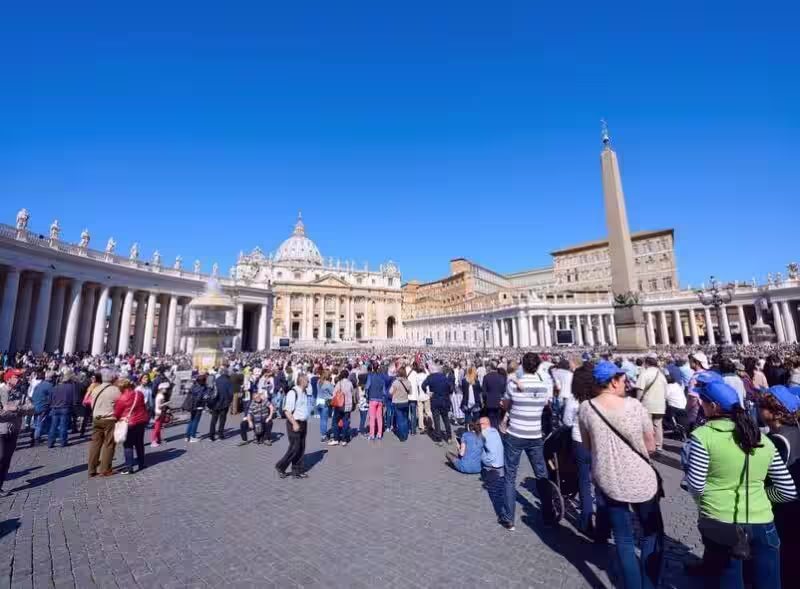
Consider the profound impact of standing in St. Peter’s Square during a public audience. The sheer number of people, united by a shared faith or a profound respect for papal authority, creates an palpable atmosphere of devotion. Even from a distance, the energy is undeniable. For those fortunate enough to receive a personal greeting or a blessing, the experience can be life-altering. It’s a moment where the abstract tenets of religion become intensely personal, a silent affirmation of God’s love and the Church’s enduring mission. This spiritual resonance is what draws millions to seek such an encounter.
What Does a Meeting with the Pope Actually Entail?
When we speak of a meeting with the Pope, it encompasses a spectrum of interactions. The most common experience for tourists and pilgrims is attending a Papal Audience, typically held on Wednesdays in Vatican City. These events are characterized by the Pope’s presence, his address to the assembled crowd, and the distribution of blessings. While not a one-on-one interaction, the sheer scale of these gatherings underscores the Pope’s role as a global spiritual leader, addressing diverse concerns and offering messages of hope and encouragement.
Beyond these large-scale events, there are more intimate opportunities. Special audiences are granted to specific groups, such as religious orders, pilgrimage groups, or individuals with particular needs. These can involve a more personal exchange, perhaps a brief conversation or a dedicated blessing for a specific intention. For very select individuals, such as heads of state or influential figures, a private audience may be arranged. Regardless of the format, the underlying intention remains the same: to foster a connection and to offer spiritual guidance and support, reinforcing the religion‘s global reach.
Preparing for a Meeting with the Pope: Practical and Spiritual Considerations
Embarking on a journey that might lead to a meeting with the Pope requires more than just booking a flight to Rome. It involves careful preparation, both practical and spiritual. Understanding the protocols and expectations can ensure a smoother and more meaningful experience. This preparation is a testament to the reverence and respect accorded to the office of the Pope and the significance of the religion he leads.
Practically, this might involve researching how to obtain tickets for Papal Audiences, understanding dress codes (modest attire is always recommended, especially when visiting the Vatican), and familiarizing oneself with the Vatican’s security procedures. Spiritually, it’s an opportunity for reflection and prayer. Many individuals prepare by making a confession, drawing closer to their faith, and formulating specific intentions for which they seek the Pope’s prayers or blessing. This proactive engagement deepens the personal significance of the eventual encounter.
Beyond the Vatican Walls: The Pope’s Influence on Global Religion
A meeting with the Pope, whether direct or indirect, is a window into his far-reaching influence on global religion. His pronouncements, encyclicals, and pastoral visits shape the discourse within the Catholic Church and often resonate beyond its boundaries. The Pope’s role as a moral voice on issues ranging from poverty and environmental stewardship to peace and human rights elevates his position as a significant figure on the international stage.
The Pope’s words and actions have a tangible impact. For example, his encyclical Laudato Si’ on care for our common home has galvanized environmental activism within and outside the Catholic community. This demonstrates how a papal initiative, stemming from the heart of the religion, can inspire widespread action and dialogue. Therefore, any encounter, even a brief one, connects an individual to this broader mission of service and advocacy.
The Personal Transformation a Papal Meeting Can Inspire
The true value of a meeting with the Pope often lies in the personal transformation it inspires. For some, it’s a moment of profound spiritual reaffirmation, solidifying their faith and commitment to the doctrines of religion. For others, even those with a peripheral connection to Catholicism, it can be an experience that sparks a deeper curiosity and a renewed appreciation for the spiritual dimensions of life.
Imagine a young person attending an audience with their family, perhaps feeling disconnected from their faith. Seeing the Pope, experiencing the shared devotion of thousands, and perhaps receiving a personal blessing can ignite a spark. This encounter might lead them to explore their faith more deeply, to engage in spiritual practices, and ultimately, to find a renewed sense of purpose and belonging within their religious community. This transformative power makes a meeting with the Pope a truly significant event.
Frequently Asked Questions about Meeting the Pope and Religion
What is the Pope’s role in the Catholic Church?
The Pope is the Bishop of Rome and the spiritual leader of the Catholic Church worldwide. He is considered the successor of Saint Peter and holds supreme authority in matters of faith and morals.
What are the main beliefs of Catholicism?
Catholicism is a denomination of Christianity that believes in one God in three persons (the Holy Trinity: Father, Son, and Holy Spirit). Key tenets include the divinity of Jesus Christ, his resurrection, the importance of the Sacraments (especially the Eucharist), the veneration of Mary, the mother of Jesus, and the authority of the Church.
How does one request a private audience with the Pope?
Private audiences are typically granted to heads of state, bishops, and other high-ranking officials. For ordinary citizens, the best way to see the Pope is to attend a public audience or the Angelus prayer, which are usually held on Wednesdays and Sundays, respectively, in St. Peter’s Square. Requests for these events can be made through the Prefecture of the Papal Household.
What is the significance of attending a Papal audience?
Attending a Papal audience is a significant spiritual experience for many Catholics, offering an opportunity to feel connected to the universal Church and to receive a blessing directly from the Holy Father. It’s a chance to be in his presence and hear his teachings.
Are there any dress code requirements for meeting the Pope or attending a Papal audience?
Yes, a modest dress code is expected. This generally means covering shoulders and knees. Avoid revealing clothing, shorts, miniskirts, or T-shirts with slogans.
What religions are recognized by the Catholic Church?
The Catholic Church recognizes other Christian denominations (like Orthodox and Protestant churches) as having valid sacraments and elements of truth. It also acknowledges the importance of Judaism and Islam, seeing them as religions with a shared monotheistic heritage.
Can non-Catholics attend Papal audiences or events?
Absolutely. Papal audiences and events are open to people of all faiths and no faith. Everyone is welcome to attend and observe.
What is the difference between a private audience and a general audience with the Pope?
A private audience is a more intimate meeting, usually with a specific group or individual, often for a particular purpose. A general audience is a larger, public event where the Pope addresses a crowd, delivers a catechesis or reflection, and bestows blessings.
How can I learn more about Catholic teachings and practices?
You can learn more by visiting the Vatican’s official website, reading the Catechism of the Catholic Church, speaking with a local Catholic priest or deacon, or attending Mass and other parish activities.
What if I have specific religious questions or need spiritual guidance?
For specific religious questions or spiritual guidance within Catholicism, the best resource is a local parish priest or a trusted member of the clergy. They are trained to provide support and answer theological inquiries.