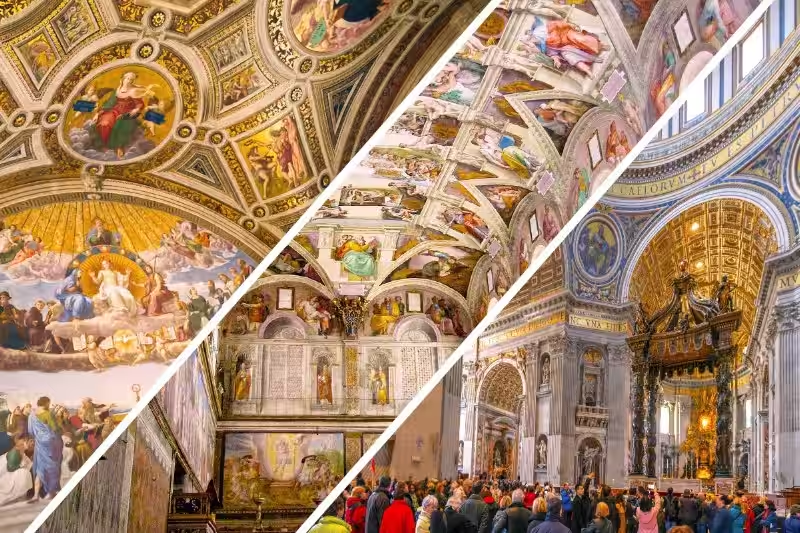
For many, a visit to Vatican City is a pilgrimage, a journey of faith and a feast for the eyes. At the heart of this spiritual and artistic epicenter lie two magnificent structures, often mentioned in the same breath, yet distinct in their purpose and impact: the Sistine Chapel and St. Peter’s Basilica. While both are intrinsically linked to the Catholic faith and offer unparalleled artistic grandeur, understanding their individual roles—the intimate sanctuary of the Sistine Chapel versus the grand cathedral of St. Peter’s Basilica—enhances the appreciation of their unique contributions to religious experience and human achievement.
The question of Sistine Chapel vs. St. Peter’s Basilica isn’t just about comparing two buildings; it’s about exploring different facets of religious devotion, artistic patronage, and the evolution of sacred spaces. Imagine stepping into a hushed, intimate room where every surface tells a story of creation, judgment, and salvation, and then contrasting that with the awe-inspiring vastness of a basilica designed to hold thousands, a testament to the Church’s enduring power and reach. This article will delve into the heart of these iconic landmarks, illuminating what makes each so special and how they work together to create an unforgettable spiritual and artistic journey.
The Sacred Canvas: Understanding the Sistine Chapel
The Sistine Chapel, a name synonymous with Michelangelo’s breathtaking frescoes, is perhaps more accurately described as a chapel within the Apostolic Palace, the official residence of the Pope. Its primary function has historically been that of the Pope’s private chapel and the venue for significant papal conclaves, where cardinals gather to elect a new Pope. This intimate setting, though now frequented by millions, inherently fosters a sense of solemnity and deep reflection, a stark contrast to the more public and expansive nature of a basilica.
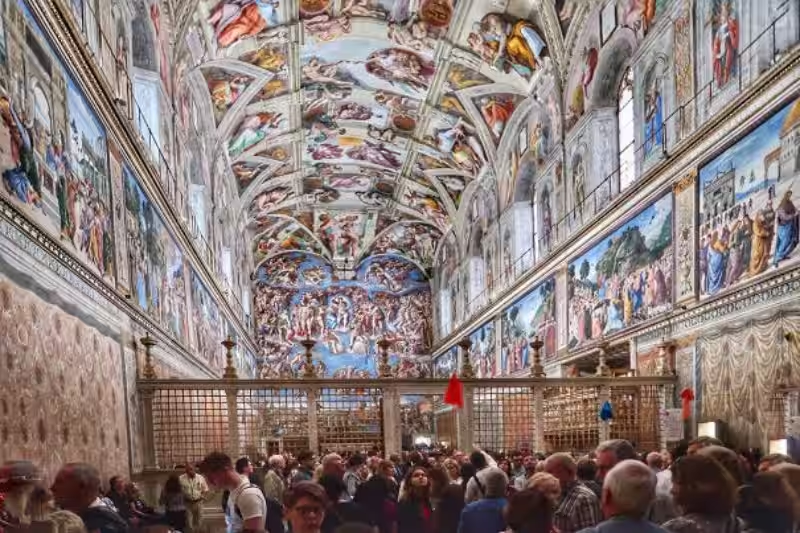
The Sistine Chapel vs. St. Peter’s Basilica discussion often centers on their artistic significance. However, the Sistine Chapel’s art is not merely decorative; it’s deeply theological. Michelangelo’s ceiling, depicting scenes from Genesis, and his powerful “The Last Judgment” on the altar wall, are not just masterpieces of Renaissance art but visual sermons, intended to inspire faith, awe, and contemplation of humanity’s relationship with the divine. The sheer artistic genius and spiritual narrative woven into its walls make it a focal point of religious and artistic pilgrimage, drawing visitors from across the globe to witness its divine beauty.
Michelangelo’s Masterpiece: The Ceiling and the Altar Wall
Michelangelo’s work in the Sistine Chapel is a pinnacle of artistic achievement, a testament to human creativity in service of religious narrative. The ceiling, painted between 1508 and 1512, features over 300 figures, including the iconic “The Creation of Adam,” where God’s finger reaches out to touch humanity, symbolizing the spark of divine life. This iconic imagery has become ingrained in global culture, transcending its religious origins to represent the very essence of creation and human potential.
Later, between 1535 and 1541, Michelangelo returned to paint “The Last Judgment” on the altar wall. This dynamic and dramatic fresco depicts Christ as a powerful judge, surrounded by saints and the damned, a stark reminder of divine justice and the consequences of one’s actions. The sheer scale, emotional intensity, and anatomical precision of these works continue to inspire awe and theological reflection, solidifying the Sistine Chapel’s place as a singular religious and artistic treasure, distinct from the grandeur of St. Peter’s Basilica in its focused, deeply personal narrative.
The Grand Sanctuary: Exploring St. Peter’s Basilica
St. Peter’s Basilica, a colossal monument to faith and architectural prowess, stands as one of the largest churches in the world and a primary symbol of the Catholic Church. Unlike the more intimate Sistine Chapel, the Basilica is a basilica church, meaning it’s a church of the highest rank, often serving as a cathedral. Its primary purpose is to be a place of worship, pilgrimage, and celebration for vast congregations, housing significant relics and serving as a spiritual epicenter for Catholics worldwide.
When comparing the Sistine Chapel vs. St. Peter’s Basilica, one must acknowledge their vastly different scales and functions. While the Sistine Chapel offers an immersive, narrative artistic experience, St. Peter’s Basilica provides an experience of overwhelming scale and spiritual immensity. Its soaring dome, designed in part by Michelangelo, its vast nave, and its opulent chapels are designed to inspire a sense of the divine’s boundless glory and the Church’s enduring presence. It is a space designed for communal worship and grand ceremonies, a testament to the collective faith of millions.
Architectural Marvels and Sacred Relics
The architectural journey of St. Peter’s Basilica is a story of collaboration and artistic evolution. While initiated by Donato Bramante, it was later shaped by the visions of Renaissance masters like Raphael, Michelangelo, and finally completed by Carlo Maderno and Gian Lorenzo Bernini. The iconic dome, a marvel of engineering and design, dominates the Roman skyline and offers breathtaking panoramic views of the city. Walking through its vast expanse, one is struck by the sheer craftsmanship and dedication involved in its creation.
Within the Basilica lie some of Catholicism’s most sacred relics, most notably the tomb of Saint Peter himself, believed to be buried directly beneath the high altar. The presence of these holy relics imbues the Basilica with a profound spiritual significance that draws pilgrims from every corner of the globe. The Pieta, Michelangelo’s tender sculpture of Mary mourning over the body of Christ, is another treasure housed within, showcasing artistic beauty alongside deep religious emotion, further differentiating its artistic offerings from the narrative frescoes of the Sistine Chapel.
The Sistine Chapel vs. St. Peter’s Basilica debate, if one can call it that, is less about superiority and more about understanding the diverse ways religion manifests through art and architecture. The Sistine Chapel engages us through its intricate, narrative frescoes, inviting deep personal reflection on biblical stories and theological concepts. It’s a place where the divine is presented through human artistry, a direct dialogue between the viewer and the depicted spiritual narrative.
St. Peter’s Basilica, on the other hand, envelops us in its sheer scale and grandeur, fostering a sense of communal worship and the overwhelming power of faith. It’s a space where the divine is experienced through immensity and collective devotion, a vast cathedral designed to house and inspire the spiritual lives of countless individuals. Both are essential components of the Vatican’s spiritual and artistic landscape, offering distinct yet complementary experiences of faith, art, and the enduring power of religious expression.
A Tale of Two Sacred Spaces
In essence, the Sistine Chapel is a sanctuary of divine revelation, a meticulously crafted space where art serves as a direct conduit to biblical narratives and theological contemplation. Its power lies in its intimate scale and unparalleled fresco cycles, drawing visitors into a personal encounter with divine stories. Think of it as a profoundly moving art gallery dedicated to faith, where each brushstroke carries immense spiritual weight.
St. Peter’s Basilica is a cathedral of communal faith, a monumental testament to the Church’s enduring presence and its capacity to inspire awe through its architectural magnificence and sacred relics. Its power resides in its vastness, its soaring heights, and its role as a global center for Catholic worship. It is a living testament to devotion, a place where millions gather to celebrate their faith. Together, the Sistine Chapel and St. Peter’s Basilica offer a comprehensive and profound exploration of religion, art, and the human quest for the divine.
Sistine Chapel vs. St. Peter’s Basilica: Frequently Asked Questions
What is the Sistine Chapel?
The Sistine Chapel is a chapel in the Apostolic Palace, the official residence of the Pope, in Vatican City. It is famous for its frescoes, particularly those by Michelangelo on the ceiling and the altar wall.
What is St. Peter’s Basilica?
St. Peter’s Basilica is one of the largest churches in the world and a major pilgrimage site. It is located in Vatican City and is considered one of the holiest Catholic sites, believed to be the burial place of Saint Peter.
What is the relationship between the Sistine Chapel and St. Peter’s Basilica?
While both are in Vatican City and are significant religious and artistic sites, they are distinct. The Sistine Chapel is primarily known for its art and its role in papal conclaves, whereas St. Peter’s Basilica is the principal church of the Catholic faith and a place of worship.
Are both sites part of the Vatican Museums?
The Sistine Chapel is an integral part of the Vatican Museums and is accessed through them. St. Peter’s Basilica, while a separate entity, is also a major attraction within Vatican City and is often visited in conjunction with the Vatican Museums.
What is the primary religious purpose of the Sistine Chapel?
The Sistine Chapel serves as the venue for the papal conclave, the process by which a new Pope is elected. It is also used for other important papal ceremonies.
What is the primary religious purpose of St. Peter’s Basilica?
St. Peter’s Basilica is a functioning church where Mass is celebrated and pilgrims come to pray. It is a central hub for Catholic worship and spiritual significance.
What are the main artistic highlights of the Sistine Chapel?
The most famous artistic highlights are Michelangelo’s ceiling frescoes, including “The Creation of Adam,” and his fresco “The Last Judgment” on the altar wall. Other notable artists like Botticelli and Perugino also contributed frescoes.
What are the main artistic and architectural highlights of St. Peter’s Basilica?
St. Peter’s Basilica boasts magnificent architecture designed by renowned artists like Bramante, Michelangelo (who designed the dome), and Bernini (who designed the baldacchino and St. Peter’s Square). It houses significant artworks, including Michelangelo’s “Pietà.”
Can you visit both at the same time?
Yes, it is common for visitors to tour the Vatican Museums, which includes the Sistine Chapel, and then visit St. Peter’s Basilica as part of their Vatican City experience.
Is there an entrance fee for both?
There is an entrance fee to visit the Vatican Museums, which includes access to the Sistine Chapel. Entry to St. Peter’s Basilica itself is typically free, though there may be charges for climbing the dome or other special access.