The month of March, often a harbinger of spring and a time of hopeful renewal, also carries a rich spiritual resonance within the Christian tradition. Beyond the literal turning of the seasons, it marks a period brimming with the lives and legacies of numerous saints, each offering a unique facet of faith, devotion, and human experience. Understanding the March saints calendar isn’t merely about memorizing dates; it’s about connecting with a vibrant lineage of individuals who, through their actions and beliefs, have shaped the very fabric of religion. This journey through March’s saintly commemorations provides a powerful opportunity for personal reflection, spiritual growth, and a deeper appreciation for the diverse expressions of Christian life.
For many, the concept of saints might seem distant, confined to ancient history or abstract theological ideals. However, a closer look at the individuals celebrated in March reveals relatable struggles, profound joys, and unwavering commitment. Their stories are not just historical footnotes; they are living testaments to the power of faith in action, offering practical guidance and inspiration for navigating our own contemporary challenges. Whether you’re a lifelong devotee or simply curious about the spiritual underpinnings of Western culture, exploring the March saints calendar can unveil a world of wisdom and encouragement.
The Spirit of March: A Month Steeped in Devotion and Sacrifice
March, as a month, often embodies a sense of transition, moving from the introspection of winter towards the outward blossoming of spring. Spiritually, this mirrors a journey of personal transformation and growth. The figures honored in the March saints calendar reflect this dynamic, showcasing individuals who underwent significant trials and emerged with strengthened faith, offering powerful lessons for all who seek a deeper connection with religion.
The very act of remembering these saints serves as a powerful reminder of the enduring nature of faith across generations. Their lives, marked by heroic virtue, unwavering prayer, and often significant sacrifice, provide a tangible link to the foundational principles of Christianity. By engaging with their stories, we are invited to contemplate our own spiritual paths and consider how we can embody similar qualities in our daily lives.
Early March: Echoes of Courage and Compassion
As the month begins, the March saints calendar presents a compelling array of figures who embody early Christian ideals of courage and compassion. We encounter individuals who faced persecution with remarkable fortitude, demonstrating that faith can be a guiding light even in the darkest of times. Their stories serve as powerful examples of resilience and unconditional love.
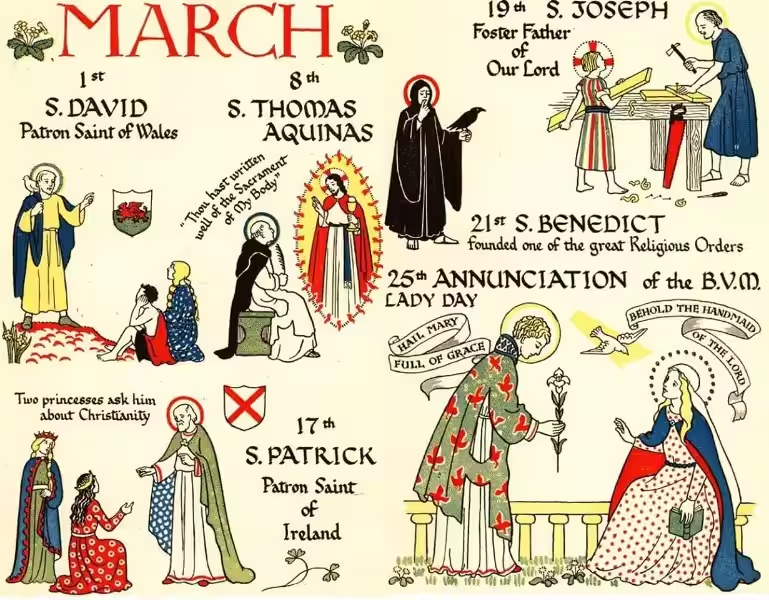
For instance, the early days of March often bring to mind saints like Saint Perpetua and Felicity, whose martyrdom in Carthage is a testament to their unshakeable belief. Their willingness to face death rather than renounce their faith resonates deeply, reminding us of the ultimate stakes involved in living a life dedicated to God. Their story, preserved through their own writings and those of their contemporaries, offers an intimate glimpse into the strength of conviction that fueled early Christianity. Another figure, often celebrated around this time, is Saint David of Wales, the patron saint of Wales, whose humble life and dedication to monasticism offer a vision of quiet strength and spiritual discipline. His emphasis on simple living and devotion to God continues to inspire those seeking a more profound connection to their faith.
While often overshadowing other commemorations, Saint Patrick, celebrated on March 17th, deserves a deeper exploration beyond the secular festivities. His mission to Ireland was not a simple conversion; it was a profound act of cultural integration and spiritual transformation. Patrick’s ability to weave Christian teachings into the existing Irish culture, utilizing symbols and stories that resonated with the people, offers a masterclass in effective evangelization and respectful engagement.
His story is a powerful reminder within the March saints calendar that religion is not about imposing foreign ideas but about finding common ground and fostering understanding. Patrick’s legacy is one of bridging divides and building communities, a lesson that remains incredibly relevant in our increasingly diverse world. He is remembered not just for driving out snakes (a symbolic representation of paganism), but for his devotion to prayer, his tireless ministry, and his deep love for the Irish people. This multifaceted approach to faith demonstrates the richness and complexity inherent in the lives of saints.
Mid-March: The Power of Prayer and Service
The middle weeks of March continue to illuminate the diverse expressions of Christian religion through the lives of saints dedicated to prayer and selfless service. These individuals, often overlooked in popular discourse, represent the quiet strength and persistent effort that underpins the spiritual lives of countless believers. Their examples encourage us to find holiness in the everyday acts of kindness, compassion, and dedication.
Consider the figures celebrated in mid-March who dedicated their lives to serving the poor, healing the sick, or educating the faithful. Their unwavering commitment, often undertaken with little fanfare, highlights the profound impact of consistent, devoted action. These saints remind us that true spiritual fulfillment often lies not in grand gestures, but in the steady rhythm of love and service to our fellow human beings. This period of the March saints calendar offers a wonderful opportunity to reflect on where our own acts of service can make a difference.
Saint Joseph: The Silent Guardian of Faith
One of the most significant figures honored in March, usually on March 19th, is Saint Joseph, the earthly father of Jesus. His quiet strength, unquestioning obedience, and protective love make him a profoundly relatable figure for many. Joseph’s role, while often in the background, was absolutely crucial to the unfolding of salvation history. His willingness to accept his divine calling without hesitation, despite the immense personal challenges, is a powerful testament to faith and trust.
Joseph’s example within the March saints calendar speaks volumes about the importance of humility and dedication. He teaches us that true leadership is often found in quiet service and unwavering commitment to one’s family and responsibilities. His life, though filled with extraordinary circumstances, offers practical lessons for all those navigating the complexities of family life and religious devotion. He is a patron saint of workers, fathers, and those seeking a peaceful death, illustrating the breadth of his intercessory power.
Late March: The Mysteries of the Passion and Resurrection
As March draws to a close, the March saints calendar moves us towards the profound mysteries of the Christian faith: the Passion, Death, and Resurrection of Jesus Christ. While not a saint in the traditional sense, Jesus is the central figure of Christianity, and His final days are commemorated with deep reverence. This period, often marked by Lent and leading into Holy Week, is a time of intense spiritual focus and reflection.
Throughout late March, we can explore saints who particularly embodied the spirit of the Paschal Mystery. These might include individuals who demonstrated profound penitence, self-denial, or unwavering hope in the face of suffering. Their lives, in their own ways, echo the ultimate sacrifice and ultimate triumph of Christ, offering us a pathway to participate more fully in these sacred events. The religion of Christianity finds its ultimate expression in these events, and the saints we remember help us to understand and live them more deeply.
The Blessed Virgin Mary: A Mother’s Enduring Love
While her feast days are scattered throughout the year, the Blessed Virgin Mary is intrinsically linked to the events of salvation history that unfold at the end of March. Her unwavering faith, humility, and complete surrender to God’s will are foundational to Christian religion. Her role as the Mother of God and her profound connection to Jesus’ suffering and resurrection are central to our understanding of these pivotal moments.
Mary’s presence in the March saints calendar, even if indirectly through the liturgical season, serves as a constant reminder of maternal love, steadfast devotion, and hope. Her acceptance of God’s plan, her courage at the foot of the cross, and her welcoming embrace of the Resurrection offer a powerful model for all believers. She teaches us the profound beauty of a life lived in complete alignment with God’s will, a lesson that transcends any particular month or season.
Connecting with the March Saints Calendar in Your Spiritual Life
Engaging with the March saints calendar is more than a historical exercise; it’s an invitation to actively participate in the living tradition of religion. By understanding the lives and virtues of these individuals, we can find practical guidance and profound inspiration for our own spiritual journeys. Their stories offer relatable challenges and triumphs, demonstrating that holiness is attainable for all, not just for a select few.
Integrating the March saints calendar into your personal practice can take many forms. You might choose to focus on one saint each week, researching their life and incorporating their particular virtue into your daily reflections. Alternatively, you could use the saint of the day as a prompt for prayer, asking for their intercession in specific areas of your life. Even a simple act of reading a short biography can open up new perspectives and foster a deeper appreciation for the rich tapestry of faith.
Practical Ways to Engage with March’s Spiritual Heritage
There are numerous accessible ways to bring the March saints calendar to life in your personal spiritual practice. These methods are designed to be relatable and informative, helping you to forge a tangible connection with these holy men and women. Whether you are a seasoned practitioner of religion or just beginning to explore your faith, these suggestions can enrich your journey.
Here are some actionable steps:
Daily Reflection: Dedicate a few moments each day to learn about the saint(s) commemorated on that particular date. Websites, devotional books, and even daily prayer apps can provide concise biographies and spiritual insights.
Prayer and Intercession: Consider offering a specific prayer for the intentions of the saint you are learning about, or ask for their intercession in a particular area of your life where you feel you need guidance or strength. For example, if you are struggling with patience, you might pray to a saint known for their forbearance.
Journaling: Keep a spiritual journal where you can record your reflections on the saints’ lives, noting any parallels to your own experiences or lessons you have learned. This can be a powerful tool for personal growth and self-discovery.
Art and Music: Explore art and music inspired by the saints. Many churches and museums feature artwork depicting these figures, and devotional music can create a contemplative atmosphere.
Community Engagement: If you are part of a religious community, see if there are opportunities to learn more about the saints during services or Bible studies. Sharing stories and insights with others can deepen your understanding and appreciation.
Acts of Service: Emulate the saints’ dedication to service by engaging in charitable works or acts of kindness in your own community. This practical application of their virtues can be incredibly rewarding.
By actively engaging with the March saints calendar, you are not just observing religious observances; you are participating in a vibrant, ongoing conversation with individuals who have profoundly influenced the course of religion. Their lives offer a timeless roadmap for navigating the complexities of faith, demonstrating that devotion, sacrifice, and love are not abstract concepts but tangible realities that can transform both individual lives and the world around us. The unfolding tapestry of faith presented in March offers a continuous source of wisdom and inspiration for all who seek it.
Frequently Asked Questions about the March Saints Calendar
What is the March Saints Calendar?
The March Saints Calendar is a liturgical calendar that lists the feast days of saints observed during the month of March in the Christian tradition, particularly within the Catholic and Orthodox churches. It provides a daily reminder of the lives and examples of these holy individuals.
What is the significance of observing saints’ feast days in March?
Observing saints’ feast days in March offers opportunities for reflection on their virtues, their contributions to faith and the Church, and their intercessory power. It’s a way to connect with the communion of saints and draw inspiration from their lives.
Are there any major saints celebrated in March?
Yes, March features several important saints. Some prominent examples include Saint Patrick (March 17th), the patron saint of Ireland, and Saint Joseph (March 19th), the earthly father of Jesus. Other notable figures celebrated include Saint Perpetua and Saint Felicity (March 7th), early Christian martyrs.
How does the March Saints Calendar relate to the liturgical year?
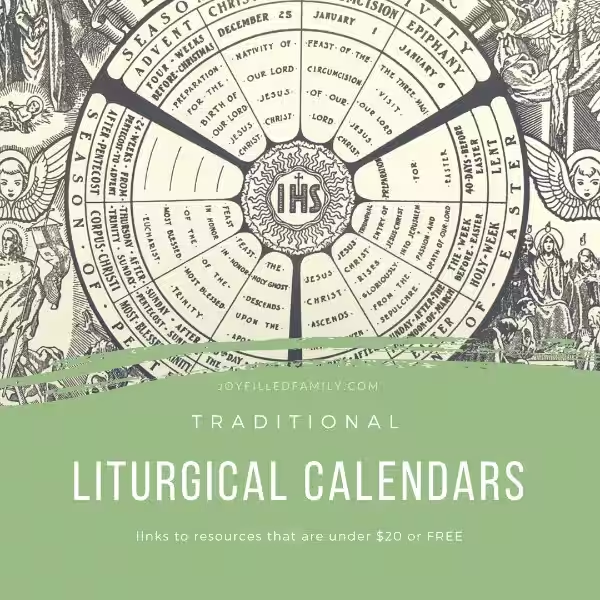
The March Saints Calendar is integrated into the broader liturgical year. Feast days of saints are observed within the context of the season of Lent in the Western Church, or within Ordinary Time or other liturgical seasons in the Eastern Church.
Can I celebrate saints’ days outside of formal church services?
Absolutely! You can celebrate saints’ days by reading about their lives, praying for their intercession, reflecting on their virtues, or even by observing traditions associated with them, such as the customs surrounding Saint Patrick’s Day.
Where can I find a detailed March Saints Calendar?
Detailed March Saints Calendars can be found in official liturgical calendars published by dioceses, denominational websites, Catholic and Orthodox prayer books, and various religious online resources.