The books of 1 and 2 Samuel, 1 and 2 Kings, and 1 and 2 Chronicles in the Bible offer a sweeping narrative of Israel’s monarchy, a period marked by moments of profound faith and devastating rebellion. These accounts are more than just historical records; they are a rich tapestry woven with lessons on leadership, obedience, consequences, and the unwavering sovereignty of God. For anyone seeking to understand the nature of true kingship – not just earthly power, but the ultimate dominion of the divine – the Kings Bible verses provide an invaluable roadmap. They speak to us across millennia, offering guidance for our own lives, relationships, and our understanding of faith.
Imagine a father teaching his children about making wise choices. He doesn’t just tell them “don’t touch the stove”; he explains why – the pain, the danger. Similarly, the books of Kings don’t simply list good and bad rulers. They reveal the divine principles that underpinned their reigns, the blessings that followed obedience, and the severe repercussions of turning away from the Lord. These narratives, filled with human triumphs and failures, serve as vivid case studies for our own spiritual journeys, reminding us that our choices have eternal significance.
From Shepherd Boy to Mighty King: David’s Legacy and Lessons
The story of King David is perhaps the most compelling and complex in the books of Kings. From his humble beginnings as a shepherd boy, anointed by God, to his reign as a warrior and psalmist, David embodies both extraordinary faith and profound human frailty. His life is a testament to the fact that even those chosen by God are susceptible to temptation, yet also capable of deep repentance and divine forgiveness. The verses recounting his life offer crucial insights into what it means to be a leader after God’s own heart, despite imperfections.
One of the central themes surrounding David is his dependence on God. Even in the face of overwhelming odds, like his battle with Goliath, David’s strength came not from his own might, but from his unshakeable trust in the Lord. We see this consistently in Kings Bible verses that describe his prayer life and his reliance on divine guidance. For instance, when facing his enemies, David would often inquire of the Lord, ensuring his actions were aligned with God’s will. This echoes through our own lives; when we prioritize seeking God’s wisdom before making critical decisions, we position ourselves for success far greater than our own capabilities could achieve.
The Ark and the Kingdom: God’s Presence as the True Throne
A pivotal moment in David’s reign, and a recurring motif in the Books of Kings, is the bringing of the Ark of the Covenant into Jerusalem. This was not merely a religious ceremony; it symbolized God’s dwelling among His people and His centrality to their kingdom. David understood that true kingship wasn’t about his personal power, but about honoring and obeying the King of Kings. His desire was for God’s presence to be the heart of his nation, a principle that transcends any earthly throne.
The Ark represented God’s covenant promise and His active involvement in the lives of His people. When it was misplaced or neglected, as it was during periods of disobedience, the kingdom suffered. This underscores a vital spiritual truth: the presence of God is the ultimate source of strength and blessing for any individual, family, or nation. The Kings Bible verses about the Ark serve as a potent reminder that our deepest longings for stability and prosperity are ultimately met when we place God at the forefront of our lives and our communities, making Him the true King.
The Divided Kingdom: The Perils of Idolatry and Disobedience
Following the golden age of David and Solomon, the united kingdom of Israel fractured into two: the Northern Kingdom of Israel and the Southern Kingdom of Judah. This division, prophesied and ultimately brought about by the people’s straying from God’s commands, is a stark illustration of the destructive consequences of disobedience and idolatry. The reigns of the subsequent kings are largely characterized by a constant struggle between allegiance to God and the allure of foreign gods and sinful practices.
The narratives in Kings are replete with examples of kings who “did evil in the sight of the Lord,” often leading their people into spiritual and political ruin. These accounts are not meant to be sensational; they are serious warnings about the slippery slope of compromise. When we, like the Israelites, begin to prioritize worldly desires, material wealth, or our own perceived wisdom over God’s clear instructions, we invite spiritual decay. The Kings Bible verses detailing the fall of these kingdoms serve as a powerful call to vigilance in our own spiritual lives, urging us to constantly examine our hearts and our allegiances.
Echoes of the Prophets: Voices of Warning and Hope
Throughout the reigns of both good and wicked kings, the voice of God’s prophets – figures like Elijah, Elisha, Isaiah, and Jeremiah – rings out. These individuals served as divine messengers, challenging the status quo, confronting kings with their sinfulness, and calling the people back to repentance. Their prophecies often served as warnings of impending judgment, but also as promises of future hope and restoration.
The interactions between the prophets and the kings are some of the most dramatic in the Bible. Prophets like Elijah, boldly confronting King Ahab and Queen Jezebel about their wickedness, demonstrate unwavering courage in the face of opposition. Their messages, though often harsh, were born out of a deep love for God and His people. The Kings Bible verses that feature prophetic pronouncements remind us that God is not silent in the face of sin; He actively intervenes, offering opportunities for change and pointing towards a redemptive future, even when judgment seems inevitable.
Lessons for Today: Applying the Wisdom of Kings
The stories and pronouncements found within the books of Kings, while set in an ancient context, offer profound and practical wisdom for believers today. They teach us about the importance of righteous leadership, both in our personal lives and in our communities. We learn that true authority flows from obedience to God, not from worldly power or influence.
Furthermore, the Kings Bible verses serve as a continuous reminder of the consequences of our choices. Just as the kings’ decisions impacted generations, our own choices have ripple effects, shaping our families, our relationships, and our spiritual walk. The emphasis on God’s faithfulness to those who seek Him, even amidst their flaws, offers immense comfort and encouragement. Ultimately, these ancient narratives call us to examine our own kingdoms – the spheres of influence God has given us – and to govern them with wisdom, integrity, and an unwavering commitment to the ultimate King, Jesus Christ.
Frequently Asked Questions about Kings Bible Verses and Religion
What are some key themes in the books of Kings?
The books of Kings primarily explore themes of obedience and disobedience to God’s covenant, the consequences of leadership, the establishment and division of the Israelite kingdom, the role of prophets, and God’s faithfulness despite Israel’s unfaithfulness. They highlight the importance of worshipping God alone and the dangers of idolatry.
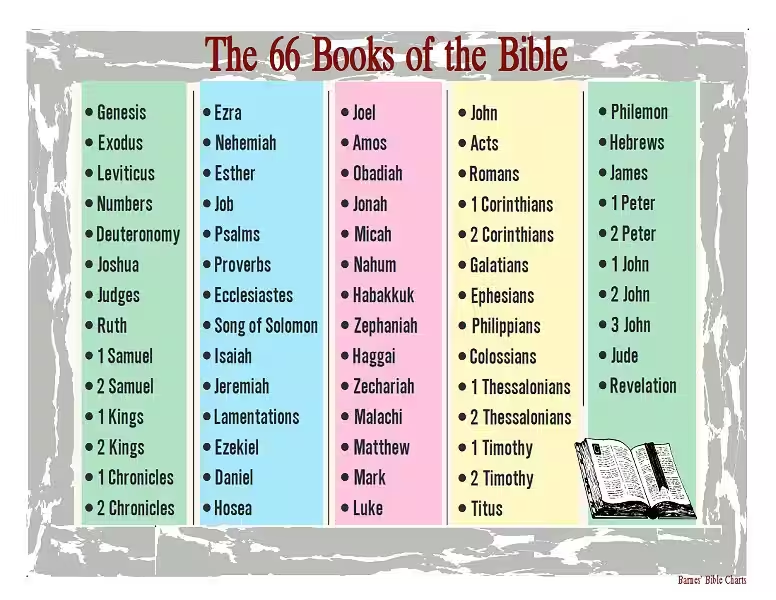
Verses about kings are predominantly found in the books of 1 Kings and 2 Kings, which detail the reigns of the kings of Israel and Judah. Other Old Testament books like Samuel, Chronicles, and even some prophetic books also contain significant passages related to kings and their rule.
What does the Bible say about the nature of kingship?
The Bible presents kingship with a dual perspective. On one hand, God institutes kingship as a means to lead and protect His people. On the other hand, it emphasizes that earthly kings are ultimately accountable to God, the true King. The books of Kings often illustrate the pitfalls of kings who stray from God’s commands, leading to judgment and suffering for their people.
Are there verses about Jesus as the ultimate King?
Yes, the Old Testament prophets foretold a coming King from the line of David who would reign righteously. The New Testament presents Jesus Christ as this promised King, the ultimate King of kings, whose kingdom is not of this world but eternal. Passages in the Gospels and the book of Revelation speak to His royal authority and future reign.
How do the books of Kings relate to Christian faith today?
The books of Kings offer timeless lessons about leadership, morality, and the consequences of choices. They remind Christians of the importance of following God’s will, the dangers of straying into sin and idolatry, and the ultimate sovereignty of God over all earthly powers. They also point forward to Jesus Christ as the perfect King whose reign brings salvation and hope.
What are some common misconceptions about Bible kings?
One common misconception is that all Bible kings were righteous or divinely appointed in their actions. The books of Kings clearly show many kings who were flawed, sinful, and led their people astray. Another misconception is that God directly controlled every action of every king; rather, God established principles and consequences, and kings made their choices within that framework.