The book of Revelation, with its vivid imagery and profound pronouncements, has captivated and challenged readers for centuries. Among its most discussed passages is chapter 6, a pivotal section that unveils a series of seals being broken, each unleashing a significant event upon the earth. This isn’t just ancient prophecy; it’s a divinely inspired roadmap that, when understood verse by verse, offers profound insights into the nature of God’s justice, the struggles of humanity, and the ultimate triumph of His kingdom. Let’s embark on a journey to unravel the meaning and relevance of Revelation 6.
The Breaking of the First Seal: The Conqueror’s Advance
We begin our exploration with the opening of the first seal, as described in Revelation 6:1-2. John, the visionary, sees one of the four living creatures call out with a voice like thunder, beckoning him to “Come and see.” Then, a white horse appears, and its rider holds a bow. To him is given a crown, and he rides out, conquering and to conquer. This imagery is both striking and open to interpretation, but consistently points towards a powerful, influential force.
This first seal often represents a victorious conqueror, a figure who achieves widespread dominion. It could symbolize the spread of empire, ideology, or even a deceptive spiritual movement that gains immense traction and influence across the globe. The white horse itself can signify purity or victory, but in this context, it’s a victory that comes with a conquering agenda, not necessarily one of peace or benevolence. Think of the rise of a powerful new nation or a persuasive philosophy that sweeps through societies, altering their course dramatically. The key takeaway here is unstoppable momentum and dominion.
The Second Seal: The Unleashing of Strife and Conflict
Moving to the second seal, Revelation 6:3-4 introduces a different, more ominous rider. When the second living creature calls, out comes a fiery red horse. Its rider is granted power to take peace from the earth, and to make people slay one another. He is given a great sword. This is a stark contrast to the potentially ambiguous victory of the first seal, clearly depicting the destructive force of war and bloodshed.
This seal speaks directly to the pervasive nature of conflict that has plagued humanity throughout history and will continue to do so. It’s not just about organized armies clashing on battlefields; it’s also about internal strife, civil unrest, and the breakdown of societal harmony. The imagery of a fiery red horse evokes the passion and violence of war, while the empowered rider actively removes peace. This verse serves as a somber reminder that humanity’s capacity for aggression is a recurring theme in the unfolding of events.
The Third Seal: The Grip of Scarcity and Economic Hardship
The third seal, revealed in Revelation 6:5-6, brings forth a different kind of suffering: economic distress. When the third living creature commands, a black horse emerges, and its rider carries a pair of scales in his hand. A voice is heard, declaring, “A quart of wheat for a day’s wages, and three quarts of barley for a day’s wages, and do not harm the oil and the wine!” This speaks volumes about severe inflation and widespread famine.
This seal vividly illustrates the devastating impact of economic collapse and scarcity. The price of basic necessities, like grain, skyrockets to an exorbitant level, making survival a daily struggle for the common person. The instruction to “not harm the oil and the wine” suggests that while the poor suffer greatly, the wealthy may still retain some luxuries, highlighting a potential for deepening social and economic inequality during times of crisis. It’s a powerful depiction of how resource depletion and poor economic management can lead to widespread suffering.
The Fourth Seal: The Specter of Death and Its Companions
The opening of the fourth seal, detailed in Revelation 6:7-8, introduces a chilling quartet of destruction. As the fourth living creature calls, a pale horse appears, and its rider’s name is Death, with Hades following close behind. They are given authority over a fourth of the earth to kill by sword, famine, plague, and by the wild beasts of the earth. This is perhaps the most direct and terrifying seal, encompassing multiple avenues of mortality.
This seal represents the unfettered reign of death and destruction across a significant portion of the earth. It acknowledges that death comes in many forms: violent conflict, starvation, deadly diseases, and even the ravages of nature. The pale color of the horse is often associated with sickness and decay. This prophecy reminds us of the fragility of life and the devastating consequences when divine judgment or unchecked human actions lead to widespread mortality. It’s a sobering reminder of the ultimate price of sin and rebellion.
The Fifth Seal: The Cries of the Martyred Faithful
Turning to Revelation 6:9-11, we witness a shift in focus. When the fifth seal is broken, John sees under the altar the souls of those who had been slain because of God’s word and the testimony they had kept. They cry out with a loud voice, asking, “How long, Sovereign Lord, holy and true, until you judge the inhabitants of the earth and avenge our blood?” They are given white robes and told to wait a little longer, until the full number of their fellow servants and their brothers who were to be killed as they had been.
This seal brings the suffering of the faithful to the forefront. It highlights the persecution faced by those who stand for their beliefs. The imagery of souls under the altar signifies their sacrifice and martyrdom. Their cry for justice is a profound expression of their longing for divine vindication and the establishment of God’s righteousness. The white robes symbolize their purity and the vindication they will ultimately receive. This passage offers comfort and hope to those enduring hardship for their faith, assuring them that their suffering is not forgotten and that justice will prevail.
The Sixth Seal: Cosmic Upheaval and Divine Judgment
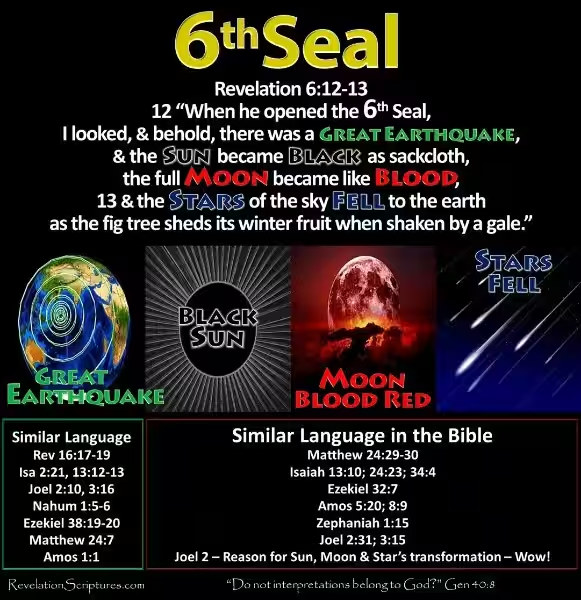
The dramatic conclusion of Revelation 6 unfolds with the breaking of the sixth seal, described in Revelation 6:12-17. A great earthquake shakes the earth, the sun becomes black as sackcloth, the moon turns blood red, and the stars fall from the sky. The heavens depart like a scroll being rolled up, and every mountain and island is moved from its place. The kings, rulers, and mighty men of the earth hide in caves and call out to the mountains to fall on them, saying, “Hide us from the face of him who sits on the throne and from the wrath of the Lamb!”
This seal depicts a cataclysmic cosmic event, a grand display of God’s power and judgment. It signifies a time when the natural order is overthrown, reflecting the profound disruption and fear that will grip humanity when divine wrath is fully unleashed. The reactions of the powerful earthly figures – their terror and attempts to hide – underscore the futility of resisting God’s ultimate authority. This is a powerful visual representation of the awe-inspiring and terrifying nature of God’s final judgment on the unrighteous.
The Enduring Relevance of Revelation 6
As we reflect on Revelation 6, verse by verse, its message resonates far beyond its ancient context. The seals don’t merely describe future events; they also offer timeless insights into the human condition and the unfolding spiritual battle. We see the recurring themes of conquest and deception, war and violence, economic hardship, the inevitability of death, the perseverance of the faithful, and the ultimate sovereignty of God.
Understanding Revelation 6 empowers us to discern the signs of the times and to remain steadfast in our faith, even amidst challenging circumstances. It reminds us that while suffering and tribulation are part of the earthly journey, they are not the end of the story. The promise of justice and vindication for the faithful, coupled with the ultimate triumph of God’s kingdom, provides a beacon of hope in a world often fraught with uncertainty. This chapter, therefore, is not just a prophecy of doom, but a call to vigilance, faith, and enduring hope.
The Book of Revelation is the final book of the New Testament, offering symbolic visions and prophecies that describe cosmic and earthly events, the ultimate triumph of God, and the establishment of a new heaven and a new earth. It is attributed to the apostle John.
What are the Four Horsemen of the Apocalypse in Revelation 6?
The first four seals of Revelation 6 unleash four horsemen, each representing a force that will impact the earth:
* The White Horse: Often interpreted as conquest, a false peace, or the spread of the Antichrist.
* The Red Horse: Symbolizes war and bloodshed.
* The Black Horse: Represents famine and economic hardship.
* The Pale Horse: Denotes death and Hades, with their power to kill by sword, famine, plague, and wild beasts.
What happens when the fifth seal is opened?
When the fifth seal is opened, John sees the souls of martyrs under the altar who cry out to God for justice and vengeance for their blood. They are told to rest a little longer until the full number of their fellow servants and brothers who were to be killed as they had been is completed.
What occurs when the sixth seal is opened?
The opening of the sixth seal brings about a great earthquake, the sun becoming black as sackcloth, the moon turning blood-red, and stars falling from the sky. The heavens are rolled up like a scroll, and mountains and islands are moved from their places. People, both the great and the small, hide in caves and among rocks, calling on mountains to fall on them and hide them from the face of Him who sits on the throne and from the wrath of the Lamb.
What is the significance of the “wrath of the Lamb” mentioned in Revelation 6?
The “wrath of the Lamb” refers to the judgment of God, executed through Jesus Christ (the Lamb of God), against sin and evil. It signifies the divine reckoning that will occur at the end times.
Who are the people hiding during the sixth seal?
The people hiding are described as “kings of the earth, the rulers, the generals, the powerful, every slave and every free person.” This indicates that the judgment of the sixth seal affects all levels of society, leaving no one unaffected.
What is the overall message of Revelation 6?
Revelation 6 depicts the unfolding of God’s judgments upon the earth as seals are broken. It serves as a warning about the consequences of sin and rebellion, the suffering that will precede the final establishment of God’s kingdom, and the ultimate sovereignty of God and Christ over all events.