The image of Jesus reaching into water is a potent, recurring motif throughout the Gospels, often signifying moments of profound religious encounter and divine intervention. It’s not merely a physical act; it’s a symbolic gesture that speaks volumes about his ministry, compassion, and spiritual power. From the baptismal waters of the Jordan to the sustenance he offered to his disciples on the Sea of Galilee, these interactions with water reveal a deeper truth about God’s engagement with humanity and the transformative nature of faith.
This article will explore the multifaceted religious significance of Jesus reaching into water, delving into specific biblical accounts and their enduring relevance for believers today. We will uncover how these seemingly simple actions represent divine grace, cleansing, and the call to discipleship, offering readers a richer understanding of their faith and its practical application in everyday life.
One of the most significant instances of Jesus interacting with water is his own baptism by John the Baptist in the River Jordan. This wasn’t a baptism for repentance, as John’s ministry was about, but rather a profound anointing and inauguration of Jesus’ public life. When John hesitated, believing Jesus was the one who should baptize him, Jesus insisted, saying, “Let it be so for now; it is proper for us to do this to fulfill all righteousness.” This act of humble obedience set a precedent for all future followers.
The moment the heavens opened, the Spirit descended like a dove, and a voice declared, “This is my beloved Son, with whom I am well pleased” – this divine affirmation at the water’s edge is foundational to Christian belief. It signifies that water, in this context, becomes a symbol of spiritual cleansing, rebirth, and the indwelling of the Holy Spirit. For Christians, their own baptism mirrors this event, marking their entry into the covenant, their forgiveness of sins, and their adoption as children of God. It’s a sacred threshold where the earthly meets the divine, and where individuals are called to a new life in Christ.
The Symbolic Power of Water in Baptism
The act of immersion or sprinkling with water in baptism is rich with symbolism. It represents dying to the old self, the life lived in sin, and emerging renewed and resurrected in Christ. Think of a seed buried in the earth, seemingly dying, only to sprout forth into new life; baptism mirrors this cycle of death and resurrection. It’s a public declaration of faith, a commitment to follow Jesus, and a visible sign of an invisible grace.
Furthermore, water has always been associated with purity and cleansing in religious traditions. In the Old Testament, ritual washings were essential for preparing individuals for worship and for maintaining spiritual cleanliness. Jesus, by entering the Jordan, sanctifies these waters, imbuing them with a new and profound spiritual significance. This cleansing power extends beyond the physical, signifying the washing away of guilt and the purification of the soul, preparing believers to live a life that is pleasing to God.
Miracles on the Water: Demonstrating Divine Authority and Compassion
Beyond his baptism, Jesus frequently interacted with water in ways that demonstrated his divine authority and deep compassion. The Gospels are replete with accounts of him walking on water, calming the storm, and importantly, reaching into the water to perform miracles of provision and healing. These events are not just sensational stories; they are powerful theological statements about Jesus’ identity and his mission to restore and redeem.
His disciples, often fishermen, were intimately familiar with the often-treacherous nature of the Sea of Galilee. When Jesus would reach into the water, whether to call Peter to follow him, to miraculously fill nets with fish, or to offer sustenance, it was a clear demonstration that he held dominion over the natural world. These acts revealed his power over creation, his ability to provide abundantly, and his care for the practical needs of his followers.
The Miracle of the Loaves and Fishes: Provision from the Depths
The miraculous feeding of the thousands, where Jesus took a few loaves and fishes and multiplied them by reaching into the abundance of God’s provision, is a prime example. While the exact mechanics are divine mystery, the imagery of Jesus holding the meager provisions and offering them into a state of miraculous abundance is profound. It speaks to the idea that God’s resources are limitless and that through Jesus, even the smallest offerings can be transformed into more than enough.
This miracle is relatable for all of us who have experienced times of scarcity or felt overwhelmed by needs, both our own and those of others. It assures us that Jesus has the power to meet our needs, not just spiritually but also physically and practically. The act of Jesus reaching into the water to offer this miraculous meal is a powerful reminder that God’s generosity flows like a river, capable of nourishing and sustaining everyone who turns to him.
Calling Disciples: From Fishing Nets to Followers
Jesus’ calling of his first disciples, often fishermen, involved a direct interaction with their livelihood and the water they worked on. When he famously said, “Follow me, and I will make you fishers of men,” he was using the familiar imagery of their trade to convey a higher spiritual calling. Imagine the scene: Jesus standing on the shore, his hand extended, perhaps gesturing towards the water where the disciples’ nets were being cast.
This act of reaching out, of drawing them from their familiar world of water and nets, symbolizes the transformative power of his invitation. He wasn’t just asking them to change their profession; he was asking them to embrace a new identity and a new purpose. The water, their source of sustenance and their daily labor, became the backdrop for a divine summons, a call to become instruments of God’s kingdom, casting their nets of faith into the world.
Forgiveness and Restoration: Jesus’ Touch in the Waters of Life
The religious significance of Jesus reaching into water extends to themes of forgiveness, healing, and restoration. While less explicitly about a physical touch in the water, the symbolic connection is powerful. Consider the pool of Bethesda, where the sick and infirm waited for the stirring of the waters, which was believed to bring healing. When Jesus healed a man who had been an invalid for thirty-eight years, he did so by simply speaking the word, but the context of the water is crucial.
His ability to bring wholeness and restoration to those who were broken, much like water can cleanse and refresh, is a testament to his compassionate nature. The water of life, flowing from God through Jesus, has the power to wash away sin, heal wounds, and restore us to spiritual vitality. This is not a passive waiting for the waters to stir; it’s an active encounter with the divine healer who reaches out to us in our deepest needs.
Washing Away Sin: The Cleansing Power of Grace
The concept of spiritual cleansing is deeply ingrained in Christian theology. Jesus, by his sacrifice and resurrection, offers a profound washing away of sin, a cleansing more thorough and permanent than any physical ablution. When we reflect on Jesus reaching into water, we can see a metaphor for this divine act of grace. His outstretched hand signifies the invitation to receive forgiveness, a willingness to draw us out of the muddy waters of our past mistakes and into the pure, clear waters of redemption.
This is a message of immense hope and relatability. We all stumble, we all make errors, and at times, we feel weighed down by guilt. The promise of Jesus’ forgiving touch, symbolized by his interaction with water, assures us that we can be made clean. It’s about receiving God’s unmerited favor, a divine embrace that allows us to start anew, unburdened and renewed in spirit.
The Wellspring of Living Water: Sustenance for the Soul
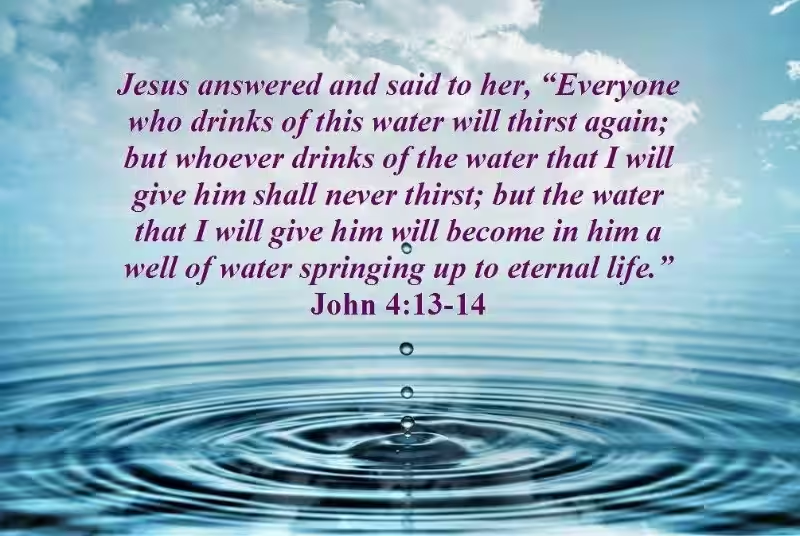
Jesus famously spoke to the Samaritan woman at the well, offering her “living water” that would become a “spring of water welling up to eternal life” (John 4:14). Here, the well itself, a source of life-giving water, becomes a powerful metaphor for Jesus himself. He is the ultimate source of spiritual nourishment and eternal life. His reaching out to her, a woman marginalized and ostracized, demonstrates his inclusive love and his desire to quench the deepest thirst of the human soul.
This imagery of living water is profoundly comforting and informative. It speaks to a spiritual sustenance that is constant and never runs dry. Unlike the physical water from a well that can be depleted, the living water offered by Jesus is inexhaustible. It’s the grace, truth, and love of God that continuously refreshes and sustains believers, enabling them to live lives of purpose and hope, even amidst the challenges of this world.
The Enduring Legacy: Jesus’ Touch in Our Lives Today
The image of Jesus reaching into water is not confined to ancient narratives; it resonates deeply with believers in the 21st century. This divine interaction continues to offer guidance, comfort, and transformation in our own lives. Whether we are reflecting on our baptism, seeking forgiveness, or in need of spiritual sustenance, the symbolic power of Jesus’ touch in the water remains a powerful reminder of God’s constant presence and unfailing love.
The religious significance of these moments invites us to actively engage with our faith. It’s an encouragement to turn to Jesus in prayer, to seek his cleansing grace, and to drink deeply from the wellspring of his living water. The ripple effect from those ancient encounters continues to spread, inviting us to experience the transformative power of Christ in our own journeys of faith and spiritual growth.
Frequently Asked Questions: Jesus Reaching into Water and Religion
Did Jesus ever reach into water?
In the Gospels, there are accounts of Jesus interacting with water in significant ways. One prominent example is the story of Jesus walking on water (Matthew 14:22-33, Mark 6:45-52, John 6:16-21). While this doesn’t explicitly state he “reached into” the water, it implies a physical interaction and control over it. Another instance is Jesus healing a man at the Pool of Bethesda, where the man was waiting for the water to be stirred, and Jesus healed him without the water’s intervention (John 5:1-15). There is also the account of Jesus baptizing (though often administered by his disciples) and the imagery of living water associated with him.
What religious symbolism is associated with Jesus and water?
Water holds profound symbolic meaning in Christianity, and Jesus’ interactions with it are rich with theological significance. Baptism, a central sacrament in Christianity, uses water to symbolize spiritual cleansing, rebirth, and entry into the Christian community. Jesus himself was baptized by John the Baptist, an event that marked the beginning of his public ministry. The imagery of Jesus as “living water” (John 4:10-14) suggests he is the source of spiritual life and sustenance for believers. Furthermore, his calming of the storm on the Sea of Galilee demonstrates his divine authority over creation.
Are there any specific biblical stories where Jesus physically reaches into water?
While direct descriptions of Jesus “reaching into” water are not as common as other miracles, his physical interaction with water is implied in several narratives. For instance, when Jesus walked on water, he was undoubtedly in contact with it. The miracle of feeding the multitude also involves disciples distributing food, and it is plausible that they would have encountered water. The healing at the Pool of Bethesda involves Jesus speaking to a man by the pool, and while the focus is on the healing rather than his physical action in the water, the proximity to the pool is key.