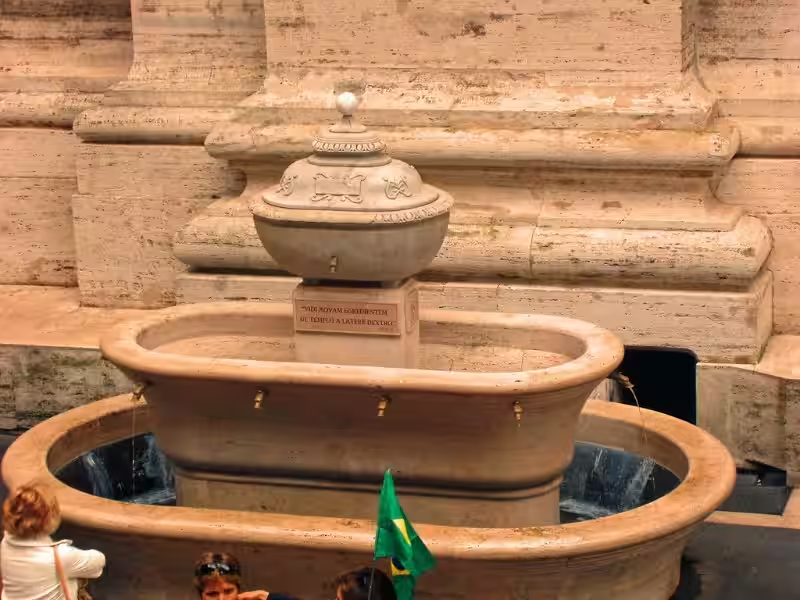
For centuries, the sacred waters emanating from the heart of Catholicism, the Vatican, have held a profound and mystical significance for millions of believers. More than just ordinary H2O, this consecrated liquid is a tangible symbol of divine grace and a conduit for spiritual protection. The very notion of holy water from the Vatican evokes an aura of ancient tradition and unwavering faith, connecting the individual believer to the universal Church and its rich spiritual heritage. It’s a reminder that even in our everyday lives, we can encounter the sacred, the purifying, and the blessed.
The practice of using holy water is deeply woven into the fabric of Catholic life, a practice that often begins with experiencing its presence, perhaps at a local parish font, but with roots that trace back to the ultimate spiritual authority. The Vatican, as the spiritual center of the Catholic Church, imbues these substances with a special gravity, connecting the faithful worldwide to a shared ritual and belief system. It’s a practice that transcends mere ritual; it’s about invokation, consecration, and the seeking of divine favor.
The theological underpinnings of holy water are as rich and nuanced as the history of the Church itself. At its core, the blessing of water transforms it from a simple element into a means of spiritual purification and a channel of God’s grace. This transformation is not arbitrary; it’s a deliberate act of faith, invoking the Holy Spirit to imbue the water with divine power.
When we speak of holy water from the Vatican, we are referencing a tradition that understands water as a fundamental element of creation, frequently used in scripture to symbolize cleansing, rebirth, and the outpouring of the Spirit. Think of the biblical accounts of Noah and the flood, or Jesus’ baptism in the Jordan River – water consistently represents a new beginning, a washing away of the old. The Church, through its priests and bishops, acting under the authority derived from the Vatican, perpetuates this symbolism, making the water a potent instrument of spiritual efficacy.
The Ritual of Blessing and its Transformative Power
The act of blessing holy water is a solemn and significant liturgical practice. It’s not a magical incantation, but rather a prayerful invocation, asking God to bless the water and consecrate it for spiritual use. This blessing typically occurs during the Easter Vigil, a foundational ceremony in the Christian calendar, but can also be performed at other times.
During the blessing, specific prayers are recited, often including exorcisms that call for the expulsion of evil and the presence of divine goodness. This transformative power is what elevates ordinary water to the status of holy water. It’s understood that through this sacramental, the water becomes a means of grace, capable of sanctifying the user and protecting them from spiritual harm. The Vatican’s endorsement of this ritual underscores its importance and universality within the Catholic faith.
Experiencing the Sacred: How Holy Water is Used
The tangible presence of holy water offers believers a daily connection to the divine, a simple yet profound way to integrate faith into their routines. From the moment of baptism to the final farewell, holy water plays a role in marking significant life transitions and offering ongoing spiritual support.
For many, the most familiar encounter with holy water from the Vatican occurs at the entrance of a church. Dipping one’s fingers into the baptismal font and making the Sign of the Cross is a powerful reminder of one’s baptismal vows and a plea for divine protection. It’s a moment of personal reflection, a brief pause to acknowledge the sacred in the midst of the secular. This simple act signifies a desire to enter into the presence of God, cleansed and ready to worship.
Personal Devotion and Protection
Beyond the communal prayer at church, holy water finds its way into the personal devotional lives of countless Catholics. Many keep a small vessel of holy water at home, using it for private prayer, to bless themselves or their living spaces, or even to anoint the sick. This personal use highlights the belief in the water’s protective and sanctifying properties in everyday circumstances.
Consider the simple act of sprinkling holy water around a room before retiring for the night; it’s an act of faith, a prayer for peace and protection against nightmares or any unwelcome spiritual influences. Similarly, some Catholics might bless their vehicles with holy water before a long journey, entrusting their safety to God’s care. These personal acts, though seemingly small, are powerful expressions of faith and a testament to the enduring belief in the efficacy of holy water originating from the spiritual heart of the Vatican.
The Vatican’s Role in Dispensing and Upholding Tradition
The Vatican, as the administrative and spiritual center of Catholicism, plays a crucial role in maintaining the authenticity and integrity of sacred practices, including the blessing and distribution of holy water. While local dioceses and parishes are empowered to bless and use holy water, the ultimate tradition and theological guidance emanate from this historic seat of faith.
The Vatican’s imprimatur on such practices lends them a universal authority, ensuring that the meaning and use of holy water remain consistent across the global Catholic community. It reinforces the understanding that this is not a localized phenomenon but a sacramental practice deeply rooted in apostolic tradition, a tradition that the Vatican carefully preserves and propagates.
Maintaining Authenticity and Reverence
The Vatican’s influence ensures that the sacredness of holy water is never diminished or trivialized. Through official pronouncements, liturgical guidelines, and the training of clergy, the Church hierarchy, centered in the Vatican, upholds the reverence due to this sacrament. This careful stewardship helps to maintain the spiritual potency and profound meaning associated with holy water.
When one encounters holy water from the Vatican, whether directly or through its widespread use in parishes worldwide, there’s an implicit understanding of its sacred origins and the unbroken chain of tradition that it represents. It’s a testament to the enduring power of faith and the Church’s commitment to providing its followers with tangible means of experiencing God’s grace. The Vatican’s enduring legacy ensures that this sacred essence continues to bless and protect believers for generations to come.
Frequently Asked Questions About Holy Water from the Vatican
What is holy water?
Holy water is a sacramental in the Catholic Church, blessed by a priest or bishop. It is used in various religious ceremonies and as a symbol of purification and protection.
Directly obtaining holy water from the Vatican itself is generally not possible for individuals. Holy water is typically distributed through local parishes and churches.
Where can I find holy water?
You can find holy water at most Catholic churches. It is usually available in fonts near the entrances of the church.
How is holy water made?
Holy water is created by blessing ordinary water with specific prayers and rituals by a priest or bishop. This blessing imbues the water with spiritual significance.
What is the religious significance of holy water?
In Catholicism, holy water symbolizes purification from sin and protection against evil. It is used in rites such as baptism, exorcisms, and blessings of people, places, and objects.
Can I use holy water at home?
Yes, many Catholics keep a small amount of holy water at home for personal devotion, prayer, and blessings.
Is there a special type of water used for holy water?
Typically, ordinary water is used. The sacredness comes from the blessing by the clergy, not from the water source itself.
Are there different kinds of holy water?
The most common is blessed water. In some traditions, there’s also “holy oil” or chrism, which is a different sacramental.
Can non-Catholics use holy water?
While holy water is primarily used within the Catholic Church, its sacred nature is respected. However, its sacramental efficacy is understood within the context of Catholic faith.
What should I do with holy water?
You can make the sign of the cross with holy water when entering or leaving a church, bless yourself or others, or sprinkle it on homes and objects to invoke God’s blessing and protection.