More Than Just H2O: The Spiritual Significance of Living Water
When we hear the phrase “living water,” our minds might immediately conjure images of a babbling brook, a refreshing spring, or the life-giving rain that nourishes the earth. In a literal sense, water is undeniably essential for all known life. It quenches our thirst, sustains our bodies, and forms the very basis of our existence. But in the realm of religion and spirituality, the concept of “living water” transcends its physical properties. It speaks to a profound, deeper nourishment – a spiritual sustenance that can revitalize our souls, bring hope in times of despair, and connect us to something eternal. The scriptures across various faiths have long used this potent metaphor to describe the divine presence, the transformative power of faith, and the enduring hope offered by a spiritual wellspring.
The idea of water as a symbol of life and purity is ancient and widespread. Think of baptismal rites in Christianity, the ritualistic ablutions in Islam, or the sacred rivers in Hinduism. These practices, while varied, often draw upon the cleansing and renewing power associated with water. This universal recognition underscores why the metaphor of “living water” resonates so deeply. It’s not just about survival; it’s about thriving, about experiencing a fullness of life that goes beyond the ordinary. This article will explore various scriptural references to living water, illuminating its multifaceted meanings and offering practical insights for incorporating its spiritual essence into our daily lives.
“Living Water” in the Christian Tradition: A Source of Eternal Life
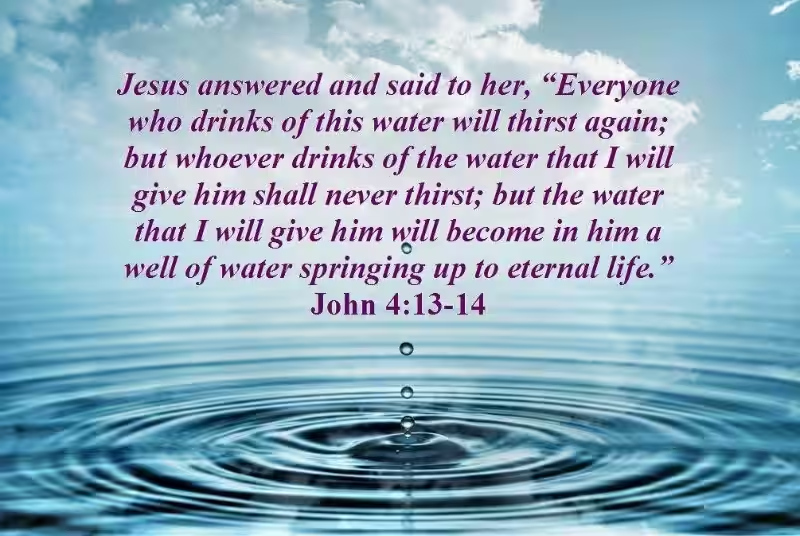
In Christianity, the concept of “living water” is most powerfully articulated in the New Testament, particularly in the teachings of Jesus. One of the most poignant encounters occurs in the Gospel of John, chapter 4, where Jesus speaks with a Samaritan woman at a well. He famously says, “But whoever drinks of the water that I will give him will never be thirsty again. The water that I will give him will become in him a spring of water welling up to eternal life.” (John 4:14). This isn’t just about satisfying a physical craving; Jesus is offering something far more profound – a spiritual satisfaction that ultimately leads to everlasting life. This “living water” is understood as the Holy Spirit, God’s divine presence that indwells believers, providing continuous spiritual refreshment and sustenance.
This encounter at the well is a beautiful illustration of how divine grace can quench a deep, often unrecognized, spiritual thirst. The woman, seeking to draw water from a physical well, is presented with an opportunity to receive a source of spiritual vitality that will never run dry. The promise of a “spring of water welling up” suggests an abundant, inexhaustible supply, a constant flow of divine love and truth. It signifies a transformation from a life of seeking and striving to one of receiving and abiding in God’s presence. The implication is that this spiritual water brings not just temporary relief but a permanent state of fulfillment, a connection to God that transcends earthly limitations and promises an eternity of communion.
The Promise of Abundance and Renewal
The imagery of a wellspring is key to understanding this promise. A wellspring is not a stagnant pool; it’s a source that continuously bubbles up, bringing forth fresh, pure water. This is how the Holy Spirit functions in the life of a believer – not as a one-time impartation, but as a dynamic, living presence that constantly renews and refreshes. The prophet Isaiah echoes this sentiment in Isaiah 58:11: “And the Lord will guide you continually, and satisfy your soul in drought, and strengthen your bones; and you shall be like a watered garden, and like a spring of water, whose waters do not fail.” This passage paints a vivid picture of what it means to be sustained by divine living water: continual guidance, soul satisfaction, and unfailing strength.
The image of a “watered garden” speaks to flourishing and productivity. When we are spiritually nourished by living water, our lives can blossom. We are better equipped to navigate life’s challenges, to love and serve others, and to bear the fruits of the Spirit. The “spring of water whose waters do not fail” is a powerful metaphor for endurance and resilience. In times of spiritual dryness or hardship, this divine wellspring provides the necessary sustenance to keep going, to remain vibrant, and to continue growing in our faith. It’s a testament to God’s unwavering provision for His people, a promise that even in the most arid seasons of life, His grace will be our constant source of renewal.
Living Water in the Old Testament: Foreshadowing the Divine Source
While the term “living water” is most explicitly used in the New Testament, the concept is powerfully foreshadowed in the Old Testament. The Hebrew Bible frequently uses water imagery to represent God’s power, His deliverance, and His provision for His people. The Exodus narrative, for instance, is replete with instances of God providing water in the wilderness. The parting of the Red Sea and the subsequent provision of water from a rock are dramatic examples of God’s miraculous intervention, demonstrating His ability to bring life-giving sustenance even in the most desolate of places. This act of providing water from a rock, as described in Exodus 17:6, was a visible manifestation of God’s power to sustain His people, a precursor to the spiritual “living water” that would be offered later.
The prophets also spoke of a future restoration and abundance, often using water as a symbol. Ezekiel, in chapter 47, has a vision of a river flowing from the temple, bringing life and healing wherever it goes. He describes trees growing on both banks, bearing fruit year-round, and leaves for healing. The waters, flowing out from the sanctuary, are described as becoming a great river, so deep that one can only swim in it. This prophetic vision is a powerful testament to the transformative and life-giving power that would originate from God’s presence. It speaks of an era of unparalleled blessing and spiritual vitality, where God’s presence would saturate the land, bringing healing, fruitfulness, and abundant life.
The Symbolism of the Ark and the Flood
Even in the story of Noah’s Ark and the Great Flood, water, while destructive, also carries a symbolic weight of cleansing and new beginnings. The floodwaters, which brought judgment upon a wicked world, ultimately receded, allowing for a fresh start. God’s covenant with Noah, marked by the rainbow, signified a promise of life and renewal after the devastating waters. This narrative, though focused on destruction, still points to water’s multifaceted role – it can represent both judgment and the purification required for new life. The ark itself, a vessel of salvation floating on the waters, can be seen as a type of the Church, carrying God’s people through the storms of life towards a promised land of renewal.
Furthermore, the recurring theme of water as a source of life in creation accounts across different cultures, including the biblical narrative, highlights its fundamental importance. Before the dry land appeared, the earth was covered in water, and God’s Spirit was hovering over it. This primordial state underscores water’s role as the foundation of life. The subsequent separation of waters and the emergence of dry land set the stage for life as we know it, reinforcing the idea that water is intrinsically linked to the very act of creation and the continuation of existence. The consistent portrayal of water as a force for both destruction and creation underscores its profound symbolic power in spiritual narratives.
Living Water in Other Religious Traditions: Universal Yearning for Spiritual Sustenance
The metaphor of “living water” is not exclusive to Christianity; it resonates across a multitude of religious and spiritual traditions, reflecting a universal human yearning for spiritual sustenance and transcendence. In Islam, the concept of al-ma’ al-hayat (living water) sometimes appears, often associated with paradise and divine blessings. The Quran speaks of rivers flowing beneath paradise, a metaphor for the eternal bliss and spiritual refreshment awaiting the righteous. These celestial rivers are not merely physical streams but represent the abundance of God’s grace and the ultimate fulfillment of spiritual desires.
In Hinduism, water holds immense sacredness. The Ganges River, considered by many Hindus to be a goddess and a purifying force, is a prime example. Pilgrims travel great distances to bathe in its waters, believing it can cleanse them of sins and bring spiritual merit. While not always explicitly termed “living water,” the reverence for sacred rivers and springs speaks to the same underlying principle: water’s ability to purify, renew, and connect individuals to the divine. The concept of amrita, the nectar of immortality, also shares similarities, representing a divine substance that grants eternal life and spiritual awakening. This universal recognition of water’s purifying and life-giving properties demonstrates a shared human understanding of its spiritual significance.
The Buddhist Path to Inner Peace
In Buddhism, while the terminology might differ, the essence of finding an inner, inexhaustible source of peace and enlightenment is central. The practice of meditation, for instance, can be seen as a way to access a deep wellspring of inner calm and wisdom. By quieting the mind and observing thoughts without attachment, practitioners can tap into a state of serenity that is not dependent on external circumstances. This inner peace can be understood as a form of “living water” for the soul, providing resilience against suffering and guiding one towards spiritual liberation. The Buddhist concept of nirvana represents the ultimate cessation of suffering, a state of profound peace and liberation that can be metaphorically likened to reaching a tranquil, inexhaustible source.
The Buddhist understanding emphasizes the impermanence of all things, including external sources of comfort. True peace, therefore, must come from within. This is achieved through practices that cultivate mindfulness, compassion, and wisdom. The inner transformation that results from these practices creates a stable and enduring sense of well-being, much like a deep wellspring that continues to flow regardless of the weather. The emphasis on self-discovery and inner strength aligns with the broader spiritual concept of accessing a divine or inherent source of life and peace that is always available, waiting to be tapped.
Applying the Principles of Living Water to Your Life
Understanding the scriptural concept of “living water” offers profound implications for how we can approach our own spiritual journeys. It’s a call to move beyond superficial satisfaction and to seek a deeper, more enduring source of nourishment. This means actively engaging with spiritual practices that connect us to the divine. For Christians, this involves cultivating a relationship with God through prayer, scripture study, fellowship, and receiving the sacraments. It’s about recognizing that God’s grace is an ever-present wellspring, available to quench our deepest spiritual thirsts. The invitation is to continually draw from this source, rather than relying on fleeting earthly comforts.
For individuals of other faiths or those seeking a spiritual path, the principle remains the same: identify and engage with the practices that foster spiritual growth and inner peace. Whether it’s meditation, acts of service, communal worship, or contemplative prayer, these activities can help us tap into our own inner wellsprings. It’s about recognizing that true fulfillment isn’t found in accumulating possessions or seeking external validation, but in cultivating a connection to something greater than ourselves. By consciously seeking out these spiritual nourishment sources, we can begin to experience the transformative power of “living water” in our own lives, leading to greater joy, peace, and purpose.
Practical Steps to Finding Your Wellspring
To intentionally cultivate this spiritual refreshment, consider these practical steps:
Regular Spiritual Disciplines: Dedicate consistent time for prayer, meditation, or reflection. Treat these times as vital appointments for receiving spiritual nourishment.
Engage with Sacred Texts: Read and study scriptures from your faith tradition. Look for passages that speak to you about divine provision and spiritual renewal.
Seek Community: Connect with others who share your spiritual journey. Shared faith and support can be a powerful source of encouragement and strength.
Practice Gratitude: Cultivate an attitude of thankfulness for the blessings in your life, both big and small. Gratitude opens our hearts to receive more of God’s goodness.
Acts of Service and Compassion: Serving others can often lead to profound spiritual insights and a deeper connection to the divine. It’s a way of participating in the life-giving flow of love.
Mindfulness in Daily Life: Be present in your everyday activities. Even simple moments, like savoring a cup of tea or observing nature, can become opportunities for spiritual connection.
By actively embracing these practices, we can move from a life that is merely surviving to one that is truly thriving. We can experience the profound peace and enduring hope that comes from tapping into the inexhaustible “living water” that sustains our souls and enriches our lives. It’s a journey of continuous discovery, where each act of seeking brings us closer to the abundant wellspring of divine life.
Frequently Asked Questions about Scriptures on Living Water
What does the Bible mean by “living water”?
In the Bible, “living water” often refers to water that is flowing, fresh, and life-sustaining, as opposed to stagnant water. Symbolically, it represents a source of spiritual life, refreshment, and renewal that God provides. It is often associated with the Holy Spirit, God’s grace, and salvation.
Where in the Bible can I find mentions of living water?
Several key passages speak of living water. The most prominent are:
John 4:10-14: Jesus speaks to the Samaritan woman at the well, offering her “living water” that will become a “spring of water welling up to eternal life.”
John 7:37-39: Jesus declares, “If anyone is thirsty, let them come to me and drink. Whoever believes in me, as the Scripture has said, rivers of living water will flow from them.” This is explicitly linked to the gift of the Holy Spirit.
Jeremiah 2:13: The prophet Jeremiah rebukes Israel for turning away from God, the “fountain of living waters,” and digging their own cisterns that cannot hold water.
Revelation 21:6: In the vision of the new heaven and new earth, God promises, “To the thirsty I will give water without cost from the spring of the water of life.”
What is the spiritual significance of living water in Christianity?
In Christianity, living water is a powerful metaphor for the transformative presence and power of God, primarily through the Holy Spirit. It signifies:
Spiritual Renewal and Refreshment: Just as physical water quenches thirst and revitalizes, the living water of the Spirit quenches the soul’s deepest longings and brings spiritual vitality.
Eternal Life: Jesus connects receiving living water with eternal life, indicating that this divine source leads to everlasting communion with God.
Abundant Grace: It represents God’s inexhaustible supply of grace, forgiveness, and strength available to believers.
Empowerment: The “rivers of living water” flowing from believers (John 7:38) suggest that those who receive God’s Spirit become conduits of His life-giving power to others.
How can I experience this “living water” today?
The Scriptures indicate that the living water is received through faith in Jesus Christ. By believing in Him, accepting His sacrifice, and surrendering to His Lordship, individuals can begin to experience the spiritual refreshment and ongoing presence of God’s Spirit in their lives. This is often expressed through prayer, scripture study, fellowship with other believers, and obedience to God’s word.