Understanding the Sacred Significance of Holy Water
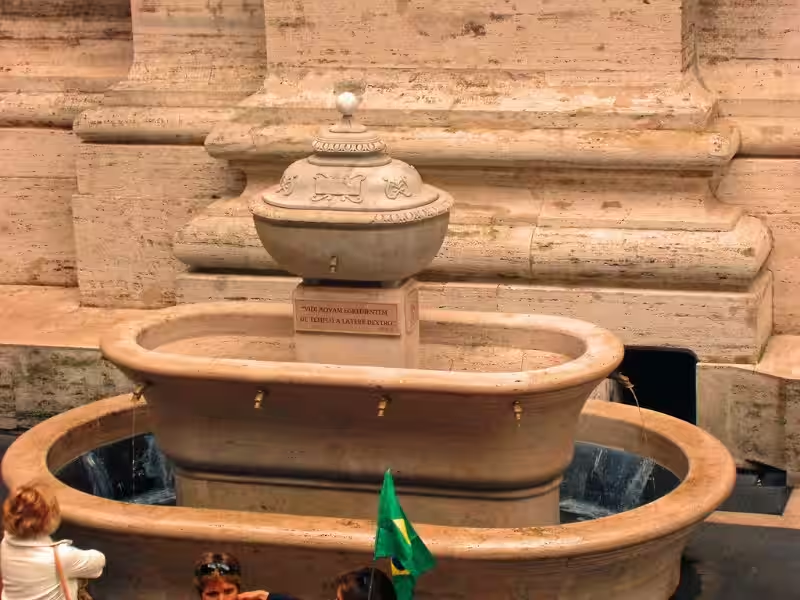
For centuries, the Catholic Church has held a profound reverence for holy water, a sacramental that symbolizes spiritual cleansing and divine grace. But what exactly makes this consecrated water so special? It’s not just ordinary water; it’s water that has been blessed by a priest or bishop, a ritual imbued with prayer and the invocation of the Holy Spirit. This blessing transforms it into a conduit of God’s grace, a tangible reminder of our baptismal vows and a comfort in times of spiritual need. The act of blessing holy water is a solemn and ancient rite, a prayerful request for God’s protective and sanctifying power to be present within it. This sacred substance, often found in fonts at the entrances of churches, serves as a constant invitation to remember our faith and approach the divine.
The origins of using blessed water in religious practice can be traced back to ancient times, with parallels found in various cultures and religions that employed water for purification rituals. In the Catholic tradition, the use of holy water is deeply rooted in the teachings of Jesus and the sacrament of baptism. When we bless ourselves with holy water, we are symbolically washing away our sins and reaffirming our commitment to Christ. It’s a simple yet powerful gesture, a moment of pause to connect with the divine presence in our lives. Think of it like this: a simple glass of water can quench your thirst, but a blessed chalice of wine in a solemn ceremony offers something far more profound—a spiritual communion. Similarly, holy water, though physically just water, carries a spiritual weight and purpose, especially when it has been blessed by someone in a position of spiritual authority, like a priest, bishop, or even, in a more profound and symbolic sense, blessed by the Pope.
The Pope’s Connection to Holy Water: A Symbol of Apostolic Authority
While any priest or bishop can bless holy water, the idea of Pope blessed holy water carries an amplified sense of spiritual weight and authority. The Pope, as the successor of Saint Peter and the visible head of the Catholic Church, embodies the ultimate spiritual leadership. When the Pope blesses holy water, it’s not just a personal act of consecration; it’s a powerful affirmation of the Church’s teachings and the efficacy of its sacraments. This act serves as a symbol of apostolic authority, a tangible connection to the unbroken lineage of Christ’s ministry. The Pope’s blessing underscores the universal reach and power of God’s grace, extending it through the Church to all believers.
Imagine a renowned artist signing their masterpiece. The signature doesn’t just identify the artist; it validates the work itself, imbuing it with added value and prestige. In a similar vein, when the Pope blesses holy water, his blessing acts as a spiritual signature, a profound endorsement of its sacred potency. While the physical process might be similar to a priest blessing water, the spiritual resonance is amplified by the Pope’s unique role. This doesn’t diminish the efficacy of water blessed by local clergy, but rather, it highlights the supreme spiritual office the Pope holds. It’s a reminder that the Church, under the guidance of the Pope, is a unified body, actively participating in the work of sanctification through its sacraments and blessings. The Pope blessed holy water serves as a profound testament to this unified spiritual mission.
How Holy Water Enriches Our Daily Lives and Faith Journey
The presence of pope blessed holy water or any specially consecrated holy water in our lives is far more than a religious tradition; it’s a practical and deeply personal tool for spiritual growth. Many Catholics keep a small bottle of holy water at home, using it for personal prayer, to bless their living spaces, or even to anoint themselves or loved ones in times of sickness or distress. The simple act of making the Sign of the Cross with holy water before sleep or upon waking can serve as a constant anchor to our faith, a small but significant reminder of God’s protective embrace. These everyday uses demonstrate how this sacred element can seamlessly weave into the fabric of our daily routines, offering a consistent source of comfort and spiritual strength.
Consider the comfort a favorite amulet or a cherished family heirloom might bring. Holy water, especially that which carries the amplified blessing associated with the Pope blessed holy water, can offer a similar, albeit spiritual, sense of security and connection. When we feel overwhelmed, anxious, or simply in need of a reminder of God’s love, reaching for holy water is an accessible act of faith. It’s a physical manifestation of our spiritual desires for protection, healing, and peace. The act itself, whether a simple sprinkle in a room or a personal anointing, becomes a prayer in motion, a tangible expression of our reliance on divine intervention. This integration of the sacred into the mundane allows us to live our faith more fully, moment by moment.
Practical Uses and Devotional Practices with Holy Water
Beyond the symbolic, holy water has a rich history of practical and devotional uses within the Catholic faith. It is traditionally used to bless individuals, homes, and objects, offering a tangible prayer for protection and sanctification. For instance, many families bless their homes with holy water at the beginning of a new year or after a period of difficulty, believing it consecrates the space and wards off negative influences. This practice is not about superstition, but rather a faithful invocation of God’s presence and blessing upon their dwelling and the people within it. It’s akin to dedicating a new project with a moment of prayer, asking for success and guidance, but on a spiritual plane.
One of the most common devotional uses is making the Sign of the Cross with holy water when entering or leaving a church. This ritual serves as a powerful reminder of our baptism and our commitment to Christ. Families might also keep holy water readily accessible for personal prayers, such as anointing a sick child or blessing a newborn. The water can be used to create a protective circle around a bedridden individual or to consecrate a space before a significant event. These acts, though seemingly small, are profound affirmations of faith, demonstrating a reliance on God’s grace and protection in tangible ways. The Pope blessed holy water, when available, can bring an even greater sense of spiritual assurance to these practices.
Holy water is not merely for private devotion; it plays a central and integral role in the sacraments and liturgical celebrations of the Catholic Church. Its use is deeply woven into the fabric of our worship, connecting us directly to the foundational sacraments of our faith. From the solemnity of baptisms to the quiet reverence of funerals, holy water serves as a constant reminder of God’s purifying and sanctifying power. The very essence of our faith is tied to these sacred rituals, and holy water is an indispensable element within them, often blessed by a priest or bishop, and in significant moments, the Pope blessed holy water could be referenced as the ultimate example of this sacramental power.
The sacrament of baptism is perhaps the most prominent example where holy water takes center stage. During the baptismal rite, the celebrant pours water over the head of the candidate, symbolizing spiritual rebirth and the washing away of original sin. This act is a powerful visual representation of being incorporated into the Body of Christ. Beyond baptism, consecrated water is also used in blessings of churches, altars, and religious objects, imbuing them with a sacred character. Even in moments of sorrow, like at a funeral, holy water is sprinkled over the casket, symbolizing the hope of resurrection and the cleansing of the soul for eternal life. These liturgical uses underscore the profound importance of holy water as a conduit of God’s grace within the communal worship of the Church.
A Personal Connection: Receiving the Grace of Holy Water
The beauty of pope blessed holy water, or any consecrated holy water, lies in its accessibility and its capacity to foster a deeply personal connection with the divine. It’s not an abstract concept reserved for theologians or distant figures; it’s a tangible element that can be integrated into our everyday lives, offering comfort, protection, and a constant reminder of God’s ever-present love. Whether you are a devout Catholic making the Sign of the Cross daily or someone exploring their faith, the spiritual significance of holy water remains a powerful testament to the Church’s rich tradition of grace and blessing. It invites us to pause, reflect, and open our hearts to the sacred.
Ultimately, the grace derived from holy water comes from our faith and our willingness to accept God’s love. It’s a reminder that even in the ordinary, the extraordinary can be found. The act of blessing oneself with holy water is a personal prayer, a moment where we consciously invite God’s presence into our lives. This simple, yet profound, gesture can be a source of strength during challenging times and a cause for gratitude during moments of joy. The Pope blessed holy water offers a powerful reminder of the Church’s unified spiritual authority and the universal reach of God’s blessings, encouraging us all to embrace the sacred in our personal journeys of faith.
Holy water is consecrated water used in many Christian traditions, particularly in Roman Catholicism. It is blessed by a priest or bishop and is believed to have sacramental and protective qualities.
How is holy water made?
Holy water is typically made by blessing ordinary water with a specific prayer or rite, often performed by a priest. In some traditions, salt is added and blessed separately before being mixed with the water.
What is the religious significance of holy water?
In Catholicism, holy water is a sacramental, an outward sign instituted by Christ to give grace. It is used in rituals like baptism and blessings of people, places, and objects. It is believed to cleanse from sin, offer protection against evil, and symbolize spiritual purification and renewal.
How is holy water used in religious services?
Holy water is commonly found in fonts near the entrance of Catholic churches. Parishioners often sprinkle themselves with it as they enter or leave, making the sign of the cross. It is also used in various liturgical ceremonies and blessings.
Can holy water be used outside of church?
Yes, individuals can keep holy water in their homes and use it for personal prayer, blessings of family members, or to bless their homes and possessions. It’s a way to bring a sense of the sacred into daily life.
What are the specific beliefs associated with holy water in Catholicism?
In Catholicism, holy water is believed to:
* Remit venial sins and temporal punishment due to sin.
* Protect against the influence of evil spirits and temptations.
* Sanctify individuals and objects.
* Aid in spiritual healing and strengthen faith.
Are there different types of holy water?
While the primary “holy water” is blessed water, some traditions also distinguish “holy oils” (like the Oil of Catechumens and the Oil of the Sick) and “chrism” (a consecrated oil used in sacraments like baptism, confirmation, and ordination), which are distinct but also blessed and hold significant religious meaning.
What is the origin of using holy water?
The practice of using blessed water has roots in ancient traditions and is found in various early Christian writings and practices. Its use is rooted in the symbolism of water for purification and cleansing.