In the vast ocean of religious texts, the Epistle to the Colossians stands as a beacon, offering profound insights into the nature of Christ, the essence of faith, and the practicalities of Christian living. For many, delving into ancient scriptures can feel like deciphering a foreign language, a daunting task filled with theological jargon and historical context. Yet, a Colossians summary reveals a message that is remarkably timeless and relevant, speaking directly to the challenges and questions we face in our modern spiritual journeys. This letter, penned by the Apostle Paul, isn’t just a historical document; it’s a spiritual roadmap, guiding us through the complexities of belief and the pursuit of a life deeply rooted in Christ.
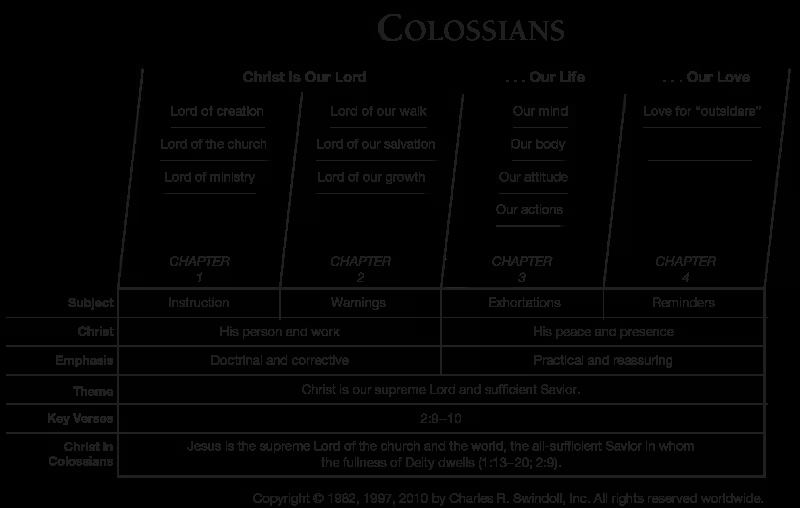
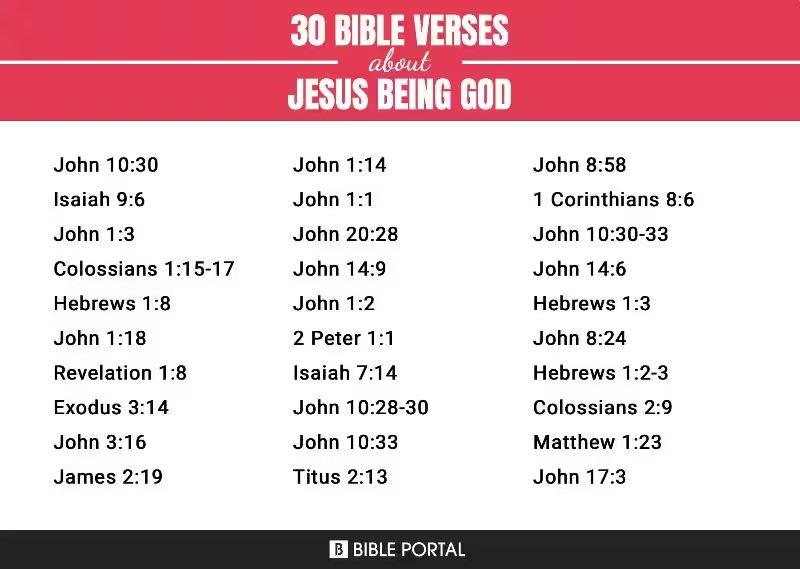
The core message of Colossians is one of Christ’s supreme authority and sufficiency. Paul meticulously dismantles any notion that Christ is merely one option among many spiritual paths, or that His work on the cross needs supplementation. Instead, he presents Jesus as the absolute Lord of all creation, the one through whom and for whom everything exists. This is a foundational concept, and understanding it is crucial for grasping the entirety of the letter. It’s like discovering that the architect of your entire life, the designer of the universe itself, is not just a participant, but the ultimate source and sustainer of everything you know and experience.
Paul’s primary objective in writing to the Colossian church was to combat heretical teachings that were subtly undermining the unique and unparalleled status of Jesus Christ. These teachings, though varied and perhaps obscure to us today, seemed to promote a kind of syncretism, blending elements of Jewish law, ascetic practices, and perhaps some form of early Gnosticism. They implied that a fuller spiritual experience could be achieved by adding other rituals, knowledge, or intermediaries to one’s faith in Christ. The Colossians summary powerfully counters this by asserting that in Christ, believers have everything they need.
Think of it like this: imagine you’re building a magnificent structure, your life of faith. Some people might suggest you need fancy blueprints from other architects, specific building materials from distant lands, or even special rituals to consecrate each brick. Paul, however, declares that the Master Architect, Jesus Christ Himself, has provided all the essential plans and the most superior materials. His divine nature, His finished work on the cross, and His ongoing presence through the Holy Spirit are not merely helpful additions; they are complete and all-sufficient. This understanding frees us from the exhausting pursuit of spiritual “extras” and anchors us in the unwavering truth of Christ’s supremacy.
Christ as Creator and Sustainer
The opening chapters of Colossians paint a breathtaking portrait of Christ’s cosmic significance. Paul emphasizes that Jesus is not just a historical figure or a religious leader, but the very image of the invisible God, the firstborn over all creation. This means that all things, visible and invisible, whether thrones, powers, rulers, or authorities, were created through Him and for Him. Understanding this Colossians summary point means recognizing that Jesus is not part of the creation; He is its source and its ultimate purpose. This isn’t just a theological statement; it’s an invitation to view every aspect of our world and our lives through the lens of Christ’s reign.
This concept can be challenging to fully grasp. We tend to think of creation as something that happened “out there,” separate from us. But Paul is saying that Christ is actively involved in the ongoing existence of everything. He is the divine glue that holds the universe together. For example, when we marvel at the intricate design of a snowflake or the vastness of the cosmos, we are seeing the fingerprints of Christ, the Creator. This truth offers a profound sense of order and meaning to a world that can often feel chaotic and random. It assures us that our existence is not an accident, but a deliberate act of a loving and sovereign God.
Beyond His role as Creator, Paul highlights Christ’s pivotal role in redemption and reconciliation. He explains that humanity, estranged from God by sin, has been reconciled through Christ’s death on the cross. This reconciliation isn’t just a pardon; it’s a restoration of relationship, bringing us back into communion with God. This is perhaps the most personal and impactful aspect of the Colossians summary. It means that the chasm created by our sin has been bridged by Christ’s sacrifice, offering us forgiveness and a new beginning.
Consider the analogy of a broken relationship. In a human context, reconciliation often involves apologies, forgiveness, and a willingness to rebuild trust. Christ’s work on the cross is the ultimate act of reconciliation. He paid the price for our wrongdoing, paving the way for us to be reunited with God. This is not a passive process on our part; it requires us to accept this divine gift of reconciliation. The relief and freedom that come from knowing we are no longer at odds with the Creator of the universe is liberating and transformative. It allows us to live with a clear conscience and a secure hope.
Living the Christ-Centered Life: Practical Implications
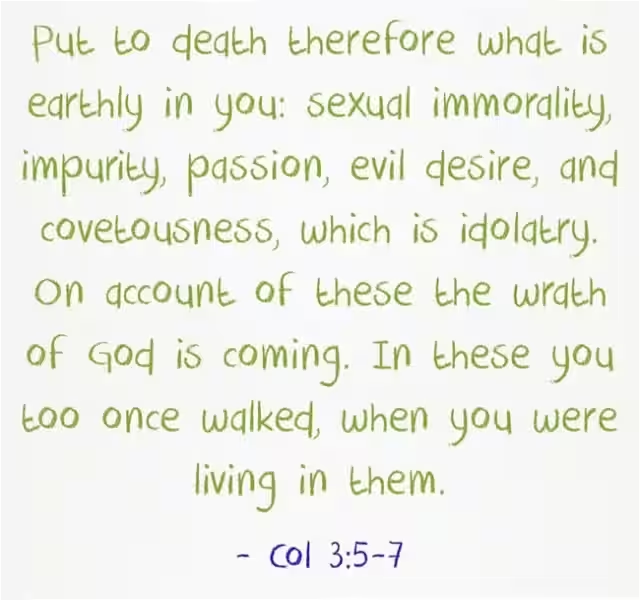
The theological truths about Christ’s supremacy are not meant to remain in the abstract; they have profound practical implications for how we live our daily lives. The latter half of Colossians shifts from theological exposition to ethical instruction, urging believers to live out their faith in tangible ways. A key takeaway from this Colossians summary is the call to put off the old self and put on the new self, reflecting the transformation that has taken place through Christ. This is not about earning salvation, but about responding to the salvation we have received with a transformed life.
This transformation isn’t about achieving perfection overnight. It’s a gradual process of growth and sanctification, guided by the Holy Spirit. Think of it like learning a new skill, such as playing a musical instrument. Initially, it’s awkward and challenging, filled with mistakes. But with consistent practice and dedication, fluency and mastery begin to emerge. Similarly, as we learn to apply Christ’s teachings and principles to our daily routines, our lives begin to reflect His character more and more. This involves intentional effort and a reliance on God’s power.
Renewing Your Mind
One of the most significant areas of transformation Paul addresses is the renewal of our minds. He urges believers to set their minds on things above, rather than on earthly things. This is a crucial aspect of living a Christ-centered life, and it directly stems from the Colossians summary of Christ’s supreme authority. If Christ is indeed Lord of all, then our thoughts, values, and priorities should align with His. This means actively choosing to focus on what is eternal and significant rather than being consumed by fleeting worldly desires.
In today’s world, we are bombarded with messages that constantly pull our attention towards temporary pleasures, material possessions, and superficial achievements. This can easily distract us from our spiritual calling. Paul’s exhortation is a call to intentional mental discipline. It’s about consciously directing our thoughts towards God, His Word, and His purposes. This might involve praying regularly, meditating on Scripture, and engaging in conversations that encourage spiritual growth. It’s about cultivating a heavenly perspective that influences our earthly decisions.
Cultivating Virtues and Relationships
Paul also provides specific instructions for cultivating virtues and navigating relationships within the Christian community and the wider world. He calls for compassion, kindness, humility, gentleness, and patience. These are not merely pleasant personal qualities; they are essential expressions of Christ’s love working through us. This practical aspect of the Colossians summary reminds us that our faith is meant to be lived out in our interactions with others. It’s about demonstrating the reality of our faith through our actions, not just our words.
Consider a community garden. For it to flourish, each plant needs proper care, and the gardeners need to work together, sharing resources and supporting each other. Similarly, the church is meant to be a garden of spiritual growth, where believers cultivate virtues and nurture healthy relationships. This involves practicing forgiveness, offering encouragement, and serving one another. When we actively pursue these virtues, we become more like Christ and contribute to the health and vibrancy of the Christian community. This outward expression of our faith is a powerful testament to God’s transforming power.
Guarding Against Deception: The Enduring Relevance of Colossians
The challenges Paul addressed in Colossae – the subtle erosion of Christ’s supreme authority, the allure of worldly wisdom, and the temptation to supplement God’s grace – are remarkably relevant to our modern context. The Colossians summary serves as a vital warning and a guide for believers today, helping us to discern truth from error and to remain steadfast in our faith. We live in an era of unprecedented information and diverse viewpoints, and it’s easy to be swayed by ideologies that subtly diminish the unique and all-sufficient work of Christ.
The letter is a powerful reminder that true spiritual fulfillment is found in Christ alone, not in a blend of philosophies or a pursuit of self-made righteousness. It encourages us to examine our beliefs and practices to ensure they are firmly anchored in the truth of God’s Word. This involves a constant process of evaluation and redirection.
The Danger of “Jesus Plus”
The temptation Paul warned against, what might be termed “Jesus plus,” continues to manifest in various forms today. This could include the idea that good works automatically earn favor with God, or that special spiritual experiences or knowledge are necessary for deeper faith, or even that worldly wisdom holds the key to true happiness. The Colossians summary unequivocally states that Christ’s sacrifice is complete and His grace is sufficient. There is no need to add anything to His finished work.
Think about a recipe for a perfect cake. The recipe calls for a specific set of ingredients and instructions. If you start adding extra, uninvited items or taking shortcuts, the cake will likely be ruined. In the same way, Paul argues that adding human traditions, philosophical ideas, or rigorous self-discipline to the gospel message compromises its purity and efficacy. It suggests that Christ’s provision is somehow lacking, which is a direct contradiction of His divine nature and finished work.
The Call to Steadfastness
Ultimately, the Epistle to the Colossians is a call to steadfastness and unwavering devotion to Christ. It encourages believers to stand firm in their faith, grounded in the truth of who Christ is and what He has accomplished. This Colossians summary is not just for ancient believers; it’s an urgent message for us today. In a world that constantly seeks to redefine truth and offer alternative paths to fulfillment, holding fast to the unchanging truth of Christ is more critical than ever.
This steadfastness isn’t about rigid adherence to rules for their own sake, but about living a life that reflects our identity in Christ. It’s about experiencing the joy and freedom that come from knowing we are fully accepted and deeply loved by God through Jesus. By embracing the profound truths of Colossians, we can navigate the complexities of our spiritual lives with confidence, clarity, and an unshakeable hope in the Lord. It is a journey of continuous growth, deep connection, and unwavering trust in the One who is truly all – Christ Jesus, our Lord.
Colossians Summary: Frequently Asked Questions
What is the main message of Colossians?
The main message of Colossians is the supremacy and sufficiency of Jesus Christ. The Apostle Paul emphasizes that Christ is the image of the invisible God, the firstborn over all creation, and that in Him, all things hold together. He is the head of the church, the beginning, the firstborn from among the dead, so that in everything he might have the supremacy. The letter also warns against false teachings that would diminish Christ’s role and highlights the believer’s new life in Him, marked by freedom from sin and the indwelling of the Holy Spirit.
The book of Colossians was written by the Apostle Paul, likely while he was imprisoned (possibly in Rome or Ephesus). He addresses the church in Colossae, a city in Asia Minor. It’s believed that Paul had not personally visited Colossae but had heard about the church from Epaphras, who was likely the one who founded the church there. The letter seems to be a response to specific challenges or false teachings that were emerging within the Colossian church, which threatened to undermine the centrality of Christ.
Who were the recipients of the letter to the Colossians?
The letter was addressed to the “saints and faithful brothers in Christ at Colossae” (Colossians 1:2). The church in Colossae was a community of believers composed of both Jews and Gentiles. Epaphras, a fellow worker with Paul, was instrumental in their conversion and spiritual growth.
What are some key themes in Colossians?
Key themes in Colossians include:
* The Supremacy of Christ: Christ is presented as supreme over all creation and the church.
* The Sufficiency of Christ: Believers have everything they need for salvation and spiritual life in Christ alone, and no other spiritual powers or philosophies are necessary.
* The New Life in Christ: Believers are united with Christ in His death and resurrection, signifying a radical transformation and a new way of living.
* Warning Against False Teachings: The letter combats various heretical ideas that were creeping into the church, such as Gnosticism, legalism, and the worship of angels.
* Practical Christian Living: Paul calls believers to live out their new identity in Christ through godly conduct, ethical behavior, and strong relationships.
What kind of false teachings were addressed in Colossians?
While the exact nature of the “Colossian heresy” is debated, it appears to have been a syncretistic blend of Jewish legalism (circumcision, dietary laws, festivals) and speculative philosophy or mysticism. It included elements like:
* Asceticism: Strict self-denial and harsh treatment of the body (Colossians 2:20-23).
* Worship of Angels: Reverence for angelic beings, perhaps seen as intermediaries to God (Colossians 2:18).
* Reliance on Human Wisdom and Tradition: Emphasizing philosophical arguments and ancient traditions over the revelation found in Christ (Colossians 2:8).
* Emphasis on Rituals and Regulations: Focusing on external observances rather than the internal transformation in Christ (Colossians 2:16).
How does Colossians relate to the concept of religion?
Colossians offers a profound perspective on religion by contrasting human attempts to find favor with God through works, rituals, or philosophical systems with the divine provision found in Jesus Christ. The letter argues that genuine “religion” (in the sense of true worship and relationship with God) is not found in human effort or external observances but in the finished work of Christ and our union with Him. It critiques religious practices that focus on outward appearances or intermediaries, asserting that Christ is the sole mediator and the complete answer to humanity’s spiritual needs. The “new life in Christ” experienced by believers is presented as a superior and transformative reality that transcends mere religious adherence.