The Shadow of the Cross: A Night of Profound Doubt
The air hung heavy with a chilling anticipation. It was a night that would forever be etched in the annals of human history, a night where loyalty was tested to its breaking point, and Jesus is denied by Peter, one of his most ardent followers. The events leading up to this moment were a whirlwind of emotion, from the devotion of the Last Supper to the anguish in the Garden of Gethsemane. Yet, as the soldiers apprehended Jesus, a palpable fear gripped the hearts of his disciples. They had witnessed his miracles, heard his profound teachings, and pledged their unwavering allegiance. But in the face of immediate danger and the terrifying reality of Roman authority, their courage faltered.
Peter, often described as impetuous and outspoken, was particularly vocal in his earlier declarations of devotion. He had famously declared, “Lord, I am ready to go with you both to prison and to death!” (Luke 22:33). This bold assertion, made with such conviction, makes his subsequent actions all the more poignant and heartbreaking when Jesus is denied by Peter. It’s a stark reminder that even the strongest vows can crumble under immense pressure. This incident isn’t just a historical footnote; it’s a powerful narrative that resonates deeply with our own human struggles with fear, doubt, and the sometimes-overwhelming desire for self-preservation. We can all, in our own ways, relate to moments where we have failed to stand up for what we believe in, or for those we care about, when the consequences seemed too dire.
The Threefold Denial: A Devastating Reckoning
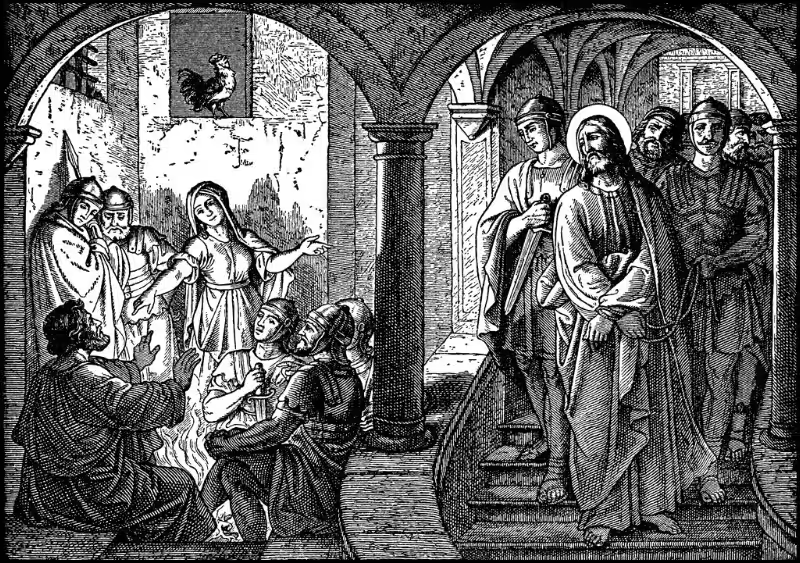
The scene unfolds with Peter, ostracized and fearful, warming himself by a fire in the courtyard of the high priest’s palace. The cold night mirrored the chill that had settled in his soul. As he attempted to blend into the shadows, a servant girl recognized him as one of Jesus’ companions. Her accusation, “You also were with Jesus,” was the first blow. Simon Peter, his voice trembling, denied it. “Woman, I do not know him,” he stammered. This initial denial, born of sheer panic, set in motion a tragic chain of events. The weight of his words must have felt crushing, even as Jesus is denied by Peter for the first time.
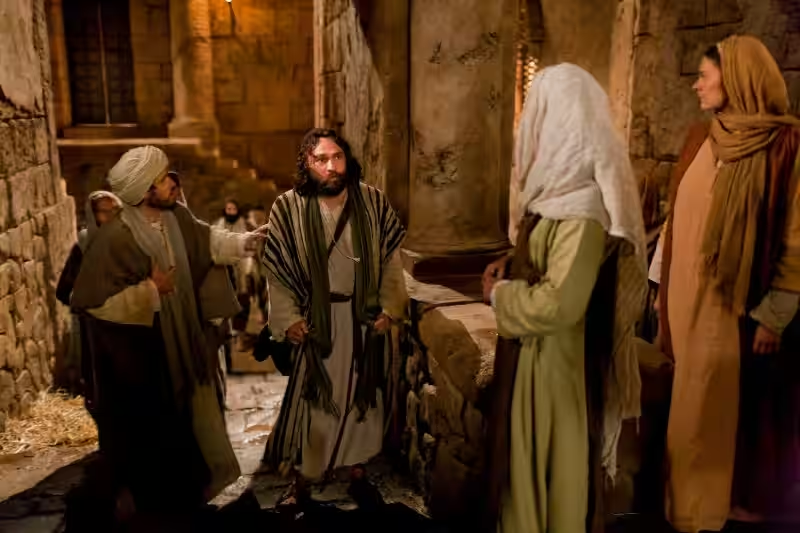
The denial was repeated. Another witness, and then another, pointed fingers, their accusations growing bolder. Each denial from Peter was a step further away from the man he pledged to follow. The third time, when confronted by others who insisted, “Surely you are one of them, for your accent betrays you,” Peter’s denial was more emphatic, accompanied by curses and oaths. It was a desperate attempt to convince not only those around him but, perhaps more importantly, himself, that he was not involved. This threefold denial, mirroring the threefold declaration of love Jesus would later ask of him, stands as a powerful symbol of human frailty and the devastating consequences of succumbing to fear. It illustrates how our attempts to distance ourselves from difficult truths or uncomfortable associations can lead to a deeper spiritual and emotional alienation.
And then, it happened. “Immediately, while he was still speaking, a rooster crowed.” This simple yet profound detail, recorded in all four Gospels, marks the precise moment when the full gravity of Peter’s actions hit him. The crow of the rooster wasn’t just a sound; it was a divine alarm clock, jolting Peter out of his self-deception. It was a stark reminder of Jesus’ own prophecy: “Truly, I tell you, this night, before the rooster crows twice, you will deny me three times” (Mark 14:30). The prophecy had been fulfilled, and the weight of his betrayal, that Jesus is denied by Peter, was now undeniable.
The Bible recounts that at that very moment, “the Lord turned and looked at Peter.” This single, penetrating gaze from Jesus, filled with what we can only imagine as profound sorrow, disappointment, and perhaps even a flicker of understanding, was more devastating than any accusation. It was a look that pierced Peter’s heart, exposing the depth of his failure. This transformative encounter is one of the most moving aspects of the narrative. It shows that even in our deepest moments of failure, when we have utterly let down those who believe in us, there can be a path to redemption. The look from Jesus wasn’t one of condemnation, but of profound empathy, a silent acknowledgment of Peter’s human weakness.
The Aftermath: Tears of Repentance and the Promise of Restoration
The immediate aftermath of the denial was a profound and heart-wrenching grief for Peter. The Gospel of Luke states, “And Peter went out and wept bitterly.” This was not a superficial regret, but a deep, soul-stirring repentance. He had failed his Lord, he had betrayed his vows, and the realization of this failure brought him to his knees in agonizing sorrow. It’s a powerful testament to the fact that genuine remorse is often accompanied by tears, by a visceral expression of pain over our wrongdoings.
This period of deep reflection and sorrow was crucial. It was a time where Peter had to confront the consequences of his fear and his denial. However, this was not the end of his story. The narrative of Peter’s denial is ultimately a story of hope and redemption. Despite his profound failure, Jesus did not abandon him. Even after the resurrection, Jesus sought Peter out. The famous encounter on the shores of the Sea of Galilee, where Jesus asks Peter three times, “Do you love me?”, is a powerful act of restorative love. Each time Peter answers, “Yes, Lord; you know that I love you,” he is given an opportunity to reaffirm his commitment, to undo the sting of his earlier denial.
From Denial to Devotion: A Transformed Heart
The transformation of Peter is one of the most inspiring aspects of the New Testament. The man who, in a moment of fear, declared, “Jesus is denied by Peter,” would go on to become a pillar of the early church. His impetuous nature, once a source of his downfall, was now channeled into bold evangelism and unwavering leadership. He preached with conviction, healed the sick, and ultimately, according to tradition, faced martyrdom for his faith, mirroring the very death he had once feared.
This journey from denial to devotion is incredibly relatable. It teaches us that our failures, however significant, do not have to define us. The story of Peter’s denial is not just about his personal failing; it’s a universal narrative about the human capacity for both weakness and strength, for betrayal and for profound love and loyalty. It assures us that even after we have stumbled, even after we have faltered, there is always the possibility of repentance, forgiveness, and a renewed commitment to our deepest values and beliefs. The story of Peter’s denial reminds us to be compassionate with ourselves and with others when we fall short, for within that falling, there lies the potent seed of rising again.
Frequently Asked Questions: Peter’s Denial of Jesus and Religion
What is the story of Peter’s denial of Jesus?
The Gospels of Matthew, Mark, Luke, and John all recount the event where Jesus’ disciple Peter, after Jesus’ arrest, denies knowing Jesus three times. This occurs when a servant girl and others question Peter’s association with Jesus in the courtyard of the high priest Caiaphas, during Jesus’ trial. Each time Peter is challenged, he vehemently denies Jesus, even swearing he doesn’t know him. Following the third denial, a rooster crows, and Peter remembers Jesus’ prophecy that he would deny him three times before the rooster crowed. Overwhelmed with remorse, Peter weeps.
What does Peter’s denial signify in the context of religion?
Peter’s denial is a pivotal moment in Christian theology and has several significant religious implications:
Human Weakness and Fallibility: It highlights the human frailty and susceptibility to fear and pressure, even among those closest to Jesus. It shows that even devoted followers can falter under duress.
The Importance of Repentance and Forgiveness: Peter’s subsequent weeping and remorse demonstrate a deep sense of guilt and the capacity for repentance. Later, in the Gospel of John, Jesus specifically reinstates Peter, asking him three times if he loves Him, mirroring the three denials and offering a powerful message of forgiveness and restoration.
The Nature of True Discipleship: Peter’s experience suggests that true discipleship isn’t about perfection but about loyalty, faith, and the willingness to overcome one’s failings. His eventual commitment and leadership of the early church underscore this.
The Fulfillment of Prophecy: Jesus’ foreknowledge of Peter’s denial emphasizes his divine nature and the accuracy of his predictions, which are central to Christian belief.
How does Peter’s denial relate to broader religious themes of doubt and faith?
Peter’s denial is a powerful illustration of the universal human experience of doubt and the ongoing struggle between faith and fear. It suggests that doubt is not necessarily the antithesis of faith, but can be a part of the journey. The story emphasizes that faith is not a static state but an active commitment that requires perseverance, especially in the face of adversity. It offers a message of hope that even after significant failings, reconciliation and renewed commitment are possible.
What can individuals learn from Peter’s denial in their own religious practice?
Individuals can learn several lessons from Peter’s denial:
Humility: Recognizing that even the most devoted can err fosters humility and prevents spiritual pride.
Self-Awareness: It encourages introspection about one’s own vulnerabilities and the situations that might test one’s faith.
Compassion: Understanding Peter’s struggle can foster greater compassion for others who may falter in their faith or commitments.
Resilience: The story of Peter’s restoration offers a model for overcoming personal failures and recommitting to one’s beliefs.
The Power of Forgiveness: It underscores the importance of seeking and offering forgiveness, both in a spiritual and interpersonal context.