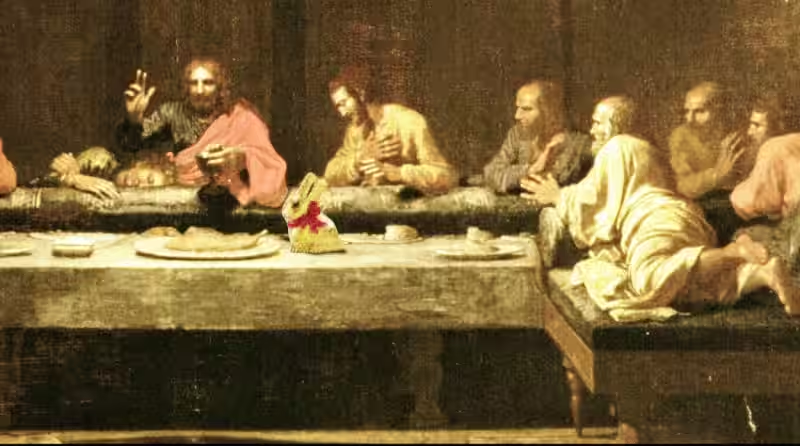
The events surrounding the Last Supper are inextricably linked to the ancient Jewish festival of Passover. More than just a meal, this pivotal moment in Christian tradition carries deep theological weight, resonating through centuries of religious practice and personal faith. Understanding the Passover context is crucial to truly grasp the profound meaning of the Last Supper and its enduring impact on religion.
This article aims to illuminate the multifaceted connections between these two significant events, exploring their historical roots, theological implications, and continuing relevance for believers today. We will delve into the rituals, symbols, and narratives that bind them, offering a comprehensive and relatable perspective. Prepare to uncover the layers of meaning that make the Last Supper a cornerstone of Christian religion, deeply rooted in the ancient observance of Passover.
The Roots of Remembrance: Passover’s Enduring Legacy
To truly appreciate the Last Supper, we must first understand Passover. This is not merely a historical event; it is a living tradition, a commemoration of the Israelites’ liberation from slavery in ancient Egypt. The very name, Passover, signifies God’s “passing over” the homes of the Israelites during the final plague, sparing their firstborn. This miraculous deliverance is the bedrock of Passover observance, a testament to divine intervention and freedom.
The central ritual of Passover is the Seder, a meticulously structured meal that unfolds over several hours. During the Seder, families retell the story of the Exodus, engaging all the senses. They consume specific symbolic foods, such as matzah (unleavened bread), bitter herbs (representing the bitterness of slavery), and charoset (a sweet mixture symbolizing the mortar used by the enslaved Israelites). The Seder is a powerful act of intergenerational transmission, ensuring that the memory of Passover and its liberation narrative remains vibrant for each new generation.
The Passover Meal: A Blueprint for the Last Supper
The Passover meal, or Seder, provides the essential framework for the Last Supper. Jesus, a devout Jew, would have been observing Passover with his disciples in Jerusalem, a tradition he upheld throughout his life. The timing is significant: the Last Supper occurred during the week of Passover, specifically on the night before the crucifixion, which coincided with the Passover sacrifice. This intentionality imbues the meal with profound symbolic resonance.
Consider the elements Jesus shared with his disciples: bread and wine. In the context of Passover, matzah is a staple, representing the haste with which the Israelites left Egypt, unable to wait for their bread to rise. The wine, a symbol of joy and redemption in Jewish tradition, also played a significant role in the Seder. Jesus took these familiar elements of Passover and re-contextualized them, transforming them into potent symbols of his own impending sacrifice and the new covenant he would establish with humanity through his religion. The Passover meal was not just a backdrop; it was the very stage upon which the Last Supper unfolded its revolutionary message.
The Last Supper: A New Covenant Rooted in Ancient Tradition
The Last Supper is often described as Jesus’ final meal with his disciples before his crucifixion. However, its significance extends far beyond a farewell gathering. It was a moment of profound theological revelation, reinterpreting the meaning of Passover and establishing the foundational sacrament of Christian religion: the Eucharist, also known as Holy Communion. Jesus’ actions and words during this meal fundamentally altered the understanding of sacrifice and redemption.
During the Last Supper, Jesus took the matzah, the unleavened bread of Passover, and declared, “This is my body, which is given for you.” This was a radical shift. The Passover lamb was a sacrifice for the sins of the nation, a yearly remembrance. Jesus presented himself as the ultimate, once-for-all Passover sacrifice, the “Lamb of God,” whose body broken would bring about the forgiveness of sins for all time. This new interpretation of Passover sacrifice is central to Christian religion.
Breaking Bread, Sharing Wine: New Meanings for Old Symbols
The Passover Seder traditionally includes four cups of wine, each with its own symbolic meaning, culminating in a cup of anticipation for the coming Messiah. At the Last Supper, Jesus took the cup of wine and declared, “This is my blood of the new covenant, which is shed for many for the forgiveness of sins.” This pronouncement transformed the symbolic wine of Passover into a tangible representation of his blood, signifying a new covenant between God and humanity, established not through adherence to the Mosaic Law alone, but through faith in his atoning sacrifice.
The Last Supper offers a profound example of continuity and transformation within religion. Jesus did not abolish the Passover tradition; he brought it to its ultimate fulfillment. The matzah, once a symbol of hasty liberation from physical bondage, became a symbol of spiritual liberation from the bondage of sin through Christ’s body. The wine, once a symbol of communal joy and future hope, became a symbol of the cleansing power of his blood, ushering in a new era of spiritual redemption. This profound reinterpretation is why the Last Supper remains so central to the Christian faith.
The Eucharist: A Living Memorial of Christ’s Sacrifice
Following the Last Supper, Jesus commanded his followers to “Do this in remembrance of me.” This instruction gave birth to the Christian sacrament of the Eucharist, a central act of worship in virtually all denominations of Christian religion. The Eucharist is not merely a symbolic re-enactment of the Last Supper; for believers, it is a real participation in Christ’s sacrifice and a foretaste of the heavenly feast.
The Passover Seder is a ritual act designed to help participants remember and experience the Exodus. Similarly, the Eucharist is a memorial in the truest sense. It allows believers to remember Christ’s death and resurrection, to experience his presence, and to proclaim his sacrifice until he returns. The elements of bread and wine, so integral to the Passover tradition, continue to serve as the visible means through which believers receive the spiritual benefits of Christ’s redemptive work, making the Last Supper a perpetual celebration of God’s love and religion. The echoes of Passover in the Eucharist are undeniable and deeply significant.
Connecting Past, Present, and Future: The Enduring Power of the Last Supper and Passover
The Last Supper, viewed through the lens of Passover, is a powerful reminder that religion is not static. It is a dynamic unfolding of God’s redemptive plan. Passover celebrates a historical liberation, an event of immense importance that freed a people from physical oppression. The Last Supper, by incorporating and transforming Passover symbols, celebrates a spiritual liberation, freeing humanity from the bondage of sin and death through Christ’s sacrifice.
For Christians, celebrating the Eucharist is a way of participating in both the historical liberation of Passover and the ultimate liberation brought about by Jesus. It is a commemoration that connects believers to their spiritual ancestors, to the very origins of their faith, and to the promise of future redemption. The Last Supper and Passover are not separate events but interwoven threads in the grand tapestry of religion, reminding us of God’s consistent faithfulness and his desire for freedom and reconciliation for all of humanity. The Passover tradition provided the fertile ground from which the profound meaning of the Last Supper sprang forth, forever shaping the landscape of religion.
While the Gospels place the Last Supper around the time of Passover and describe elements that resemble a Seder (like partaking in wine and bread), there is scholarly debate on whether it was a formal Passover Seder as understood by Jewish tradition. Some scholars argue it was, while others suggest it was a meal that occurred just before the official Passover feast, or a meal with Passover themes but not a strict observance. The timing and specific rituals are points of discussion.
What is the religious significance of the Last Supper?
For Christians, the Last Supper is profoundly significant as it is understood as the institution of the Eucharist (also known as Holy Communion or the Lord’s Supper). Jesus shared bread and wine with his disciples, identifying them as his body and blood, and commanded them to “do this in remembrance of me.” This meal symbolizes his sacrifice for the sins of humanity and is a central sacrament in most Christian denominations, representing communion with Christ and with one another.
How does the Last Supper relate to the Passover festival?
The Last Supper took place during the Jewish festival of Passover, which commemorates the liberation of the Israelites from slavery in ancient Egypt. Jesus, in this context, is often seen by Christians as the lamb of God whose sacrifice brings about a new liberation – from sin and death. The breaking of bread and sharing of wine by Jesus are interpreted as a fulfillment of the Passover narrative, establishing a new covenant through his sacrificial death.