The Christian faith, in its intricate tapestry of belief and practice, offers a profound pathway for understanding the human condition, particularly through the lens of sorrowful mysteries reflection. These moments in the life of Jesus Christ, marked by intense suffering and sacrifice, are not mere historical accounts but vibrant, living meditations that invite deep personal engagement. They speak to the universal experience of pain, loss, and ultimately, redemption. For many believers, delving into the sorrowful mysteries is not an exercise in morbid fascination, but a powerful spiritual practice that illuminates the depths of God’s love and the resilience of the human spirit.
This journey into sorrow, though challenging, is ultimately one of hope and transformation. It requires us to confront uncomfortable truths about our own lives and the world around us, while simultaneously offering a beacon of light in our darkest hours. By allowing ourselves to be touched by the sorrow of Christ, we can begin to understand our own sorrows with greater clarity and find solace in the knowledge that we are not alone in our suffering. This article aims to guide you through a meaningful reflection on these pivotal moments, fostering a deeper connection with your faith and a more profound understanding of yourself.
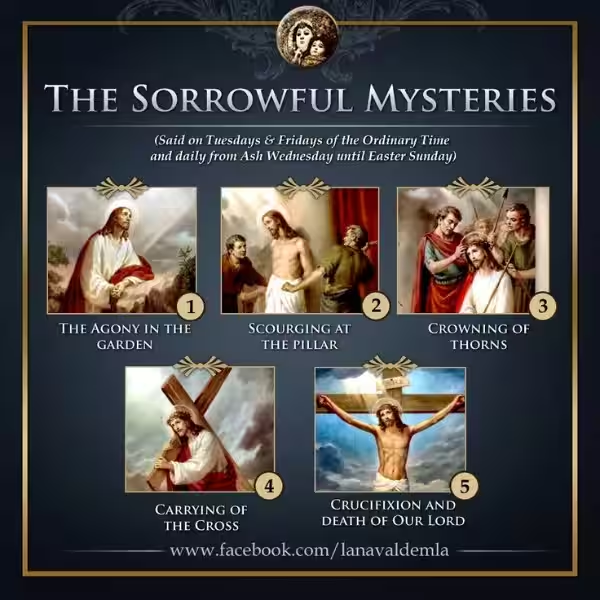
The Agony in the Garden: Bearing the Weight of the World
The first of the sorrowful mysteries, the Agony in the Garden of Gethsemane, presents us with a raw and vulnerable Christ. Imagine the scene: the cool night air, the scent of olive trees, and Jesus, overwhelmed by an immense spiritual distress. He withdraws from his closest disciples, taking only Peter, James, and John with him, to grapple with the immense burden he is about to bear. Here, we witness Jesus’ humanity in its most profound expression as he prays, “Father, if it is possible, let this cup pass from me; yet not my will, but yours be done.” This prayer is not one of weakness, but of supreme obedience and trust, even in the face of unimaginable suffering.
This moment offers a powerful parallel to our own lives. We too experience times of great anguish, moments where the weight of responsibility, loss, or fear feels almost unbearable. The Agony in the Garden reminds us that it is okay to feel this pain, to express our fears to God, and to ultimately surrender our will to a higher purpose, trusting that there is a divine plan. It teaches us that true strength lies not in avoiding suffering, but in facing it with faith and acceptance, knowing that even in our most desperate hours, God is present. Consider a time you felt overwhelmed; how did you, or how could you have, found solace in prayer and surrender?
The Scourging at the Pillar: The Brutality of Injustice
The scourging at the pillar is a visceral depiction of physical torment and the injustice of human cruelty. Jesus, already betrayed and arrested, is subjected to a brutal beating, his back laid open by the lash. This event is not just about the physical pain endured, but about the dehumanization that occurs when individuals are stripped of their dignity and subjected to arbitrary violence. It forces us to confront the uncomfortable reality of suffering caused by the malice and indifference of others. This mystery challenges us to reflect on the injustices we witness in the world today, from large-scale conflicts to personal acts of unkindness.
Reflecting on the scourging compels us to ask ourselves: How do we respond to injustice? Do we turn a blind eye, or do we find the courage to speak out, to offer compassion, and to work for a more just and humane world? Jesus, in his silent endurance of this horrific punishment, demonstrates a profound forgiveness and love even for those who inflict pain. This mystery calls us to emulate that forgiveness, to treat those who have wronged us, and indeed all of humanity, with empathy and understanding, even when it is incredibly difficult. It’s a stark reminder that even in the face of immense suffering, the capacity for love and compassion can prevail.
The Crowning with Thorns: The Mockery of True Kingship
The crowning with thorns presents a perverse and ironic twist on the concept of kingship. Jesus, the true King of Kings, is mocked and humiliated. A crown of thorns, a symbol of pain and suffering, is forced upon his head, and he is dressed in a purple robe, a mockery of royal attire, while soldiers spit on him and hail him as “King of the Jews.” This mystery highlights the discrepancy between worldly power and divine truth. The world often values earthly authority, wealth, and recognition, yet Jesus’ true kingdom is one of love, humility, and service.
This sorrowful mystery invites us to examine our own values. What do we truly consider kingly? Are we chasing after superficial accolades and worldly power, or are we striving to embody the virtues of Christ – compassion, humility, and service? The crowning with thorns reminds us that true royalty is found not in outward displays of dominance, but in the inner strength of character and the selfless love we extend to others. It encourages us to reject the world’s definition of success and to embrace a spiritual kingship that finds its fulfillment in serving God and our neighbor.
The Carrying of the Cross is perhaps one of the most universally recognizable sorrowful mysteries. Jesus, weakened and bleeding, is forced to carry the heavy wooden cross through the streets of Jerusalem, a painful journey that culminates in his crucifixion. This mystery is a powerful symbol of the burden of sin that Jesus willingly took upon himself, not just his own sins, but the sins of all humanity. The weight of the cross represents the collective guilt and failings of humankind, the things that separate us from God and from one another.
This reflection is deeply personal. What burdens are we carrying that weigh us down? Are they the consequences of our own past mistakes, the hurts we have inflicted, or the pain inflicted upon us? The sorrowful mysteries of the cross urge us to acknowledge these burdens, to confess our failings, and to find reconciliation and healing through Christ’s sacrifice. It’s a call to embrace our own cross, to accept the challenges and sufferings of life, and to find strength in knowing that we are not alone in our struggles. Jesus’ journey with the cross is a testament to the power of sacrifice and redemption, offering us hope for a new beginning.
The Crucifixion: The Ultimate Act of Love
The Crucifixion is the culmination of Jesus’ earthly suffering, the ultimate sacrifice and the most profound expression of divine love. Nailed to the cross, Jesus endures unimaginable pain, yet even in his final moments, he offers words of forgiveness: “Father, forgive them, for they know not what they do.” This act of unconditional love and boundless mercy is the cornerstone of the Christian faith. It is through this suffering and death that Jesus redeems humanity, bridging the gap between God and humankind.
The sorrowful mystery of the Crucifixion is not an endpoint, but a gateway to resurrection and new life. It teaches us that even in the face of death and despair, there is always the promise of hope. It calls us to live lives worthy of such immense sacrifice, to love one another as Christ has loved us, and to find meaning and purpose in the midst of our own suffering. By reflecting on the Crucifixion, we are reminded of the immeasurable value of every human life and the transformative power of God’s grace. This profound act of love is the ultimate source of solace, offering us peace in a world often filled with turmoil.
The Sorrowful Mysteries are a set of five meditations within the Rosary that focus on the suffering and death of Jesus Christ. They are: the Agony in the Garden, the Scourging at the Pillar, the Crowning with Thorns, the Carrying of the Cross, and the Crucifixion.
What is the purpose of reflecting on the Sorrowful Mysteries?
Reflecting on the Sorrowful Mysteries helps us to meditate on Jesus’ immense love for humanity, His sacrifice, and the profound redemptive power of His suffering. It encourages us to grow in empathy, humility, and a deeper understanding of the cost of our salvation.
How can I pray the Sorrowful Mysteries?
You can pray the Sorrowful Mysteries by reciting the Rosary. This involves praying the Our Father, Hail Mary (ten times for each mystery), and the Glory Be after meditating on each of the five Sorrowful Mysteries.
When are the Sorrowful Mysteries typically prayed?
The Sorrowful Mysteries are traditionally prayed on Fridays during Lent and on Tuesdays.
How does reflecting on sorrow connect with faith and religion?
In many religions, particularly Christianity, reflecting on sorrow, especially the suffering of Christ, is a central aspect of faith. It acknowledges the reality of suffering in the world and the belief that through suffering, redemption and spiritual growth can be achieved. It fosters a deeper connection to the divine by understanding sacrifice and love.
What is the theological significance of Jesus’ suffering?
Theological interpretations vary, but generally, Jesus’ suffering and death are seen as an act of love and atonement for the sins of humanity. It is believed to have opened the way to salvation, reconciliation with God, and eternal life for believers.
Can someone who is not Catholic pray the Sorrowful Mysteries?
While the Rosary is a Catholic devotion, the act of meditating on the suffering and sacrifice of Jesus can be a meaningful spiritual exercise for individuals of other Christian denominations or even those exploring their faith, provided they find value in the contemplative aspects.
How can I find strength when reflecting on painful events in the Sorrowful Mysteries?
Focus on the love and purpose behind Jesus’ suffering. Remember that the ultimate outcome of His Passion was resurrection and victory over sin and death. Prayer, scripture, and seeking spiritual guidance can also provide comfort and strength during these reflections.