Jerusalem. The very name conjures images of ancient stones, hushed prayers, and a history so profound it has shaped civilizations. For billions around the globe, this city is not just a geographical location but the spiritual epicenter of Christianity. It is here, within its hallowed walls, that the central narratives of the Christian faith unfolded, forever imprinting its indelible mark on the world. Understanding Jerusalem Christianity is not merely an academic pursuit; it’s an immersion into the very DNA of a religion that continues to inspire and guide millions.
This article delves into the multifaceted world of Jerusalem Christianity, exploring its historical roots, its theological impact, and its enduring relevance in the modern era. We will journey through the sacred sites, the theological developments, and the lived experiences of Christians in Jerusalem, seeking to provide a comprehensive and relatable understanding of this vital aspect of global religion.
The story of Jerusalem Christianity is inextricably linked to the life, death, and resurrection of Jesus of Nazareth. His ministry, largely centered in Galilee, culminated in his triumphant entry into Jerusalem, his crucifixion just outside its walls, and the foundational event of the resurrection, profoundly impacting his followers and the nascent movement they were about to ignite. The disciples, initially a small Jewish sect, found themselves at the heart of a transformative spiritual awakening in Jerusalem.
Following Jesus’ ascension, the early Christian community was born in Jerusalem. It was in the Upper Room, a place now venerated by Christians, that the disciples received the Holy Spirit at Pentecost, an event described in the Book of Acts as the catalyst for the rapid spread of the Gospel. This initial period, often referred to as primitive Christianity, was characterized by communal living, prayer, and the sharing of the teachings of Jesus. The vibrancy and unwavering commitment of these first Jerusalem Christians laid the groundwork for what would become a global religion.
The Early Church and the Spread of the Gospel
The early church in Jerusalem was a tight-knit community, deeply rooted in Jewish tradition yet increasingly distinct by its belief in Jesus as the Messiah. They continued to worship at the Temple, a testament to their Jewish heritage, while also gathering in homes for fellowship and to break bread in remembrance of Jesus. This dual identity, while initially a point of connection, would later become a source of tension as Christianity began to attract a significant number of Gentile converts.
The persecution that the early Christians faced, often instigated by both Jewish authorities and the Roman Empire, paradoxically fueled their expansion. Figures like Stephen, the first martyr, and Paul, who transitioned from persecutor to apostle, played pivotal roles in carrying the message of Jesus beyond Jerusalem. The city remained their spiritual anchor, the source from which their evangelistic efforts radiated outwards, demonstrating the remarkable resilience and transformative power of their faith despite immense adversity.
Theological Pillars Forged in Jerusalem
The foundational doctrines of Christianity were not developed in abstract scholarly circles but were born out of the lived experiences and intense theological debates that swirled around Jerusalem. The very essence of Christian theology – the nature of Jesus, the significance of his sacrifice, the promise of salvation, and the role of the Holy Spirit – was hammered out in the crucible of this ancient city.
The resurrection of Jesus is, without question, the cornerstone of Jerusalem Christianity. It is this event that validated Jesus’ claims, empowered his followers, and offered the promise of eternal life. The apostles, in their sermons and letters, constantly returned to this central tenet, emphasizing its transformative power and its implications for all humanity. The resurrection is not just a historical event; it’s a theological declaration that continues to resonate deeply within Christian belief systems.
Key Doctrines and Their Jerusalem Connection
Several core Christian doctrines have direct and profound connections to Jerusalem. The Incarnation, the belief that God became human in the person of Jesus, finds its genesis in the events surrounding his birth and life in the region. The Atonement, the concept that Jesus’ death on the cross paid the penalty for humanity’s sins, is directly tied to the place of his crucifixion, Golgotha, located just outside ancient Jerusalem.
Furthermore, the Sacraments of Baptism and Communion (the Eucharist) are deeply rooted in the practices initiated by Jesus in Jerusalem. Baptism, symbolizing death and resurrection with Christ, echoes the ritual washings prevalent in Jewish tradition and the cleansing power of the Holy Spirit at Pentecost. Communion, the reenactment of the Last Supper, is a sacred meal instituted by Jesus in Jerusalem before his passion, serving as a memorial and a foretaste of the Kingdom of God.
Jerusalem as a Pilgrimage Destination: A Living Connection
For centuries, Jerusalem has been a paramount destination for Christian pilgrimage. To walk the streets where Jesus walked, to stand in the places where he taught, suffered, and rose again, is to forge a tangible connection to the very origins of their faith. This journey is more than just tourism; it’s a deeply spiritual experience that enriches understanding and deepens devotion.
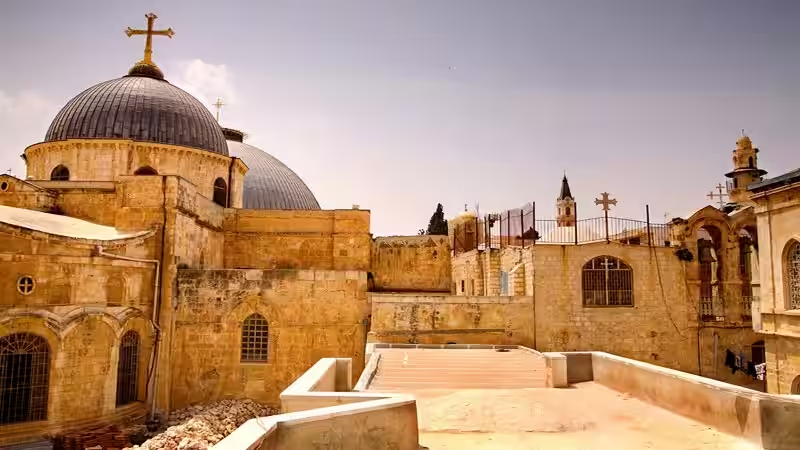
Sites like the Church of the Holy Sepulchre, believed to encompass both Golgotha and Jesus’ tomb, draw millions of pilgrims annually. The Via Dolorosa, the traditional path Jesus took to his crucifixion, offers a poignant retracing of his final steps. These physical locations serve as powerful reminders of the events that underpin Christian belief, making the abstract tenets of faith tangible and emotionally resonant for believers from all corners of the globe.
The Experience of Pilgrimage and its Impact
The experience of pilgrimage to Jerusalem is often described as life-altering. For many, it’s a moment of profound spiritual renewal, a time to reflect on their faith journey and recommit themselves to Christian principles. The shared experience with fellow pilgrims from diverse backgrounds fosters a sense of global Christian unity, reminding individuals that they are part of a vast and interconnected spiritual family.
Beyond the iconic sites, the very atmosphere of Jerusalem—the ancient stones, the prayers echoing from churches, the vibrant mix of cultures—contributes to this unique spiritual immersion. It’s an opportunity to witness firsthand the living history of Jerusalem Christianity, to see how the faith continues to thrive and be expressed in this sacred land, offering a palpable link to the past and a beacon of hope for the future.
Contemporary Jerusalem Christianity: Challenges and Resilience
In the 21st century, Jerusalem Christianity faces a complex landscape of political, social, and demographic challenges. The city’s status as a holy site for three major religions means that interfaith relations are a constant and delicate dance. Christian communities, though historically significant, represent a minority within Jerusalem, navigating the complexities of coexistence and seeking to preserve their unique heritage.
Despite these challenges, Christianity in Jerusalem remains vibrant and resilient. Churches of various denominations continue to operate, serving both local congregations and the influx of pilgrims. Institutions of learning, healthcare, and social services, established by Christian organizations, continue to play a vital role in the city’s fabric. The enduring spirit of Jerusalem Christianity is evident in the dedication of its adherents and their commitment to maintaining their spiritual presence in this pivotal location.
Navigating a Multifaceted City
The Christian population in Jerusalem is diverse, comprising various denominations including Orthodox, Catholic, Protestant, and Armenian churches, each with its own traditions and historical ties to the city. This diversity enriches the Christian landscape but also necessitates ongoing dialogue and cooperation. The ongoing political situation in the region inevitably impacts the lives of all its inhabitants, including Christians, who often find themselves caught in the crosscurrents of regional tensions.
However, the focus remains on the spiritual mission. Christian leaders and communities in Jerusalem are dedicated to fostering peace, promoting understanding, and continuing their ministries of service and evangelism. Their presence is a testament to the enduring power of faith and the profound significance of Jerusalem as the birthplace and spiritual heart of their religion, a place where history, faith, and the future converge.
Frequently Asked Questions about Jerusalem and Christianity
What is the significance of Jerusalem in Christianity?
Jerusalem is the central site of Christian pilgrimage and theology, revered as the city where Jesus Christ lived, taught, was crucified, and resurrected. It holds immense spiritual importance for Christians worldwide.
What are the key Christian holy sites in Jerusalem?
Prominent Christian holy sites include the Church of the Holy Sepulchre (believed to be the site of Jesus’ crucifixion and burial), the Mount of Olives (where Jesus prayed and taught), the Garden of Gethsemane, the Via Dolorosa (the path Jesus walked to his crucifixion), and the Upper Room (believed to be the site of the Last Supper).
How has Jerusalem’s Christian population evolved over time?
Historically, Jerusalem has had a significant Christian presence. While the proportion has fluctuated due to various historical events and political circumstances, there remains a vibrant Christian community in the city today, though it is a minority.
What is the relationship between the different Christian denominations in Jerusalem?
Jerusalem is home to numerous Christian denominations, including Roman Catholic, Greek Orthodox, Armenian Orthodox, Coptic Orthodox, Syrian Orthodox, Ethiopian Orthodox, and Protestant churches. These denominations often share holy sites and have varying degrees of cooperation and historical complexities in their relations.
What is the role of the various Christian churches in Jerusalem today?
Christian churches in Jerusalem continue to play a vital role in religious life, education, social services, and cultural preservation. They serve their respective communities and welcome pilgrims from around the globe.
Are there any specific Christian traditions unique to Jerusalem?
Jerusalem is the focal point for many core Christian traditions, including the celebration of major feasts like Easter and Christmas. Specific traditions also exist related to the veneration of relics, processions along the Via Dolorosa, and the ongoing stewardship of its holy sites by various denominations.
What challenges do Christians face in Jerusalem?
Christians in Jerusalem, like other minority groups, can face challenges related to political instability, emigration, and maintaining their presence in the face of demographic shifts. Efforts are often made by religious and community leaders to address these issues.