Jerusalem. The very name resonates with a history so profound, so layered, it feels etched into the very bedrock of the earth. For millennia, this sacred city has been a beacon, a battleground, and a spiritual homeland for billions. Within its ancient walls, the concept of the Jerusalem Third Temple is not merely a historical footnote or a distant prophecy; it’s a vibrant, living aspiration that continues to shape religious thought, political discourse, and the hopes of countless individuals across the globe. Understanding the significance of the Jerusalem Third Temple requires delving into the rich tapestry of religious tradition, the complexities of history, and the profound human yearning for restored divine connection.
The idea of a Third Temple is deeply interwoven with the narrative of the Jewish people. Following the destruction of the First Temple by the Babylonians in 586 BCE and the Second Temple by the Romans in 70 CE, the Jewish people experienced periods of exile and diaspora. Yet, throughout these challenging times, the memory of the Temples and the fervent hope for their rebuilding remained a central tenet of their faith. This enduring aspiration for the Jerusalem Third Temple became a powerful force, unifying a dispersed people and fueling their spiritual resolve. It’s a dream passed down through generations, a tangible symbol of national restoration and a profound expression of faith in divine providence.
The Temple in Jerusalem was more than just a building; it was considered the dwelling place of God on Earth. In ancient Judaism, it served as the central point of worship, the site of sacrifices, and the location where the divine presence, the Shekhinah, was believed to reside most strongly. Imagine, for a moment, a time when the entire community, from kings to commoners, would journey to this magnificent edifice for pilgrimage, bringing their offerings and pouring out their hearts in prayer. This collective experience fostered an unparalleled sense of unity and spiritual focus. The Jerusalem Third Temple represents the ultimate realization of this sacred ideal, a return to a state of unhindered communion with the divine.
The theological implications of the Temple are vast. It provided a tangible link between the earthly and the celestial, a conduit for divine blessing and atonement. The rituals performed within its precincts were meticulously prescribed, each carrying profound symbolic meaning. For instance, the High Priest’s annual entry into the Holy of Holies was the single most sacred event, a moment of immense spiritual weight for the entire nation. The absence of this central sanctuary has been deeply felt, and the anticipation of a Jerusalem Third Temple is inextricably linked to a longing for the restoration of these ancient sacred practices and the full expression of divine covenant.
The Whispers of Prophecy: Visions of a Future Sanctuary
Throughout religious texts, particularly within Judaism and Christianity, there are numerous prophecies that speak of a future Temple in Jerusalem. These prophetic visions are not always literal descriptions but often carry deep symbolic and spiritual weight, pointing towards a future era of peace, justice, and heightened divine presence. For many, these prophecies offer a blueprint for redemption and a promise of a renewed covenant between God and humanity. These ancient words have resonated through the ages, inspiring hope and guiding theological interpretations.
The concept of a Jerusalem Third Temple often appears in eschatological discussions, the study of end-times events. Different religious traditions interpret these prophecies in diverse ways, leading to a spectrum of beliefs and expectations. Some see the Third Temple as a physical structure built by human hands, while others view it as a more spiritual or metaphorical edifice, representing a state of perfected faith and universal harmony. Regardless of the specific interpretation, the underlying theme is a powerful one: a future time when divine presence will be fully manifest in Jerusalem.
Christian Perspectives: A Divine Fulfillment in the Third Temple
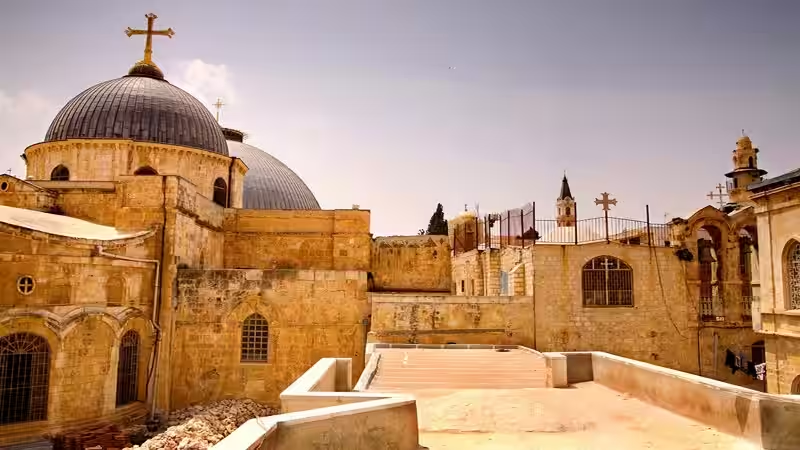
Within Christianity, the concept of the Jerusalem Third Temple also holds significant theological weight, though often interpreted through a different lens. Many Christian scholars and believers see the prophecies concerning a future Temple as being fulfilled in Jesus Christ and his followers. The New Testament speaks of believers themselves as a “temple of the Holy Spirit,” a living sanctuary where God resides. This perspective often views the physical rebuilding of a literal temple in Jerusalem as less central than the spiritual reality of Christ’s redemptive work and the ongoing presence of the Holy Spirit within the Church.
However, this does not negate the significance of Jerusalem itself within Christian theology. The city remains a pivotal site of biblical history and a place of pilgrimage for Christians worldwide. Some Christian traditions do maintain an expectation of a future physical Temple in Jerusalem, often linking it to events leading up to the Second Coming of Christ. This can manifest as a belief that a future Jerusalem Third Temple will have a role to play in the unfolding of divine plans, perhaps as a center of worship and testimony in the final days. The nuanced interpretations highlight the enduring spiritual power associated with the idea of God’s presence in Jerusalem.
Islamic Views: Reverence for Jerusalem and the Temple Mount
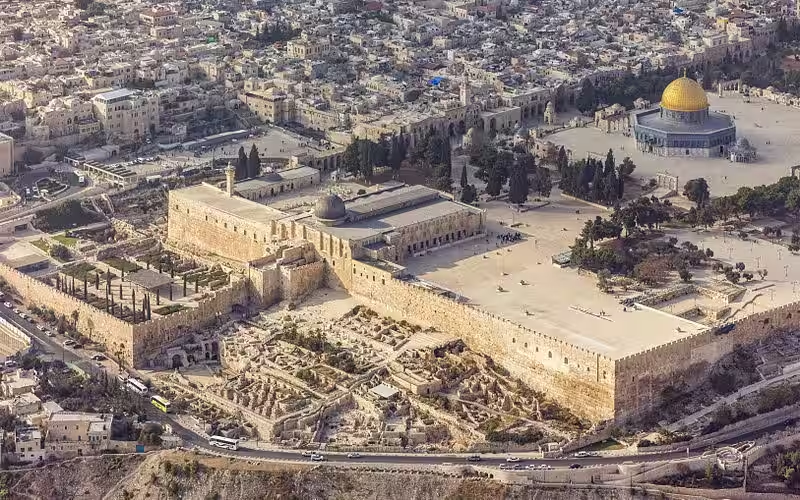
Islam, the third Abrahamic faith to hold Jerusalem as a holy city, also has a complex relationship with the concept of a Temple on the Temple Mount. While Islam does not speak of a “Third Temple” in the same way as Judaism, the Temple Mount (Haram al-Sharif) is considered the third holiest site in Islam, after Mecca and Medina. It is the location of the Al-Aqsa Mosque and the Dome of the Rock, structures built centuries after the destruction of the Second Temple. Islamic tradition reveres the Prophet Muhammad’s miraculous night journey and ascension to heaven, which is believed to have originated from this sacred ground.
The historical continuity of worship at the site is paramount in Islamic understanding. While acknowledging the Jewish history of the Temple on the Mount, contemporary Islamic perspectives often focus on the structures that stand there today as the culmination of divine revelation at that location. The idea of a Jerusalem Third Temple in a purely Jewish sense is often viewed with caution or opposition due to the complex political and religious sensitivities surrounding the site. Nevertheless, the deep reverence for Jerusalem and its holy sites underscores the enduring spiritual significance of this ancient city for a vast segment of the global population.
The Modern Echo: Politics, Faith, and the Quest for Peace
In contemporary times, the notion of a Jerusalem Third Temple has become deeply intertwined with the modern political landscape, particularly concerning the Israeli-Palestinian conflict. For many religious Jews, the rebuilding of the Temple is seen as a divinely ordained imperative, a crucial step towards national redemption and the ushering in of a messianic era. This aspiration fuels significant religious and political movements advocating for its construction. The desire to worship at the precise location where the previous Temples stood is a powerful driving force.
Conversely, the potential construction of a Jerusalem Third Temple is a source of immense concern and opposition for Palestinians and many Muslims, given the existing Islamic holy sites on the Temple Mount. This has made the issue of the Temple Mount one of the most sensitive and intractable aspects of the conflict. Finding a path towards peace and coexistence in Jerusalem requires navigating these deeply held religious beliefs and historical narratives with utmost care, recognizing that the quest for a Jerusalem Third Temple is not solely a religious endeavor but also a deeply political one with profound implications for regional stability.
The pursuit of a Jerusalem Third Temple is a testament to the enduring power of religious faith and the profound human need for connection to the divine. It is a concept that has transcended centuries, influencing the spiritual lives of millions and continuing to shape the destiny of a city that remains at the heart of global religious consciousness. Whether viewed as a literal structure, a spiritual state, or a future promise, the Jerusalem Third Temple continues to be a powerful symbol of hope, redemption, and the eternal quest for a closer relationship with the sacred.
Frequently Asked Questions: Jerusalem, Third Temple, and Religion
What is the significance of the Third Temple in Judaism?
The Third Temple is envisioned as a future rebuilt Temple on the Temple Mount in Jerusalem. It holds immense religious significance for many Jews, representing a period of messianic redemption, national unity, and a closer connection to God. It is believed to be the site of the Holy of Holies, where the High Priest would enter once a year on Yom Kippur, and the location for sacrifices and other temple rituals.
What are the main religious perspectives on the Third Temple?
Most Orthodox Jewish streams of Judaism anticipate and pray for the rebuilding of the Third Temple as a literal structure. Reform Judaism and Conservative Judaism generally interpret the concept of the Temple more metaphorically, focusing on the spiritual presence of God and the continuation of Jewish law and observance without a physical edifice. Other religious traditions, including some Christian denominations, also have their own interpretations and expectations regarding a future Temple in Jerusalem, often tied to their eschatological beliefs.
What are the historical and archaeological considerations regarding the Third Temple?
Historically, the First Temple (Solomon’s Temple) and the Second Temple (Herod’s Temple) stood on the Temple Mount in Jerusalem before their destruction. Archaeological evidence from these periods provides insights into their structure and function. The location of these past Temples is central to the discussion of a future Third Temple, as it is universally believed by those who anticipate its rebuilding to be on the same sacred site.
What are the geopolitical implications of the Third Temple concept?
The idea of rebuilding a Third Temple is a deeply sensitive and complex issue due to its location on the Temple Mount, a site holy to both Judaism and Islam (known to Muslims as Haram al-Sharif). This has significant geopolitical implications, as any attempt to build a Temple would likely involve major political and religious conflicts, impacting Israeli-Palestinian relations and broader regional stability.
Is there a specific religious requirement for the Third Temple to be built by humans?
In Jewish tradition, there are varying views. Some believe the Third Temple will be built by human hands, possibly by the Messiah. Others hold the belief that it will be divinely revealed or built directly by God. The emphasis for many remains on the spiritual sanctity of the site and the eventual restoration of divine presence.