Italy, a land where history whispers from every cobblestone and art breathes from every fresco, is undeniably synonymous with its magnificent churches. These hallowed spaces are far more than just places of worship; they are living museums, repositories of centuries of faith, artistic genius, and architectural innovation. For many, a trip to Italy is a pilgrimage, not just in a spiritual sense, but as an exploration of the very foundations of Western civilization, with churches in Italy serving as the cornerstones of this profound experience.
Beyond their religious significance, these iconic Italian churches offer a captivating glimpse into the evolution of human creativity and devotion. From the grandeur of Romanesque basilicas to the soaring ambition of Gothic cathedrals and the opulent elegance of Baroque masterpieces, each structure tells a story. Whether you are a devout believer, an art enthusiast, a history buff, or simply a curious traveler, the spiritual and artistic tapestry woven by churches in Italy promises an unforgettable journey.
Religion, particularly Roman Catholicism, has been an indelible force shaping the cultural and social fabric of Italy for millennia. The presence of the Vatican City within Rome, the spiritual heart of the Catholic world, further underscores the profound and pervasive influence of faith in the Italian psyche. This is not a distant, abstract concept; it is woven into the daily lives of many Italians, from local festivals celebrating patron saints to the ubiquitous presence of crucifixes in homes and public spaces. Religion in Italy is a vibrant, living entity.
The profound connection between the Italian people and their faith is vividly reflected in the sheer number and diversity of churches in Italy. These structures, scattered across every town and village, from bustling metropolises to remote hamlets, are more than just architectural marvels. They are community hubs, places of solace, and tangible expressions of a deep-seated spiritual heritage. The act of attending mass, participating in religious processions, or simply finding quiet contemplation within the
walls of a historic Italian church remains a significant part of many Italians’ lives, demonstrating the enduring power of religion.
A Spectrum of Architectural Styles: A Visual History Lesson
The churches of Italy present an extraordinary panorama of architectural evolution, each era leaving its distinct mark. The early Christian basilicas, with their simple, longitudinal layouts and often richly decorated interiors, laid the groundwork for what was to come. Think of the ancient Santa Maria Maggiore in Rome, a testament to early Christian artistry and devotion. These structures, built on Roman models, were designed to accommodate large congregations and often featured stunning mosaics that told biblical stories, serving as visual sermons for a largely illiterate populace.
As centuries progressed, so did architectural ambition and artistic expression. The Romanesque period brought robust, solid structures with rounded arches and barrel vaults, creating a sense of permanence and strength. Later, the Gothic era ushered in a revolution of height and light, characterized by pointed arches, ribbed vaults, and flying buttresses, allowing for soaring ceilings and vast, stained-glass windows that bathed interiors in ethereal light. Finally, the Baroque period introduced a theatricality and grandeur, with opulent decorations, dramatic lighting, and elaborate facades designed to inspire awe and wonder. Exploring churches in Italy is akin to walking through a living textbook of architectural history, with each edifice a chapter in itself.
The foundations of Christianity in Italy predate even the Roman Empire’s eventual adoption of the faith. Early Christian communities, often meeting in private homes or catacombs, gradually established their own places of worship. As Christianity gained acceptance and eventually became the state religion, grand basilicas began to rise. These early churches in Italy were not just places of worship; they were centers of community life and often built upon sites of martyrdom or significant religious events, imbuing them with deep historical and spiritual resonance.
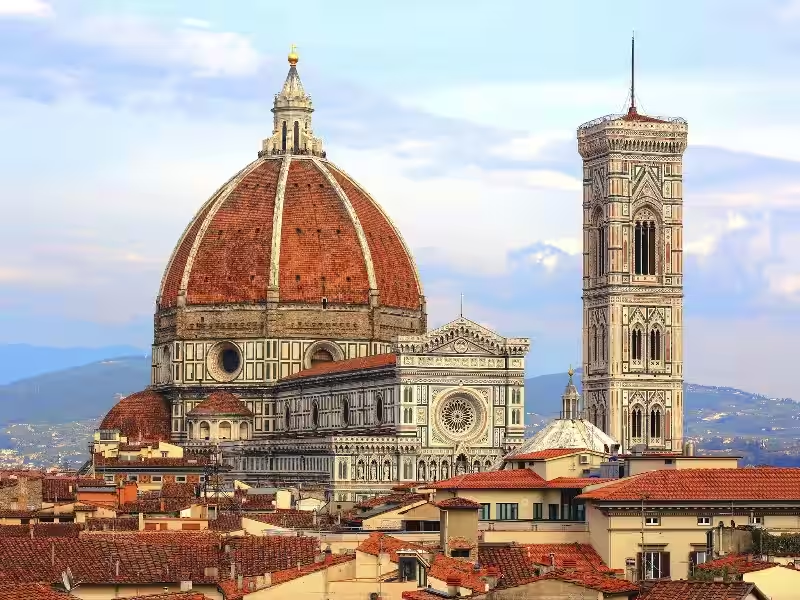
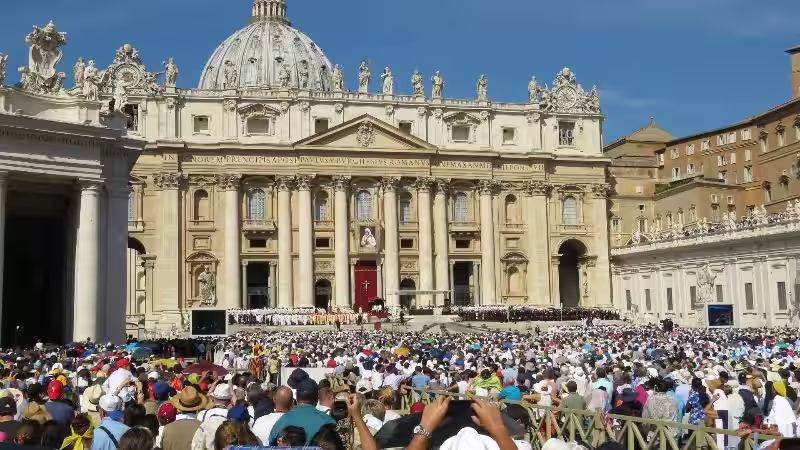
The Renaissance, a period of unparalleled artistic and intellectual flourishing, saw churches in Italy transformed into breathtaking showcases of human genius. Architects like Brunelleschi, Bramante, and Michelangelo pushed the boundaries of engineering and design, creating masterpieces that continue to astound. The dome of Florence Cathedral, a marvel of engineering and a symbol of the city, stands as a prime example of Renaissance ambition. The sheer scale and detail of works like St. Peter’s Basilica in Vatican City, with its iconic dome and Bernini’s colonnade, represent the zenith of this era’s artistic and religious fervor, solidifying the role of churches in Italy as unparalleled artistic achievements.
Baroque Grandeur and Beyond: A Celebration of Faith and Art
The Baroque era in Italy was a period of dramatic flourish, where churches in Italy became stages for divine drama. Architects and artists sought to overwhelm the senses, using opulent decoration, dramatic lighting, and a sense of movement to evoke powerful emotional and spiritual responses. Think of the intricate stucco work, the vibrant ceiling frescoes that appear to open up to the heavens, and the lavish use of gold and marble. The Church of St. Ignatius of Loyola in Rome, with its breathtaking trompe-l’oeil ceiling, perfectly encapsulates this theatrical approach to sacred space.
Even beyond the Baroque, religious architecture in Italy continued to evolve, though perhaps with less universal stylistic dominance. Later periods saw revivals of earlier styles and the emergence of more restrained or modern designs. However, it is the enduring legacy of the earlier periods, particularly the Renaissance and Baroque, that most prominently defines the image of churches in Italy for many visitors. These structures remain not only vital centers of religious life for local communities but also globally recognized symbols of Italy’s immense cultural and artistic heritage, attracting millions who come to admire their beauty and contemplate their history.
Experiencing the Sacred: Tips for Visiting Churches in Italy
Visiting the myriad of churches in Italy is an essential part of any trip to the country, but approaching these sacred spaces with respect and understanding will greatly enhance your experience. Dress modestly is a fundamental rule; shoulders and knees should generally be covered. This is a sign of respect for the religious nature of the sites, and many churches will deny entry to those who do not comply. Think of it as dressing for a formal occasion – it shows you value the place you are entering.
Beyond attire, be mindful of noise and behavior. These are active places of worship, so keep conversations quiet, turn off your mobile phone, and avoid disruptive photography, especially during services. Consider attending a mass or vespers service to fully immerse yourself in the spiritual atmosphere. Many churches in Italy offer guided tours or audio guides that can provide invaluable historical and artistic context, enriching your appreciation of the masterpieces within. Plan your visits to coincide with opening hours, as many smaller churches may have limited hours or be closed for lunch.
Practical Considerations for Your Pilgrimage of Churches
Navigating the sheer abundance of churches in Italy can be overwhelming, so it’s wise to have a plan. Prioritize based on interest and location. If you are in Rome, you cannot miss St. Peter’s Basilica, the Pantheon (originally a Roman temple, now a church), and Santa Maria Maggiore. Florence offers the Duomo (Cathedral of Santa Maria del Fiore), Santa Croce, and Santa Maria Novella. Venice boasts St. Mark’s Basilica and the Frari Church. Don’t try to see everything; focus on quality over quantity.
Be aware of entry fees and ticketing. While many smaller churches are free to enter, major attractions like St. Peter’s Basilica (though the basilica itself is free, climbing the dome has a fee) and the Duomo in Florence often require tickets, sometimes with timed entry. Booking tickets in advance, especially during peak tourist season, is highly recommended to avoid long queues. Also, consider the time of day; early mornings or late afternoons can offer a more serene experience with fewer crowds. Finally, wear comfortable shoes, as you will likely be doing a lot of walking and standing within these magnificent churches in Italy.
Beyond the Famous Landmarks: Discovering Hidden Gems
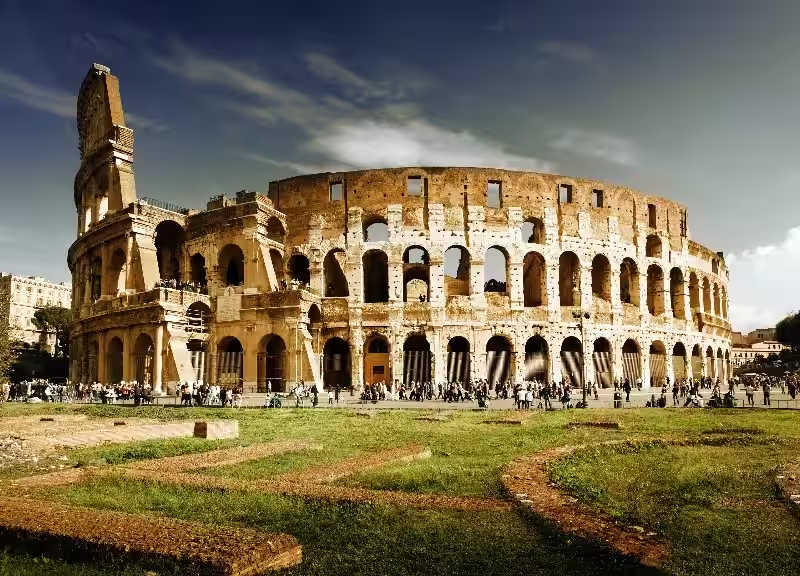
While the iconic churches in Italy like the Colosseum (though not a church, its history is intertwined with Christian martyrdom) or the Sistine Chapel are world-renowned, a truly rewarding experience often lies in discovering the less-visited, yet equally captivating, smaller churches. These hidden gems, often tucked away on quiet side streets, offer a more intimate and authentic encounter with faith and art. You might stumble upon a medieval fresco in a humble village church or a breathtaking Baroque altarpiece in a quiet city parish, providing a unique and personal connection to the spiritual heart of Italy.
Embrace the serendipity of exploration. Wander off the beaten path and allow yourself to be drawn in by the allure of an unassuming facade. These smaller churches in Italy often house remarkable works of art and possess a profound sense of history, untouched by the overwhelming throngs of tourists. They offer a chance to witness living faith in action, with local parishioners going about their daily devotional practices. This quiet immersion can be just as, if not more, impactful than visiting the most famous cathedrals. This approach to discovering churches in Italy will yield unexpected treasures.
Embracing the Spiritual and Artistic Resonance
The allure of churches in Italy extends far beyond their architectural grandeur and artistic treasures. They are places where centuries of human aspiration, faith, and artistic endeavor converge, offering a profound sense of continuity and connection to the past. Whether you find yourself awestruck by Michelangelo’s Pietà in St. Peter’s Basilica or moved by the quiet devotion in a parish church in a small Tuscan town, these spaces have a unique ability to stir the soul.
Ultimately, visiting churches in Italy is an invitation to engage with a rich and complex heritage. It is an opportunity to witness the enduring power of religion, the boundless creativity of humankind, and the profound stories etched into stone and pigment. So, as you plan your Italian adventure, make sure to dedicate ample time to explore these sacred sanctuaries. You will leave with not only stunning photographs but also a deeper understanding of Italy’s soul and a lasting impression of its magnificent churches in Italy.
Frequently Asked Questions about Churches in Italy and Religion
Are churches in Italy generally open to visitors?
Yes, most churches in Italy are open to visitors, especially during daylight hours. Some may have specific visiting hours or be closed during services. Smaller, less famous churches might have more limited access.
Is there an entrance fee to visit churches in Italy?
The majority of churches in Italy are free to enter. However, some of the most famous and historically significant cathedrals or basilicas, particularly those housing renowned artworks or relics, may charge a small entrance fee or offer guided tours for a fee. Entrance to the Sistine Chapel within the Vatican Museums, for example, requires a ticket for the museums.
What are the main religions practiced in Italy?
The predominant religion in Italy is Christianity, with the Roman Catholic Church being the largest denomination. There are also smaller communities of other Christian faiths, as well as adherents of Islam, Judaism, Buddhism, and other religions.
What is the significance of churches in Italian culture?
Churches are central to Italian culture, history, and art. Beyond their religious function, they are often architectural masterpieces, repositories of priceless art, and enduring symbols of community and heritage. Many towns and cities are defined by their central church or cathedral.
Are there dress code requirements for visiting churches in Italy?
Yes, it is respectful and often required to dress modestly when entering churches. This generally means covering shoulders and knees. Avoid revealing clothing such as shorts, tank tops, or short skirts. Some churches may provide scarfs for visitors to cover up if needed.
Can I attend a religious service in an Italian church?
Absolutely. Most Catholic churches welcome visitors to attend Mass or other services. It is a great way to experience the spiritual and cultural heart of Italy. Be mindful of the solemnity of the occasion and participate respectfully.
What are some of the most famous churches to visit in Italy?
Some of the most renowned churches include St. Peter’s Basilica in Vatican City, the Duomo di Firenze (Florence Cathedral), St. Mark’s Basilica in Venice, the Duomo di Milano, and the Basilica of Saint Francis of Assisi. There are countless other magnificent churches across the country.
Is it acceptable to take photographs inside churches?
In many churches, photography is permitted, but often without flash, as it can damage delicate artworks and be disruptive. However, some churches, especially those with particularly sacred relics or artworks, may prohibit photography entirely. Always look for signage indicating photography rules and be discreet.
What is the general attitude towards religion in Italy?
Religion, particularly Catholicism, has historically played a significant role in Italian society and continues to be influential. While levels of religious observance vary, faith, tradition, and religious holidays remain important aspects of Italian life for many.
Are there churches dedicated to non-Catholic denominations in Italy?
Yes, while Catholicism is dominant, there are churches and places of worship for other Christian denominations (e.g., Waldensian, Methodist, Orthodox) as well as synagogues, mosques, temples, and other religious centers for various faiths throughout Italy, particularly in larger cities.