We all carry burdens. Some are tangible, like a heavy backpack or a list of chores. Others are invisible, etched onto our hearts by the sharp edges of pain, betrayal, or hurt. These emotional burdens, often stemming from perceived wrongs, can feel incredibly heavy, anchoring us to the past and preventing us from moving forward. This weight of unforgiveness isn’t just a passive experience; it’s an active drain on our energy, our peace, and our overall well-being. It can manifest as chronic stress, anxiety, anger, and even physical ailments, as our bodies absorb the constant turmoil of unresolved grievances.
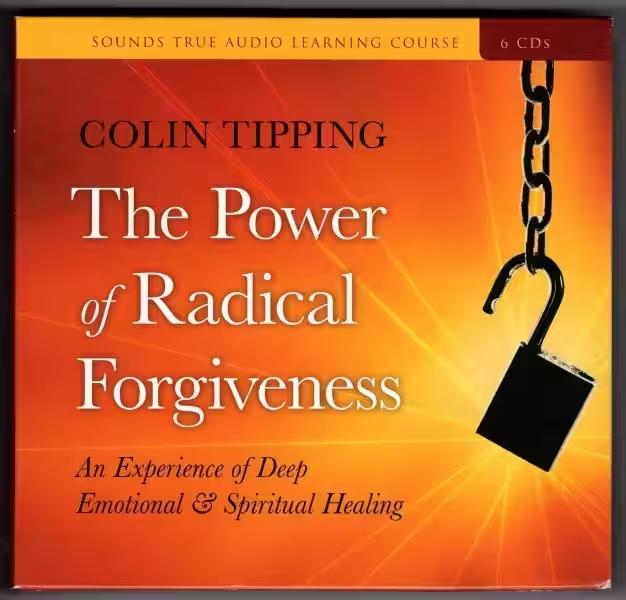
Think about a time someone deeply disappointed you. Perhaps a friend broke a promise, a family member said something hurtful, or a colleague undermined your hard work. Initially, the sting of that experience is sharp. But if we cling to that hurt, replaying the scene in our minds, nurturing resentment, and silently judging the offender, we are effectively choosing to remain entangled in that pain. This isn’t about excusing the behavior or forgetting what happened; it’s about recognizing that the real prisoner in this scenario is often the one holding onto the grudge. The act of choosing forgiveness is a powerful declaration of freedom from this self-imposed captivity.
Forgiveness as a Spiritual Principle
Across the vast tapestry of human belief systems, the concept of choosing forgiveness emerges as a recurring and profoundly spiritual principle. Whether you find solace in the teachings of Christianity, Islam, Buddhism, Judaism, Hinduism, or indigenous spiritual traditions, the call to forgive resonates deeply. These traditions often frame forgiveness not as a weakness, but as a virtue, a pathway to spiritual growth and a reflection of divine love or universal compassion. It’s about aligning ourselves with a higher power or a more elevated state of being, recognizing that holding onto anger creates a barrier between us and that which is sacred.
In many religions, forgiveness is presented as a divine imperative, a reflection of God’s own boundless mercy. Jesus’ teachings, for instance, are replete with exhortations to forgive “seventy times seven,” signifying an unending capacity for grace. Similarly, the Quran emphasizes Allah’s attribute as Al-Ghafur (The Forgiving). Buddhist philosophy speaks of cultivating compassion and letting go of attachment, which inherently includes releasing the grip of resentment. These spiritual frameworks provide not just a rationale, but a divine mandate for choosing forgiveness, offering a roadmap for navigating the complexities of human relationships and the inevitable hurts we encounter.
Theological Perspectives on Forgiveness
Theological interpretations of choosing forgiveness often highlight its transformative power, both for the individual and for the community. In Abrahamic religions, forgiveness is frequently linked to reconciliation with God and with fellow human beings. It’s seen as an act that mirrors God’s own willingness to forgive sins when repentance is offered. This doesn’t mean that the wronged party is expected to be a passive recipient of further harm, but rather that the act of forgiving is a sacred duty that can break cycles of violence and bitterness.
Consider the Christian concept of atonement, where Christ’s sacrifice is seen as an act of ultimate forgiveness for humanity’s sins. This sacrificial love, it is argued, calls believers to emulate that spirit by extending grace to others. In Judaism, the concept of teshuva (repentance) involves seeking forgiveness from both God and the person wronged. This dual focus underscores the social and relational aspect of forgiveness. The choice to forgive becomes a step towards restoring broken relationships and upholding the sanctity of human connection, all under the umbrella of a spiritual calling.
Eastern spiritual traditions offer profound insights into the practice of choosing forgiveness through the lens of mindfulness, compassion, and detachment. Buddhism, for example, teaches that suffering arises from attachment and aversion. Resentment is a form of aversion, a clinging to the negative experience and the perpetrator. By observing our emotions without judgment and cultivating a sense of universal compassion, we can begin to choose forgiveness as a way to liberate ourselves from this suffering.
Practices like loving-kindness meditation (Metta) are specifically designed to foster feelings of warmth and goodwill towards all beings, including those who have caused us pain. The idea is not to condone harmful actions, but to recognize the shared humanity of all individuals and the interconnectedness of all life. This spiritual practice of expanding our capacity for love can naturally lead to a choice for forgiveness, dissolving the walls of anger and paving the way for inner peace. Similarly, in Hinduism, the concept of karma suggests that holding onto negativity can perpetuate a cycle of suffering, making choosing forgiveness a way to break free and move towards spiritual liberation.
The Practicalities of Choosing Forgiveness
Understanding forgiveness as a spiritual principle is one thing; embodying it in our daily lives is another. Choosing forgiveness isn’t a one-time event, but often a process, a journey that requires intention, patience, and self-compassion. It’s about making a conscious decision to release the desire for retribution and to reclaim your emotional energy. This is not about pretending the hurt didn’t happen or condoning the behavior, but about recognizing that the cost of holding on is far greater than the perceived benefit.
The practical aspect of choosing forgiveness involves several key steps. Firstly, acknowledge the pain and the injustice you feel. Suppressing these emotions is counterproductive. Secondly, try to understand the situation from a broader perspective, perhaps even considering the other person’s own struggles or limitations (without excusing their actions). This doesn’t require deep empathy for your offender, but a recognition of shared human frailty. Thirdly, make a deliberate choice to let go. This might involve a prayer, a ritual, or simply a silent affirmation to yourself that you are releasing the burden. The spiritual act of choosing forgiveness is ultimately about reclaiming your peace.
Steps Towards Releasing Resentment
Embarking on the path of choosing forgiveness often involves a series of deliberate steps, designed to gradually loosen the grip of resentment. The initial step is often self-awareness: recognizing the anger, hurt, or bitterness that you are holding onto. This might involve journaling, meditation, or simply honest introspection. Without acknowledging the wound, it’s impossible to begin to heal. This is a crucial first step in the spiritual journey of forgiveness.
Next comes the decision to forgive. This is where the “choosing” aspect truly comes into play. It’s a conscious act of will, a declaration that you no longer want to be defined or consumed by this past hurt. This decision can be reinforced through prayer or spiritual affirmations. For example, you might pray for strength to let go, or recite a mantra about peace and liberation. The intention behind choosing forgiveness is paramount. Finally, the process often involves releasing the desire for revenge and actively cultivating a sense of peace. This might mean reframing negative thoughts, practicing gratitude for what you still have, or engaging in acts of kindness, thereby shifting your focus from the past to the present and future.
There are moments when choosing forgiveness feels like an insurmountable mountain. When the hurt is deep, the betrayal profound, or the injustice seemingly unforgivable, the very idea of letting go can seem absurd, even insulting. In these instances, it’s important to remember that forgiveness is a journey, not a destination, and that spiritual traditions often acknowledge the difficulty of this path. It’s not about forcing yourself to feel something you don’t, but about gradually moving towards a state of release.
In such challenging situations, approaching choosing forgiveness with compassion for yourself is vital. Understand that healing takes time, and it’s okay to feel anger or pain. Spiritual guidance can be immensely helpful here. Prayer, seeking counsel from religious leaders, or engaging in spiritual readings can provide comfort, perspective, and the strength to continue. Sometimes, the initial step isn’t full forgiveness, but simply a desire to forgive, a quiet yearning for peace. This desire, fueled by faith, can be the seed from which true liberation grows. Remember, the spiritual strength to choose forgiveness often comes from connecting with a power greater than ourselves.
The Rewards of Choosing Forgiveness
The rewards of choosing forgiveness are profound and far-reaching, impacting not only our emotional and mental health but also our spiritual lives. When we release the burden of resentment, we open ourselves up to a profound sense of liberation. This isn’t just about feeling better; it’s about reclaiming our inner peace, our joy, and our capacity for love. The energy that was once consumed by anger and bitterness can be redirected towards positive growth, creativity, and meaningful connections.
Spiritually, choosing forgiveness aligns us more closely with the divine principles of love, grace, and compassion that are central to most religious traditions. It allows us to experience a deeper sense of connection to God, to the universe, and to our fellow human beings. This spiritual alignment can lead to a more fulfilling and purpose-driven life, free from the shackles of past grievances. The act of choosing forgiveness is an offering, both to ourselves and to the divine, a testament to our desire for wholeness.
Reclaiming Your Inner Peace
One of the most immediate and significant rewards of choosing forgiveness is the reclaiming of your inner peace. Holding onto anger is like carrying a heavy weight that constantly presses down on your spirit. When you finally decide to let go, that weight is lifted. This release allows for a calmness to settle within, a quietude that allows you to experience life more fully and joyfully. This is the essence of spiritual freedom.
Imagine a turbulent storm raging inside you. Choosing forgiveness is like the storm finally subsiding, leaving behind a clear, serene sky. This inner peace isn’t about the absence of challenges, but about having the equanimity to face them without being overwhelmed by negativity. It’s the ability to respond to life’s difficulties with clarity and grace, rather than reacting from a place of hurt. This inner stillness is a powerful testament to the transformative nature of choosing forgiveness.
The act of choosing forgiveness is a profound spiritual practice that can significantly deepen your connection to the divine. Many religious traditions teach that holding onto grudges creates a barrier between us and God. By releasing these negative emotions, we are, in essence, removing those obstacles, allowing divine love and grace to flow more freely into our lives. This spiritual openness can lead to a heightened sense of purpose and meaning.
When you make the choice to forgive, you are emulating the very nature of a merciful and loving God. This alignment with divine attributes fosters a stronger spiritual bond. It’s like tuning into a radio frequency; when you are in sync, the signal is clear. Similarly, when you choose forgiveness, your spiritual “signal” becomes clearer, allowing you to experience a more direct and profound connection with the sacred. This deepened spiritual connection is a profound reward of embracing the path of choosing forgiveness.
In many religions, forgiveness is seen as a divine attribute and a moral imperative. It often involves letting go of resentment and the desire for retribution towards someone who has wronged you, mirroring God’s own forgiveness of humanity’s transgressions. Religious teachings frequently emphasize compassion, mercy, and reconciliation as core components of forgiveness.
How does my religion guide me in choosing to forgive?
Different religions offer varying pathways and motivations for forgiveness. For example, Christianity emphasizes Jesus’ teachings and example of forgiveness. Islam encourages Muslims to forgive, as Allah is the Most Forgiving. Buddhism teaches that holding onto anger creates suffering and forgiveness can lead to inner peace. Your specific faith tradition will likely have scriptures, stories, and practices that illuminate the importance and process of forgiveness.
Are there religious obligations to forgive?
Many religions consider forgiveness a spiritual duty or a highly encouraged virtue. While the specifics of obligation can vary, most faiths promote forgiveness as a means of spiritual growth, maintaining community harmony, and aligning oneself with divine principles. Some traditions may present forgiveness as a prerequisite for receiving God’s own forgiveness.
What if I find it difficult to forgive based on my religious beliefs?
It’s common to face challenges in forgiving, even with religious conviction. Many faiths acknowledge this struggle and offer resources for support. Prayer, meditation, seeking guidance from religious leaders or elders, and engaging with religious community can provide strength and clarity. Remember that forgiveness is often a process, not an instant event, and divine grace is often seen as available to help those who strive to forgive.
Does forgiving someone mean condoning their actions, from a religious perspective?
From a religious standpoint, forgiveness does not equate to condoning or excusing harmful behavior. It is primarily an internal act of releasing personal bitterness and anger. While some religions may encourage seeking justice or accountability for wrongdoing, the act of forgiveness is focused on the forgiver’s spiritual well-being and their relationship with the divine, rather than absolving the offender of responsibility.