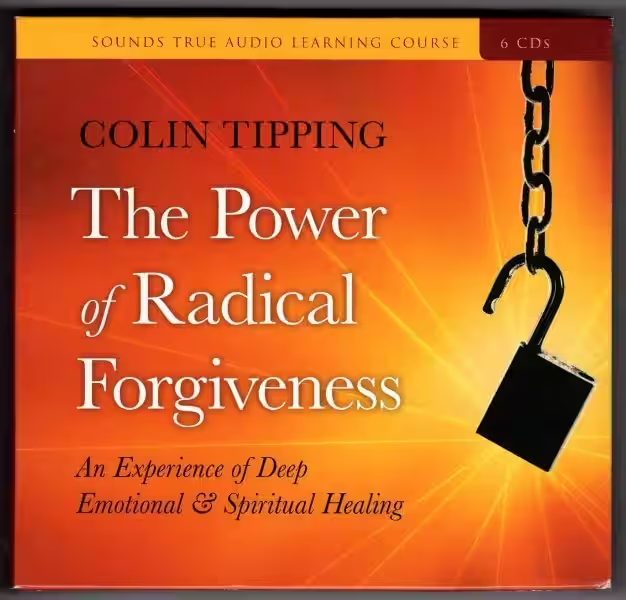
Life, in its beautiful and often turbulent unfolding, inevitably presents us with moments of hurt, betrayal, and deep disappointment. From the sting of a casual remark to the profound pain of a broken trust, these experiences can leave us carrying heavy emotional burdens. It is in these moments, when our hearts ache and our minds replay painful memories, that the profound spiritual imperative to choose forgiveness emerges. This isn’t about condoning wrongdoing or forgetting the past; it’s about actively deciding to release the grip of resentment, anger, and bitterness that can bind us, hindering our spiritual growth and well-being.
Religion, in its myriad forms, consistently points towards forgiveness as a cornerstone of spiritual maturity and a pathway to divine grace. Across diverse faith traditions, the message is clear: to choose forgiveness is to align ourselves with the highest principles of love, compassion, and reconciliation. It’s a powerful act of self-liberation, a conscious decision to break free from the chains of the past and embrace a future unburdened by the weight of unforgiveness. This journey can be challenging, but the rewards, both in this life and in the spiritual realms, are immeasurable.
The Divine Mandate: Why Forgiveness Matters in Religious Teachings
Every major religion, at its core, emphasizes the transformative power of forgiveness. It is not merely a suggestion but often a divine commandment, a reflection of a higher moral code designed to foster peace and understanding amongst humanity. The very essence of divine love, as understood in most spiritual traditions, is intertwined with the capacity to forgive, to extend grace even when it feels undeserved. When we choose forgiveness, we are mirroring this divine attribute, participating in a sacred act that resonates with the deepest truths of our faith.
Consider the parables and teachings found in scriptures worldwide. Whether it’s the Christian emphasis on loving your enemies and praying for those who persecute you, the Islamic concept of Allah as Ar-Rahman (The Most Gracious) and Ar-Rahim (The Most Merciful), or the Buddhist principle of cultivating compassion for all sentient beings, the underlying message is a powerful call to choose forgiveness. These teachings are not abstract philosophical musings; they are practical guides for navigating the complexities of human relationships and fostering inner peace.
Forgiveness as an Act of Love and Compassion
At the heart of religious doctrine lies an unwavering emphasis on love and compassion as the ultimate virtues. To choose forgiveness is to embody these virtues in their most potent form. It’s recognizing the shared humanity in both ourselves and those who have wronged us, understanding that everyone is on a spiritual journey, albeit sometimes a misguided one. This perspective allows us to move beyond personal hurt and see the bigger picture, a picture where reconciliation and healing are paramount.
When we hold onto grudges, we nourish a garden of bitterness within our souls. This internal landscape can become so overgrown with negative emotions that it chokes out the seeds of joy, peace, and spiritual connection. Conversely, when we choose forgiveness, we are actively tending to a garden of love and compassion. We are cultivating a space where healing can flourish, where our spiritual light can shine, and where we can experience the profound peace that comes from releasing the need for retribution. This act of grace, offered freely, not only benefits the recipient but profoundly transforms the giver.
Illustrative Examples from Sacred Texts
Across various religious traditions, we find powerful narratives that illustrate the grace and necessity of forgiveness. In Christianity, the story of the Prodigal Son (Luke 15:11-32) is a profound example. The father’s immediate and unconditional embrace of his wayward son, without demanding an apology or dwelling on the years of lost inheritance, is a divine model for how we are called to choose forgiveness. This tale highlights that forgiveness is not earned but freely given, a testament to boundless love.
In Islam, the Prophet Muhammad (peace be upon him) exemplified forgiveness throughout his life. Despite facing immense persecution and hardship, he consistently responded to his enemies with mercy and understanding. His forgiveness of the people of Mecca after their prolonged opposition serves as a powerful lesson. When faced with those who had wronged him, he chose to choose forgiveness, demonstrating a profound character that continues to inspire billions. This commitment to leniency, even in the face of great injustice, underscores the spiritual strength derived from this noble virtue.
The Personal Journey: Embracing Forgiveness for Inner Peace
While religious teachings provide the framework and motivation, the act of choosing forgiveness is ultimately a deeply personal journey. It’s an internal shift, a conscious decision to reclaim our emotional and spiritual autonomy. The world around us may not always change; the person who hurt us may never acknowledge their wrongdoings or seek reconciliation. However, by choosing to choose forgiveness, we empower ourselves, liberating our spirits from the corrosive effects of resentment.
This journey is not a one-time event but often a process, a series of conscious choices. There will be days when the wounds feel fresh, and the temptation to retreat into anger or self-pity is strong. It is on these days that our commitment to choose forgiveness is tested and strengthened. It requires patience, perseverance, and a deep understanding that our own well-being is intrinsically linked to our willingness to let go of past hurts.
Releasing the Chains of Resentment
Holding onto resentment is like carrying a heavy burden that we voluntarily choose to bear. It weighs us down, clouds our judgment, and prevents us from experiencing the fullness of life. When we choose forgiveness, we are choosing to lay down that burden. We are deciding that our peace of mind and spiritual freedom are more valuable than clinging to the pain of the past. This release is not about forgetting the offense, but about preventing it from continuing to define our present and future.
Think of it like a constant internal battle. Every time we replay the hurtful event, we are essentially re-experiencing the pain. This cycle of rumination keeps us trapped in a negative loop. By making the deliberate choice to choose forgiveness, we break that cycle. We redirect our energy from the past to the present, from the source of our pain to the possibility of healing and growth. It’s a profound act of self-care, a declaration that we are worthy of peace, regardless of what others have done.
Practical Steps on the Path to Forgiveness
The path to forgiveness can feel daunting, especially when the hurt is deep. However, there are practical steps that can help us navigate this spiritual terrain. Acknowledge the Pain: The first step is to validate your feelings. It’s okay to feel hurt, angry, or betrayed. Suppressing these emotions will only make the process of forgiveness more difficult. Understand the Intent (or Lack Thereof): Sometimes, hurt is unintentional. Trying to understand the other person’s perspective, their own struggles or limitations, can sometimes foster empathy and make it easier to choose forgiveness. This doesn’t excuse their behavior, but it can help depersonalize the hurt. Focus on Your Own Healing: Remember that forgiveness is primarily for you. It’s about freeing yourself from the emotional prison of unforgiveness. Shift your focus from what the other person “deserves” to what you need to thrive spiritually and emotionally. Practice Mindfulness and Prayer/Meditation: These spiritual disciplines can help you observe your thoughts and emotions without judgment, making it easier to detach from the pain. When you choose forgiveness, you are also choosing to cultivate inner stillness. Seek Support: Talking to a trusted friend, family member, spiritual advisor, or therapist can provide invaluable support and perspective on your journey to choose forgiveness.
Transcending the Self: Forgiveness as a Bridge to the Divine
In many religious traditions, the ultimate aim of spiritual practice is to transcend the limitations of the ego and connect with the divine. The act of choosing forgiveness is a powerful catalyst in this process. It requires us to move beyond self-centeredness, to extend grace and understanding, which are qualities that bridge the gap between our finite selves and the infinite nature of God or the Universal Consciousness.
When we choose forgiveness, we are actively aligning ourselves with the divine will. We are demonstrating a willingness to let go of our own perceived justice in favor of a higher, more compassionate order. This surrender of egoic claims is a significant step in our spiritual evolution, allowing divine love and wisdom to flow more freely through us. It’s in these moments of letting go that we often experience profound spiritual breakthroughs and a deeper connection to the sacred.
The Liberating Power of Letting Go
The weight of unforgiveness can manifest in myriad ways – physical ailments, emotional exhaustion, strained relationships, and a general sense of dissatisfaction with life. When we finally choose forgiveness, we experience a profound sense of liberation. It’s like shedding a heavy cloak that we didn’t even realize we were wearing. This release allows us to move forward with a lighter heart and a clearer spirit, ready to embrace new possibilities and deepen our spiritual path.
This liberation is not merely psychological; many spiritual traditions believe it has profound energetic and even cosmic implications. When we hold onto unforgiveness, we are essentially creating energetic blockages. By choosing to choose forgiveness, we clear these pathways, allowing for a greater flow of positive energy and divine grace in our lives. It’s an act of spiritual housekeeping, tidying up the inner landscape to make room for divine blessings.
The Role of Divine Grace in Forgiveness
It is important to acknowledge that the ability to choose forgiveness, especially in the face of deep hurt, often comes through Divine Grace. While we make the conscious decision, it is the Divine power that empowers us to truly let go and heal. Our faith teaches us that we are not alone in this journey. We can ask for divine assistance, for the strength and clarity to extend forgiveness. This reliance on a higher power is a crucial element in overcoming the natural human tendency to hold onto pain.
Ultimately, the decision to choose forgiveness is a testament to our spiritual resilience and our yearning for connection with the divine. It is a path that leads not to weakness, but to profound strength, not to condonation of wrongdoing, but to the liberation of our own souls. By embracing forgiveness, we step into a more authentic, peaceful, and spiritually abundant existence, closer to the divine heart of all religions.
Frequently Asked Questions about Forgiveness and Religion
What is forgiveness according to different religions?
Forgiveness is a central tenet in many religions, often seen as a divine attribute and a moral imperative. In Christianity, it’s closely linked to God’s forgiveness of humanity through Jesus Christ, encouraging believers to forgive others as they have been forgiven. Islam emphasizes God (Allah) as “The Most Forgiving” (Al-Ghafoor) and “The Ever-Merciful” (Ar-Rahman), urging Muslims to emulate these qualities. Judaism views forgiveness as a process that involves both human repentance and divine mercy, often sought during the High Holy Days. Buddhism emphasizes compassion and the release of suffering, which includes letting go of anger and resentment towards others. Hinduism highlights the concept of karma and dharma, suggesting that forgiveness can lead to positive spiritual growth and a reduction of negative karmic consequences.
How does religion define the act of forgiving?
Across religions, forgiving is generally understood as a conscious decision to release resentment, anger, and the desire for retribution towards someone who has wronged you. It’s not about condoning the action, forgetting what happened, or necessarily reconciling with the offender. Instead, it’s an internal process of letting go for one’s own peace and spiritual well-being. Many faiths suggest that this act aligns one with the divine will and fosters a more harmonious existence.
Are there specific religious teachings or stories that illustrate forgiveness?
Yes, numerous religious texts and narratives exemplify forgiveness. In Christianity, the Parable of the Prodigal Son and Jesus’s crucifixion prayers (“Father, forgive them, for they know not what they do”) are prime examples. In Islam, the story of Prophet Yusuf (Joseph) forgiving his brothers after they betrayed him is a powerful illustration. Jewish tradition recounts the story of Moses interceding for the Israelites after the sin of the Golden Calf. Buddhist teachings often feature stories of monks and laypeople demonstrating profound forgiveness in the face of adversity.
Can forgiveness be a pathway to spiritual growth or enlightenment in religious contexts?
Absolutely. Many religions teach that forgiveness is a crucial step on the path to spiritual maturity. By releasing negative emotions like anger and bitterness, individuals can open themselves up to divine grace, cultivate inner peace, and move closer to spiritual enlightenment or union with God. It’s seen as a way to purify the heart, reduce ego, and foster greater empathy and compassion, which are often considered hallmarks of spiritual development.
Are there any religious perspectives that caution against or limit forgiveness?
While most religions strongly advocate for forgiveness, some interpretations or specific contexts might suggest caution. This is usually not about preventing forgiveness altogether, but about ensuring it doesn’t lead to further harm or enable abusive behavior. For instance, some traditions emphasize the importance of justice alongside mercy, suggesting that forgiveness doesn’t negate the need for accountability or protection from ongoing wrongdoing. The focus often remains on the internal act of letting go rather than necessarily a full reconciliation that might put one at risk.
How do different religions approach the question of forgiving oneself?
Self-forgiveness is also a significant aspect within many religious frameworks. It’s often understood as acknowledging one’s mistakes, seeking divine pardon, and making sincere amends where possible. Religions teach that just as God offers forgiveness, individuals should extend that same grace to themselves, recognizing their humanity and fallibility. This process is crucial for healing, self-acceptance, and continuing on a righteous path, preventing guilt from becoming a debilitating spiritual obstacle.