The vast, shimmering expanse of the ocean has always held a profound mystique for humanity. It is a realm of immense power, breathtaking beauty, and humbling mystery, a place that has, from the dawn of civilization, interwoven itself with our spiritual beliefs and religious practices. La vida del mar, the life of the sea, is not merely a biological or geographical phenomenon; it is a tapestry woven with threads of faith, ritual, and a deep-seated reverence for the forces that govern our world. From ancient mariners navigating by celestial bodies to modern coastal communities offering prayers for safe passage, the sea and religion have been inextricably linked, shaping cultures and inspiring awe for millennia.
This profound connection is evident across diverse cultures and throughout history. Whether viewed as the cradle of life, a divine dwelling place, or a formidable force to be appeased, the ocean’s influence on religious thought is undeniable. Understanding la vida del mar through a religious lens offers a unique perspective on our relationship with nature and the divine, revealing a shared human experience of wonder, respect, and a yearning for meaning in the face of the infinite.
The Sea as a Divine Realm: Ancient Beliefs and Coastal Mythology
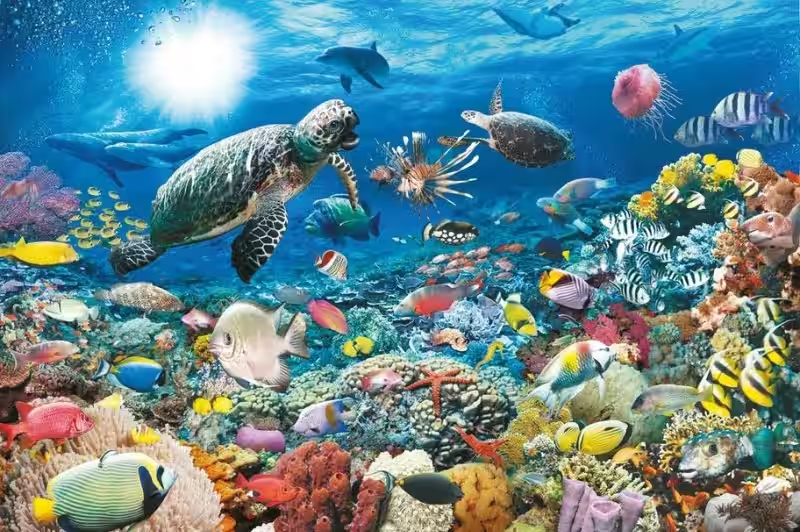
Throughout history, many cultures have perceived the ocean not just as a body of water, but as a sacred space, inhabited by deities or representing a primordial force. This perception often stemmed from the sea’s inherent power and its role as a source of sustenance and danger. The sheer scale of la vida del mar, from the microscopic plankton to the colossal whales, hinted at a divine hand at work, creating and sustaining a universe within our own.
Ancient Egyptians, for instance, believed in Nun, the primordial watery abyss from which all creation emerged. This concept underscores the idea of the ocean as the ultimate source of life, a divine womb that birthed the world. Similarly, the Greeks attributed dominion over the seas to Poseidon, a powerful god who could stir storms or grant calm. His influence over la vida del mar was absolute, and sailors would offer sacrifices to him for protection and bountiful catches. This veneration of oceanic deities highlights a fundamental human impulse to connect with and understand the powerful natural forces that shape our existence, seeking solace and guidance in the divine.
Deities of the Deep and Their Sacred Duties
The pantheon of sea gods and goddesses across different cultures is vast and varied, each embodying specific aspects of oceanic power and influence. These divine beings were not abstract concepts but were actively worshipped, with elaborate rituals and offerings dedicated to them. Their stories often explained natural phenomena, from the ebb and flow of tides to the sudden fury of a tempest, making la vida del mar a direct manifestation of divine will.
For example, in Japanese Shinto, Ryūjin, the dragon god of the sea, resided in a magnificent underwater palace and controlled the tides. Fishermen would pray to him for good fortune and would often leave offerings of sake and rice at coastal shrines. The stories of these deities provided a framework for understanding the mysteries of the ocean, offering believers a sense of order and control in a world where la vida del mar could be both benevolent and terrifying. Their sacred duties were seen as essential for maintaining the balance of the world, and humanity’s role was to honor and respect these powerful entities.
Offerings and Rituals for a Bountiful Catch
The spiritual connection to la vida del mar was most tangibly expressed through offerings and rituals aimed at ensuring safety and prosperity for those who depended on the ocean. These practices were not merely superstitious but were deeply ingrained in the cultural and religious fabric of coastal communities. The act of offering was a way of acknowledging their dependence and seeking favor from the divine powers that governed the waters.
Before embarking on a fishing expedition, it was common to perform specific rituals. These could include casting a small portion of the day’s catch back into the sea as a sign of gratitude, or pouring a libation of wine or water into the waves. In many traditions, special prayers were recited, asking for protection from storms and for a generous harvest from the ocean’s depths. These acts of devotion were a testament to the profound respect and awe inspired by la vida del mar, recognizing its vital role in supporting human life and the interconnectedness of all living things.
Catholicism and the Sacredness of the Ocean’s Bounty
Even in more structured religious systems like Catholicism, the sea and its inhabitants have found a significant place within spiritual teachings and practices. While perhaps not personified in the same direct way as ancient deities, the ocean is recognized as a divine creation, and its bounty is seen as a gift from God. The vastness and mystery of la vida del mar continue to inspire contemplation of the divine.
The Bible itself is replete with references to the sea, from Jesus calling his first disciples, who were fishermen, to the miraculous feeding of the multitudes with fish. These narratives highlight the sea’s importance as a source of sustenance and a stage for divine intervention. The Catholic Church, in its teachings and traditions, acknowledges the sacredness of the ocean’s bounty, encouraging respect for marine life and responsible stewardship of this vital resource.
Saints of the Sea and Miraculous Interventions
Throughout Catholic history, certain saints have become particularly associated with the sea and its protection. These Saints of the Sea are invoked by sailors, fishermen, and coastal communities in times of need, their intercession sought for safe journeys and successful livelihoods. The stories of their miraculous interventions offer comfort and hope, reinforcing the belief in a benevolent divine presence that watches over la vida del mar.
Saint Nicholas, the patron saint of sailors and fishermen, is perhaps the most well-known. Legends tell of his miraculous interventions to save ships from storms and to rescue those lost at sea. Similarly, Saint Brendan the Navigator, an Irish monk, is said to have embarked on a legendary voyage across the Atlantic, encountering wondrous islands and mythical creatures, further intertwining la vida del mar with tales of faith and exploration. These figures serve as spiritual guides, reminding believers of the ever-present divine hand in the face of the ocean’s formidable power.
The Ocean as a Symbol of God’s Infinite Power and Mystery
Beyond specific saints and stories, the ocean itself serves as a powerful metaphor for the infinite power and mystery of God within Catholic theology. Its unfathomable depths, its boundless horizons, and its ever-changing moods all speak to a grandeur that transcends human comprehension. La vida del mar, in its sheer diversity and complexity, can be seen as a reflection of God’s boundless creativity.
Contemplating the ocean can lead to profound spiritual insights. The sheer scale of la vida del mar, from the smallest shell to the mightiest whale, reminds us of the intricate design and divine order present in the natural world. The waves that crash upon the shore can symbolize the unrelenting force of divine will, while the calm surface on a clear day can represent divine peace and tranquility. This symbolic connection elevates the experience of the sea from mere observation to a form of spiritual communion.
Indigenous Faiths and the Spirit of the Waters
For many indigenous cultures around the world, la vida del mar is not just a resource or a backdrop to life; it is a living entity, imbued with spirits and possessing a consciousness of its own. These beliefs are deeply rooted in a holistic worldview where humanity and nature are interconnected and interdependent. The ocean is seen as a sacred relative, a source of wisdom, and a provider that deserves profound respect.
These spiritual traditions often involve elaborate ceremonies and storytelling, passed down through generations, that explain the origins of the sea, the behavior of its creatures, and the proper ways to interact with this powerful realm. This intimate relationship with the ocean fosters a deep sense of responsibility for its well-being, recognizing that the health of la vida del mar is directly linked to the health and prosperity of the community.
Animistic Beliefs and the Sentient Ocean
In many indigenous cultures, animism forms the bedrock of their spiritual understanding. This worldview posits that everything in nature possesses a spirit, and this includes the ocean and all its inhabitants. The tides, the currents, the storms – these are not just physical phenomena but are the expressions of the ocean’s moods and intentions. This perspective imbues la vida del mar with a profound sense of sentience.
Coastal tribes might believe that specific waves have personalities, or that certain marine animals carry messages from the spirit world. Whales, in particular, are often revered as ancient beings with immense spiritual power and wisdom. Before hunting, elaborate rituals would be performed to ask permission from the whale’s spirit and to express gratitude for its sacrifice. This animistic approach fosters a deeply respectful and reciprocal relationship with the ocean.
Guardians of the Coast and the Ancestral Waters
Indigenous communities often see themselves as guardians of the coast and the ancestral waters. This role is not one of ownership but of stewardship, a sacred duty to protect and maintain the balance of the marine ecosystem for future generations. Their religious practices are intrinsically linked to the health of the ocean, and any harm to la vida del mar is seen as an affront to the spiritual order of the world.
Ceremonies might involve cleansing rituals for polluted waters, or storytelling sessions that remind younger generations of their connection to the sea. The elders often act as keepers of this knowledge, ensuring that the sacred laws governing human interaction with the ocean are upheld. This deep-seated reverence underscores the understanding that la vida del mar is an essential component of their cultural and spiritual identity, a continuous cycle of life, death, and renewal.
Modern Interpretations and the Environmental Ethos
In contemporary times, the relationship between la vida del mar and religion is evolving, often manifesting as a growing environmental consciousness. Many religious traditions are now recognizing the urgent need to protect marine ecosystems, seeing it as a moral imperative rooted in their spiritual values. This shift reflects a deeper understanding of interconnectedness and a call to action.
The vastness of the ocean, once a symbol of the unattainable divine, now also highlights our collective responsibility to its preservation. The challenges facing la vida del mar, from plastic pollution to overfishing, are prompting religious leaders and followers to advocate for sustainable practices and to re-evaluate our impact on this vital part of the planet. This modern interpretation bridges ancient reverence with contemporary ecological concerns.
Environmental Stewardship as a Spiritual Duty
Increasingly, religious scholars and communities are framing environmental stewardship not just as a societal responsibility, but as a spiritual duty. The act of caring for the ocean and its diverse life forms is seen as an extension of religious faith, a way to honor the Creator by protecting His creation. This perspective imbues conservation efforts with a profound sense of purpose and ethical weight.
Many faith groups are now actively involved in marine conservation initiatives, organizing beach cleanups, advocating for policy changes, and educating their congregations about the importance of protecting la vida del mar. This movement recognizes that the health of the planet, and particularly its oceans, is intrinsically linked to our spiritual well-being and the future of humanity. It’s a call to translate faith into tangible action for positive change.
Beyond activism, the ocean continues to serve as a powerful space for spiritual contemplation and renewal. The sheer beauty and tranquility of marine environments can offer a respite from the stresses of modern life, fostering a sense of peace and connection to something larger than oneself. La vida del mar, in its quiet majesty, invites introspection.
For individuals seeking solace, a walk along the beach, the sound of the waves, or the sight of marine life can be deeply restorative. This experience often leads to a renewed appreciation for the natural world and a deeper understanding of our place within it. The ocean’s enduring allure continues to inspire awe, offering a pathway to spiritual awakening and a profound sense of belonging to the grand tapestry of existence. The vida del mar remains a constant source of inspiration and a reminder of the sacredness that surrounds us.
La Vida del Mar: Religión – Preguntas Frecuentes
¿Qué significa “la vida del mar” en un contexto religioso?
En un contexto religioso, “la vida del mar” puede referirse a diversas interpretaciones, desde la creencia en deidades marinas, espíritus del océano, hasta la veneración de criaturas marinas como símbolos sagrados o mensajeros divinos. También puede aludir a la vida espiritual que se cree reside en las profundidades del océano, o a rituales y prácticas religiosas asociadas al mar.
¿Existen religiones o cultos que adoren a dioses o diosas del mar?
Sí, existen numerosas religiones y mitologías a lo largo de la historia y en diversas culturas que veneran a dioses y diosas del mar. Ejemplos notables incluyen Poseidón (griego), Neptuno (romano), Yemayá (yoruba/afrocubana), Manannán mac Lir (celta), y muchos otros en tradiciones marítimas alrededor del mundo.
¿Cómo se manifiesta la “vida del mar” en las prácticas religiosas?
La “vida del mar” puede manifestarse en las prácticas religiosas a través de ofrendas al mar o a deidades marinas, ceremonias de bendición para pescadores y navegantes, rituales de purificación utilizando agua de mar, y la interpretación de fenómenos marinos como presagios o mensajes divinos. Las representaciones artísticas de criaturas marinas también son comunes en templos y lugares sagrados.
¿Se considera al océano un lugar sagrado en alguna religión?
Sí, en varias tradiciones religiosas, el océano es considerado un lugar sagrado. Se le ve como la fuente de la vida, un reino de misterio y poder, o la morada de entidades divinas. Muchas cosmogonías describen la creación del mundo a partir de las aguas primordiales, lo que confiere al mar un estatus sagrado fundamental.
¿Hay alguna conexión entre la “vida del mar” y la vida después de la muerte en ciertas religiones?
En algunas culturas y religiones, el mar o el océano se asocian con el viaje del alma después de la muerte. Puede ser visto como un portal hacia el más allá, un lugar de descanso eterno, o un destino final para las almas. Las leyendas sobre ciudades sumergidas o reinos espirituales bajo el mar a menudo entran en esta categoría.
¿Qué papel juegan las criaturas marinas en las creencias religiosas?
Las criaturas marinas a menudo juegan roles simbólicos importantes en las creencias religiosas. Pueden representar la fertilidad, la profundidad, el misterio, la fuerza, o incluso ser mensajeros de los dioses. Ballenas, delfines, tortugas y peces son frecuentemente venerados o considerados sagrados en diversas tradiciones.
¿Existen festivales o celebraciones religiosas dedicadas al mar?
Absolutamente. Muchas comunidades costeras celebran festivales y fiestas religiosas dedicadas al mar y a sus deidades protectoras. Estos eventos suelen incluir procesiones, cantos, danzas, ofrendas y rituales para asegurar buenas cosechas, viajes seguros y la protección de quienes viven y trabajan en el mar.