In the vast tapestry of human experience, few metaphors resonate as deeply and universally as that of light. Across cultures and throughout history, light has been synonymous with understanding, hope, truth, and divinity. In the realm of religion, this imagery is not merely poetic; it forms a fundamental pillar, illuminating the path for believers and offering solace in the darkest of times. This article delves into the profound significance of light as depicted in religious scriptures, exploring how these sacred verses can guide us, inspire us, and ultimately, transform our lives. We will examine the multifaceted nature of spiritual light, from its role in revealing God to its power to banish darkness, both external and internal.
The journey of faith is often described as a passage from darkness to light, a transition from ignorance to enlightenment, and from despair to hope. Religious texts, particularly the Bible and the Quran, are replete with powerful verses that use the imagery of light to convey essential spiritual truths. These passages offer not just abstract theological concepts, but practical wisdom that can inform our daily decisions and shape our perspectives. By reflecting on these light scripture verses, we can gain a deeper appreciation for the divine presence in our lives and cultivate a more radiant and purposeful existence.
Across many faiths, the ultimate source of all light, both physical and spiritual, is attributed to the divine. God is not just seen as a creator, but as the very essence of luminescence, the origin point from which all truth and understanding emanate. This concept is powerfully articulated in scripture, offering a foundational understanding of the divine nature and its relationship with humanity. When we encounter verses that speak of God as light, we are being invited to understand Him as the purest form of goodness, clarity, and revelation.
The Bible, for instance, declares in 1 John 1:5: “This is the message we have heard from him and proclaim to you, that God is light, and in him is no darkness at all.” This verse is a profound statement about God’s absolute purity and perfection. It means that God is unblemished by evil, deception, or ignorance. When we turn towards God, we are turning towards the very source of all that is good and true. Think of a dark room suddenly flooded with sunlight; all shadows disappear, and clarity is restored. Similarly, approaching God dispels the ‘darkness’ of our confusion, our doubts, and our moral failings. This inherent divine illumination is an invitation to a life of transparency and integrity, mirroring His own perfect nature.
Light as Revelation and Truth
One of the most significant roles of spiritual light in scripture is its function as a revealer of truth. Just as physical light exposes what is hidden in darkness, divine light illuminates the truths of God, His will, and the nature of reality. This revelation is crucial for guiding human beings, helping them to discern right from wrong and to understand their purpose in the world. Many scriptures highlight that seeking and embracing this divine light leads to wisdom and understanding.
In the Psalms, we find the affirmation: “Your word is a lamp to my feet and a light on my path” (Psalm 119:105). This beautifully illustrates how God’s teachings, His commandments, and His wisdom act as a guiding beacon. Imagine walking through a treacherous, unlit forest at night. Without a light source, every step is fraught with peril. The Word of God, in this analogy, is that essential light, preventing us from stumbling into spiritual pitfalls and ensuring we stay on the correct course. This scriptural light provides clarity for our immediate actions and a broader vision for our life’s journey, helping us to navigate the complexities of life with divine guidance.
Similarly, the Quran emphasizes the illuminating nature of divine knowledge. Verses speak of the Quran itself as a “light” and a “clear book” (Quran 5:15). This Quranic light guides believers away from misguidance and towards the straight path. It is through studying and applying these sacred texts that individuals can gain spiritual insight and develop a deeper connection with the divine. The clarity provided by this divine revelation is not just intellectual; it is transformative, shaping our character and our actions towards righteousness and truth.
The Believer as a Beacon: Reflecting God’s Light
The concept of light in scripture extends beyond God being the source; it also calls believers to become carriers and reflectors of that divine light. Once individuals experience the illuminating power of faith, they are encouraged to share that light with others, becoming beacons of hope and truth in a world often shrouded in darkness. This is not about personal radiance, but about demonstrating God’s love and truth through one’s actions and character.
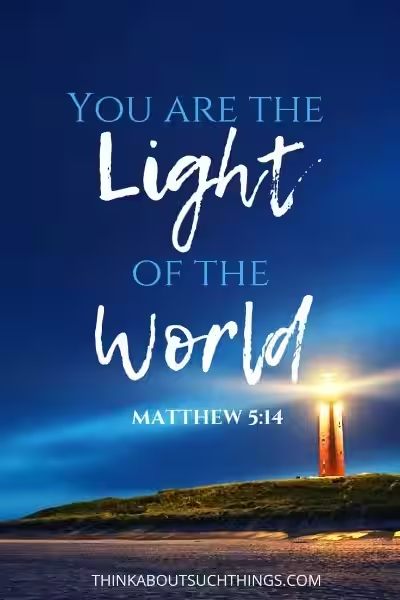
Jesus famously stated in the Sermon on the Mount: “You are the light of the world. A city set on a hill cannot be hidden. Nor do people light a lamp and put it under a bushel, but on a stand, and it gives light to all in the house. Let your light shine before others, that they may see your good deeds and give glory to your Father who is in heaven” (Matthew 5:14-16). This is a powerful call to active discipleship. Our faith isn’t meant to be a private, hidden possession; it’s meant to shine outwardly. Our good deeds, our acts of kindness, our integrity, and our compassion are the ways we make God’s light visible to the world. By living out our faith authentically, we can inspire others and draw them closer to the divine source.
Battling Darkness: The Spiritual Struggle
Scripture consistently portrays the spiritual life as a struggle against darkness, which symbolizes evil, sin, ignorance, and despair. Light, in contrast, represents the victory of good over evil, understanding over confusion, and hope over hopelessness. This ongoing battle is a core aspect of religious life, and the verses on light offer encouragement and the promise of ultimate triumph.
The Apostle Paul eloquently describes this struggle in Ephesians 5:8: “for at one time you were darkness, but now you are light in the Lord. Walk as children of light.” This verse highlights a profound transformation that occurs through faith. It acknowledges that before encountering the divine light, individuals may have been living in a state of spiritual darkness. However, upon embracing faith, they are reborn into the light. The imperative to “walk as children of light” is a call to live a life that is consistent with this new identity, actively rejecting the ways of darkness and embracing the virtues associated with light, such as goodness, righteousness, and truth.
This spiritual warfare is not always about grand gestures; often, it’s about the daily choices we make. When faced with temptation, dishonesty, or negativity, choosing the path of light means opting for integrity, truthfulness, and a positive outlook. It’s about actively choosing to let God’s light shine through us, even when the surrounding circumstances are challenging. This internal and external battle is a testament to the power of divine light to overcome even the deepest shadows.
The Hope of Light: Promise of Future Glory
Beyond its role in present guidance and spiritual warfare, the imagery of light in scripture also speaks powerfully of future hope and eternal glory. It promises a time when all darkness will be dispelled, and believers will dwell in the unfading light of God’s presence. This eschatological hope provides immense comfort and motivation, reminding believers of the ultimate divine reward that awaits.
The Book of Revelation is particularly rich in its depiction of this future light. It describes the New Jerusalem, the heavenly city, where there is “no more night, and they need no lamp nor the light of the sun, for the Lord God will be their light” (Revelation 22:5). This verse paints a picture of ultimate fulfillment, where God Himself is the sole and eternal source of light. Imagine a place of perfect peace, understanding, and joy, bathed in the uninterrupted radiance of the divine. This is the ultimate promise of light, a symbol of the eternal communion with God that awaits the faithful.
Light as Eternal Life and Presence
In many traditions, light is inextricably linked with the concept of eternal life and the everlasting presence of God. This is not just about living forever, but about living in a state of perfect communion and spiritual vibrancy, bathed in the divine light. This promise offers a profound sense of purpose and an enduring hope that transcends the limitations of mortal existence.
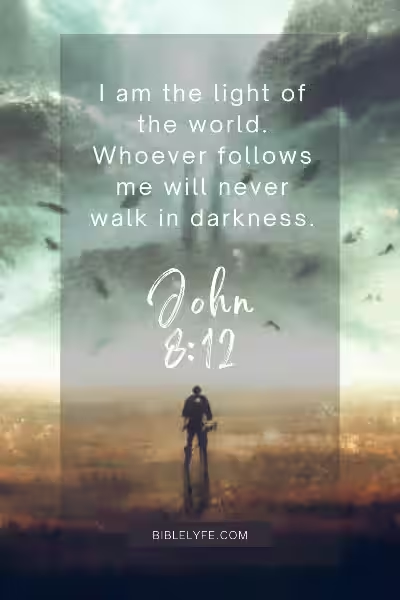
The Gospel of John presents Jesus as the embodiment of this divine light. John 8:12 records Jesus saying, “I am the light of the world. Whoever follows me will not walk in darkness, but will have the light of life.” This statement is foundational for many Christians. It signifies that by following Jesus, one receives not just illumination for the present, but the very essence of spiritual life, which is characterized by light and freedom from the bondage of darkness. This “light of life” is a promise of eternal relationship and a state of being that is perpetually connected to the divine source, a state of unending hope and vibrant existence.
The Quran also speaks of the “light” that God bestows upon believers in paradise, a light that signifies divine favor and eternal bliss. This imagery reinforces the idea that the ultimate reward for the faithful is to be in the everlasting presence of God, bathed in His glorious light, experiencing a state of perfect peace and unending joy. These scripture verses on light collectively offer a powerful testament to the enduring hope found in faith, pointing towards a future where darkness is vanquished and the radiance of the divine reigns supreme.
Frequently Asked Questions about Scripture and Religion
What are some key scripture verses about light?
Several scriptures use the metaphor of light to represent divine presence, truth, guidance, and goodness. Some prominent examples include:
Psalm 119:105 (NIV): “Your word is a lamp for my feet, a light on my path.” This verse highlights scripture as a source of guidance and direction.
John 8:12 (NIV): Jesus says, “I am the light of the world. Whoever follows me will never walk in darkness, but will have the light of life.” This points to Jesus himself as the ultimate source of spiritual light and salvation.
Matthew 5:16 (NIV): Jesus tells his followers, “Let your light shine before others, that they may see your good deeds and glorify your Father in heaven.” This encourages believers to live out their faith visibly.
1 John 1:5 (NIV): “God is light; in him there is no darkness at all.” This verse defines God’s nature as pure and holy, devoid of any evil.
Proverbs 6:23 (NIV): “For the commandment is a lamp, and the teaching is light, and the reproofs of discipline are the way of life.” This emphasizes the moral and instructive role of divine teachings.
The understanding of “religion” within scripture can be multifaceted. In its most positive sense, it refers to a genuine devotion and commitment to God, expressed through worship, obedience, and love for others. However, scripture also cautions against a superficial or hypocritical practice of religion. Key aspects include:
True religion: James 1:27 (NIV) states, “Religion that God our Father accepts as pure and faultless is this: to look after orphans and widows in their distress and to keep oneself unstained by the world.” This verse emphasizes practical compassion and moral purity as core components of genuine faith.
Worship and devotion: Many scriptures describe acts of worship, prayer, and sacrifice as central to relating to God. Examples include the Psalms and the Old Testament laws concerning worship.
Obedience to God’s commands: Following God’s will and commandments is consistently presented as a vital aspect of religious observance.
Warning against hypocrisy: Jesus often rebuked religious leaders for their outward displays of piety that lacked inner sincerity. This highlights the importance of the heart’s attitude over mere ritual.
What is the significance of light in religious contexts?
In many religious traditions, light carries profound symbolic meaning. Across various faiths, light often represents:
Divine presence and revelation: Light is frequently associated with God or the divine, signifying revelation, enlightenment, and the dispelling of ignorance or spiritual darkness.
Truth and knowledge: Just as light illuminates the physical world, it symbolizes the understanding and truth that comes from divine wisdom or spiritual insight.
Goodness and purity: Light is the antithesis of darkness, which often symbolizes evil, sin, or ignorance. Therefore, light represents moral purity, righteousness, and the triumph of good.
Guidance and hope: A light in the darkness provides a path forward. In a religious context, this signifies divine guidance, hope, and the promise of a better future or salvation.
Spiritual awakening: Experiencing or following a spiritual “light” often signifies a transformation, an awakening to spiritual realities, or a turning away from a life of sin or confusion.