The Weight of the World: Understanding the Sorrowful Mysteries
Life, in its beautiful complexity, is often punctuated by moments of profound sadness. We all experience loss, disappointment, and the sting of suffering. For many within the Christian tradition, these universal experiences find a deep resonance within the Sorrowful Mysteries of the Rosary. These five meditations recount the passion and death of Jesus Christ, a narrative that, while undeniably tragic, offers a powerful pathway to understanding and navigating our own sorrowful journeys. They are not simply historical accounts; they are living reflections, inviting us to connect our personal pain with the ultimate act of love and sacrifice.
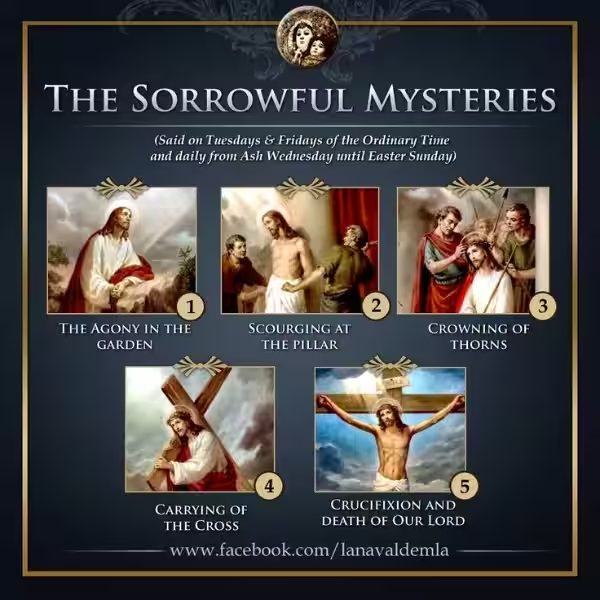
When we speak of the Sorrowful Mysteries, we are referring to specific events: the Agony in the Garden, the Scourging at the Pillar, the Crowning with Thorns, the Carrying of the Cross, and the Crucifixion. Each of these moments represents a profound depth of human suffering, not just physical, but also emotional and spiritual. Reflecting on them allows us to see that our own feelings of isolation, betrayal, physical discomfort, and the crushing burden of responsibility are not foreign to the divine experience. They are, in fact, shared. This shared journey is the essence of their transformative power; it assures us that we are never truly alone in our darkest hours.
The Agony in the Garden: Facing Our Deepest Fears
The first Sorrowful Mystery, the Agony in the Garden, plunges us into Jesus’ profound distress as he faces his impending crucifixion. He sweats blood, a physical manifestation of his immense internal struggle, as he prays, “Father, if you are willing, take this cup away from me; yet not my will, but yours be done.” This moment is a poignant reflection on our own battles with fear and the unknown. We too, in times of great anxiety or dread, often wrestle with our desires and the seemingly overwhelming circumstances that lie before us. Think of a young person facing a life-altering surgery, or a parent receiving devastating news about their child. The temptation to wish it away, to plead for a different path, is incredibly powerful. Yet, Jesus’ prayer offers a model of surrender and trust, a call to acknowledge our fear while ultimately submitting to a higher purpose, even when that purpose is shrouded in pain.
This reflection on the Agony in the Garden is particularly relevant when we feel overwhelmed by the weight of our anxieties. It’s easy to feel like we’re carrying a burden too heavy to bear, isolated in our suffering. However, by meditating on Jesus’ prayer, we are reminded that even in his divine perfection, he experienced the profound human struggle of confronting immense pain and uncertainty. This offers a deep well of comfort; it suggests that our own feelings of helplessness are not a sign of weakness, but a shared human experience. The act of prayer itself, even when it feels like a desperate plea, becomes a powerful anchor, connecting us to a divine understanding that transcends our immediate suffering. It’s about finding the courage to say, “Thy will be done,” even when it’s the hardest thing in the world.
The Scourging at the Pillar: Enduring Unjust Suffering
The Scourging at the Pillar depicts Jesus enduring brutal physical torture, subjected to unimaginable pain and humiliation at the hands of his tormentors. This mystery forces us to confront the reality of unjust suffering. We may not be physically whipped, but we certainly experience forms of injustice, betrayal, and the sting of unfair accusations that can leave us feeling bruised and broken. Consider the individual who is wrongly accused, the employee who is unfairly dismissed, or the child who endures bullying. These experiences can inflict deep wounds, leaving scars that are not readily visible but are profoundly felt. The silence and endurance of Christ during this ordeal offer a powerful, albeit challenging, lesson in resilience and dignity in the face of cruelty.
Reflecting on the Scourging invites us to consider how we respond when we are hurt by others or by circumstances beyond our control. Do we lash out in anger, or do we seek to find a measure of peace within ourselves? This mystery doesn’t condone suffering, but it does offer a spiritual framework for enduring it with grace. It suggests that even in our most vulnerable moments, when we feel stripped bare and exposed, there is an inherent dignity to be found in how we bear our burdens. The constant presence of God, even in the midst of such torment, is a key takeaway. It reminds us that even when we feel most alone and abandoned, we are held. This understanding can be a source of immense strength, enabling us to rise above the pain and to find a deeper sense of purpose, even amidst injustice.
The Crowning with Thorns: The Pain of Mockery and Misunderstanding
The third Sorrowful Mystery, the Crowning with Thorns, portrays Jesus being subjected to mockery and derision. A crown of thorns, a symbol of his kingship, is pressed upon his head, a cruel jest at his authority and divinity. This mystery speaks to the pain of being misunderstood, ridiculed, and treated with contempt. We all, at some point, have experienced the sting of being laughed at, having our intentions twisted, or being dismissed by others. Think of the artist whose work is criticized harshly, the innovator whose ideas are ridiculed, or the individual who is ostracized for their beliefs. The humiliation and disrespect endured by Jesus here are deeply relatable to the social and emotional pain we can experience when our worth is questioned or our efforts are met with scorn.
Meditating on the Crowning with Thorns is a call to examine our own reactions to criticism and mockery. Do we allow the opinions of others to define us, or do we find our identity in something deeper, something unshakeable? Jesus’ quiet acceptance of this indignity highlights a profound strength that lies not in retaliation, but in inner conviction. This mystery encourages us to cultivate a similar inner resilience, to recognize that our true value is not determined by the fleeting judgments of others. It’s about understanding that true worth is an internal attribute, not something that can be diminished by external ridicule. This offers a powerful antidote to insecurity and a pathway to unwavering self-acceptance, grounded in a faith that transcends worldly opinion.
The Carrying of the Cross: Bearing Our Burdens with Perseverance
The Carrying of the Cross depicts Jesus struggling under the immense weight of the cross, stumbling and falling as he makes his way to Golgotha. This mystery is a powerful metaphor for the burdens we all carry in life. These burdens can be physical ailments, financial struggles, family responsibilities, emotional wounds, or the sheer weight of everyday existence. We, too, often find ourselves faltering, feeling the crushing pressure of our individual crosses. The sheer exhaustion and pain Jesus experiences are palpable, and it resonates with those moments when we feel utterly depleted, when the path ahead seems insurmountable. Yet, he perseveres, driven by love and a mission that extends beyond his own suffering.
Reflecting on the Carrying of the Cross encourages us to examine our own approach to life’s challenges. Do we collapse under the weight of our burdens, or do we find the strength to continue, even when progress is slow and painful? This mystery offers a profound lesson in perseverance and the redemptive power of enduring hardship. It suggests that even when we feel like we can’t take another step, there is a divine strength available to us. The assistance he receives from Simon of Cyrene can also be a reminder that we are not always meant to carry our crosses alone. Reaching out for help and accepting support from others is not a sign of weakness, but a wise and often necessary part of the journey. This mystery inspires us to find the courage to keep moving forward, knowing that each step, however small, has meaning and purpose.
The Crucifixion: Love’s Ultimate Sacrifice and the Hope of Resurrection
The Crucifixion, the final Sorrowful Mystery, is the ultimate act of love and sacrifice. Jesus hangs on the cross, experiencing the extreme physical agony and spiritual abandonment. From this vantage point, he utters words of forgiveness, proclaiming, “Father, forgive them, for they know not what they do.” This profound act of mercy amidst immense suffering offers a beacon of hope and a challenging call to emulate his love. It is here, in this ultimate act of surrender, that the full depth of God’s love for humanity is revealed. Even in the face of death, there is a profound act of unconditional love and forgiveness. This is the moment that encapsulates the entirety of the Christian message – that love can triumph over death and despair.
The Crucifixion, while the apex of sorrow, is inextricably linked to the promise of the Resurrection. This mystery, therefore, is not one of despair, but of ultimate hope. It reminds us that even in our darkest moments, when we feel utterly broken and defeated, there is a promise of new life and renewal. The pain is not the end. This reflection is crucial for anyone grappling with loss, grief, or a sense of finality. It assures us that suffering, when united with Christ’s sacrifice, can be a transformative force, leading to a deeper understanding of love, forgiveness, and the enduring power of the divine. The empty tomb is the ultimate testament to this hope, a reminder that even the deepest sorrow can give way to the most profound joy.
Frequently Asked Questions about Sorrowful Mysteries Reflections
What are the Sorrowful Mysteries?
The Sorrowful Mysteries are one of the four sets of meditations used when praying the Rosary in the Catholic tradition. They focus on the passion and death of Jesus Christ.
What is the purpose of reflecting on the Sorrowful Mysteries?
Reflecting on the Sorrowful Mysteries helps believers contemplate the immense suffering Jesus endured for humanity. This reflection aims to foster a deeper understanding of Jesus’ love, sacrifice, and the concept of redemptive suffering, encouraging spiritual growth and a closer relationship with God.
How does reflecting on the Sorrowful Mysteries relate to the Catholic faith?
In Catholicism, the Sorrowful Mysteries are central to devotional prayer. They provide a visual and emotional pathway to understanding the core tenets of Christianity: Jesus’ humanity, his sacrificial death on the cross, and the promise of salvation. They are a way to participate in and meditate upon Christ’s passion.
What are the specific events meditated upon in the Sorrowful Mysteries?
The Sorrowful Mysteries typically include:
1. The Agony in the Garden
2. The Scourging at the Pillar
3. The Crowning with Thorns
4. The Carrying of the Cross
5. The Crucifixion and Death of Jesus
Can people of other religions benefit from reflecting on the Sorrowful Mysteries?
While the Sorrowful Mysteries are rooted in Catholic theology, the themes of suffering, sacrifice, love, and redemption are universal. Individuals from other faiths or no faith may find value in contemplating these profound human experiences and the ethical teachings associated with them, such as compassion and forgiveness.
How can one best reflect on the Sorrowful Mysteries?
Effective reflection involves not just reciting the prayers but actively visualizing the events, considering their meaning and implications, and allowing the emotions and spiritual insights to arise. Many find it helpful to use scriptural accounts, art, or contemplative music to deepen their meditation.
Are there specific prayers associated with each Sorrowful Mystery?
Each mystery is typically preceded by an invocation and followed by the Our Father, ten Hail Marys, and a Glory Be. The specific reflections and prayers are often found in Rosary guides or devotional books.
What is the connection between the Sorrowful Mysteries and personal suffering?
Reflecting on Jesus’ suffering can help individuals to contextualize their own difficulties. It offers a sense of solidarity with Christ and can provide comfort, strength, and a renewed perspective on personal trials, seeing them as potential opportunities for spiritual growth.