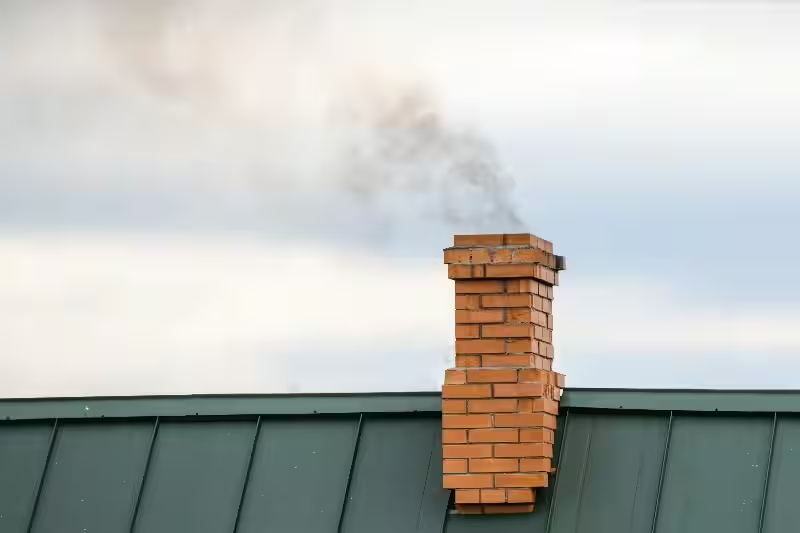
The gentle curl of chimney smoke rising into the crisp air has, for millennia, been more than just a sign of hearth and home. It’s a primal signal, a visual whisper that has woven itself into the very fabric of human faith and spiritual practice. From ancient hearth fires to the sacred incense of temples, the upward trajectory of smoke has served as a powerful metaphor for connection, for the ascent of prayers, and for the tangible manifestation of the divine. This article will explore the profound and often overlooked relationship between the humble plume of chimney smoke and the diverse tapestry of human religion, revealing how this everyday phenomenon has become a potent symbol in our quest for meaning and transcendence.
Imagine a small, ancient village, bathed in the soft glow of twilight. As families gather for their evening meal, a comforting scent fills the air – the aroma of woodsmoke, mingling with the savory notes of their supper. This isn’t just about warmth and sustenance; it’s a communal ritual, a moment where the hearth, the heart of the home, becomes a focal point of shared experience. The chimney smoke, rising from each dwelling, is a collective breath, an unspoken affirmation of life and continuity, and, in many cultures, an offering, however unintentional, to the heavens above.
From Hearth Fires to Holy Incense: The Universal Symbolism of Smoke
The act of burning has been intrinsically linked to worship since the dawn of civilization. Early humans, observing the transformative power of fire, likely saw its flames as a bridge to the spiritual realm. The smoke, a byproduct of this sacred fire, carried the essence of the burnt offerings – grains, herbs, animal sacrifices – upward, towards the celestial deities they believed inhabited the skies. This isn’t merely a historical curiosity; it’s a fundamental aspect of how we have historically communicated with the divine. The chimney smoke of our ancestors was, in essence, their prayer made visible, an earnest plea or a grateful offering ascending into the unknown.
Consider the practice of burnt offerings in ancient religions. Whether it was the meticulous ritual of a priest in a temple or the simple act of a farmer offering a portion of his harvest, the principle remained the same: to send something precious upwards, a tangible manifestation of devotion. The smoke was not just a byproduct; it was the very vehicle of that devotion, carrying the scent and essence of the sacrifice to the gods. This ancient tradition echoes in the plumes of chimney smoke we see today, a subtle reminder of our enduring need to connect with something larger than ourselves. The act of burning, and the subsequent rise of smoke, taps into a deep-seated human instinct to send our hopes and desires skyward.
The Aromatic Ascent: Incense as Sacred Communication
While the smoky breath from a domestic hearth often signifies comfort and sustenance, the deliberate use of incense in religious ceremonies elevates this concept to a profound spiritual practice. Incense, often made from fragrant resins, herbs, and spices, is specifically designed to produce a dense, aromatic smoke. This smoke is not just a visual cue; its perfumed essence is believed to purify spaces, ward off evil spirits, and, most importantly, carry prayers and intentions to the divine realm. The act of burning incense is a deliberate, sensory engagement with the sacred, a fragrant pathway for devotion.
In many traditions, the swirling tendrils of incense smoke are seen as visual prayers. Think of the wafting smoke from a censer in a Buddhist temple, or the rich scent of frankincense in a Christian liturgy. These are not random atmospheric effects; they are carefully orchestrated elements designed to create an atmosphere of reverence and facilitate a connection with the spiritual. The chimney smoke from a temple, therefore, is imbued with a different kind of meaning than that from a kitchen; it is a concentrated expression of collective faith, a visible testament to ongoing spiritual practice. The complex patterns of rising smoke can even be interpreted as divine messages, a visual language understood through faith and tradition.
Smoke as a Veil and a Window: Navigating the Sacred Unknown
The presence of chimney smoke can also evoke a sense of mystery and the sacred unknown. It can obscure the view of what lies beyond, creating a metaphorical veil between the mundane and the divine. This veil, however, is not necessarily a barrier; it can also be a window, inviting contemplation and fostering a sense of awe. The wispy, ephemeral nature of smoke mirrors the elusive nature of spiritual understanding, a constant reminder that the divine often operates in ways we cannot fully grasp.
Consider the stories from various cultures where smoke is associated with divine manifestations or portals to other realms. In some indigenous traditions, sacred smoke is used in rituals to connect with ancestral spirits or to seek guidance from the spirit world. The chimney smoke, in these contexts, becomes a tangible link to the unseen, a conduit for communication with those who have passed beyond our earthly perception. This duality – the obscuring veil and the revealing window – highlights the complex and multi-layered symbolism of smoke in religious thought, a constant dance between the known and the unknowable.
The Enduring Legacy: Chimney Smoke in Modern Spirituality
Even in our modern, increasingly secular world, the symbolism of chimney smoke continues to resonate within religious and spiritual contexts. While the direct act of burnt offerings may be less common, the visual and olfactory associations remain potent. The sight of chimney smoke can still evoke feelings of peace, reflection, and a connection to tradition. It serves as a gentle reminder of our collective human history and our enduring spiritual yearnings.
For many, the chimney smoke from their childhood home still carries a sense of comfort and belonging, a tangible link to their upbringing and the values instilled in them, which often include religious or spiritual teachings. Furthermore, the deliberate use of incense and smudging with herbs in contemporary spiritual practices, from yoga studios to personal meditation spaces, demonstrates the continued power of smoke as a tool for creating sacred space and fostering inner peace. The chimney smoke of our past and present, in its many forms, continues to be a silent, yet powerful, testament to our ongoing spiritual journey.
Frequently Asked Questions About Chimney Smoke and Religion
What is the religious significance of smoke?
Smoke has held religious significance across many cultures and throughout history. It is often seen as a conduit between the earthly and spiritual realms. The rising smoke from offerings and incense can symbolize prayers ascending to the heavens, purification, or a connection to the divine. Various traditions use smoke in rituals for cleansing spaces, invoking spirits, or as a form of meditation and spiritual focus.
Are there specific religious practices that involve burning incense or creating smoke?
Yes, many religious practices involve burning incense or other materials to create smoke. Examples include:
Buddhism: Incense is burned as an offering to the Buddha and as a way to purify the mind and create a meditative atmosphere.
Hinduism: Incense and ghee (clarified butter) are burned during pujas (worship rituals) to invoke deities and purify the environment.
Judaism: Historically, incense was used in the Temple in Jerusalem.
Christianity: Incense is used in some Christian denominations, particularly Orthodox and Catholic traditions, during services to symbolize the prayers of the faithful rising to God and for ceremonial blessings.
Indigenous Religions: Many indigenous spiritual practices worldwide use smoke from sacred herbs like sage, cedar, or tobacco for cleansing, healing, and ceremonial purposes.
Can chimney smoke be seen as a metaphor in religious contexts?
Yes, chimney smoke can be used metaphorically in religious contexts. Its ephemeral nature and upward movement can represent the fleetingness of earthly life, the ascent of the soul, or the visible manifestation of prayers and good deeds. Conversely, in some spiritual interpretations, uncontrolled or excessive smoke might symbolize impurity or a lack of clarity in spiritual pursuits.