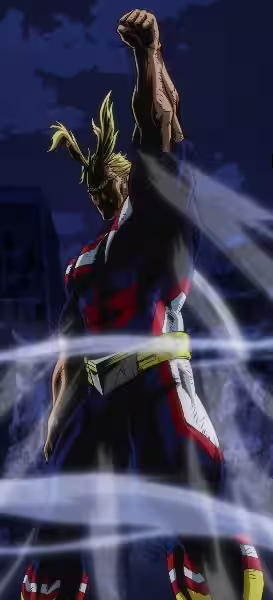
In the electrifying world of My Hero Academia, the name All Might resonates with unwavering hope, overwhelming power, and the very embodiment of justice. But beyond the iconic “Plus Ultra!” and the smash-filled finales, lies a deeper, often unspoken, connection to themes that resonate with the human spirit: faith, belief, and the very essence of what it means to be a symbol. This article delves into the spiritual undercurrents of All Might’s journey, exploring how his heroic principles and signature moves can be seen as a form of secular religion, offering solace, inspiration, and a guiding light to a society grappling with the extraordinary.
For many, All Might wasn’t just a hero; he was a beacon of unwavering optimism, a force that pushed back the encroaching darkness with every powerful punch. His presence alone could quell riots and inspire courage in the hearts of the downtrodden. This is where the concept of a “secular religion” truly takes root. It’s not about dogma or divine intervention in the traditional sense, but about a shared belief system built on foundational principles that guide and uplift. In this regard, All Might’s moves, and the man behind them, became the focal point of this collective faith.
The Preaching of the Symbol: Faith in the Face of Fear
The core of any religion lies in its ability to offer faith and hope, especially when confronted with adversity. All Might, even before his iconic battles, was a symbol of this. His very existence, the gleam in his eyes, and the booming laughter that preceded his arrival, instilled a sense of impenetrable security. This wasn’t just about physical protection; it was a psychological balm. When villains threatened, and the populace felt vulnerable, the mere thought of All Might, the number one hero, was enough to bolster their spirits. His unwavering smile, even in the face of overwhelming odds, became a sermon of resilience.
Consider the impact of his presence on everyday citizens. Before the rise of villains like All For One, society lived in a relative peace, but the potential for chaos always loomed. All Might’s unmatched power, exemplified by moves like the United States of Smash, acted as a constant deterrent. This wasn’t just a display of strength; it was a divine pronouncement of protection. His ability to single-handedly defeat even the most formidable threats was akin to a divine intervention, a powerful force intervening to restore order. This created a societal reliance, a collective trust that bordered on reverence, where his arrival was met with awed silence and then thunderous applause, echoing the adoration often reserved for spiritual figures after a miraculous act.
The Commandments of a Hero: Upholding Justice and Compassion
Just as religions have commandments that guide believers, All Might’s actions and teachings can be seen as a set of heroic doctrines. His unwavering commitment to justice, his selfless sacrifices, and his unyielding dedication to saving everyone formed the bedrock of his “creed.” These weren’t just moral guidelines; they were deeply ingrained principles that dictated his every move. His iconic line, “I am here!”, was not just a declaration of presence, but a sacred promise, a reassurance that no matter the peril, help would arrive. This promise, delivered with the force of a Detroit Smash, became a rallying cry for the oppressed and a stern warning to the wicked.
His training of young heroes, particularly Izuku Midoriya, was a form of spiritual mentorship. He didn’t just teach combat techniques; he imparted life lessons and ethical frameworks. He emphasized the importance of sacrifice, courage, and the unwavering belief in good, even when faced with personal loss. The transfer of One For All itself could be viewed as a sacred rite, a passing down of not just power, but of a divine responsibility. This monumental act underscored the idea that true heroism requires more than just strength; it demands a pure heart and an unshakeable conviction, echoing the virtues lauded in spiritual leaders throughout history.
The Miracles of Might: Divine Intervention and Superhuman Feats
All Might’s battles were often characterized by superhuman feats that defied logic and expectation. His Texas Smash, a powerful punch capable of dispelling immense energy, or the Missouri Smash, a flurry of rapid strikes, were not just displays of physical prowess; they were miraculous interventions in the face of overwhelming threats. When the city was on the brink of destruction, and all hope seemed lost, All Might’s arrival and subsequent heroic exploits were interpreted by many as nothing short of divine intervention. His Olympus-level strength allowed him to perform acts that saved countless lives, solidifying his status as a savior figure.
The All Might: Origin story, detailing his struggle and eventual triumph, further cemented his legend. It was a narrative of suffering, perseverance, and ultimate redemption. This narrative arc, where a seemingly ordinary individual rises to become an unbeatable force for good, resonates deeply with the archetypal stories of religious saviors and prophets who overcome immense personal hardship to guide humanity. His final, monumental battle, where he pushed his waning power to its absolute limit to defeat All For One, was a martyrdom of sorts, a supreme sacrifice that left an indelible mark on the hearts and minds of everyone who witnessed it. This act, more than any other, solidified his place as a divine figure in the eyes of many.
The Sacred Texts of Heroism: Lessons from the Symbol of Peace
The teachings of All Might, embedded in his actions and his words, can be considered the sacred texts of heroism in the MHA universe. His philosophy, centered on protecting the weak and upholding justice, served as a guiding principle for aspiring heroes and ordinary citizens alike. When he declared, “You too can become a hero!”, it was a divine calling, an invitation to embrace their inner strength and stand against evil. This message, delivered with the impact of a Carolina Smash, resonated with individuals who felt powerless, offering them a path to purpose and meaning.
The impact of his wisdom extended beyond the battlefield. His advice to Midoriya, about the importance of determination and the spirit of never giving up, became a mantra for many facing personal struggles. These weren’t just platitudes; they were profound truths delivered with the weight of his experience. The stories of his past victories, the sacrifices he made, and the unwavering spirit he displayed, served as parables that inspired generations. In this way, All Might’s moves and his entire persona became a living gospel, a testament to the power of faith, courage, and the enduring pursuit of good.
Frequently Asked Questions
What are All Might’s signature moves?
All Might’s most iconic move is the “United States of Smash,” a powerful punch that signifies his ultimate strength. He also employs variations like the “Delaware Smash” and “Texas Smash” for different levels of impact and range.
Does All Might have a specific religion?
The anime and manga series do not explicitly state or explore All Might’s religious beliefs. His character is primarily focused on his role as the Symbol of Peace and his dedication to justice and heroism, with no indication of any religious affiliation.