The concept of the Holy Spirit is a cornerstone of many religious traditions, particularly within Christianity, where it is understood as a distinct person of the Godhead. But for many, a fundamental question lingers: where did the Holy Spirit come from? This isn’t a simple theological puzzle with a single, universally accepted answer, but rather a profound exploration into the nature of God and divine relationship. Understanding this origin involves delving into scripture, theological interpretations, and the very essence of faith itself. It’s a journey that can illuminate our understanding of God’s active presence in the world and in our lives.
From the earliest whispers of religious thought, there has been a recognition of a divine power that animates, guides, and inspires. While the term “Holy Spirit” is most prominent in Christian theology, the idea of a divine breath or active force emanating from the divine is present in various spiritual and philosophical systems. To truly grasp the origin of the Holy Spirit, we must begin by examining the foundational beliefs that shape our understanding of God and His eternal nature.
The Trinitarian Perspective: God the Father, God the Son, and God the Holy Spirit
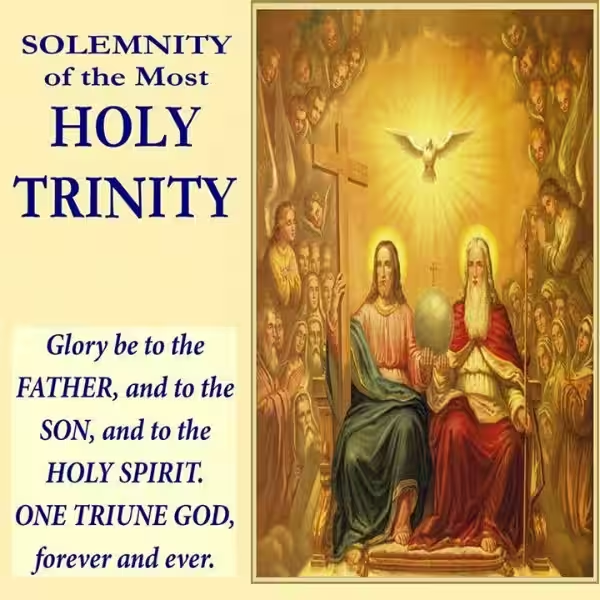
In mainstream Christianity, the understanding of the Holy Spirit’s origin is inextricably linked to the doctrine of the Trinity. This doctrine posits that God is one being existing in three co-equal and co-eternal persons: the Father, the Son (Jesus Christ), and the Holy Spirit. Within this framework, the Holy Spirit does not have a separate origin in time, but rather proceeds eternally from the Father, and in Western theology, also from the Son (the “Filioque” clause). This means the Holy Spirit has always been, and always will be, with the Father and the Son.
Think of it like a perfectly harmonious, eternal song. The melody, the harmony, and the rhythm are all distinct yet inseparable components of the single piece of music. Similarly, the Father, Son, and Holy Spirit are distinct persons, each with their unique role, yet they are one unified God. The Holy Spirit’s procession from the Father, and sometimes the Son, signifies this eternal, unbreakable bond and the ongoing outflow of God’s very essence. This isn’t about one person creating another, but about the eternal relationship and unity within the Godhead itself.
The concept of “procession” is crucial here. It doesn’t imply a temporal beginning or a subordination of the Spirit to the Father or Son, but rather an eternal relationship of origin within the Godhead. The Holy Spirit is the visible manifestation of God’s love, power, and presence in the world. When Jesus spoke of the Holy Spirit, often called the “Comforter” or “Advocate,” he described Him as being sent by the Father and also by Himself. This reinforces the idea that the Spirit’s existence is intimately tied to the other persons of the Trinity, an eternal “breathing out” of the divine nature.
Consider a powerful light source, like the sun. The light itself doesn’t have a separate origin point in time from the sun; it is eternally emanating from it. In a similar, though imperfect, analogy, the Holy Spirit is eternally proceeding from the Father, and in the Western tradition, also from the Son, as the expression of God’s active, vibrant, and relational being. This eternal origin signifies the Spirit’s full divinity and equality with the Father and the Son, ensuring that God’s presence is not limited to a singular point but is an ever-present, dynamic reality.
Biblical Accounts of the Holy Spirit’s Manifestation
The Bible offers numerous accounts that shed light on where the Holy Spirit came from by illustrating His divine nature and actions. From the very beginning, in Genesis, we see the “Spirit of God hovering over the waters,” suggesting an active, creative presence. In the New Testament, Jesus’ birth is described as being by the power of the Holy Spirit, and His baptism marks a pivotal moment where the Spirit descends in bodily form like a dove, with a voice from heaven declaring, “This is my beloved Son, with whom I am well pleased.” These instances are not just isolated events but point to the Spirit’s eternal existence and active participation in God’s plan.
The disciples’ experience at Pentecost is perhaps the most dramatic depiction of the Holy Spirit’s coming. After Jesus’ ascension, the Holy Spirit descended upon them with the sound of a rushing wind and tongues of fire, empowering them to speak in other languages and to boldly proclaim the Gospel. This event, as described in the Book of Acts, wasn’t the creation of the Holy Spirit, but rather the manifestation of His full power and presence upon those who believed. It was a pivotal moment where the Spirit, eternally existing, was poured out to empower the Church and extend God’s kingdom.
Throughout scripture, the Holy Spirit is consistently portrayed as God’s active presence and power working in the world and in the lives of believers. He is the one who inspires prophets, guides apostles, empowers miracles, and indwells believers, convicting them of sin, teaching them truth, and comforting them in their struggles. The question of where the Holy Spirit came from is answered by understanding that He is not a created being or an impersonal force, but a divine person eternally united with the Father and the Son. His actions are the actions of God Himself.
Consider the analogy of a powerful, invisible current of electricity that powers a city. The electricity isn’t created by the light bulbs or the appliances that use it; it is an inherent, active force that flows through them, enabling them to function. Similarly, the Holy Spirit is the divine current that animates and empowers the spiritual life of individuals and the Church. His origin is not a point in time but an eternal emanation from the very being of God. This understanding helps us to see the Spirit not as a distant entity, but as the very essence of God’s active, loving, and transforming presence among us.
Beyond Christianity: Divine Breath and Active Principles
While the term “Holy Spirit” is most explicitly defined within Christianity, the concept of a divine emanation, a life-giving breath, or an animating principle is present in many other religious and philosophical traditions. These ideas, though not always trinitarian, often point to a profound recognition of a divine force that is both transcendent and immanent, actively shaping reality and guiding humanity. Exploring these parallels can broaden our perspective on the universal human longing for connection with the divine.
In Judaism, the “Ruach Elohim” (Spirit of God) is present from creation and is understood as God’s power and presence. In some Eastern philosophies, concepts like “prana” or “chi” represent life force energy that is believed to emanate from a universal source. While these are distinct theological frameworks, the common thread is the acknowledgment of a vital, divine power that is not separate from the ultimate reality but is its active expression. This suggests that the question of where the Holy Spirit came from resonates with a deeper, cross-cultural understanding of the divine.
The very existence of these diverse expressions of divine energy and presence across religions speaks to a universal human yearning to understand and connect with the source of life and meaning. Whether termed Holy Spirit, divine breath, or cosmic energy, these concepts represent humanity’s attempt to articulate the active, guiding, and life-giving aspect of the divine. The origin of these perceived forces is often understood as being intrinsically linked to the ultimate creator or ultimate reality, suggesting a fundamental truth about the divine nature being inherently active and relational.
Ultimately, understanding where the Holy Spirit came from is less about pinpointing a historical event and more about grasping the eternal nature of God as a relational, active, and all-encompassing being. The Holy Spirit’s origin is not a point of separation but a profound expression of unity within the Godhead. This understanding invites us to experience the Spirit not as a distant concept, but as the very means by which God is present, active, and empowering in our world and in our individual lives, offering guidance, comfort, and transformative power.
Frequently Asked Questions about the Holy Spirit
Where does the Holy Spirit come from?
In Christianity, the Holy Spirit is understood to be the third person of the Trinity, co-equal and co-eternal with God the Father and God the Son (Jesus Christ). Therefore, the Holy Spirit proceeds from the Father and the Son, as stated in the Nicene Creed.
What is the Holy Spirit’s role in religion?
The Holy Spirit is believed to be God’s active presence in the world. In Christianity, the Holy Spirit is seen as the source of spiritual gifts, the comforter, the guide into truth, and the one who empowers believers for service and witness. In other religious traditions, similar concepts of divine spirit or animating force exist, though their specific roles and theological understanding may differ.