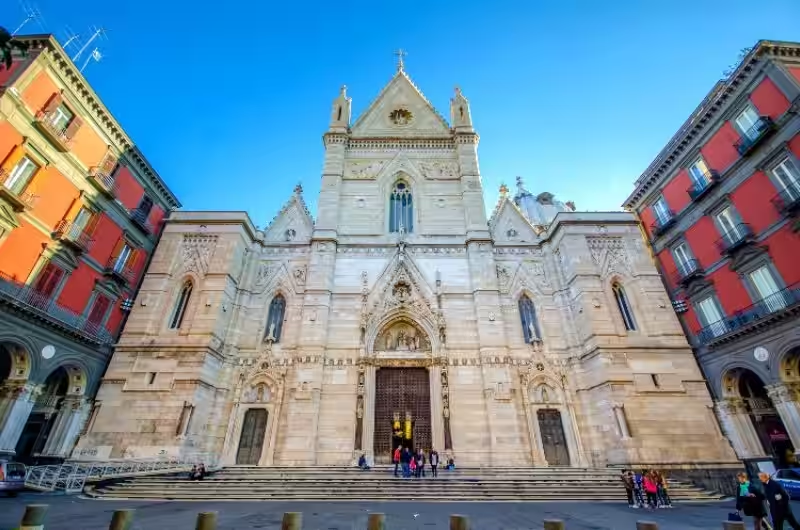
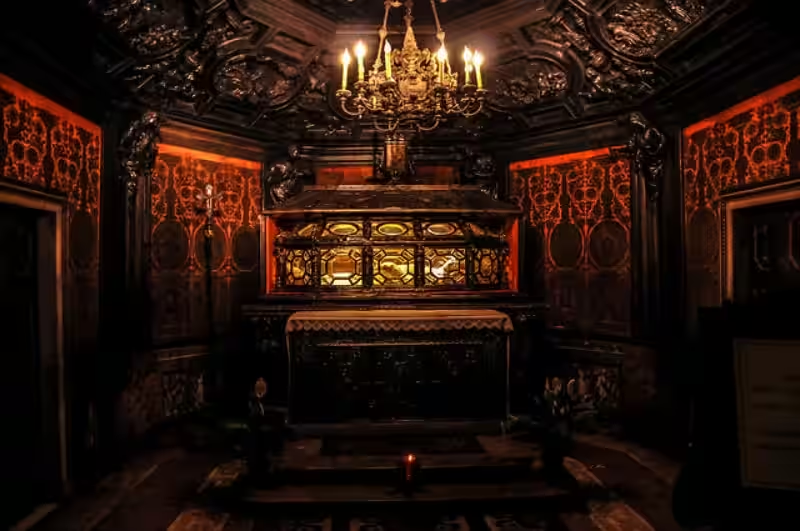
Naples, a city pulsating with life, passion, and an almost tangible sense of history, is home to a treasure that stands as a testament to centuries of devotion and artistic brilliance: the Cathedral of Naples, or more formally, the Duomo di Napoli. This magnificent edifice is far more than just a building; it’s a spiritual heart for the Neapolitan people, a repository of sacred relics, and a canvas showcasing the evolution of religion and art in this vibrant corner of Italy. To step inside the Cathedral of Naples is to embark on a journey that transcends time, connecting with the deep-rooted faith that has shaped this extraordinary city.
For many, visiting the Cathedral of Naples is an essential part of experiencing the true essence of the city. It’s a place where the echoes of prayers whispered over generations mingle with the awe-inspiring beauty of its architecture and art. Whether you are a devout believer, an art enthusiast, or a curious traveler, the Duomo offers a profoundly moving and incredibly informative encounter with the enduring power of religion and its tangible manifestations in human creation. This article aims to guide you through the rich tapestry woven within the walls of the Cathedral of Naples, highlighting its significance, its artistic wonders, and its place in the ongoing story of Neapolitan religion.
A Sanctuary of Sacred Power: The Miracles and Relics of the Cathedral of Naples
At the very core of the Cathedral of Naples’ spiritual significance lies its profound connection to Saint Januarius (San Gennaro), the city’s beloved patron saint. The most renowned and cherished aspect of the Duomo is the ongoing tradition of the Miracle of San Gennaro, a phenomenon that has captivated believers for centuries. Twice a year, on the feast day of the saint (September 19th) and the anniversary of his martyrdom (December 16th), ampoules containing the saint’s dried blood are brought before his reliquary. In a moment of intense anticipation, the blood is said to liquefy, a sign of divine intervention and a blessing for the city. This event, deeply ingrained in Neapolitan religion, draws thousands of pilgrims and faithful from around the world, transcending mere spectacle to become a powerful expression of unwavering faith and hope.
Beyond the dramatic spectacle of the blood liquefaction, the Cathedral of Naples houses a wealth of sacred relics that underscore its importance as a pilgrimage site. The Chapel of the Treasury of San Gennaro is the most opulent and significant of these, a Baroque masterpiece adorned with precious artworks and housing the saint’s skull and vials of blood. Imagine the countless souls who have stood before these relics, their prayers carried on the air, seeking solace, intercession, or simply a tangible connection to the divine. The presence of these sacred artifacts makes the Cathedral of Naples a living testament to the enduring power of religion and the profound impact of its saints on the lives of ordinary people.
Architectural Grandeur: A Fusion of Styles and Centuries
The Cathedral of Naples, with its imposing façade and sprawling interior, is a captivating study in architectural evolution. What we see today is not the result of a single construction phase but rather a fascinating amalgamation of styles that reflects centuries of additions, renovations, and artistic interventions. The original structure, dating back to the late 13th century, was built on the foundations of an ancient Greek temple and a Roman basilica, hinting at the deep historical layers beneath. This layering is a metaphor for the city itself, where ancient pagan roots intertwine with Christian religion.
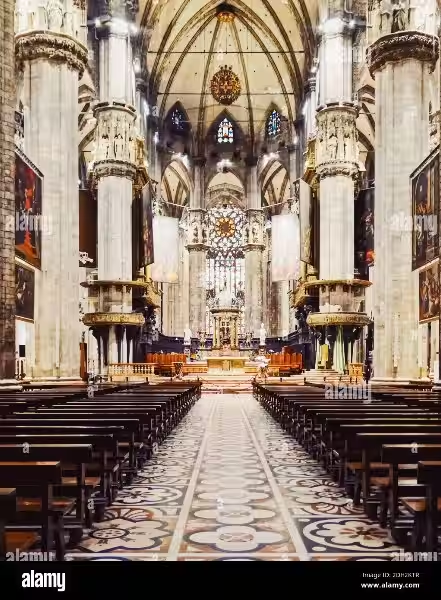
As you wander through the Cathedral of Naples, you’ll encounter a rich tapestry of architectural periods. The Gothic elements of the original construction are still visible, particularly in the nave’s soaring arches and ribbed vaults. However, these are beautifully complemented by later Baroque additions, most notably in the stunning Chapel of the Treasury of San Gennaro, a riot of stucco, gold, and intricate detailing that exemplifies the exuberance of the era. Even Renaissance influences can be found, adding further depth to the visual narrative. It’s this harmonious blend of disparate eras, where each architectural style tells its own story, that makes the Cathedral of Naples such a visually compelling and historically significant landmark, a testament to the evolving expressions of religion and art.
Artistic Treasures: A Divine Palette of Masterpieces
The Cathedral of Naples is not just a sanctuary for the faithful; it’s also a veritable museum, housing an extraordinary collection of religious art that spans from antiquity to the Baroque period. Within its hallowed halls, you can find masterpieces by renowned artists, each piece contributing to the sacred narrative and the aesthetic splendor of the Duomo. The sheer volume and quality of the art underscore the profound relationship between religion and artistic patronage throughout history, demonstrating how faith has inspired some of humanity’s greatest creative endeavors. Visiting the Cathedral of Naples offers a unique opportunity to witness this divine marriage of art and devotion.
Among the many artistic highlights, the Cathedral of Naples boasts important works that draw the eye and stir the soul. The frescoes in the Cappella Carafa, the stunning altarpieces, and the intricate mosaics all speak to the immense talent and devotion of the artists who contributed to its embellishment. Consider, for instance, the works by Luca Giordano or Francesco Solimena, whose vibrantly dramatic Baroque style brings biblical narratives to life with an almost theatrical flair. These artistic treasures are not merely decorative; they serve as visual sermons, aiding contemplation and deepening the spiritual experience for all who enter the Cathedral of Naples, making it a cornerstone of religious and artistic heritage.
The Cathedral of Naples in Modern Life: A Living Faith
The Cathedral of Naples is far from being a relic of the past; it remains a vibrant and integral part of contemporary Neapolitan life. The daily rhythm of Mass, confessions, and prayer services continues unabated, demonstrating the enduring relevance of religion in the lives of its parishioners. It serves as a constant reminder of the spiritual anchor that the Duomo provides amidst the bustling energy of the city. For many Neapolitans, the Cathedral of Naples is a familiar and comforting presence, a place of solace and community that has been passed down through generations.
Beyond its liturgical functions, the Cathedral of Naples also plays a crucial role in community events and celebrations. It is the focal point for significant religious festivals, bringing people together in shared devotion and cultural expression. The annual feast of San Gennaro, for example, transforms the area around the Duomo into a vibrant street festival, a testament to the living spirit of religion in Naples. The Cathedral of Naples stands as a powerful symbol not only of historical faith but also of a faith that continues to thrive and adapt, resonating deeply with the modern Neapolitan spirit.
Frequently Asked Questions about the Cathedral of Naples and Religion
What is the primary religious significance of the Cathedral of Naples?
The Cathedral of Naples, also known as the Duomo di Napoli or the Metropolitan Cathedral of the Assumption of Saint Mary, is the principal church of the Catholic Archdiocese of Naples. It is a site of immense religious importance, primarily as the resting place of the relics of Saint Januarius, the patron saint of Naples. The miracle of the liquefaction of his blood, which occurs twice a year, is a central focal point of devotion and attracts pilgrims from far and wide.
What are the most important religious relics housed in the Cathedral of Naples?
The most revered relic is the blood of Saint Januarius (San Gennaro), the patron saint of Naples. Other significant relics include those of Saint Agrippinus of Naples and Saint Severus of Ravenna, as well as relics of various other saints and martyrs.
How is Saint Januarius venerated in the Cathedral and in Naples?
Saint Januarius is deeply venered as the patron saint and protector of Naples. The most prominent act of veneration is the miracle of the liquefaction of his blood, which is believed to occur on his feast day (September 19) and the anniversary of the miracle (December 16). This event is a major religious festival, often accompanied by public processions and celebrations. The cathedral itself is dedicated to him in part, and his image and relics are central to its religious life.
What is the significance of the “Miracle of San Gennaro”?
The “Miracle of San Gennaro” refers to the recurring liquefaction of the blood of Saint Januarius. This phenomenon is a profound symbol of faith for Neapolitans, seen as a sign of protection and divine favor for the city. The event is steeped in tradition and is a cornerstone of religious devotion in Naples.
Is the Cathedral of Naples still an active place of worship?
Yes, the Cathedral of Naples is an active and functioning Roman Catholic cathedral. It serves as the seat of the Archbishop of Naples and is the site of regular Mass services, sacraments, and other religious ceremonies. It remains a vital center for the Catholic community in Naples.
What is the architectural style and religious symbolism of the Cathedral?
The Cathedral of Naples is a fascinating blend of architectural styles, reflecting centuries of construction and renovation, with significant Gothic, Renaissance, and Baroque elements. Religiously, its symbolism revolves around its dedication to the Assumption of Mary, its role as the sanctuary for Saint Januarius, and its function as the spiritual heart of the archdiocese. The various chapels and altars are dedicated to different saints and biblical events, further enriching its religious symbolism.
Are there any specific religious events or festivals held at the Cathedral of Naples?
Beyond the “Miracle of San Gennaro” in September and December, the Cathedral hosts numerous other significant religious events throughout the year. These include Easter celebrations, Christmas services, feast days of various saints, and special masses for important occasions related to the Archdiocese and the city of Naples.