For centuries, the Catholic faith has been guided by the spiritual leadership of the Pope, and at the heart of this immense spiritual network lie the four Papal Basilicas. These aren’t just grand churches; they are cathedrals of history, art, and profound religious significance, drawing millions of pilgrims and visitors each year. Stepping within their hallowed walls is to step into a living testament to the Church’s enduring legacy, a journey through time and a deeply personal encounter with the divine.
These four monumental structures are more than just beautiful buildings; they are centers of devotion, hubs of theological learning, and repositories of sacred relics. Each basilica holds a unique place in the narrative of Christianity, offering a different facet of faith to explore. Whether you are a devout pilgrim seeking spiritual solace or a curious traveler fascinated by history and architecture, understanding the importance of these sites offers a richer appreciation for the global reach and deep roots of the Catholic Church.
St. Peter’s Basilica: The Heartbeat of the Vatican
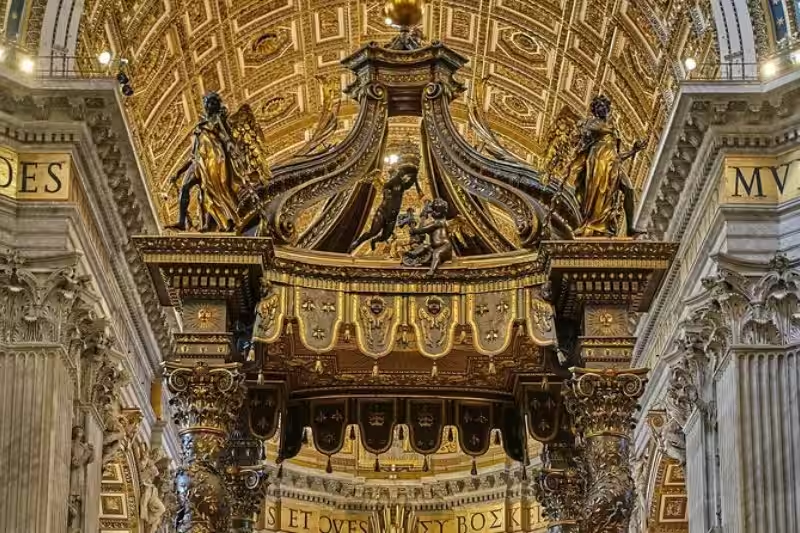
Dominating the skyline of Vatican City, St. Peter’s Basilica is arguably the most famous of the four Papal Basilicas, and for good reason. It stands as the principal church of the Catholic world, a place where the Pope himself presides over many of the most significant liturgical celebrations. Its sheer scale is breathtaking, a testament to human endeavor and artistic brilliance, housing masterpieces like Michelangelo’s Pietà and Bernini’s Baldacchino. The feeling of awe upon entering is palpable, a humbling realization of the centuries of prayer and devotion that have resonated within its walls.
The spiritual weight of St. Peter’s is immense, as it is believed to be built over the tomb of Saint Peter, one of Jesus’s twelve apostles and the first Pope. This makes it a paramount pilgrimage destination, where the faithful come to connect with the very foundations of the Church. The experience of witnessing the grandeur, from the soaring dome to the intricate mosaics, is not just an aesthetic delight but a profound encounter with the living history and spiritual lineage of Catholicism. Imagine a family gathering, where the oldest members share stories of faith – St. Peter’s is like that, but on a global, eternal scale.
St. John Lateran: The Mother Church of All Churches
Often overlooked by those solely focused on the grandeur of St. Peter’s, St. John Lateran holds a unique and perhaps even more foundational title: it is the Cathedral of Rome and, by extension, considered the “Mother Church of all the Churches” throughout the world. This title underscores its historical precedence; it was the residence of the Popes for centuries before the Vatican became their primary seat. The basilica’s ancient origins and its role as the episcopal see of the Bishop of Rome give it an unparalleled historical and spiritual authority.
Walking through the majestic facade and into the vast nave of St. John Lateran, one can almost feel the echoes of the early Church fathers and the unfolding of Christian doctrine. The sheer weight of history here is tangible, a place where pivotal decisions that shaped Western civilization were made. It’s a reminder that the Church is not static but has a dynamic, evolving history, and this basilica is a cornerstone of that narrative. Think of it like a revered ancestral home, where the roots of a vast family tree are strongest and most deeply felt.
St. Paul Outside the Walls: A Monument to the Apostle to the Gentiles
Further testament to the importance of the Apostles, St. Paul Outside the Walls (San Paolo Fuori le Mura) is a basilica dedicated to the Apostle to the Gentiles. Legend holds that it is built on the burial site of Saint Paul, making it another critical pilgrimage destination for those seeking to honor his immense contribution to spreading Christianity throughout the Roman Empire. The basilica’s imposing scale and the stunning mosaics that adorn its nave create an atmosphere of solemnity and reverence, inviting reflection on Paul’s missionary journeys and his profound theological writings.
The experience of visiting St. Paul Outside the Walls is one of deep contemplation and spiritual connection. The vastness of the basilica, with its rows of portraits of all the Popes throughout history, serves as a visual timeline of the Church’s leadership. This site offers a powerful reminder of the Church’s universal mission, reaching out to all nations and peoples, just as Saint Paul did. It’s a place where the legacy of faith is celebrated, inviting visitors to consider their own place within that grand, ongoing story.
Finally, St. Mary Major (Santa Maria Maggiore) stands as a testament to the profound veneration the Catholic Church holds for the Blessed Virgin Mary. It is the largest church in Rome dedicated to Mary, and its origins are steeped in legend, including a miraculous snowfall that indicated the site for its construction. This basilica is not only a stunning architectural achievement, featuring some of the earliest and most beautiful mosaics depicting Marian scenes, but also a vibrant center of Marian devotion. Pilgrims come here to pray for her intercession and to find solace in her maternal love.
The beauty and tranquility of St. Mary Major offer a unique spiritual experience. The magnificent mosaics are not merely decorative; they narrate key moments in Mary’s life, drawing visitors into a deeper understanding and appreciation of her role in salvation history. Visiting this basilica allows one to connect with a timeless aspect of Catholic spirituality, the deep and enduring love for the Mother of God. It’s a sanctuary of peace, where the faithful can find comfort and inspiration, much like seeking the embrace of a loving mother.
Pilgrimage and Preservation: The Enduring Significance
The four Papal Basilicas are more than just tourist attractions; they are living sanctuaries that continue to serve their original purpose: to be centers of worship, faith, and spiritual renewal. Pilgrims from every corner of the globe undertake journeys to these sacred sites, seeking to walk in the footsteps of saints and apostles, to experience the tangible presence of history, and to deepen their faith. The devotional practices that take place within their walls – prayer, Mass, confession – are the lifeblood that keeps these basilicas vibrant and relevant.
Beyond their spiritual function, these basilicas are also invaluable historical and artistic treasures. Their preservation is a collective responsibility, undertaken with immense care and dedication. The ongoing efforts to maintain their architectural integrity, restore their priceless artworks, and ensure their accessibility to all demonstrate a commitment to safeguarding this rich cultural and religious heritage for future generations. Visiting these four Papal Basilicas offers a profound glimpse into the enduring power of faith and the monumental legacy of the Catholic Church.
Frequently Asked Questions about the Four Papal Basilicas
What are the four Papal Basilicas?
The four Papal Basilicas, also known as major basilicas, are the most important churches in Catholicism. They are: St. Peter’s Basilica, the Archbasilica of St. John Lateran, the Basilica of Saint Mary Major, and the Basilica of Saint Paul Outside the Walls. All are located in Rome, except for St. Paul Outside the Walls, which is technically outside the Vatican City but still under papal jurisdiction.
What is the significance of a Papal Basilica?
Papal Basilicas hold a special status within the Catholic Church, signifying a direct connection to the Pope and their historical importance. They are centers of pilgrimage and devotion, housing significant relics and serving as important liturgical sites. Archbasilica of St. John Lateran is the cathedral of the Diocese of Rome, making it the seat of the Pope as Bishop of Rome.
What religion are these basilicas associated with?
These basilicas are central to the Roman Catholic tradition within Christianity. They are dedicated to prominent figures in Christian history and are places of worship for Catholics worldwide.
What is the Archbasilica of St. John Lateran?
The Archbasilica of St. John Lateran is the Pope’s cathedral as Bishop of Rome. It is considered the mother church of all churches in the Catholic world. It holds immense historical and spiritual significance.
What is St. Peter’s Basilica?
St. Peter’s Basilica is one of the largest churches in the world and is located in Vatican City. It is built on the traditional burial site of Saint Peter, one of Jesus’ apostles and the first Pope. It is a major pilgrimage destination.
What is the Basilica of Saint Mary Major?
The Basilica of Saint Mary Major is the largest and most important church in Rome dedicated to the Virgin Mary. It is one of the oldest churches in Rome and is known for its beautiful mosaics.
What is the Basilica of Saint Paul Outside the Walls?
The Basilica of Saint Paul Outside the Walls is built over the tomb of Saint Paul the Apostle. It is one of the four major basilicas and is located outside the ancient Roman walls.