The iconic Notre Dame Cathedral, a silhouette etched against the Parisian sky, is more than just an architectural marvel. It is a living testament to centuries of faith, artistry, and human endeavor. While its soaring arches and majestic spires often capture the initial awe, it is within the hallowed walls, bathed in an ethereal glow, that the true soul of Notre Dame whispers its stories. This soul is intricately woven into the breathtaking Notre Dame Cathedral stained glass windows, a collection that transcends mere decoration to become a profound expression of religious narrative and divine light.
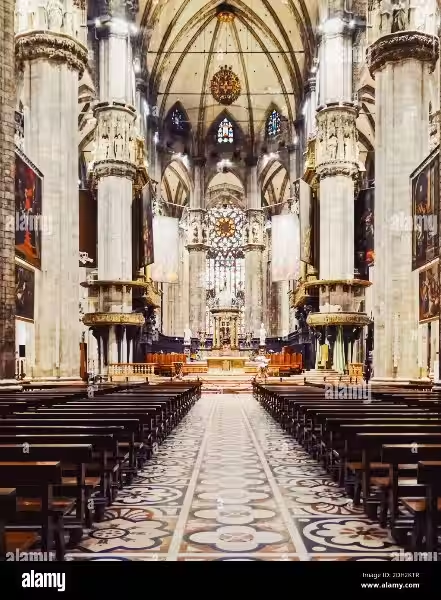
For generations, pilgrims, tourists, and Parisians alike have been drawn to the cathedral’s interior, seeking solace, inspiration, or simply to marvel at its grandeur. The experience is often amplified, almost transformed, by the interplay of light filtering through the magnificent Notre Dame Cathedral stained glass windows. These luminous panes are not just windows; they are portals, each piece of colored glass meticulously placed to tell stories that have resonated with believers for over 800 years, offering a tangible connection to the divine and the enduring power of faith.
The Genesis of Sacred Light: Early Stained Glass at Notre Dame
The story of Notre Dame’s stained glass begins with the very foundations of the Gothic architectural movement. As cathedrals grew taller, reaching towards the heavens, walls were thinned and pierced with vast openings to allow more light to flood the sacred spaces. This architectural innovation created the perfect canvas for the art of stained glass. The early Notre Dame Cathedral stained glass windows were revolutionary for their time, transforming the cold stone into vibrant, luminous walls.
Imagine stepping into a dimly lit space, and suddenly, the walls erupt with color. This was the effect of the early stained glass. The artisans, working with an understanding of both artistry and theology, meticulously chipped away at stone to create space for these “painted” windows. Their primary purpose was didactic: to educate a largely illiterate population about the stories of the Bible, the lives of saints, and the core tenets of their religion. These windows served as visual sermons, bringing the sacred texts to life through vibrant hues of ruby, sapphire, and emerald.
The Rose Windows: Celestial Blossoms of Theological Depth
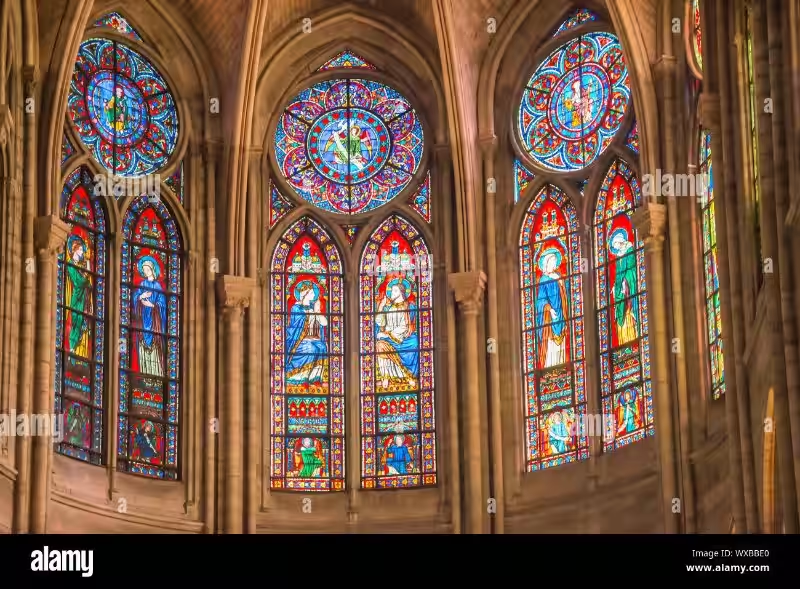
No discussion of the Notre Dame Cathedral stained glass windows would be complete without singling out its magnificent Rose Windows. These circular masterpieces, flanking the transepts and the facade, are arguably the most famous and visually arresting features of the cathedral’s interior. Their sheer size and the complexity of their design are a testament to the extraordinary skill and devotion of the medieval artisans who created them. Each Rose Window is a universe of symbolic meaning, a testament to the intricate theological understanding of the era.
The North Rose, for instance, dating back to the 13th century, depicts scenes from the Old Testament, a rich tapestry of prophecy and anticipation leading towards the coming of Christ. The South Rose, equally breathtaking, focuses on the New Testament, illustrating the redemptive story of salvation. The central figure often represents the Virgin Mary, a pivotal figure in Catholic devotion, surrounded by a kaleidoscope of figures and events. To gaze upon these Notre Dame Cathedral stained glass windows is to embark on a visual pilgrimage, tracing the grand narrative of salvation with every glance. The intricate patterns, like cosmic mandalas, draw the eye inward, fostering contemplation and a sense of awe at the divine order.
The Evolution and Restoration of Luminous Narratives
Over the centuries, Notre Dame has witnessed fires, revolutions, and countless renovations, and its Notre Dame Cathedral stained glass windows have been subject to the same ebb and flow of history. While some original 13th-century glass remains, much of what we see today are later additions and restorations, each reflecting the artistic styles and theological emphases of their respective eras. This evolution adds another layer of richness to the cathedral’s story, showcasing how faith and its artistic expressions adapt and endure.
The process of restoring and preserving these delicate works of art is a monumental undertaking. Experts meticulously study the original techniques, carefully cleaning and repairing fractured panes, and sometimes, recreating lost sections based on historical records and artistic analysis. The goal is always to honor the original intent while ensuring the longevity of these precious Notre Dame Cathedral stained glass windows. This dedication to preservation underscores the profound importance placed on these windows as custodians of religious history and artistic heritage. It’s akin to a family painstakingly restoring an ancient heirloom, ensuring its beauty and story can be passed down to future generations.
The Symbolic Language of Color and Light
The power of the Notre Dame Cathedral stained glass windows lies not just in the stories they depict, but in the very language of color and light they employ. Each hue is imbued with symbolic meaning, carefully chosen to evoke specific emotions and theological concepts. Deep blues often represent the heavens, divine truth, and the Virgin Mary’s purity, while vibrant reds can signify Christ’s blood, love, or martyrdom. Golden yellows symbolize divine radiance, glory, and the presence of God.
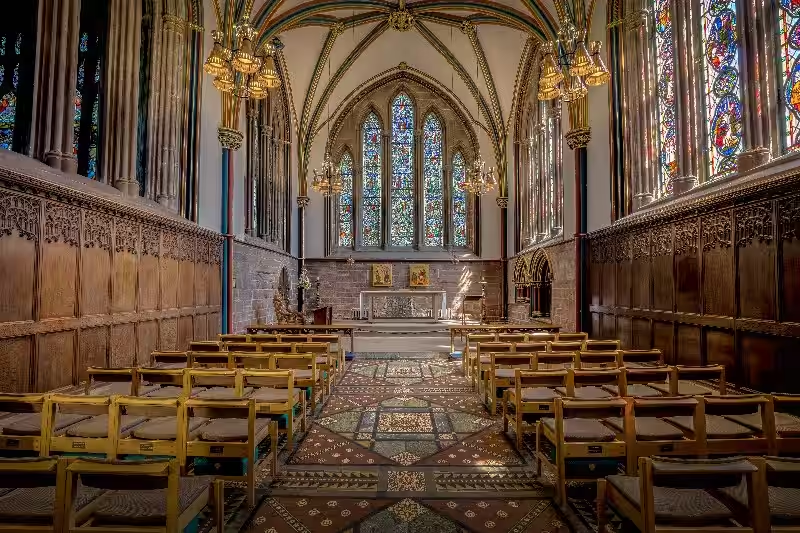
When sunlight streams through these colored panes, it transforms the cathedral’s interior into a kaleidoscope of divine illumination. This is not accidental; it is a deliberate theological statement. The light itself becomes an active participant in the worship experience, a tangible manifestation of God’s presence. The way the light shifts and plays throughout the day, casting different hues and patterns on the stone floor and walls, creates a dynamic and ever-changing sacred space. This is the magic of Notre Dame Cathedral stained glass windows: they turn pure light into a conduit for spiritual connection, making the abstract concepts of faith feel palpable and immediate.
A Legacy Illuminated: The Enduring Significance of Notre Dame’s Glass
The resilience of Notre Dame, even in the face of recent tragedy, has underscored the profound connection people feel to this sacred edifice and its treasures. The efforts to restore the cathedral, including its priceless Notre Dame Cathedral stained glass windows, have been met with global support, a testament to their universal significance. These windows are more than just historical artifacts; they are living testaments to human ingenuity, faith, and the enduring power of art to inspire and uplift.
As we look forward to the renewed glory of Notre Dame, the Notre Dame Cathedral stained glass windows will undoubtedly continue to play a central role in its spiritual and artistic narrative. They will continue to tell their ancient stories, to bathe worshippers in divine light, and to serve as a constant reminder of the enduring power of faith, beauty, and the human spirit’s capacity for creation. The careful restoration and preservation of these windows ensure that their luminous legacy will continue to enlighten and inspire for centuries to come, a beacon of hope and a testament to the sacred beauty that can be crafted from glass and light.
Frequently Asked Questions: Notre Dame Cathedral Stained Glass Windows and Religion
What is the significance of the stained glass windows in Notre Dame Cathedral?
The stained glass windows of Notre Dame are not merely decorative; they are profound theological and historical documents. They depict biblical stories, the lives of saints, and key moments in Christian history, serving as a visual catechism for a largely illiterate population in medieval times. These windows have been integral to the cathedral’s spiritual purpose, guiding worshippers in prayer and contemplation, and illuminating the sacred space with divine light.
How do the stained glass windows relate to Catholic doctrine?
The imagery within the windows directly reflects core tenets of Catholic faith. Scenes from the Old and New Testaments illustrate the narrative of salvation, from creation and the fall of man to the life, death, and resurrection of Jesus Christ. The presence of the Virgin Mary in many windows highlights her central role in Catholic devotion. The windows also depict the sacraments and the communion of saints, reinforcing the Church’s teachings and the faithful’s connection to the divine.
What religious narratives are commonly depicted in the Notre Dame stained glass?
Commonly depicted narratives include:
* The Life of Christ: The Annunciation, Nativity, Baptism, Miracles, Crucifixion, Resurrection, and Ascension.
* The Life of the Virgin Mary: Her childhood, the Annunciation, her role as the Mother of God, and her Assumption.
* The Old Testament: Stories such as Adam and Eve, Noah’s Ark, Moses, and the prophets, often seen as prefiguring Christ.
* The Lives of Saints: Particularly those important to French history and Catholicism, like Saint Denis and Saint Genevieve.
* The Last Judgment: A powerful depiction of divine justice.
How does the light filtering through the stained glass contribute to the spiritual atmosphere?
The colored light that streams through the stained glass is intended to evoke a sense of the divine and heavenly. It transforms the interior of the cathedral into a sacred space, blurring the distinction between the earthly and the celestial. This filtered light is often described as mystical and awe-inspiring, enhancing the prayerful experience and drawing the faithful closer to God. The effect is a visual representation of God’s presence illuminating the world.
Are the stained glass windows considered sacred objects themselves?
Yes, the stained glass windows are considered sacred objects due to their integral role in the worship and religious instruction within the cathedral. They are not just art; they are devotional tools that have been blessed and consecrated as part of the sacred edifice. Their creation involved immense devotion and skill, dedicated to glorifying God and teaching His word.
What is the historical and religious context of the Rose Windows?
The magnificent Rose Windows, particularly those on the north, south, and west facades, are iconic. Historically, their construction coincided with periods of great artistic and architectural innovation in the Gothic era. Religiously, they often represent the Virgin Mary, “Rosa Mystica” (Mystical Rose), a significant symbol of purity and beauty in Catholic tradition. The intricate patterns and vibrant colors symbolize the harmony of creation and the divine order.