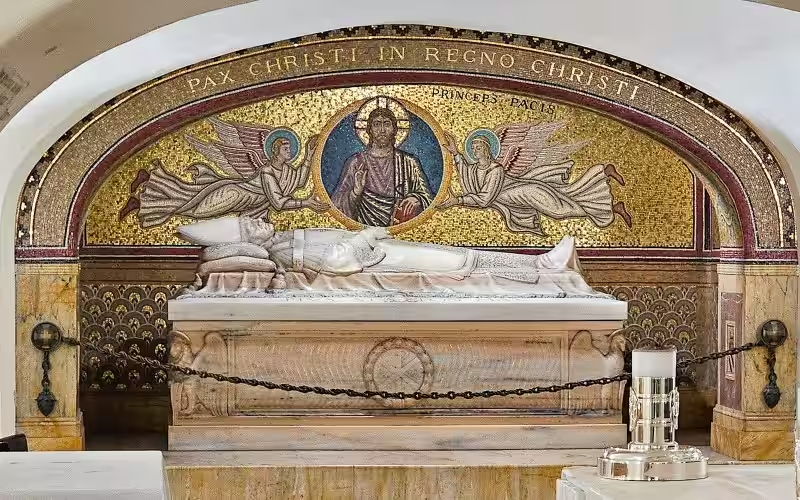
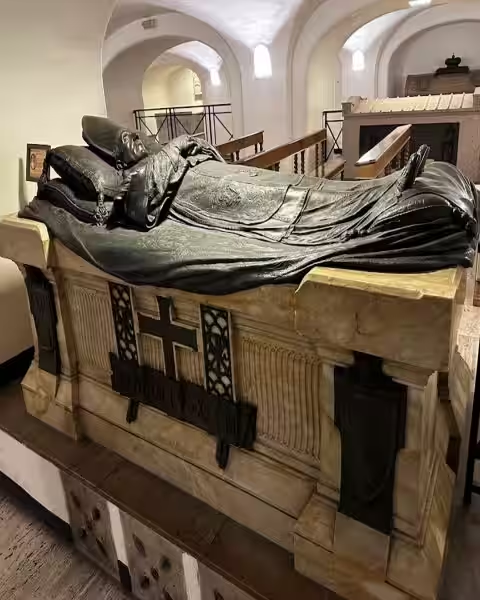
The very mention of Rome evokes images of ancient grandeur, iconic ruins, and a profound spiritual legacy. At the epicenter of this legacy lies St. Peter’s Basilica, a monumental testament to faith and artistry. But beyond its breathtaking architecture and priceless artworks, lies a deeper, more intimate draw for millions: the opportunity to visit St. Peter’s Tomb. This pilgrimage is not merely a tourist excursion; it’s a profound engagement with the roots of Christianity, a chance to connect with history on a visceral level, and a deeply personal encounter with the enduring power of belief.
For many, the desire to visit St. Peter’s Tomb stems from a lifelong devotion, a yearning to stand where the Apostle Peter, Christ’s chosen rock, is believed to be buried. It’s a place that has drawn pilgrims for centuries, each seeking solace, inspiration, or a renewed sense of purpose. The weight of history is palpable here, a silent echo of countless prayers whispered and tears shed by those who trod this sacred ground before. This isn’t just about seeing a tomb; it’s about participating in a continuous stream of faith that has flowed through this very spot for two millennia.
The Significance of St. Peter: A Foundation of Faith
To truly appreciate the experience of visiting St. Peter’s Tomb, one must first understand the monumental significance of St. Peter himself within the Christian narrative. Jesus famously declared, “And I tell you, you are Peter, and on this rock I will build my church, and the gates of hell shall not prevail against it” (Matthew 16:18). This pivotal moment, often referred to when discussing the call for believers to visit St. Peter’s Tomb, established Peter as a foundational figure, the first among the apostles, and a shepherd for the nascent Christian community. His leadership, though marked by human frailty, became synonymous with the Church’s enduring strength.
Peter’s journey from a humble fisherman to the first Pope is a powerful testament to divine calling and human transformation. He was present at key moments in Jesus’ ministry, witnessed His miracles, and, despite his denial during Christ’s Passion, repented and was restored. This complex, relatable figure embodies both the ideal of unwavering faith and the reality of human imperfection, making him a deeply human yet divinely appointed leader. The desire to visit St. Peter’s Tomb is often an expression of reverence for this pivotal role and the continuity of the faith he helped establish.
From Fisherman to Rock: Peter’s Transformative Journey
Simon, later renamed Peter by Jesus, was a fisherman from Bethsaida, a profession requiring hard work, resilience, and an understanding of the unpredictable nature of life. His encounter with Jesus, as recounted in the Gospels, was a profound turning point. Imagine the sheer audacity of a carpenter calling a seasoned fisherman to leave his nets and follow Him, promising to make him a “fisher of men.” This call to discipleship marked the beginning of Peter’s extraordinary transformation, a journey that would ultimately lead him to Rome and to his martyrdom, and consequently, to the desire of so many to visit St. Peter’s Tomb.
Peter’s leadership was not without its challenges. He walked, and at times stumbled, alongside Jesus, learning and growing under His tutelage. His impulsiveness and outspokenness, while sometimes a source of consternation, also revealed a deep love and commitment. His eventual martyrdom in Rome, tradition holds, occurred during Nero’s persecution, a tragic yet glorious end to a life dedicated to spreading the Gospel. This ultimate sacrifice cemented his place as a foundational martyr, adding another layer of profound meaning to the act of choosing to visit St. Peter’s Tomb.
Experiencing the Sacred Ground: What to Expect When You Visit St. Peter’s Tomb
The experience of visiting St. Peter’s Tomb is layered and deeply profound, offering a multi-faceted encounter with faith, history, and art. The journey begins as you enter the magnificent basilica, a space that overwhelms the senses with its sheer scale, intricate marble work, and awe-inspiring dome. But the true pilgrimage often leads downwards, into the Vatican Necropolis, where the remains of St. Peter are believed to rest. Visiting St. Peter’s Tomb is not a casual stroll; it requires a conscious effort to descend into the earth, into the very foundations of the Church.
The Vatican Necropolis, also known as the Scavi Tour, offers a unique and humbling experience. Guided tours take small groups through ancient Roman burial sites, revealing layers of history that predate the basilica above. You’ll walk through narrow passageways, see ancient tombs adorned with faded frescoes, and learn about the early Christian community and their burial practices. The climax of this descent is reaching the area directly beneath the high altar of the basilica, where a small, inscribed stone marker, known as the tropaion, is believed to indicate Peter’s burial site. It’s a moment of quiet contemplation, a chance to connect with the immense spiritual weight of this location.
Navigating the Scavi Tour: Planning Your Pilgrimage to the Tomb
To visit St. Peter’s Tomb through the Scavi Tour, meticulous planning is essential. This is not an attraction you can simply walk into; reservations are mandatory and must be made well in advance, often months ahead. The Vatican Museums website is the official portal for booking these tours, and it’s crucial to be aware of the limited availability and the specific dates and times offered. Understanding the process for booking is the first step in ensuring your spiritual journey to this sacred site. Failing to pre-book can result in significant disappointment.
The Scavi Tour itself is a guided experience, led by knowledgeable guides who bring the history and archaeology of the necropolis to life. The tours are conducted in various languages, so ensure you select the appropriate one for your visit. Photography is strictly prohibited within the necropolis to preserve the sanctity and delicate nature of the ancient remains and structures. The emphasis is on quiet reflection and absorption of the historical and spiritual atmosphere, making the experience all the more intimate and meaningful for those who visit St. Peter’s Tomb.
Beyond the Tomb: The Enduring Legacy and Personal Meaning
While the primary focus for many is to visit St. Peter’s Tomb, the experience extends far beyond this singular act. St. Peter’s Basilica is a treasure trove of religious art and architecture, each element contributing to a profound spiritual atmosphere. Michelangelo’s Pietà, the soaring dome, and Bernini’s magnificent bronze baldachin over the papal altar are just a few of the masterpieces that inspire awe and contemplation. These artistic expressions are not mere decorations; they are deeply interwoven with the narrative of faith and the legacy of St. Peter.
Ultimately, the decision to visit St. Peter’s Tomb is a deeply personal one. For some, it’s a pilgrimage of faith, a reaffirmation of their beliefs. For others, it’s an exploration of history and the origins of Christianity. Regardless of your personal motivations, standing in the presence of this sacred site offers a unique opportunity for reflection, for connecting with a lineage of believers stretching back to the very beginnings of the Church. It’s a chance to feel a part of something immeasurably larger than oneself, a testament to the enduring power of faith that continues to draw millions to this hallowed ground.
Frequently Asked Questions about Visiting St. Peter’s Tomb
What is St. Peter’s Tomb?
St. Peter’s Tomb is believed to be the burial place of Saint Peter, one of Jesus’ twelve apostles and the first Pope of the Catholic Church. It is located beneath the main altar of St. Peter’s Basilica in Vatican City.
Can I visit St. Peter’s Tomb?
Yes, it is possible to visit the area believed to be St. Peter’s Tomb. This is done through a guided tour of the Vatican Necropolis (Scavi Tour).
Tours of the Vatican Necropolis must be booked in advance through the Ufficio Scavi (Office of Excavations) website. These tours are very popular and have limited availability. It is recommended to book several months in advance.
What is the Vatican Necropolis (Scavi)?
The Vatican Necropolis is an ancient Roman cemetery located directly beneath St. Peter’s Basilica. It contains numerous tombs, including the one believed to be St. Peter’s.
Is there a religious requirement to visit St. Peter’s Tomb?
While the Vatican Necropolis tour is a historical and archaeological exploration, the site holds profound religious significance for Catholics. Visitors are expected to show respect for the sacred nature of the location. There is no strict religious requirement to visit, but an understanding and appreciation of its importance are encouraged.
What should I expect during the tour of St. Peter’s Tomb?
The Scavi tour is a guided exploration of the underground Roman cemetery. It involves walking through narrow passages and seeing ancient tombs, mosaics, and inscriptions. The tour culminates at the area believed to be St. Peter’s tomb and the “Confessio” (the place of confession), a space in front of the altar. The tour is conducted in small groups and lasts approximately 45 minutes to an hour.
Are there any restrictions for visiting St. Peter’s Tomb?
Due to the confined spaces and the historical nature of the site, there are some restrictions. Visitors must be able to walk and navigate uneven surfaces. Photography is generally not allowed within the Necropolis. Comfortable walking shoes are recommended.
Can I visit St. Peter’s Basilica without visiting the Tomb?
Yes, you can visit St. Peter’s Basilica itself without booking the Scavi tour. The Basilica is open to the public, and you can admire the architecture, art, and the main altar under which the tomb is located. However, the direct visit to the tomb requires the Scavi tour.
Is there a cost to visit St. Peter’s Tomb?
There is a fee for the Vatican Necropolis (Scavi) tour. The exact cost can be found on the Ufficio Scavi website.
Can children visit St. Peter’s Tomb?
Children are generally permitted on the Scavi tour, but given the historical and sensitive nature of the site, and the need for quiet respect, it may not be suitable for very young children. It is advisable to check the age recommendations when booking.