For millions, the idea of a Saint Peter’s Tomb Tour transcends a mere tourist excursion. It represents a profound pilgrimage, a tangible connection to the very foundations of Christianity. Imagine stepping into a space where legend and history intertwine, a place believed to be the final resting spot of one of Jesus’ most prominent apostles. This journey is not just about seeing ancient relics; it’s about feeling the weight of centuries of devotion, witnessing architectural marvels born from unwavering faith, and perhaps, for many, experiencing a deeply personal spiritual awakening.
Our exploration into the allure of a Saint Peter’s Tomb Tour delves into why this particular destination holds such immense significance. It’s a site that draws individuals from all walks of life, united by a shared reverence for the man who, according to tradition, was chosen by Christ himself to lead his nascent church. The experience promises a blend of historical discovery, artistic appreciation, and spiritual contemplation, making it an unforgettable chapter in any believer’s life or for anyone fascinated by the enduring power of religious belief.
The Echoes of Faith: Understanding the Significance of Saint Peter’s Tomb
The very notion of a Saint Peter’s Tomb Tour immediately conjures images of immense historical and religious weight. Saint Peter, originally known as Simon, was a fisherman from Galilee who became one of Jesus’ twelve apostles. Jesus famously declared, “You are Peter, and on this rock I will build my church” (Matthew 16:18), a declaration that has been interpreted by many Christian denominations as a foundational moment for the papacy and the leadership of the Church. This makes the presumed location of his burial an incredibly sacred spot, a focal point of pilgrimage for centuries.
The historical narrative surrounding Peter’s martyrdom in Rome, traditionally believed to have occurred around 64-67 AD during the reign of Emperor Nero, adds another layer of profound significance. His death and subsequent burial in what was then a pagan necropolis became a powerful early symbol of Christian resilience and ultimate triumph. A Saint Peter’s Tomb Tour allows visitors to connect with this narrative, to stand where his followers believed he was laid to rest, and to contemplate the immense sacrifices made by early Christians. This belief has fueled countless acts of devotion, leading to the construction of awe-inspiring basilicas and underground chambers, each a testament to enduring faith.
The Journey Beneath: Navigating the Necropolis and the Confessio
The most intimate part of many a Saint Peter’s Tomb Tour involves descending into the Vatican Grottoes and the areas directly beneath the Basilica. This is where the archaeological evidence and tradition converge. Here, visitors can explore the ancient Roman necropolis, a complex burial ground that existed long before the grand basilica was conceived. Walking through these hallowed grounds, one can almost feel the presence of those who lived and died in the early centuries of Christianity, a silent testament to their lives and beliefs. The journey is often guided, providing crucial context and historical insights.
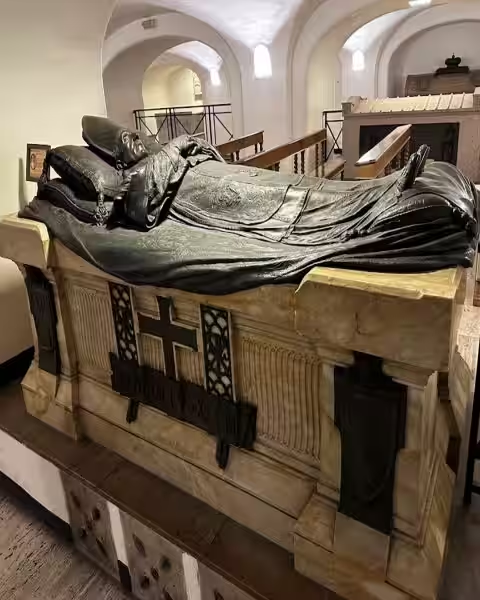
The heart of this subterranean exploration lies in reaching the Confessio, the area directly above what is believed to be Saint Peter’s tomb. This sacred space, designed to allow pilgrims to draw near to the apostle’s resting place, is an incredibly moving experience. The sheer proximity to where Peter is traditionally said to have been martyred and buried is a powerful draw for many on a Saint Peter’s Tomb Tour. Imagine standing in a place that has been revered for nearly two millennia, a place where popes have been buried and countless faithful have sought solace and intercession. The layers of history, from the simple pagan graves to the ornate papal tombs, tell a compelling story of faith’s transformation and endurance.
Beyond the Tomb: The Artistic and Architectural Grandeur of Saint Peter’s Basilica
While the Saint Peter’s Tomb Tour focuses on the historical and spiritual core, it is inextricably linked to the magnificent edifice that stands above: Saint Peter’s Basilica. This colossal structure is not merely a building; it is a masterpiece of Renaissance and Baroque art and architecture, a testament to human creativity inspired by divine purpose. Every dome, every sculpture, every fresco tells a story and contributes to an overwhelming sense of awe and wonder. The sheer scale of the basilica is designed to inspire reverence and a sense of the divine.
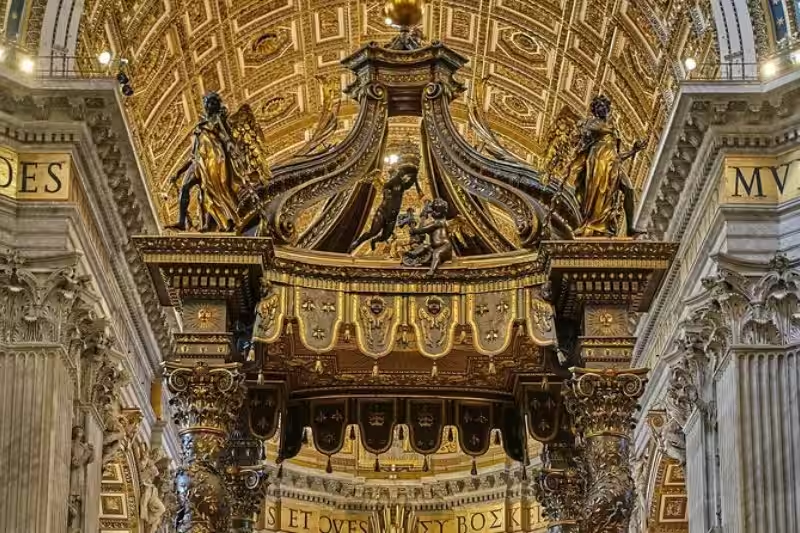
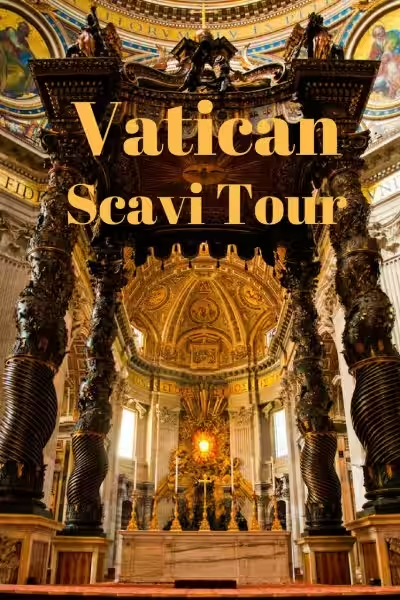
The artistic treasures within are as vital to the experience as the tomb itself. Works like Michelangelo’s Pietà and Bernini’s Baldacchino (the monumental bronze canopy over the main altar, positioned directly above the tomb) are not just artistic triumphs; they are deeply embedded in the spiritual narrative of the site. A Saint Peter’s Tomb Tour often includes time for visitors to absorb the grandeur of the basilica, to appreciate how art and architecture have been employed to glorify God and to commemorate the foundational figures of the Church. These elements work in harmony to create an environment conducive to profound reflection and spiritual connection.
Experiencing the Pilgrimage: Practicalities and Spiritual Reflections
Embarking on a Saint Peter’s Tomb Tour requires a degree of planning and an open heart. Tickets for guided tours, especially those that delve into the Scavi (the archaeological excavations beneath the basilica), are often limited and need to be booked well in advance. It’s crucial to respect the sacred nature of the site; dress modestly, maintain a quiet demeanor, and be prepared for a deeply spiritual experience. Many visitors find that the physical act of descending into the earth, to a place of such profound historical and religious significance, can be incredibly moving.
For many, the Saint Peter’s Tomb Tour is more than just a historical or cultural outing; it’s a personal pilgrimage. It’s an opportunity to strengthen one’s faith, to seek inspiration, or simply to connect with a history that has shaped billions of lives. The quiet reverence of the crypts, the immensity of the basilica above, and the palpable sense of history combine to create an atmosphere that encourages introspection. Whether you are a devout believer or an interested observer, the journey to Saint Peter’s tomb offers a unique and enduring encounter with the heart of Christian history and devotion.
Frequently Asked Questions about St. Peter’s Tomb Tour and Religion
What is the historical significance of St. Peter’s Tomb?
St. Peter’s Tomb is believed to be the burial site of Saint Peter, one of Jesus Christ’s apostles and the first Pope of the Catholic Church. It is located beneath the altar of St. Peter’s Basilica in Vatican City and is considered one of the most sacred sites in Christendom.
Can anyone visit St. Peter’s Tomb?
Access to the necropolis, where the tomb is located, is restricted and requires a guided tour. These tours are limited in size and often need to be booked well in advance. The Basilica itself is open to the public, but direct access to the immediate vicinity of the tomb is part of the organized tour.
What can I expect to see on a St. Peter’s Tomb tour?
The tour typically takes visitors through the Vatican Necropolis, an ancient Roman cemetery. You will see ancient tombs and burial chambers, culminating in the area believed to be St. Peter’s tomb, marked by a monument. The experience is deeply historical and religious.
Is there a religious service at St. Peter’s Tomb?
While the site is of immense religious importance, there are no regular religious services held directly at the tomb itself due to the sensitive nature of the archeological site and the limited access. However, Mass is celebrated daily in St. Peter’s Basilica.
What are the religious beliefs associated with St. Peter’s Tomb?
For Catholics, St. Peter’s Tomb is a profound pilgrimage destination. It symbolizes the foundation of the Church, the succession of the Papacy, and the veneration of saints. Visiting the tomb is seen as a way to connect with early Christianity and the faith’s origins.
Is it permissible for non-Catholics to visit St. Peter’s Tomb?
Yes, visitors of all faiths are welcome to tour the Vatican Necropolis and St. Peter’s Basilica. The tour provides historical and archeological insights that are of interest to many, regardless of their religious affiliation.
What is the importance of St. Peter in Christianity?
Saint Peter is a central figure in Christianity. He was one of Jesus’ closest disciples, a leader among the apostles, and is traditionally regarded as the first Bishop of Rome (Pope). His confession of Jesus as the Christ is a pivotal moment in the Gospels, and Jesus’ words to him (“You are Peter, and on this rock I will build my church”) are foundational for the Catholic understanding of the Papacy.
How does the Catholic Church view the authenticity of St. Peter’s Tomb?
The Catholic Church officially recognizes the site beneath St. Peter’s Basilica as the tomb of Saint Peter. This recognition is based on extensive archeological research conducted in the 20th century, which uncovered evidence supporting the traditional belief.