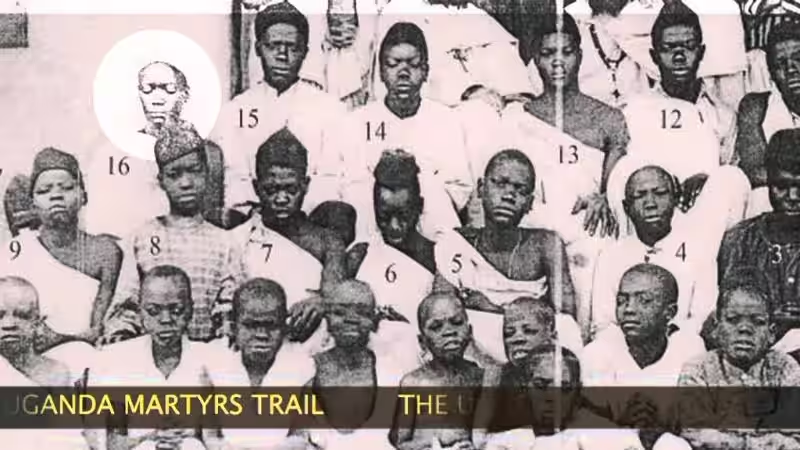
The story of the Ugandan Martyrs is far more than a historical footnote; it is a vibrant testament to the power of unwavering faith in the face of unimaginable cruelty. Nestled within the rich tapestry of Uganda’s spiritual landscape, their saga resonates with a profound message of courage, conviction, and the ultimate triumph of the human spirit. This narrative, woven with threads of religious devotion and personal sacrifice, continues to inspire millions, not only within Uganda but across the globe, serving as a potent reminder of the enduring strength found in deeply held beliefs.
Imagine a land teeming with vibrant cultures and ancient traditions, where the arrival of new faiths sparked both wonder and conflict. It was in this dynamic environment that Christianity first took root, bringing with it a message of hope and transformation. However, this nascent faith also encountered resistance, particularly from those who saw it as a threat to their established power structures and cultural norms. The tragic events that unfolded during this period, culminating in the martyrdom of numerous individuals, underscore the profound impact religion can have on societal dynamics and the personal journeys of its followers.
The Crucible of Faith: Persecution and Perseverance
The late 19th century in the Kingdom of Buganda was a period of immense upheaval. As King Mwanga II grappled with consolidating his power and navigating the burgeoning influence of foreign missionaries and colonial powers, internal tensions escalated. The growing number of converts to Christianity, primarily Catholicism and Protestantism, began to challenge the traditional religious and political order. This created a fertile ground for suspicion and animosity, and tragically, the newfound faith became a target.
King Mwanga, influenced by his advisors and his own insecurities, viewed the Christians as a disloyal faction, undermining his authority. He perceived their allegiance to a higher power and their refusal to participate in customary religious practices as a direct affront. This perception, fueled by fear and a desire to maintain absolute control, led to a brutal campaign of persecution. The Ugandan Martyrs, as they would come to be known, were subjected to horrific torture and execution. Their unwavering refusal to renounce their faith, even under the most agonizing circumstances, cemented their place in history as symbols of religious conviction.
The Trials of the Elect: Stories of Unwavering Devotion
Among the most prominent of the Ugandan Martyrs are Saint Charles Lwanga and Saint Kizito. Charles Lwanga, a young man of great intelligence and leadership, was the leader of the royal pages. He embraced Christianity and sought to guide others in their spiritual journey, even as the storm clouds of persecution gathered. His steadfastness in the face of death, his commitment to his followers, and his ultimate sacrifice are deeply moving. He is often depicted as a figure of immense courage, embodying the strength of character that religious belief can foster.
Kizito, one of the youngest of the martyrs, exemplifies the innocent and pure heart that can be touched by faith. His story, though brief, is incredibly powerful. It is said that even as he faced his agonizing death, he displayed remarkable composure and faith. His young age makes his unwavering commitment all the more poignant, highlighting that the transformative power of religion is not bound by age or experience. These individual narratives, like that of Joseph Mukasa, who bravely confronted the king and was the first to be martyred, paint a vivid picture of the human cost of religious intolerance but also the immense resilience of the human spirit when rooted in deep faith.
The Legacy of Sacrifice: A Foundation for Faith and Unity
The horrific events of the late 19th century, while tragic, ultimately served to solidify the Christian faith in Uganda. The blood of the martyrs became, as is often said, the seed of the Church. The sheer bravery and unwavering commitment displayed by these individuals deeply impressed both Christians and non-Christians alike, fostering a profound respect for their beliefs. This religious sacrifice did not extinguish Christianity; rather, it ignited a brighter flame, one that continues to burn brightly today.
Today, the Ugandan Martyrs are venerated as saints by the Catholic Church, and their feast day, celebrated on June 3rd, is a major pilgrimage site and national holiday in Uganda. Millions of believers travel to the Namugongo Martyrs’ Shrine, a place of profound spiritual significance, to commemorate their lives and seek inspiration. This enduring devotion underscores the lasting impact of their story, demonstrating how acts of extreme sacrifice can forge a powerful sense of religious identity and community. The shrine itself is a testament to this, a place where people of all backgrounds come together in shared reverence and prayer.
The story of the Ugandan Martyrs offers invaluable lessons for us today, especially in a world that can often feel fragmented and uncertain. Their unwavering faith in the face of extreme adversity reminds us of the profound strength that can be found within ourselves when we are anchored by deeply held beliefs. Whether one’s faith is religious, philosophical, or a strong commitment to personal values, the principle of standing firm in one’s convictions, even when it is difficult, is a universal virtue.
In a contemporary context, where challenges to belief systems and societal pressures are ever-present, the Ugandan Martyrs serve as a potent example of resilience and integrity. Their willingness to endure suffering for what they believed in encourages us to examine our own commitments and the courage we possess to live authentically. The narrative of their faith and sacrifice continues to be a powerful source of inspiration, fostering a sense of hope and reminding us that even in the darkest of times, the light of unwavering conviction can shine through, illuminating the path forward for generations to come.
Frequently Asked Questions about the Ugandan Martyrs and Religion
Who were the Ugandan Martyrs?
The Ugandan Martyrs were a group of 22 Catholic and 12 Anglican converts to Christianity in the Kingdom of Buganda (modern-day Uganda) who were executed between 1885 and 1887 by the Kabaka (King) Mwanga II. They were martyred for their faith, refusing to renounce Christianity and engage in the king’s homosexual practices.
What was the religious context in Buganda at the time of the martyrdoms?
Buganda had a complex religious landscape. Traditional indigenous beliefs were prevalent, but by the late 19th century, Christianity (both Catholic and Anglican) and Islam had been introduced and were gaining converts. King Mwanga II initially tolerated Christianity but later grew suspicious and fearful of its influence, particularly its challenge to his absolute authority and its rejection of his sexual demands.
They are considered martyrs because they died for their religious beliefs. They refused to recant their Christian faith, even under severe torture and the threat of death, thereby witnessing to their commitment to Christ.
What is the significance of the Ugandan Martyrs in Christianity?
The Ugandan Martyrs are significant as a testament to the power of faith and the willingness to die for it. Their story is an inspiration for Christians worldwide, highlighting the courage and conviction of early African Christians in the face of persecution. They are venerated as saints by both the Catholic and Anglican Churches.
When are the Ugandan Martyrs commemorated?
The feast day for the Ugandan Martyrs is celebrated on June 3rd. This day is a public holiday in Uganda and is a major pilgrimage event at the Uganda Martyrs Shrine in Namugongo.
What was the role of religion in the persecution of the Ugandan Martyrs?
Religion was the central cause of the persecution. King Mwanga II saw Christianity as a threat to his power and the traditional social order. The martyrs’ refusal to abandon their faith and their commitment to Christian teachings directly challenged his authority and his lifestyle.
What is the legacy of the Ugandan Martyrs today?
The legacy of the Ugandan Martyrs is profound. They are symbols of faith, courage, and resistance against oppression. Their story has contributed to the growth and strength of Christianity in Uganda and Africa, serving as a powerful example of Christian witness. They are also seen as a bridge between different Christian denominations, as both Catholics and Anglicans recognize their martyrdom.