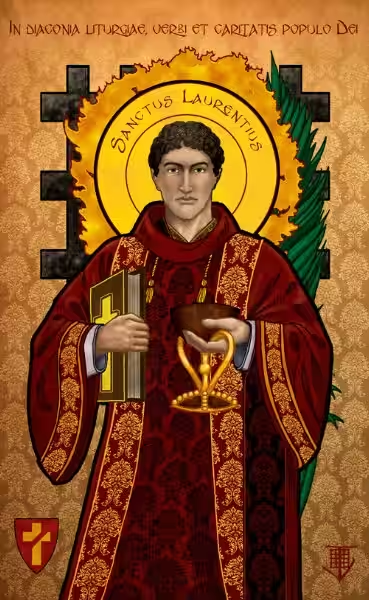
The name Saint Lawrence resonates through centuries of Christian tradition, a powerful symbol of unwavering faith and profound generosity. But who was Saint Lawrence, this revered martyr whose feast day is celebrated with such fervor? More than just a historical figure, Lawrence embodies a spirit that continues to inspire millions. He was a deacon in the early Christian church, living during a time of intense persecution. His story is not one of quiet contemplation, but of bold action and ultimate sacrifice, a testament to the power of belief even in the face of unimaginable suffering. Understanding Saint Lawrence offers a glimpse into the heart of early Christianity and the enduring values of compassion and devotion.
The life and martyrdom of Saint Lawrence serve as a powerful reminder of the sacrifices made by early Christians to uphold their beliefs. In a world where religious freedom was a distant dream, individuals like Lawrence faced immense pressure to renounce their faith. His story, therefore, is not just about a single man, but about the collective courage and resilience of an entire community striving to live by their convictions. By delving into his narrative, we can gain a deeper appreciation for the foundations of our religious heritage and the profound impact that personal conviction can have on history.
Born in Osca, in modern-day Spain, around the year 225 AD, Lawrence quickly distinguished himself through his intelligence and piety. He was a man of deep learning and an eloquent speaker, qualities that propelled him into a position of prominence within the burgeoning Christian community. His early life was shaped by the Roman Empire, a powerful entity that, while often tolerant of various religions, could also be brutally repressive when it perceived a threat. Lawrence’s path led him to Rome, where he became a deacon under Pope Sixtus II.
As a deacon, Lawrence was entrusted with significant responsibilities. He was not merely an assistant; he was a key administrator of church affairs. This role involved caring for the poor and needy, managing church property, and distributing alms. Imagine a modern-day charity director, but with the added weight of secrecy and the constant threat of discovery. Lawrence was the “treasurer” of the Roman Church, a position that demanded not only organizational skills but also immense trust and a profound commitment to serving the marginalized. He was known for his generosity, ensuring that no one in need was overlooked, from widows and orphans to the elderly and infirm.
The mid-3rd century was a tumultuous period for Christians within the Roman Empire. Emperor Valerian, initially somewhat tolerant, eventually issued decrees that severely persecuted the Church. His aim was to eradicate Christianity by undermining its leadership and seizing its assets. This era demanded immense courage from believers, and Lawrence, in his capacity as a deacon, was at the forefront of this spiritual and practical battle. He was part of a community that operated in the shadows, finding strength in shared faith and mutual support.
Lawrence’s role as a deacon meant he was intimately familiar with the church’s resources and, more importantly, its people. He understood that the true wealth of the Church lay not in its material possessions, but in the lives it touched. When the persecution intensified, and the authorities demanded the church’s treasures, Lawrence’s response would become legendary, demonstrating his unwavering loyalty to both God and humanity. His actions during this critical period cemented his legacy as a man who prioritized spiritual riches over earthly possessions.
The Infamous Trial and Martyrdom
The turning point in Saint Lawrence’s life, and the reason for his enduring fame, came with the intensified persecution under Emperor Valerian. The authorities, eager to crush the Church and confiscate its wealth, arrested Pope Sixtus II and several other clergy members. Lawrence, as a prominent deacon, was also apprehended. What followed is a story that has been retold and embellished through centuries, but its core remains a powerful narrative of faith and defiance.
According to tradition, the Roman prefect, believing the Church possessed vast riches, demanded that Lawrence hand them over. Lawrence, knowing that the true “treasures” of the Church were its people, the poor and the sick, asked for three days to present them. On the appointed day, he returned, not with gold and silver, but with a procession of the poor, the blind, the lame, and the sick. He presented them to the prefect, declaring, “Here are the true treasures of the Church!” This act of profound faith and defiance infuriated the Roman authorities, leading to his brutal martyrdom.
The most famous and chilling aspect of Saint Lawrence’s martyrdom is undoubtedly the legend of his death on a red-hot gridiron. The story tells of how Lawrence was laid upon this instrument of torture, subjected to immense pain. Yet, even in his agony, his faith did not waver. Accounts suggest he bravely jested with his tormentors, famously saying, “I am roasted enough on this side; you may turn me over and eat me.” This supposed quip, while possibly apocryphal in its exact wording, encapsulates the spirit of his martyrdom: a testament to his unflinching resolve and his ability to find spiritual strength even in the most horrific circumstances.
This graphic depiction of his death has become a powerful symbol in Christian art and literature. It highlights the extreme sacrifices made by early believers and the unwavering belief in an afterlife that transcended earthly suffering. The image of Saint Lawrence, often depicted holding a gridiron, has served as a potent reminder of the cost of faith and the ultimate victory of the spirit over the flesh. His story serves as a beacon, illuminating the depth of human courage when fueled by profound religious conviction.
The Legacy of Saint Lawrence
The impact of Saint Lawrence extends far beyond his lifetime. His martyrdom, rather than crushing the Christian faith, became a powerful catalyst, inspiring countless others to embrace their beliefs with renewed fervor. His story was a testament to the fact that even in the face of death, true faith could prevail. The Roman authorities may have sought to extinguish the Church, but in doing so, they inadvertently created a martyr whose example ignited a flame of devotion that spread rapidly.
Saint Lawrence is remembered not only for his courage but also for his deep compassion and selfless service. His dedication to the poor and marginalized, his willingness to risk everything for them, has made him a patron saint of the needy and of those who work in charitable endeavors. His example reminds us that true religion is not just about belief, but about action, about extending love and support to those less fortunate. This enduring message of generosity continues to resonate today, making his story extraordinarily relatable and profoundly informative for people of all backgrounds.
Today, Saint Lawrence is venerated as a major saint in the Catholic Church, the Orthodox Church, and other Christian denominations. He is the patron saint of various professions and causes, including librarians, cooks, deacons, and the city of Rome. His feast day, August 10th, is celebrated with special Masses and traditions, often featuring symbolic representations of his martyrdom, such as the lighting of bonfires, reminiscent of the gridiron.
His story offers a profound lesson: that generosity is a spiritual act, and that true wealth lies in our love and care for one another. In a world that can often feel driven by material gain, the example of Saint Lawrence stands as a powerful counterpoint, reminding us of the eternal value of compassion, courage, and unwavering faith. He was a man who understood that the greatest treasures are not those that can be held in one’s hand, but those that reside in the heart and are expressed through selfless love.
Frequently Asked Questions about Saint Lawrence
Who was Saint Lawrence?
Saint Lawrence was a deacon of the Roman Catholic Church who lived in the 3rd century AD. He is one of the most famous of the seven deacons of Rome and is revered as a martyr.
What religion was Saint Lawrence?
Saint Lawrence was a Christian. He lived during a time when Christianity was a persecuted religion in the Roman Empire.