Cremation and Catholicism: Navigating Faith and Final Rites
The question of cremation and Catholicism is one that many faithful individuals and families grapple with as they plan for the future or respond to an immediate need. For centuries, the Catholic Church has held a strong preference for burial, rooted in tradition and theological understanding. However, in recent decades, there has been a significant shift, and understanding this evolution is crucial for those seeking clarity on where their faith tradition stands on the practice of cremation. This article aims to provide a comprehensive, yet accessible, guide to the Church’s stance, historical context, and practical considerations surrounding cremation in the Catholic religion, offering solace and informed decision-making for believers.
Navigating religious practices, especially concerning end-of-life rituals, can be a deeply personal and sometimes emotionally charged experience. When the topic of cremation Catholicism arises, it often brings with it a mix of tradition, perceived prohibitions, and evolving pastoral guidance. Our aim here is to demystify this aspect of Catholic practice, providing a clear and compassionate overview that respects both the sanctity of life and the dignity of the human body, even after death. We will explore the historical trajectory, the theological reasoning, and the practical permissions that now guide Catholics in making choices about their final disposition.
Historical Roots: The Church’s Preference for Burial
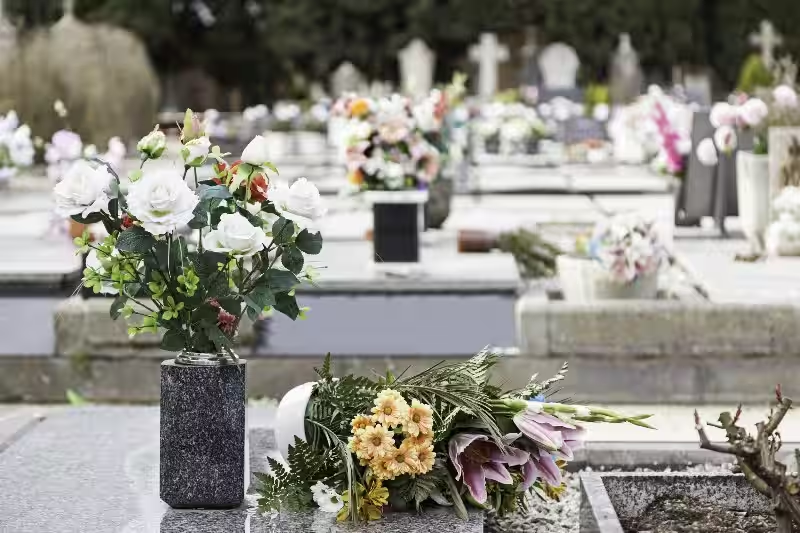
Historically, the Catholic Church has unequivocally favored earth burial. This preference is not arbitrary; it is deeply intertwined with the Church’s theological understanding of the resurrection of the body. For centuries, the norm within Catholicism was to inter the body whole, believing that the body, which was the temple of the Holy Spirit during life, would be reunited with the soul at the final resurrection. This reverence for the physical remains stems from the example of Jesus Christ himself, whose tomb was a place of burial, and from the early Christian communities who buried their dead with dignity, often in catacombs, distinguishing themselves from pagan cremation practices of the time.
The symbolic weight of burial in Catholicism cannot be overstated. It served as a tangible reminder of the belief in the resurrection and the ultimate triumph over death. The physical integrity of the body, even in decay, was seen as important. Consider the early martyrs, whose bodies were carefully preserved and venerated. This deep-seated tradition, passed down through generations, solidified burial as the primary and preferred method of disposing of the deceased within the faith. The emphasis was always on respecting the earthly vessel, a testament to the belief in the sacredness of human life from conception to natural death and beyond.
Theological Underpinnings of Burial in Catholicism
The theological rationale behind the Church’s historical preference for burial centers on several key tenets. Foremost is the belief in the bodily resurrection. The Church teaches that at the end of time, the souls of the faithful will be reunited with their resurrected bodies, which will be glorified. While God’s power is limitless and can undoubtedly reunite scattered particles, the Church saw burial as a practice that more readily symbolized this future resurrection. It was a visible sign of hope, a commitment to the belief that this earthly body, though destined to return to dust, would one day be made new and immortal.
Furthermore, the Church views the human body as created in the image and likeness of God. Therefore, even in death, the body is to be treated with respect and dignity. This respect extends to its final disposition. Burying the body, allowing it to return to the earth from which it came, was seen as a natural and reverent process, reflecting the cycle of life and death ordained by God. This reverence for the corporeal aspect of human existence is a cornerstone of Catholic belief, influencing many of its sacramental and liturgical practices. For example, the sacredness of the body is also evident in how the Church treats the consecrated hosts after Mass, ensuring no fragment is wasted.
The Church’s Evolving Stance on Cremation
In more recent times, the Catholic Church has significantly updated its guidance regarding cremation. Recognizing that the practice has become more common and that the reasons for choosing it are often not rooted in a denial of faith, the Church has granted permission for cremation under certain conditions. This shift, formally articulated in the 1963 Instruction of the Holy Office and further clarified in the 2016 Vatican document “Ad Resurgendum cum Christo” (To Rise Again with Christ), reflects a pastoral approach that seeks to accompany grieving families and respect individual wishes while upholding core Catholic beliefs.
The key development was the removal of the prohibition against cremation itself. Previously, it was forbidden, and Catholics who chose cremation often faced pastoral challenges. Now, the Church permits cremation, provided it is not done in a way that demonstrates a denial of faith, such as believing the soul perishes with the body or that the resurrection is impossible without the intact body. The focus has shifted from the method of disposition to the underlying intention and the continued respect for the human body. This change allows for greater pastoral sensitivity and accommodates modern practices without compromising fundamental doctrines. For instance, a family might choose cremation due to limited burial space or cost, which are seen as legitimate reasons.
Conditions for Cremation in Contemporary Catholicism
While cremation is now permitted, it is not without important stipulations. The primary condition is that cremation should not be chosen as a statement against Catholic doctrine, particularly concerning the resurrection of the body. The Church continues to maintain a preference for burial, and it is recommended that the liturgical rites of Christian burial take place before cremation occurs. If cremation takes place before the funeral Mass, the eulogy and prayers should still acknowledge the deceased’s life and the hope of resurrection.
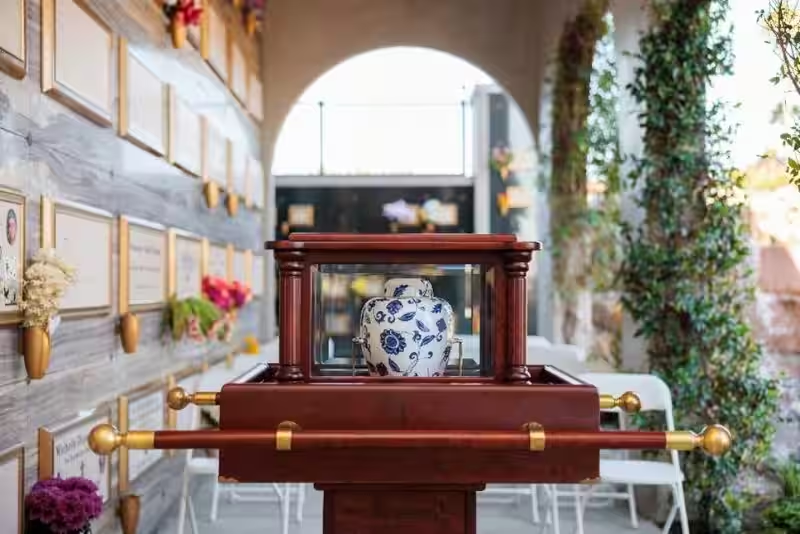
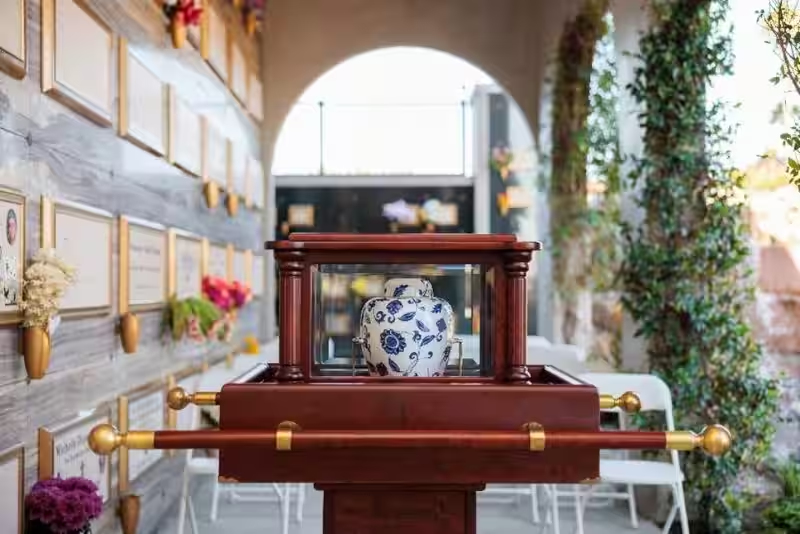
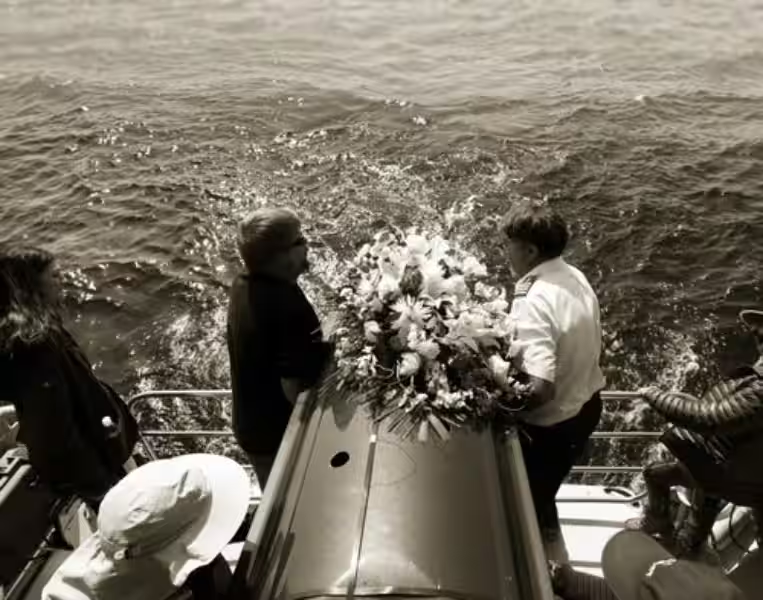
Crucially, the ashes of the deceased must be treated with respect. The Vatican document “Ad Resurgendum cum Christo” is very clear on this point. Scattering ashes, dividing them among family members, or keeping them in mementos are not considered appropriate ways to honor the deceased’s mortal remains. Instead, the Church directs that the ashes should be interred in a sacred place, such as a cemetery or a church columbarium. This ensures that the earthly remains are treated with dignity and can be prayed for by the community, reinforcing the hope of resurrection. Think of how we treat relics of saints; even in their reduced form, they are treated with immense reverence.
Practical Considerations and Pastoral Guidance
For Catholics considering or experiencing the need for funeral arrangements involving cremation, understanding these guidelines is essential. The decision should be made with prayer and consultation. Many dioceses and parishes offer resources and guidance to help families navigate these choices. It’s important to engage with your parish priest or a funeral director who is knowledgeable about Catholic customs and can offer support throughout the process.
The preference for burial remains strong within the Church, and families are encouraged to consider it first. However, when cremation is chosen, the focus should always be on honoring the deceased and maintaining a hopeful outlook on the resurrection. The Church’s updated stance acknowledges that the body, whether buried or cremated, is still a vessel that God will glorify in the resurrection. The key is that the ultimate disposition of the ashes reflects respect and faith, not a rejection of core beliefs. For example, a family can still have a traditional funeral Mass with the cremated remains present, followed by interment in a cemetery.
Making Decisions with Faith and Love
When faced with the decision of whether to choose burial or cremation, it is important to consider the deceased’s wishes, the family’s beliefs, and the Church’s teachings. If the deceased expressed a desire for cremation, and this desire is not contrary to Catholic faith and morals, then it can be accommodated. The Church trusts that God’s mercy is boundless, and the disposition of the physical body does not preclude salvation or the resurrection.
Ultimately, the Catholic approach to death and burial, including cremation, is guided by faith, hope, and love. The Church seeks to provide comfort and spiritual support to the bereaved while upholding the dignity of the human person and the profound mystery of Christian hope. By understanding the nuances of cremation and Catholicism, families can make informed decisions that align with their faith and honor their loved ones with reverence and devotion.
Frequently Asked Questions: Cremation and Catholicism
Can Catholics be cremated?
Yes, the Catholic Church permits cremation. This change in Church teaching was officially approved in 1963.
What are the Church’s guidelines for cremation?
While cremation is permitted, the Church still recommends that the mortal remains be buried in a sacred place, such as a cemetery. The ashes should be treated with respect and not divided, scattered, or kept in jewelry.
Why did the Church change its stance on cremation?
The Church’s stance evolved due to practical reasons and the observation that many Catholics were choosing cremation. The core belief in the resurrection of the body remains, and the Church determined that cremation does not prevent God from raising the body at the end of time.
What are the theological reasons for the Church’s preference for burial?
Historically, burial was preferred because it symbolized the belief in the resurrection of the body. The Church taught that the body was a temple of the Holy Spirit and that burial reflected the descent of Christ into the tomb. However, the Church now emphasizes that the resurrection is God’s work and not dependent on the physical state of the body.
Where should cremated remains be kept?
The Church recommends that cremated remains be buried in a legitimate cemetery or, in some cases, entombed in a mausoleum or columbarium. Keeping ashes in a private home is generally discouraged, as is scattering them in places of significance or dividing them among family members.
What is the difference between cremation and burial in terms of funeral rites?
The funeral rites themselves remain largely the same, whether the deceased is buried or cremated. The focus of the liturgy is on prayer for the deceased, the celebration of Christ’s resurrection, and the comfort of the bereaved. The committal service may differ slightly to accommodate the urn.
Does cremation affect the possibility of resurrection?
No, cremation does not affect the possibility of resurrection. The Church teaches that resurrection is a miraculous act of God and is not dependent on the physical preservation of the body. God can raise the body from ashes just as easily as from dust or any other state.
Are there any circumstances where cremation is not permitted by the Catholic Church?
Cremation is forbidden if it is chosen as a denial of Christian doctrine, such as the resurrection of the body, or if it is done for reasons contrary to Christian faith and morals.