The final disposition of a loved one is a deeply personal and often emotionally charged decision. For many, this process intertwines profoundly with their religious beliefs, shaping not only the immediate rituals but also the long-term considerations. As societies evolve and cultural norms shift, the practice of cremation burial has gained significant traction, prompting a closer examination of how various religions view this alternative to traditional burial. This article aims to explore the multifaceted relationship between cremation, burial, and the diverse tapestry of religious doctrines and practices, offering insights to help individuals and families navigate these important choices with understanding and respect.
For generations, the image of a casket being lowered into the earth has been the default for commemorating the departed. However, the increasing prevalence of cremation, and the subsequent scattering or interment of ashes, often referred to as cremation burial, presents a different set of considerations. Understanding the religious nuances surrounding this practice is crucial for those seeking to honor their faith while making arrangements for themselves or a loved one. This journey into the intersection of cremation burial, religion, and personal choice is one of empathy, respect, and informed decision-making.
Understanding the Spectrum of Religious Views on Cremation
The question of whether a religion permits or discourages cremation is rarely a simple ‘yes’ or ‘no’. Instead, it exists on a spectrum, influenced by historical interpretations, evolving theological understandings, and the specific cultural contexts within which faith is practiced. Many religions have historically favored traditional burial, often rooted in beliefs about the resurrection of the body or the sanctity of the physical form. However, as cremation has become more accessible and socially accepted, many religious bodies have re-examined their stances, leading to a broader acceptance in some denominations.
It’s essential to recognize that within any given religion, there can be varying levels of adherence and interpretation. Some individuals might strictly follow the most traditional outward expressions of their faith, while others might find comfort and spiritual fulfillment in more modern practices like cremation burial. This exploration will delve into the specific doctrines and historical precedents that shape these views, providing a clearer picture of how different faiths approach the disposition of the body.
Christianity: A Diverse and Evolving Landscape
Christianity, with its vast array of denominations, presents a complex picture when it comes to cremation. Historically, many Christian traditions, particularly those with strong ties to Jewish customs (where cremation was uncommon), favored traditional burial. This was often linked to the belief in the bodily resurrection, with the idea that a whole, intact body was necessary for this divine event. The imagery of Jesus’ burial and resurrection also played a significant role in solidifying the preference for interment.
However, in recent decades, many Christian denominations have eased their restrictions. The Catholic Church, for instance, officially permits cremation as long as it is not done to deny the resurrection or to conceal sins. The ashes are still to be treated with respect, typically interred in a cemetery or columbarium, making it a form of cremation burial. Similarly, many Protestant denominations, including Methodists, Lutherans, and Presbyterians, now readily accept cremation, often viewing it as a practical and ecologically sound choice, and embracing the scattering or interment of ashes as a meaningful act of remembrance.
Judaism: A Deeply Rooted Tradition and Shifting Interpretations
Traditional Judaism has historically held a strong preference for burial. This is deeply rooted in the concept of kavod hamet (honoring the deceased) and the belief in the eventual resurrection of the dead. The physical body, even after death, is considered sacred and deserving of respect. Cremation, by contrast, was seen as a violation of this sanctity and was strongly discouraged, often associated with pagan practices or acts of extreme desecration. Thus, for many devout Jews, cremation burial is not a consideration.
While the Orthodox branches of Judaism largely maintain the prohibition against cremation, there has been a gradual shift in acceptance within more liberal movements, such as Reform and Conservative Judaism. These denominations, while still generally valuing traditional burial, acknowledge that for some individuals, cremation may be a more practical or personally meaningful choice. In such cases, the emphasis is placed on how the ashes are handled, with a preference for respectful interment in a Jewish cemetery or columbarium, thus incorporating the concept of cremation burial as a respectful act of memorialization.
Islam: A Clear Prohibition and its Underlying Reasons
In Islam, the disposition of the deceased is a matter with clear guidelines. The overwhelming consensus among Islamic scholars and jurists is that cremation is forbidden. This prohibition is rooted in several key tenets of the faith. Firstly, Muslims believe in the physical resurrection of the body, and thus the preservation of the body is considered important. Secondly, the Quran emphasizes the dignity of the human being, and cremation is seen as a violation of this dignity. The body is entrusted to the earth, and traditional burial is the prescribed method of returning it to its Creator.
The emphasis in Islam is on a swift burial, usually within 24 hours of death, and the body is prepared through ritual washing and shrouding. The grave is seen as a place of rest until the Day of Judgment. Therefore, the concept of cremation burial is not compatible with Islamic teachings. While exceptions might be considered in extremely rare and unavoidable circumstances, such as public health emergencies where traditional burial is impossible, the general rule remains a firm stance against cremation.
Hinduism: A Sacred Cycle of Life, Death, and Rebirth
For Hindus, cremation is not merely an option but a sacred and integral part of the life cycle. The practice is deeply intertwined with the core beliefs of reincarnation and the concept of moksha, or liberation from the cycle of birth and death. Hinduism views the body as a temporary vessel for the soul, and cremation is seen as a way to release the soul, allowing it to embark on its next journey. The fire is considered a purifying element, symbolizing the transition and cleansing of the soul.
Following cremation, the ashes are often dispersed in sacred rivers, such as the Ganges, which is believed to facilitate the soul’s journey towards enlightenment. This act of scattering, often followed by a memorial service that can be considered a form of cremation burial in a broader sense of remembrance, is a profound spiritual ritual. While traditional burial exists in some Hindu communities, cremation remains the most widely practiced and religiously significant method of final disposition, embodying the faith’s understanding of impermanence and the eternal nature of the soul.
Buddhism: Diverse Practices and Interpretations
Buddhism, similar to Christianity, exhibits a wide range of practices and interpretations regarding death and disposition, varying significantly across different cultures and traditions. While the Buddha himself did not explicitly prescribe a specific method, the core Buddhist principles of impermanence (anicca) and non-attachment are central to how death is viewed. Cremation is widely practiced in many Buddhist cultures, particularly in East Asia, as it aligns with the understanding that the physical form is transient and that attachment to it should be relinquished.
In many Buddhist traditions, cremation is seen as a way to prevent excessive grief and attachment to the physical remains, encouraging focus on the teachings and the path to enlightenment. The ashes may be interred in a stupa, scattered in nature, or kept by family members. Therefore, various forms of cremation burial, including interment in memorial gardens or columbaria, are common. In some instances, especially in Western Buddhist communities, traditional burial is also practiced, reflecting a personal choice that doesn’t necessarily contradict core Buddhist tenets.
Navigating Personal Choice within Religious Frameworks
Ultimately, the decision regarding cremation or traditional burial, even within the context of religious beliefs, often comes down to a deeply personal interpretation and individual conscience. While religious doctrines provide guidance and historical precedent, the spiritual journey of each person is unique. It’s not uncommon for individuals to find a way to honor their faith while choosing a disposition method that resonates with them on a more personal level. This often involves dialogue with religious leaders, family members, and careful consideration of one’s own spiritual convictions.
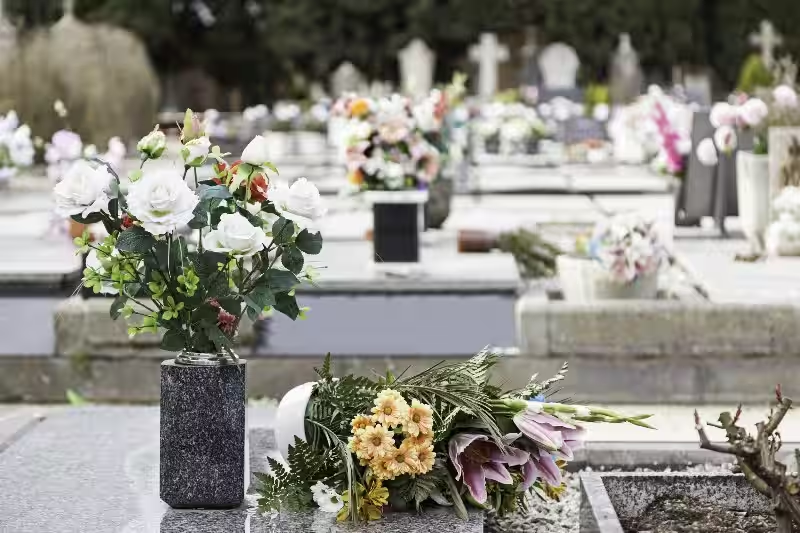
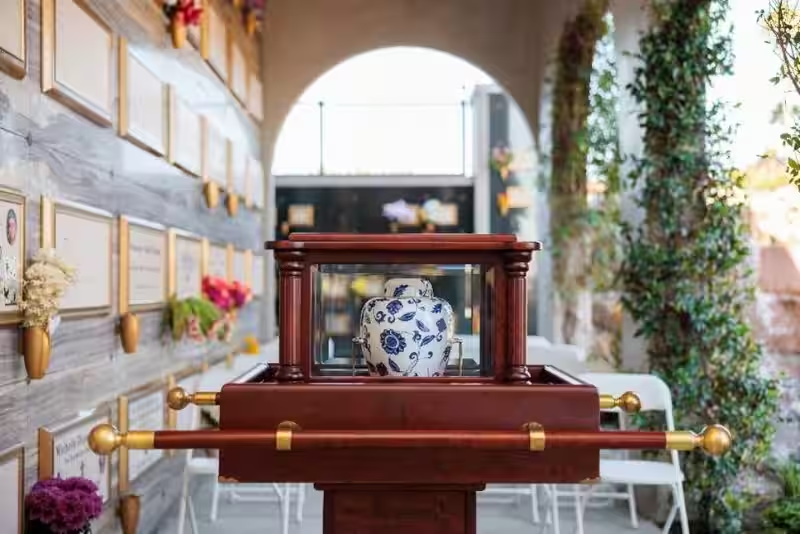
The concept of cremation burial, encompassing the interment of ashes in a cemetery plot, a columbarium niche, or a memorial garden, offers a tangible place for remembrance and pilgrimage. This can provide comfort to grieving families, regardless of their specific religious background, by offering a dedicated space to honor their loved ones. The key is to approach these decisions with respect for the deceased, for the religious traditions they held, and for the diverse ways in which people find solace and meaning in commemorating life’s end.
The Role of Memorialization and Remembrance
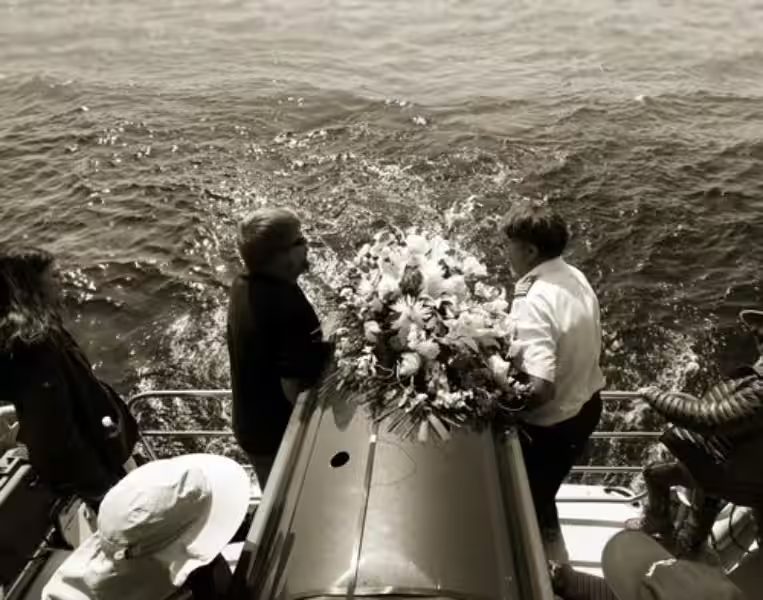
Regardless of the method of disposition, the act of memorialization plays a crucial role in the grieving process and in maintaining a connection with the departed. For those who choose cremation burial, the creation of a memorial site, whether it’s a simple plaque, an urn garden, or scattered ashes in a meaningful location, provides a focal point for remembrance. This can be a place for reflection, prayer, and the sharing of memories, offering a sense of continuity and comfort.
Many religions offer specific rituals and traditions for memorializing the dead, some of which can be adapted to accommodate cremation. For example, a memorial service can be held with or without the physical presence of the ashes. The focus remains on celebrating the life lived and offering prayers or blessings for the departed’s spiritual journey. The enduring love and spiritual connection are what truly transcend the physical form, and memorialization serves to nurture that bond.
Practical Considerations and Modern Adaptations
Beyond the theological arguments, there are practical considerations that often influence the choice between cremation and traditional burial. Cremation can sometimes be more cost-effective than a traditional burial, especially when considering cemetery plot fees, casket costs, and embalming. It also offers greater flexibility in terms of memorialization, allowing for scattering of ashes in places of personal significance or the division of ashes among family members.
Furthermore, modern adaptations of cremation burial are continually emerging, offering more personalized and environmentally friendly options. From biodegradable urns to memorial trees planted with ashes, these innovations allow individuals to align their final disposition with their values, whether they are deeply religious or hold a more secular perspective on life and death. The ability to respectfully inter or memorialize cremated remains in a way that honors both personal wishes and, where applicable, religious guidelines is a testament to the evolving landscape of end-of-life planning.
Conclusion: Honoring Faith and Individuality in Final Wishes
The intersection of cremation burial and religion is a complex and deeply personal one. While some faiths have clear prohibitions, many others have evolved to embrace cremation, allowing for a more flexible and individualized approach to honoring the departed. Understanding the historical context, theological underpinnings, and practical implications of both cremation and traditional burial is essential for making informed decisions that align with one’s spiritual beliefs and personal desires.
Ultimately, the most meaningful choice is one that brings peace and comfort to the individual and their loved ones, while also respecting the traditions and values that hold significance. Whether through traditional interment or a thoughtful form of cremation burial, the enduring legacy of a life lived is found not just in the physical disposition, but in the memories we cherish, the lessons we learned, and the love that continues to connect us across all boundaries.
Frequently Asked Questions: Cremation and Religion
What do major religions say about cremation?
The stance of religions on cremation varies. Some religions, like Hinduism and Buddhism, have historically embraced cremation as a sacred ritual. Other religions, such as Judaism and Islam, traditionally favor burial. Christianity has a more diverse history, with early Christians often opting for burial due to pagan influences, but cremation is now widely accepted by most denominations, though some may still have reservations or historical preferences for burial.
Is cremation permissible in Christianity?
Most Christian denominations today permit cremation. While burial was the historical norm, influenced by Jewish tradition and the burial of Jesus, the Catholic Church officially recognized cremation as permissible in 1963. Many Protestant denominations have also affirmed their acceptance of cremation, viewing it as a matter of personal choice or practical consideration. However, the specific rites and theological interpretations surrounding cremation can still vary among different Christian traditions.
Is cremation permissible in Islam?
Cremation is generally not permitted in Islam. Islamic tradition strongly favors burial according to specific funeral rites. The reasoning behind this prohibition is rooted in the belief in the resurrection of the body and the reverence for the deceased.
Is cremation permissible in Judaism?
Traditional Jewish law and custom strongly favor burial over cremation. Burial is seen as a way to honor the deceased and is part of the mourning process. While there is no explicit prohibition against cremation in the Torah, the practice has been historically discouraged and is still not widely accepted within Orthodox and Conservative Judaism. Reform Judaism tends to be more accepting of cremation as a personal choice.
Is cremation permissible in Hinduism?
Cremation is a deeply ingrained and widely practiced tradition in Hinduism. It is considered a sacred rite, symbolizing the release of the soul from the physical body and facilitating its journey to the next life or reincarnation. The ashes are often scattered in holy rivers, such as the Ganges.
Is cremation permissible in Buddhism?
Cremation is a common practice in many Buddhist traditions and is often seen as a respectful way to handle the deceased. It aligns with the Buddhist concept of impermanence and the detachment from the physical form, allowing the soul to move on. However, specific customs can vary across different Buddhist cultures and schools.