The question of cremation has long been a point of discussion and sometimes concern within the Roman Catholic Church. For centuries, the traditional practice of burial held a prominent, almost sacred, place in Catholic funeral rites. This reverence stemmed from deeply held theological beliefs about the resurrection of the body and the sacredness of human remains as temples of the Holy Spirit. However, as societal norms evolve and practical considerations emerge, the Church’s stance on cremation has seen a significant shift, offering a more nuanced and accepting approach. Understanding this evolution requires a journey through historical context, theological underpinnings, and the practical implications for Catholic families today.
The Roman Catholic Church’s historical preference for burial was rooted in a profound respect for the physical body, seen as an integral part of the human person destined for resurrection. This respect was not merely ceremonial but deeply theological. The belief that Christ himself was buried and resurrected lent immense weight to the practice of burial as a way to mirror Christ’s own journey and to anticipate the future resurrection of the faithful. This tradition was so ingrained that for a long time, cremation was actively discouraged, and in some historical periods, even forbidden, primarily due to its association with certain pagan practices or perceived disrespect for the body.
However, the Church is a living institution, responsive to the needs and evolving understanding of its faithful. Over time, the practical challenges and changing cultural landscapes necessitated a re-evaluation. Factors like limited burial space in some regions, the desire for cremation as a more environmentally sound option, and the rising popularity of cremation in secular society began to influence the dialogue. The Church, in its pastoral wisdom, recognized that the core tenets of faith – the resurrection, the dignity of the human person, and the hope of eternal life – were not inherently contradicted by the act of cremation itself, provided certain conditions were met.
A Shift in Policy: Understanding the Church’s Evolving Stance
The most significant change in the Roman Catholic Church’s approach to cremation came with the revision of the Code of Canon Law in 1983 and subsequent clarifications from the Congregation for the Doctrine of the Faith. These updates marked a pivotal moment, moving from a position of discouragement to one of permission, under specific circumstances. This shift was not a capitulation to secular trends but a thoughtful reconsideration of how the Church’s eternal truths could be expressed within contemporary contexts, ensuring that cremation could be undertaken with reverence and respect for Catholic doctrine.
The underlying principle guiding this adjustment is that the Church does not prohibit cremation as long as it is not done in a way that demonstrates a denial of faith or is contrary to Christian doctrine. This means that the primary concern remains the ultimate destiny of the soul and the belief in the resurrection of the body, even if the body is no longer physically present in its original form. The Church emphasizes that salvation is of the soul, and while the resurrection of the body is a fundamental dogma, the physical state of the body at the time of death, or how its remains are treated, does not preclude this ultimate hope.
This evolving stance allows Catholic families more flexibility and comfort in making funeral arrangements. It acknowledges that the desire for cremation can stem from various motivations, including practicality, personal preference, or even environmental concerns, none of which inherently conflict with Catholic faith. The key is that the intention behind choosing cremation must be one of reverence and respect, not an act of defiance or a rejection of core beliefs. This careful balance allows the Church to minister to its flock compassionately while upholding its sacred teachings.
Theological Underpinnings: Resurrection and Reverence
The cornerstone of the Roman Catholic Church’s theological stance on the body, and by extension cremation, is the doctrine of the resurrection of the dead. This belief is central to Christian faith, asserting that at the end of time, all the faithful will be reunited with their resurrected bodies, perfected and glorified, to live eternally with God. This profound hope means that the body, even after death, is considered sacred and intrinsically linked to the person’s identity and their eternal destiny.
For a long time, this theological emphasis led to a strong preference for burial, seen as the most direct way to honor the body’s sacredness and anticipate its future resurrection. The image of the body returning to the earth from which it was formed, awaiting God’s call, was a powerful symbol. However, with deeper theological reflection and pastoral experience, the Church recognized that cremation does not negate the possibility or the reality of the resurrection. God, who is all-powerful, can raise any body, regardless of its physical state, to eternal life. The dust that remains after cremation is still within God’s creative power.
This understanding is crucial for Catholic families contemplating cremation. It reassures them that choosing cremation does not compromise their faith or their hope for resurrection and eternal life. The respect for the deceased must remain paramount, ensuring that the ashes are treated with dignity and that the funeral rites continue to focus on the spiritual journey of the departed and the hope of resurrection. The Church’s concern is not with the method of disposition but with the ultimate spiritual state of the soul and the underlying faith of the mourners.
Practical Guidelines for Catholic Families
The Roman Catholic Church offers specific guidance for families who choose cremation, ensuring that the practice aligns with Catholic teachings and traditions. These guidelines are designed to uphold the dignity of the deceased and to maintain the integrity of Catholic funeral practices, even when cremation is involved. Understanding these guidelines is essential for a Catholic funeral that is both meaningful and doctrinally sound, providing comfort and confidence to grieving families.
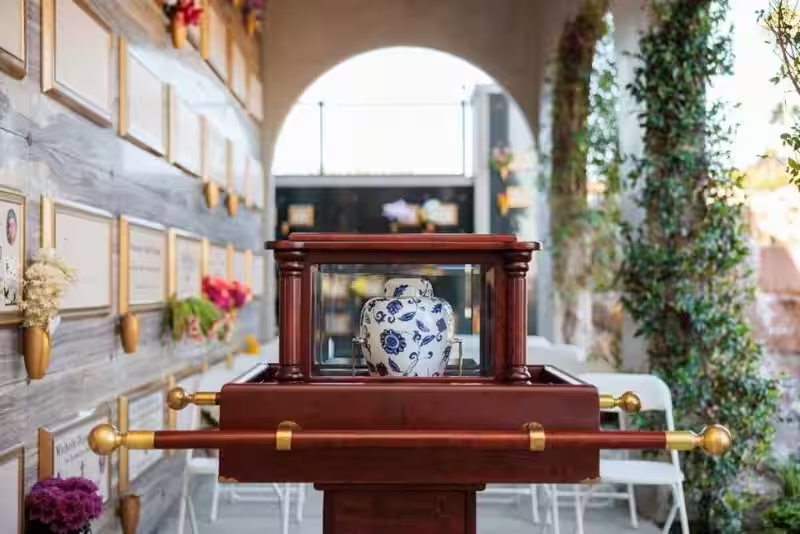
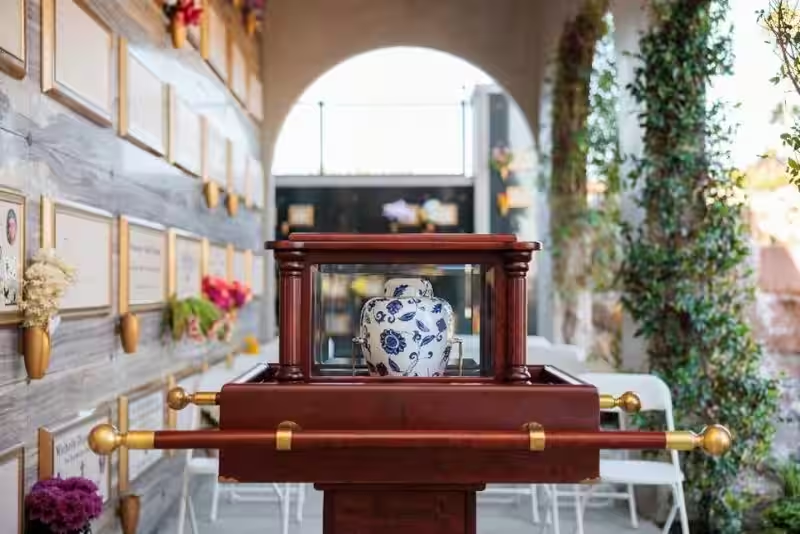
One of the most important directives from the Roman Catholic Church regarding cremation is the placement of the ashes. The ashes must be kept in a sacred place, such as a cemetery or a church columbarium, and not divided among family members or scattered. This directive reinforces the concept of the body’s unity and the hope of collective resurrection. Keeping the ashes together in a designated sacred space honors the deceased as an individual and signifies their place within the community of believers. Disrespectful or frivolous treatment of ashes is not permitted.
Furthermore, the celebration of the funeral liturgy remains a critical component. The Mass of Christian Burial can still be celebrated with the cremated remains present. The funeral rites should focus on the spiritual significance of the deceased’s life, their journey of faith, and the hope of resurrection. The Church encourages families to participate fully in these rites, finding solace and strength in prayer and community. Ultimately, the Roman Catholic Church’s approach to cremation reflects a compassionate pastoral care, balancing tradition with the evolving needs of its faithful, while steadfastly upholding the core tenets of Christian belief.
Frequently Asked Questions: Cremation and the Roman Catholic Church
Can Catholics be cremated?
Yes, cremation is permitted by the Roman Catholic Church. The Church’s stance changed in 1963, allowing cremation as long as it is not chosen as a rejection of Christian doctrine, particularly the resurrection of the body.
What are the Church’s guidelines on cremated remains?
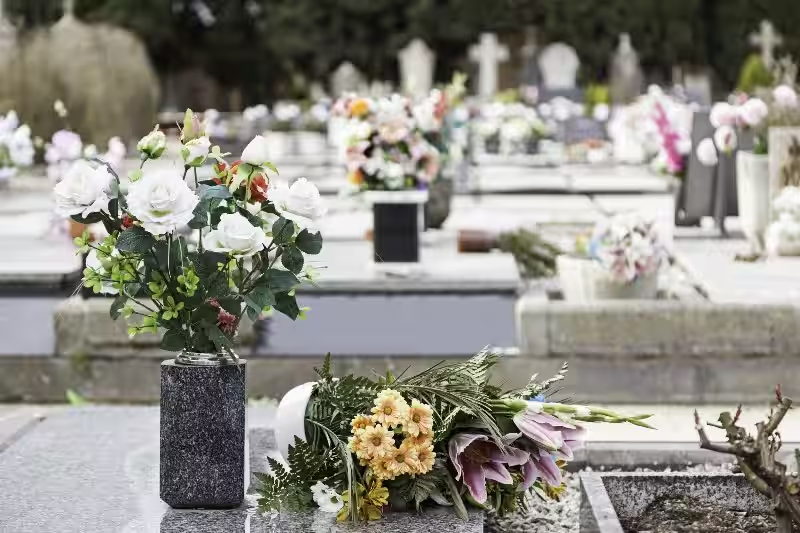
The Church requires that cremated remains be treated with the same respect as a deceased body. This means they should be interred in a tomb, grave, or columbarium (a structure with niches for urns). Scattering ashes, dividing them among family members, or keeping them in homes is not permitted.
Why does the Church have these guidelines for cremated remains?
These guidelines are rooted in the belief in the resurrection of the body and the sacredness of human remains. The Church views the body as having been a temple of the Holy Spirit during life and deserving of respectful treatment even after death. Burial or entombment is seen as a more direct expression of this respect and a more fitting symbol of hope in the resurrection.
Does cremation affect the deceased’s salvation?
No, cremation has no bearing on a person’s salvation. The Church teaches that salvation depends on God’s grace and one’s faith and actions during life, not on the method of disposing of the body after death.
What is the preferred method of disposition for Catholics?
While cremation is permitted, the Church still considers burial as the preferred method of disposition. This preference stems from the historical practice of the Church and its symbolism related to the resurrection of Christ and the expectation of the resurrection of believers.
What if someone has specific wishes for their cremated remains that conflict with Church guidelines?
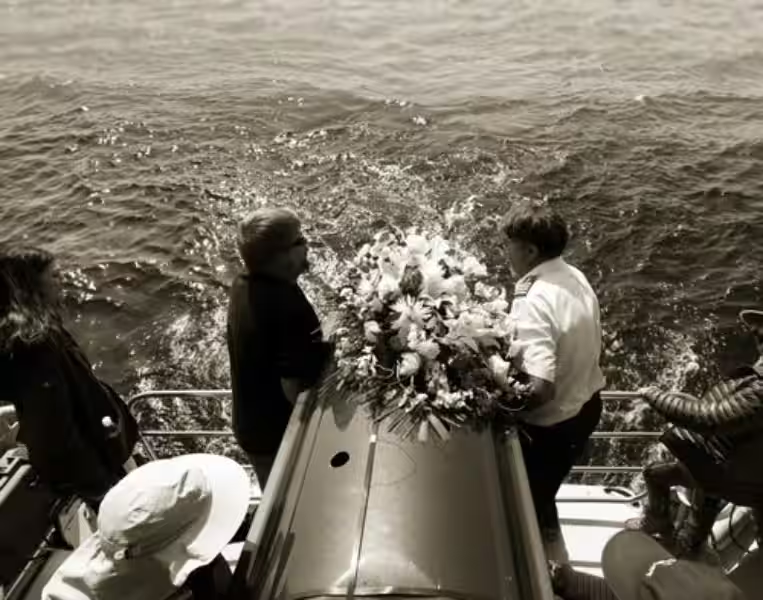
If an individual’s wishes for their cremated remains are contrary to the Church’s guidelines (e.g., scattering ashes), the Church encourages pastoral guidance and discussion to help the faithful understand and adhere to Church teachings.