In the tapestry of faith, certain prayers and devotions draw us closer to the divine, offering solace and strength in times of struggle. For those grappling with the profound challenges of mental, emotional, and neurological ailments, the intercession of a beloved saint can be a beacon of hope. Among these heavenly patrons, Saint Dymphna stands out as a powerful advocate, and the Novena to St. Dymphna has become a cherished practice for countless individuals seeking healing and peace. This article delves into the essence of this novena, its origins, and how it can serve as a meaningful spiritual tool on your journey towards well-being.
The pursuit of inner peace is a universal human endeavor. Whether we face anxiety that whispers doubts, depression that casts shadows, or conditions that affect our cognitive functions, the desire for relief is palpable. It is in these moments of vulnerability that turning to spiritual traditions can offer a profound sense of comfort and a pathway to healing. The Novena to St. Dymphna offers exactly this – a structured period of prayer and reflection, inviting divine assistance and personal spiritual growth.
Who Was St. Dymphna? The Patron Saint of Mental Health
To truly appreciate the significance of the Novena to St. Dymphna, it’s essential to understand the life and legacy of the saint herself. Dymphna, born an Irish princess in the 7th century, is revered as the patron saint of those suffering from mental and neurological disorders, as well as victims of sexual abuse. Her story, though steeped in legend, speaks to profound themes of faith, courage, and the enduring power of love in the face of unimaginable adversity.
The narrative of Saint Dymphna recounts her escape from her father, who, driven mad by grief after the death of his wife, developed an incestuous obsession with his daughter. To protect her purity and escape his madness, Dymphna fled with her confessor, Father Gerebernus, and a few loyal attendants. They eventually settled in Gheel, Belgium, a place that would later become renowned for its innovative and compassionate care for the mentally ill. Tragically, her father eventually found her and, in a fit of rage, beheaded her. Her martyrdom cemented her reputation as a protector of the vulnerable and a champion for those struggling with inner turmoil.
The Origins and Significance of a Novena
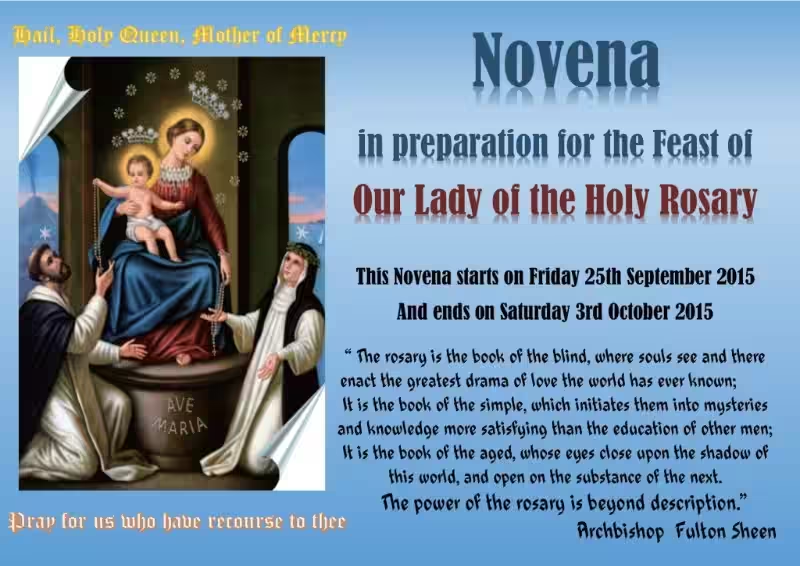
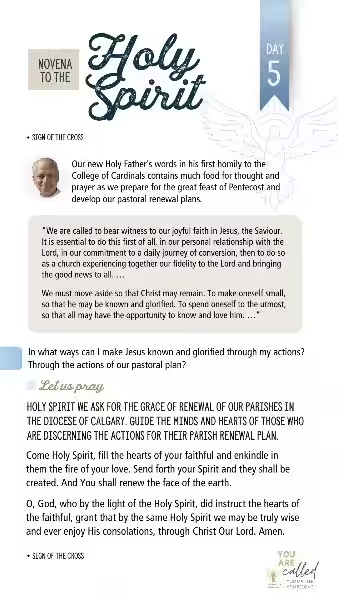
A novena, in its simplest form, is a prayer said for a specific intention, typically over nine consecutive days. The word “novena” itself originates from the Latin word for “nine.” This practice is deeply rooted in Christian tradition, drawing inspiration from the nine days the Apostles spent in prayer in the Upper Room after Jesus’ Ascension, awaiting the coming of the Holy Spirit at Pentecost. The repetition of prayer over this period is believed to foster a deeper connection with God and provide a concentrated period of petition.
The act of undertaking a Novena to St. Dymphna is more than just reciting words; it’s an act of faith, hope, and surrender. It signifies a commitment to seeking divine intervention and trusting in the intercession of a saint who understood suffering firsthand. This dedicated period allows individuals to focus their intentions, open their hearts to spiritual guidance, and cultivate a sense of spiritual resilience. Whether you are seeking relief for yourself or praying for a loved one, the novena provides a structured and meaningful way to channel your prayers.
How to Pray the Novena to St. Dymphna: A Practical Guide
Embarking on a Novena to St. Dymphna is a personal and deeply spiritual experience. While there are many variations of the novena, the core elements remain consistent: prayer, reflection, and an open heart. The beauty of this devotion lies in its adaptability, allowing you to integrate it into your daily life with sincerity and intention. It’s not about rigid adherence to a specific liturgy, but about fostering a genuine dialogue with God through the intercession of Saint Dymphna.
To begin, find a quiet and peaceful space where you can pray without interruption. This could be your bedroom, a corner of your living room, or even a peaceful spot outdoors. Gather any resources you might need, such as a prayer card of Saint Dymphna, a Bible, or a journal. The key is to create an environment that fosters reverence and allows you to focus your mind and spirit on your intentions. Remember, the most important element is your sincere desire for healing and peace.
Essential Components of the Novena
A typical Novena to St. Dymphna involves several key components, each contributing to the spiritual efficacy of the practice. These often include:
An opening prayer: This sets the intention for the novena and invokes Saint Dymphna’s intercession. It’s a call to her compassionate spirit, asking her to be your advocate.
A reflection or meditation: Many novenas include a daily reflection that draws from the life of Saint Dymphna, scripture, or teachings on mental and spiritual well-being. This helps deepen your understanding and connection to the prayer. For instance, a reflection might focus on Dymphna’s courage in the face of fear, encouraging you to find similar strength within yourself.
A specific petition: This is where you articulate your personal intentions, whether it’s for healing from anxiety, clarity of thought, emotional stability, or relief for a loved one. Be specific and honest with your desires.
A concluding prayer: This often includes a prayer to God, asking for His grace and mercy, and expressing gratitude for the intercession of Saint Dymphna. This might involve a traditional prayer like the Our Father and Hail Mary, followed by a personal prayer of thanks.
It is also beneficial to accompany these prayers with acts of charity or spiritual disciplines, such as fasting, attending Mass, or performing acts of kindness. These actions, when undertaken with a pure heart, can amplify your prayers and demonstrate your commitment to spiritual growth. For example, if you are praying for peace, actively seeking to bring peace to others through your actions can be a powerful complement to your novena.
The power of intercessory prayer, especially through the Novena to St. Dymphna, lies in its ability to connect us to a community of faith and to a divine source of love and healing. We are never truly alone in our struggles. When we pray for ourselves or for others, we tap into a spiritual network that extends beyond our immediate circumstances, drawing strength from the communion of saints and the loving presence of God.
For many, the consistent repetition of the novena acts as a gentle but persistent reminder that hope is always present, even in the darkest of times. It provides a structured framework for confronting difficult emotions, a sacred space to voice unspoken fears, and a tangible way to seek divine intervention. This practice can foster a profound sense of peace, not necessarily the absence of problems, but the inner strength and calm to navigate them with greater resilience and faith. The cumulative effect of nine days of focused prayer can lead to a significant shift in perspective and a renewed sense of spiritual well-being.
Real-Life Testimonies and the Efficacy of Faith
Countless individuals have found solace and experienced profound healing through the Novena to St. Dymphna. While faith is deeply personal, the shared experiences of others can offer encouragement and reinforce the belief in the efficacy of prayer. These testimonies often speak of a gradual but tangible shift in their mental and emotional states, a lessening of overwhelming anxiety, a newfound sense of calm, or a greater capacity to cope with challenging symptoms. For instance, one person might describe how, after completing the novena, they felt a significant reduction in their racing thoughts, allowing them to experience moments of genuine serenity they hadn’t felt in years.
These stories are not about miraculous, instantaneous cures in every instance, but about the power of sustained faith and the gentle unfolding of God’s grace. They highlight how the novena can be a catalyst for personal growth, leading to a deeper understanding of oneself, a stronger relationship with God, and a greater capacity for self-compassion. The journey of healing is often a process, and the Novena to St. Dymphna can be a vital spiritual companion on that path, offering consistent support and unwavering hope.
Beyond the Novena: Integrating Faith into Daily Life
While the Novena to St. Dymphna is a powerful devotional practice, its impact can be amplified when integrated into your daily life. Faith is not meant to be confined to specific prayer times; it is a living, breathing force that can permeate every aspect of our existence. Consider how the virtues embodied by Saint Dymphna – courage, purity, and unwavering faith – can inspire your actions and thoughts on a daily basis.
This integration might involve incorporating short prayers or reflections throughout your day, practicing mindfulness and gratitude, or seeking out supportive communities. The principles learned and the peace fostered during the novena can become a wellspring of strength to draw upon in moments of stress or distress. For example, if the novena helped you find calm, you can consciously recall that feeling and invoke Saint Dymphna’s intercession when you feel anxiety rising during your workday.
The journey towards mental and emotional well-being is often an ongoing one, and the Novena to St. Dymphna can serve as a recurring source of spiritual renewal. Many individuals choose to pray the novena periodically, particularly during challenging times, or as a regular spiritual practice once a year. This consistent engagement with your faith can help maintain a sense of spiritual grounding and provide ongoing support.
Ultimately, the Novena to St. Dymphna offers a pathway to connect with the divine, to seek the intercession of a compassionate saint, and to cultivate inner peace. It is a testament to the enduring power of faith and the profound comfort that can be found in turning towards God with an open and hopeful heart. May your journey be filled with grace, healing, and an ever-deepening sense of peace.
Frequently Asked Questions about Novena to St. Dymphna
What is a novena?
A novena is a devotion consisting of nine days of prayer.
Who is St. Dymphna?
St. Dymphna is the patron saint of the mentally ill, those suffering from nervous disorders, and victims of sexual abuse. She is known for her courage and faith in the face of adversity.
What is the Novena to St. Dymphna prayed for?
The Novena to St. Dymphna is typically prayed for healing from mental and emotional distress, protection from exploitation and abuse, and strength to overcome personal struggles.
How do I pray the Novena to St. Dymphna?
The Novena to St. Dymphna usually involves reciting specific prayers for nine consecutive days. These prayers often include an invocation to St. Dymphna, a reflection on her life and virtues, a petition for her intercession, and an Our Father, Hail Mary, and Glory Be.
When should I pray the Novena to St. Dymphna?
You can pray the Novena to St. Dymphna at any time you feel the need for her intercession. It is often prayed in preparation for her feast day, which is on May 25th.
Can anyone pray the Novena to St. Dymphna?
Yes, anyone can pray the Novena to St. Dymphna, regardless of their religious affiliation. It is a prayer for solace, healing, and protection.
Is there a specific prayer for each day of the novena?
While there are common prayers used throughout the novena, many versions include a slightly different reflection or intention for each of the nine days, drawing on different aspects of St. Dymphna’s life and patronage.
What is the role of faith in praying a novena?
Faith is a central element in praying a novena. It is believed that through sincere prayer and faith in God’s grace, one can receive the intercession of saints like St. Dymphna.
Are there specific churches or communities dedicated to St. Dymphna?
Yes, there are churches and shrines dedicated to St. Dymphna, most notably the Shrine of St. Dymphna in Geel, Belgium, which has a long history of caring for the mentally ill.