The enduring traditions of the Catholic faith offer profound comfort and meaning for believers throughout their lives and, importantly, in their final farewells. For many, the thought of a traditional burial in consecrated ground has long been the norm. However, in recent times, there’s been a growing interest and acceptance within the Catholic Church for alternative practices, including Catholic cremation and even the deeply symbolic act of burial at sea. These options, while perhaps less commonly discussed, are not only permissible but can hold significant spiritual weight for those who choose them, reflecting a connection to God’s creation and a hopeful anticipation of resurrection.
This article aims to demystify the Church’s stance on Catholic cremation burial at sea, offering a comprehensive and relatable guide for individuals and families navigating these decisions. We’ll explore the theological underpinnings, practical considerations, and the spiritual significance that can be found in embracing the vastness of the ocean as a final resting place, all while adhering to Catholic teachings and principles. Understanding these options can provide a sense of peace, allowing for a farewell that is both personally meaningful and spiritually aligned.
For centuries, the Catholic Church favored earthly burial, seeing it as a powerful symbol of Christ’s own burial and the hope of resurrection. The physical body, created in God’s image, was to be treated with reverence. This led to a long-standing prohibition against cremation. However, the Church’s understanding of the resurrection has always been rooted in the belief in the immortal soul, and that God can raise the body, even if it has been physically altered.
In 1963, the Holy See issued new directives that lifted the prohibition against cremation. This shift was not a repudiation of past practices but rather a recognition that cremation itself does not impede the resurrection. The core teaching remains that the body is sacred, but now, the Church acknowledges that cremation can be a respectful way to handle the deceased’s remains. The crucial stipulation is that cremation should not be done to deny belief in the resurrection or to conceal ashes for illicit purposes. Therefore, for Catholics, Catholic cremation is now an accepted practice, provided it is undertaken with due respect for the deceased and the teachings of the Church.
Respectful Handling of Cremated Remains
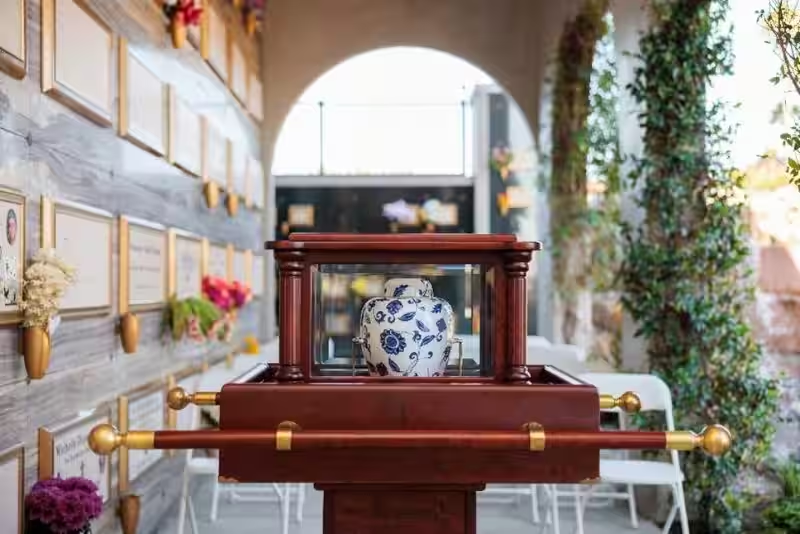
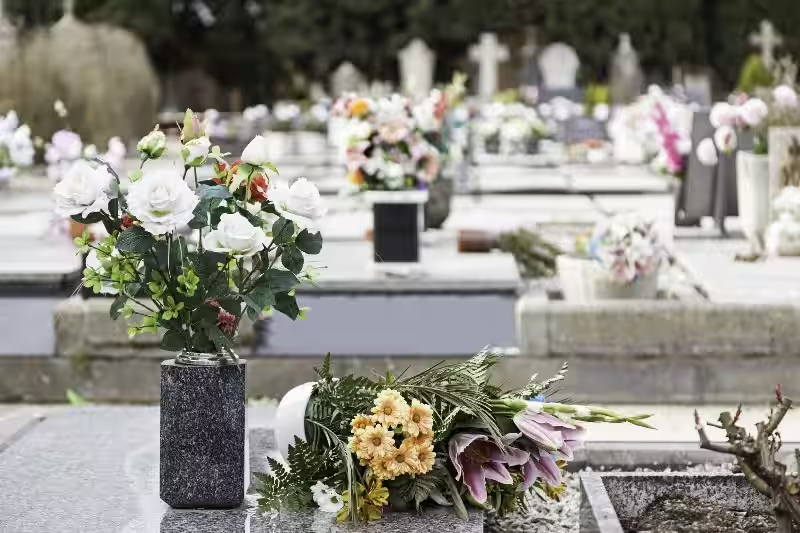
Following cremation, the Church still emphasizes the importance of treating the ashes with dignity and respect. This means they should not be scattered indiscriminately, divided among family members, or kept in places that suggest a lack of belief in the resurrection. The preferred method for ashes is burial in a sacred place, such as a cemetery or a columbarium. This upholds the belief that the body, or its remains, will be raised on the last day.
However, the concept of a “sacred place” has broadened to include other reverent locations, opening the door to practices like burial at sea. The key is that the final resting place should be one that honors the deceased and reflects a belief in God’s eternal embrace. Preserving the ashes in a dignified urn is paramount, whether they are intended for a traditional burial, a columbarium niche, or a more unique disposition like Catholic cremation burial at sea.
Exploring the Spiritual Significance of Burial at Sea
The ocean, in its vastness and power, has long held symbolic meaning across cultures and religions. For Catholics, the imagery of water is rich with theological significance. It is present in the sacrament of Baptism, signifying purification and new life in Christ. The early Church itself met in catacombs, underground spaces that, in a way, mirrored the depths of the earth, much like the depths of the sea.
Burial at sea, when approached with the right intentions, can be a profoundly spiritual experience. It can symbolize a return to God’s creation, a release of earthly burdens, and a hopeful journey into eternity. The immensity of the ocean can evoke a sense of God’s boundless love and mercy, a loving embrace that extends beyond the physical realm. For individuals who had a deep connection to the sea, this final resting place can feel like a natural and fitting tribute, a testament to their life’s journey mirroring the ebb and flow of the tides.
Requirements and Considerations for Catholic Cremation Burial at Sea
While the Catholic Church permits Catholic cremation burial at sea, there are specific guidelines and considerations that must be observed to ensure the practice aligns with religious tenets. The primary requirement is that the cremation itself must be conducted with reverence, and the ashes must be properly contained in a biodegradable urn. This is crucial for the ecological impact and ensures a respectful dissolution into the ocean.
Furthermore, the burial at sea must be conducted in a manner that is both reverent and respectful. This often involves a blessing of the urn and a prayer service, perhaps led by a priest or deacon, or by a family member. The location chosen for the burial should be appropriate, typically in designated areas or at a significant distance from shore to ensure privacy and environmental responsibility. It is essential to consult with local maritime authorities and religious leaders to understand specific regulations and to ensure the ceremony is conducted with the solemnity and spiritual integrity it deserves.
Embarking on the journey of Catholic cremation burial at sea involves careful planning and attention to detail. This is not a decision to be made lightly, and gathering information is key to a smooth and meaningful process. Understanding the logistical aspects ensures that the farewell is handled with the utmost respect and adherence to both secular and spiritual requirements.
When considering Catholic cremation burial at sea, there are several practical steps to undertake. Firstly, arranging for the cremation through a reputable funeral home is paramount. They will guide you through the process of obtaining necessary documentation and ensure the cremation is performed according to regulations. Secondly, selecting a suitable urn is vital. As mentioned, it should be biodegradable and designed for sea burial, often made from materials like sand, wood, or sea salt.
The Ceremony and Committal at Sea
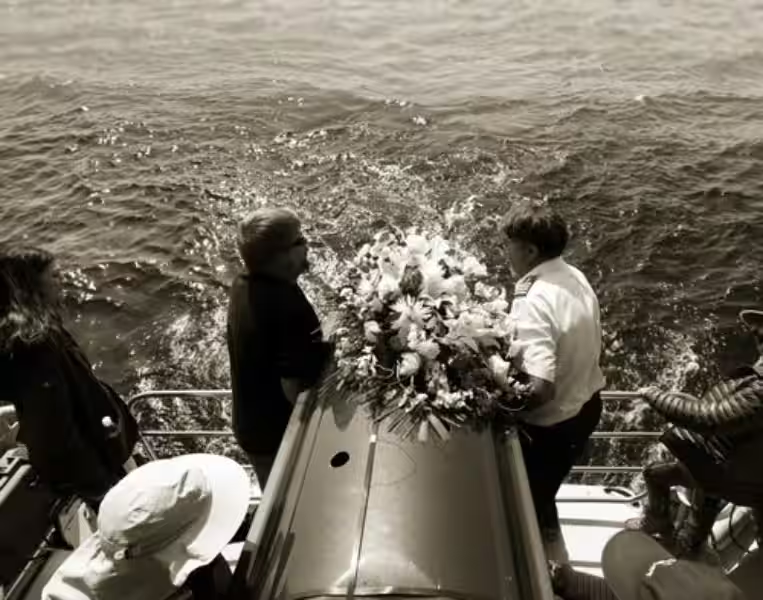
The committal service itself is a deeply personal and spiritual moment. Many families choose to have a religious ceremony at sea, which can be tailored to their specific needs and preferences. This might include readings from scripture, prayers, a eulogy, and the final blessing. For Catholic cremation burial at sea, having a priest or deacon present to officiate can add a profound layer of spiritual significance, offering prayers for the departed and comfort to those grieving.
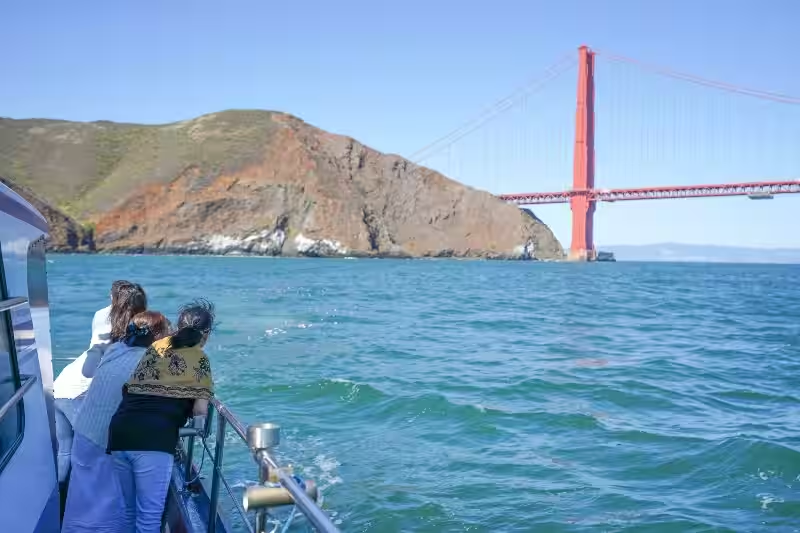
The act of releasing the urn into the ocean is a powerful symbol of returning to God’s embrace. It signifies the soul’s journey onwards, while the physical remains are entrusted to the vastness of creation. The ceremony can be as simple or as elaborate as desired, but the focus should always remain on honoring the deceased’s life and expressing faith in the resurrection. Many companies specialize in facilitating sea burials, offering services that include boat charter, coordination with authorities, and guidance on the ceremony, making the process more manageable for grieving families.
Finding Peace and Hope in the Catholic Tradition
The decision to opt for Catholic cremation burial at sea is a deeply personal one, often born from a desire for a final resting place that resonates with one’s life, faith, and spirituality. It’s a testament to the fact that the Catholic Church, while steeped in tradition, is also capable of embracing practices that offer comfort and meaning in contemporary life, provided they align with core theological principles.
Ultimately, whether one chooses traditional burial, cremation with interment in sacred ground, or the contemplative beauty of Catholic cremation burial at sea, the Church’s message remains one of hope and eternal life. The focus is on the immortal soul and the promise of resurrection. By understanding the Church’s teachings and approaching these practices with reverence and faith, individuals can find profound peace and a meaningful way to honor their loved ones, entrusting them to God’s loving care, whether on land or in the boundless embrace of the sea.
Frequently Asked Questions: Catholic Cremation and Burial at Sea
What is the Catholic Church’s stance on cremation?
For many years, the Catholic Church prohibited cremation. However, in 1963, the Church revised its canon law to permit cremation, provided it is not done as a denial of faith in the resurrection of the body. The Church still prefers the traditional burial of the body.
Can Catholics be cremated and have their ashes scattered at sea?
Yes, the ashes of a cremated Catholic can be scattered at sea. The Church permits this practice, as long as it is done with reverence and respect for the deceased and does not involve scattering the ashes in a way that is disrespectful or intended to obscure the memory of the deceased.
What are the guidelines for a Catholic burial at sea?
When ashes are scattered at sea, the Church emphasizes that it should be done with reverence and respect. This means avoiding scattering in places where the remains might be disturbed or treated disrespectfully. The focus remains on the solemnity of returning the body (or its remains) to the earth or sea, acknowledging God’s creation.
Does the Catholic Church have specific prayers or rituals for cremation and burial at sea?
While there isn’t a specific rite for “cremation and burial at sea” as a combined event, the Church’s funeral rites can be adapted. Prayers and blessings offered for the deceased and their remains are still appropriate, focusing on the hope of resurrection and the love of God. A priest may be able to offer prayers at the time of scattering the ashes.
What is the theological significance of burial for Catholics?
The Church has historically emphasized the burial of the body as a reflection of the belief in the resurrection of the body. The body is seen as having been a temple of the Holy Spirit and destined for glory in the resurrection. Cremation is accepted, but the underlying theological understanding of the body’s importance remains.
Are there any restrictions on where ashes can be scattered at sea for Catholics?
The primary consideration is that the scattering should be done in a dignified manner, respecting the deceased and the sacredness of the act. The Church advises against scattering ashes in places that are frivolous, disrespectful, or where the remains might become an object of mockery or desecration. The vastness of the sea is generally seen as a fitting resting place when done with reverence.