Anger, a potent and often unwelcome emotion, can weave its way into even the most devout spiritual journeys. For many who seek solace and guidance within their faith, the experience of anger can be particularly disorienting, sometimes leading to a challenging anger cycle that seems to trap them in a perpetual state of frustration and disillusionment. Understanding this cycle, and how it interacts with religious beliefs and practices, is the first step towards cultivating a more peaceful and fulfilling spiritual life. This article will explore the intricate relationship between the anger cycle and religion, offering insights and practical strategies for navigating these turbulent waters.
The journey of faith is often depicted as a path of love, compassion, and serenity. However, the reality for many individuals is far more complex. Life’s unavoidable challenges – personal struggles, perceived injustices within their religious community, or even internal theological doubts – can ignite feelings of anger. This anger, left unaddressed or misinterpreted, can become a recurring pattern, a cycle that repeats itself, impacting one’s relationship with their faith, their community, and ultimately, themselves. Recognizing this anger cycle is not a sign of spiritual failure, but rather an opportunity for growth and deeper understanding, a chance to refine one’s faith in the crucible of real-world experience.
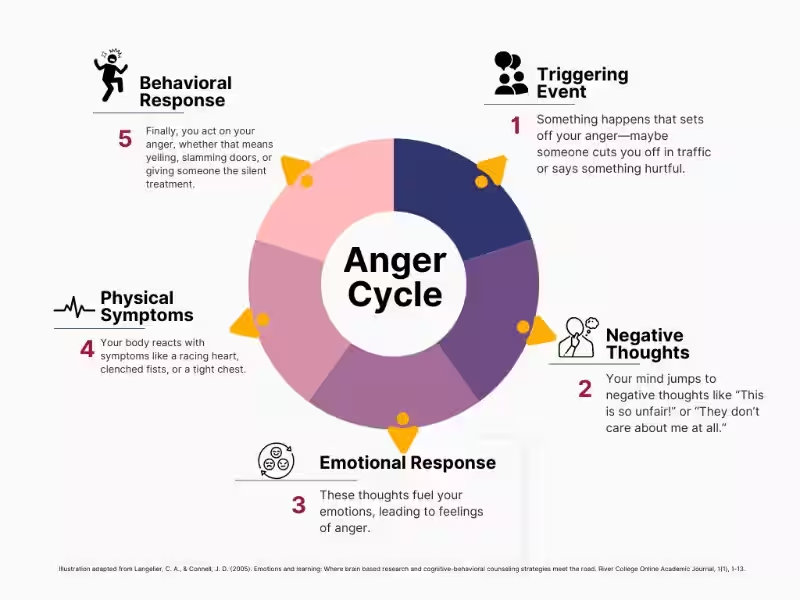
At its core, the anger cycle is a sequence of events that begins with a trigger, leading to the emotion of anger, and then to behaviors that often exacerbate the initial situation, eventually leading back to a similar trigger or a lingering sense of resentment. It’s a loop that can feel inescapable, a spiral downwards that impacts our thoughts, feelings, and actions. This cycle is not exclusive to any particular group or belief system; it is a fundamental human experience that can profoundly affect how we engage with our spiritual lives.
The anger cycle typically begins with a trigger event. This could be anything from a perceived slight from a fellow congregant, a sermon that feels overly critical, a difficult personal situation that tests one’s patience, or even a crisis of faith that leaves one feeling abandoned or misunderstood by the divine. This initial spark ignites the physiological and psychological response of anger. Our hearts may race, our muscles tense, and our minds fill with accusatory thoughts. The intensity of this response varies, depending on individual temperament and past experiences.
Following the initial surge of anger, we often enter the escalation phase. Here, our thoughts become increasingly negative and focused on the perceived wrong. We might replay the event in our minds, adding fuel to the fire with our interpretations and judgments. This is where the anger cycle can become particularly damaging in a religious context, as we may begin to question the goodness of God, the sincerity of our leaders, or the validity of our faith itself. The urge to act out, whether through verbal confrontation, withdrawal, or internal brooding, becomes strong.
The action phase is where the anger is expressed. This could be through an outburst, a passive-aggressive comment, or even a silent, simmering resentment that affects our interactions. Unfortunately, actions taken in anger are rarely constructive. They can damage relationships, create further misunderstandings, and ultimately, do little to resolve the underlying issue. Instead, they often serve to reinforce the negative emotions, preparing the ground for the next iteration of the anger cycle.
Finally, after the expression of anger, there is often a period of aftermath. This can involve feelings of regret, shame, or exhaustion, but often, the underlying issue remains unresolved. The trigger may have passed, but the anger leaves a residue. This residual anger can make individuals more susceptible to future triggers, thus perpetuating the anger cycle. It’s this cyclical nature that makes anger so insidious, especially when it intersects with our spiritual lives, potentially turning a source of comfort into a source of distress.
Anger and Religion: A Complex Interplay
Religion, with its emphasis on love, forgiveness, and divine perfection, can present a unique backdrop for the anger cycle. On one hand, religious teachings often offer powerful tools for managing anger, such as the principles of patience, compassion, and turning the other cheek. On the other hand, the very doctrines and community structures that are meant to foster peace can sometimes become sources of frustration and anger for individuals. This creates a complex interplay where faith can be both a balm and a battleground.
Many religious traditions emphasize the importance of forgiveness, both of others and of oneself. The concept of a loving and merciful God is intended to provide a model for human behavior and a source of solace when we falter. However, when individuals struggle to forgive themselves or others, or when they perceive a lack of divine forgiveness, anger can fester. This is especially true when religious teachings are interpreted rigidly or used judgmentally, leading to feelings of condemnation rather than grace. The anger cycle can then become entangled with guilt and self-doubt, creating a profound spiritual crisis.
Furthermore, religious communities, while intended to be places of support and belonging, can unfortunately become breeding grounds for interpersonal conflict. Disagreements over doctrine, leadership disputes, or perceived favoritism can ignite anger among congregants. When these issues are not addressed with transparency and grace, they can lead to lasting resentment and division. For individuals caught in such situations, the very place they turn to for spiritual nourishment can become a source of significant distress, fueling the anger cycle and undermining their faith.
The concept of divine justice also plays a significant role. Many believe that God is just and will ultimately set things right. However, when faced with prolonged suffering or apparent injustice in the world, individuals may find themselves questioning this justice. This can lead to anger directed at God, or at the perceived inaction of the divine. This existential anger can be particularly challenging to process within a religious framework, as it directly challenges core tenets of faith. It’s a testament to the human heart’s struggle when faced with the perceived silence or indifference of the heavens.
Breaking the Cycle: Strategies for Spiritual Serenity
The good news is that the anger cycle is not an unbreakable chain. By understanding its mechanics and applying principles drawn from both psychological wisdom and religious teachings, individuals can learn to navigate their anger more effectively and cultivate a deeper, more resilient faith. This involves a conscious effort to interrupt the pattern, develop coping mechanisms, and reframe one’s perspective. It’s a journey of intentional spiritual and emotional self-care.
One of the most crucial steps in breaking the anger cycle is recognizing the early warning signs. This might include physical sensations like clenched fists or a tight jaw, or mental cues like intrusive negative thoughts or a heightened sense of irritability. When these signs appear, it’s an invitation to pause and intervene before anger escalates. Many religious traditions offer practices that can help cultivate this self-awareness, such as mindfulness meditation, prayer, or journaling. By paying attention to our inner landscape, we can catch the spark before it becomes a blaze.
Developing healthy coping mechanisms is essential. Instead of resorting to destructive behaviors, individuals can learn to channel their energy constructively. This might involve deep breathing exercises, taking a walk in nature, engaging in a creative activity, or speaking with a trusted friend, counselor, or spiritual advisor. For those of faith, turning to prayer or scripture during moments of anger can be incredibly powerful. Reading passages that speak of peace, patience, and divine love can offer a much-needed shift in perspective. The key is to find outlets that soothe rather than inflame.
Another vital strategy is to challenge and reframe negative thoughts. Often, anger is fueled by distorted thinking patterns, such as catastrophizing, black-and-white thinking, or making assumptions. Religious teachings often encourage us to “think on things that are true, noble, right, pure, lovely, admirable” (Philippians 4:8). By consciously questioning the validity of our angry thoughts and replacing them with more balanced and compassionate perspectives, we can disrupt the anger cycle. This might involve asking ourselves: “Is this thought truly accurate?” or “What is a more loving or charitable interpretation of this situation?”
Finally, cultivating a practice of forgiveness is paramount. This doesn’t mean condoning harmful behavior or forgetting past hurts. It means releasing the grip of resentment and allowing oneself to move forward. Many religious traditions teach that forgiveness is not just for the offender, but primarily for the forgiver, freeing them from the burden of anger. This is a challenging but profoundly liberating aspect of spiritual growth. Embracing the divine example of mercy can empower us to extend that same grace to ourselves and others, effectively breaking the chains of the anger cycle.
Embracing Grace: Finding Peace in Your Faith Journey
The anger cycle can feel like a formidable adversary, especially when intertwined with our spiritual lives. However, by understanding its patterns and actively employing strategies for de-escalation and reframing, we can move towards a more harmonious existence. This journey is not about eradicating anger entirely, which is an unrealistic and perhaps even unhealthy goal, but about learning to manage it with wisdom, compassion, and an unwavering commitment to our faith.
Ultimately, navigating the anger cycle within a religious context is an opportunity to deepen our understanding of ourselves and our relationship with the divine. It’s a chance to discover the resilience of our faith and the transformative power of grace. By embracing the principles of patience, forgiveness, and self-awareness, we can transform moments of spiritual turmoil into pathways of profound personal growth, finding a lasting peace that transcends the cyclical nature of anger. This is the essence of a mature and vibrant spiritual life, one that acknowledges the human struggle while holding fast to the enduring hope of divine love and guidance.
Frequently Asked Questions about the Anger Cycle and Religion
What is the anger cycle?
The anger cycle is a pattern of thoughts, feelings, and behaviors that can lead to an escalation of anger. It typically involves a trigger, which sparks an initial feeling or thought, leading to physical sensations, then behavioral responses, and finally, a period of resolution or consequence. Understanding this cycle can help individuals identify and manage their anger more effectively.
How do religious beliefs relate to managing anger?
Many religions offer guidance and principles for managing anger. Practices such as prayer, meditation, forgiveness, compassion, and adhering to moral codes can provide tools and a framework for individuals to understand, control, and transform their angry impulses. Religious teachings often emphasize peace, patience, and understanding as virtues that counter anger.
Can religion encourage anger?
While most religions promote peace, some interpretations or specific doctrines within certain faiths might, in certain contexts, be used to justify anger or conflict. This can arise from interpretations of divine justice, righteous indignation, or the defense of religious principles. However, these instances are often debated within religious communities, and the overarching emphasis in major religions is typically on peaceful resolution and inner calm.
How can I use my religious faith to cope with anger?
You can use your religious faith by engaging in practices that promote mindfulness and self-reflection, such as prayer, scripture study, or meditation. Many faiths encourage acts of service, forgiveness, and seeking spiritual guidance from leaders. Reflecting on religious teachings about patience, love, and understanding can also help reframe your perspective during moments of anger.
Are there specific religious teachings on anger?
Yes, most major religions have teachings on anger. For example, in Christianity, the Bible warns against wrath and encourages forgiveness. In Islam, the Quran advises believers to control their anger and seek refuge in God. Buddhism emphasizes mindfulness and detachment from negative emotions, including anger. Hinduism teaches about the importance of controlling the senses and emotions. These teachings often provide moral and ethical guidance for dealing with anger.