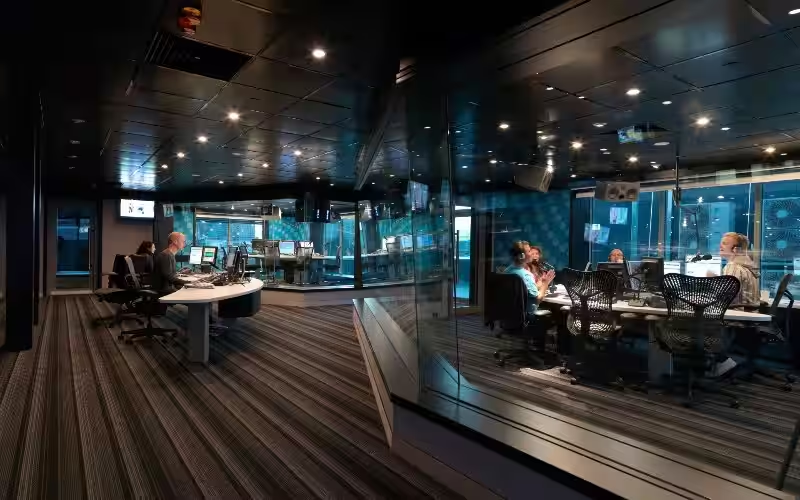
In the hushed quiet of the early morning, before the world fully awakens, a different kind of broadcast often fills the airwaves. It’s a sound that has resonated for generations, a familiar voice carrying messages of hope, guidance, and spiritual connection. This is where the concept of the radio office intersects powerfully with the realm of religion, acting as a vital conduit for faith in an increasingly digitized world. Far from being a relic of the past, the radio office, in its modern and traditional forms, continues to be a cornerstone for disseminating religious teachings, fostering community, and offering solace to millions.
The very idea of a “radio office” might conjur images of a bustling newsroom or a place dispatching urgent calls. However, when we speak of its role in religion, we’re referring to the administrative and broadcasting heart that fuels religious programming. This encompasses everything from managing the airtime for sermons and religious discussions to the intricate work of producing podcasts and live-streamed services. It’s the unseen engine that ensures the sacred word reaches listeners, whether they are devout followers seeking daily inspiration or curious individuals exploring different spiritual paths.
The journey of religion on the airwaves has been a fascinating evolution. Initially, it was the stark, clear voice of a preacher delivering a sermon on AM radio, often broadcast directly from the church itself. These early broadcasts from the radio office were revolutionary, allowing faith to transcend geographical boundaries and reach individuals who might never physically enter a place of worship. Think of the powerful impact of those early radio evangelists, their words becoming a guiding light for families gathered around the radio in their living rooms, creating a sense of shared spiritual experience.
Today, the definition of the radio office has expanded dramatically. While traditional radio remains strong, especially for reaching older demographics or those in areas with limited internet access, the digital age has introduced new frontiers. Religious organizations now manage sophisticated online platforms, producing high-quality video content, interactive Q&A sessions with religious leaders, and even virtual prayer groups. This modern radio office is a multi-faceted operation, employing not just broadcasters but also web developers, social media managers, and content creators, all working in synergy to spread their message effectively across diverse media channels. The goal remains the same: to foster spiritual growth and provide a sense of belonging, but the tools and techniques have become infinitely more varied and accessible.
The programming emanating from a religious radio office is far from monolithic. While sermons and liturgical services form the bedrock, the spectrum of content is remarkably broad, catering to a wide range of spiritual needs and interests. You’ll find educational programs delving into the history and theology of various faiths, offering in-depth explorations for those seeking to deepen their understanding. These programs often feature interviews with scholars, theologians, and practitioners, shedding light on complex doctrines and practices in an accessible manner.
Beyond the academic, there are the deeply personal and relatable aspects of religious life that find a voice through the radio office. Consider talk shows where listeners can call in with questions about faith, doubt, or personal struggles, receiving advice and encouragement from religious leaders or guest experts. There are also programs dedicated to interfaith dialogue, fostering understanding and respect between different religious communities. Furthermore, many religious broadcasts now incorporate music, storytelling, and even segments focused on charitable work and community outreach, demonstrating the holistic nature of faith and its practical application in the world. This holistic approach is a hallmark of effective religious broadcasting.
The Unseen Impact: Community and Comfort
One of the most profound impacts of religious broadcasting, facilitated by the radio office, is its ability to foster a sense of community. For individuals who are geographically isolated, homebound, or simply unable to attend services regularly, these broadcasts provide a vital link to their faith community. It’s a way of participating, even from afar, in shared rituals, prayers, and teachings. This sense of connectedness can be incredibly powerful in combating loneliness and reinforcing a person’s spiritual identity.
The comfort and guidance offered through religious radio programming are equally significant. In times of crisis, uncertainty, or personal hardship, the familiar voice of a religious leader or a reassuring message can be a source of immense solace. The radio office ensures that these messages of hope and resilience are consistently available, acting as a spiritual lifeline. For many, tuning into their preferred religious broadcast is as routine and essential as a morning cup of coffee, providing a stable anchor in the often turbulent waters of life. This consistent presence from the radio office builds trust and reliance.
Navigating Doubt and Seeking Answers
The journey of faith is rarely a straight line; it’s often punctuated by questions, doubts, and periods of searching. The radio office, through its diverse programming, plays a crucial role in supporting individuals through these challenging phases. Many religious programs are specifically designed to address common theological questions, explore different interpretations of scripture, and provide frameworks for grappling with doubt. This openness to inquiry is a testament to the evolving nature of religious discourse.
Listeners can find themselves drawn to the radio office’s offerings when grappling with existential questions, moral dilemmas, or simply seeking a deeper understanding of their own beliefs. The availability of recorded sermons, podcasts addressing specific topics, and live call-in shows provides a safe space for exploration and learning. It’s a resource that empowers individuals to engage with their faith on a more intellectual and personal level, often leading to renewed conviction or a more nuanced perspective. This intellectual engagement is a key benefit of well-managed religious broadcasting.
The Future of Faith on the Airwaves
As technology continues to advance, the role of the radio office in religious broadcasting will undoubtedly continue to adapt. We can anticipate even more immersive experiences, such as virtual reality services or interactive online communities facilitated by religious organizations. The focus will remain on leveraging new platforms to make religious teachings and community engagement more accessible and impactful than ever before.
The enduring power of the spoken word, amplified and distributed through the channels managed by the radio office, is unlikely to diminish. Whether it’s a classic radio sermon, a polished podcast, or a live-streamed event, the fundamental human need for spiritual connection and guidance will continue to drive the demand for religious content. The radio office, in its many forms, will remain the vital link, ensuring that the echoes of faith resonate far and wide, touching lives and inspiring hearts for generations to come.
Frequently Asked Questions
What is a radio office?
A radio office, also known as a broadcast station or radio station, is a facility that transmits radio waves intended for public reception. This can include AM, FM, and digital radio broadcasts.
What kind of content can I expect from a radio office?
Radio offices typically broadcast a variety of content, which can include music, news, sports, talk shows, educational programming, and advertisements. The specific content varies greatly depending on the station’s format and target audience.
How can I find a radio office near me?
You can typically find radio offices by using a radio scanner, checking local directories, or searching online for “radio stations in [your city/region]”. Many cars and home radios have built-in tuners to scan for available frequencies.
Can I listen to a radio office from anywhere in the world?
While AM and FM radio signals have a limited range, many radio offices now stream their broadcasts online via their websites or through dedicated radio apps. This allows for listening from virtually anywhere with an internet connection.
What is the history of radio offices?
The development of radio offices began in the early 20th century with pioneers like Guglielmo Marconi. Early broadcasts were experimental, but soon evolved into regular programming for entertainment and information.
How can I get involved with a radio office?
Many radio offices offer opportunities for volunteering, internships, or employment in various roles, including on-air personalities, producers, engineers, sales, and administrative positions. Some also have community advisory boards.
What is the difference between AM and FM radio?
AM (Amplitude Modulation) and FM (Frequency Modulation) are two different methods of transmitting radio signals. FM generally offers higher fidelity sound and is less susceptible to static, making it preferred for music. AM is more prone to interference but can travel further, especially at night.
Are there religious radio offices?
Yes, there are many radio offices dedicated to religious programming. These stations often broadcast sermons, religious music, scripture readings, and discussions on faith-related topics. They can represent a wide range of denominations and beliefs.
How can I find religious radio offices?
You can search online for terms like “Christian radio stations,” “Islamic radio,” “Gospel radio,” or “religious programming” along with your location. Many religious broadcasters also have websites where you can find their broadcast schedules and listen online.
What kind of content is typically found on religious radio offices?
Religious radio offices usually feature content that promotes a specific faith or spiritual message. This can include:
* Sermons and teachings: Broadcasts from religious leaders.
* Religious music: Hymns, gospel, and other faith-inspired music.
* Scripture readings and discussions: Explanations and interpretations of religious texts.
* Testimonials: Personal stories of faith and transformation.
* Interviews: Conversations with religious figures and members of the community.
* Prayer and reflection: Guided prayers and moments of spiritual contemplation.