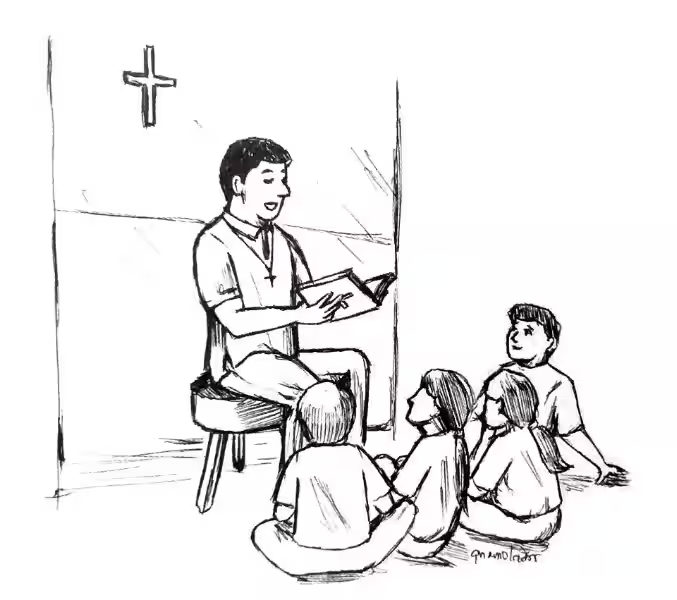
The role of a priest, within the vast tapestry of human religion, is often shrouded in reverence and mystery. Beyond the public pronouncements and sacred rituals, lies a profound and demanding journey of preparation: priest training. This isn’t a mere academic pursuit; it’s a transformative process, a crucible designed to forge individuals, equipping them with the spiritual, intellectual, and pastoral skills necessary to guide and serve their congregations. Understanding this training offers a unique window into the very heart of religious life, revealing the dedication and discipline that underpins spiritual leadership.
For many, the image of a priest conjures up visions of ancient texts and hushed chapels. While these elements are certainly present, the reality of priest training is far more multifaceted. It encompasses a rigorous intellectual curriculum, delving into theology, philosophy, and biblical studies. Simultaneously, it demands intense spiritual formation, cultivating personal piety, prayer life, and a deep understanding of one’s own faith. Furthermore, the practical application of ministry, often overlooked, forms a critical component, preparing these future leaders for the complexities of human interaction and spiritual guidance.
The Foundation: Laying the Groundwork for Sacred Service
The initial stages of priest training are akin to building a solid architectural foundation for a grand structure. This period is characterized by a comprehensive immersion in the core tenets of the religion. Aspiring priests are presented with the foundational doctrines, historical narratives, and ethical frameworks that define their faith tradition. This isn’t just about memorizing facts; it’s about internalizing a worldview, understanding the theological underpinnings of their beliefs, and developing a coherent and robust personal faith.
This foundational phase often involves extensive study of sacred scriptures, exploring their historical context, literary forms, and theological implications. For instance, a Christian candidate might spend years dissecting the Gospels, understanding the life and teachings of Jesus Christ, while a Jewish student would engage deeply with the Torah and its commentaries. Beyond scripture, philosophical inquiry plays a crucial role, helping trainees grapple with profound questions of existence, morality, and the nature of God. This intellectual wrestling is essential for developing the capacity to articulate and defend their faith in a complex world, and to minister to those who are seeking answers themselves.
Academic Rigor: The Intellectual Pillars of Ministry
The academic component of priest training is undeniably demanding and comprehensive. It extends far beyond introductory courses, requiring a deep dive into specialized areas of theological study. This can include systematic theology, which examines the core doctrines of the faith; biblical exegesis, the critical interpretation of sacred texts; and church history, providing context and understanding of how religious traditions have evolved. The goal is not simply to accumulate knowledge, but to develop the intellectual tools necessary for thoughtful preaching, teaching, and pastoral care.
Consider the vastness of theological inquiry. For example, a priest in training might be tasked with understanding the nuances of Christology (the nature of Christ) or the philosophical arguments for the existence of God. This requires not only diligent study but also the ability to synthesize complex ideas and communicate them clearly. Furthermore, understanding comparative religion becomes increasingly important, allowing future priests to engage with diverse faith traditions and to better understand the spiritual landscape in which they will minister. This academic rigor ensures that their ministry is grounded in sound theological understanding and intellectual integrity.
Spiritual Formation: Cultivating the Inner Life
While academic learning provides the intellectual framework, spiritual formation is the very soul of priest training. This is where the aspiring minister is encouraged to deepen their personal relationship with their faith and to cultivate the inner discipline required for a life of service. This often involves a significant emphasis on prayer, meditation, and contemplative practices. The aim is to foster a profound sense of connection with the divine, to cultivate humility, and to develop a spirit of self-awareness and surrender.
This aspect of training isn’t always overtly structured but is woven into the fabric of daily life within the seminary or religious community. It can involve periods of silence, retreats, and guidance from spiritual directors. Imagine a young person learning to navigate the quietude of their own mind, actively seeking God’s presence through consistent prayer. This cultivation of the inner life is crucial, as it enables priests to draw on a deep well of spiritual strength when facing the challenges and joys of ministry, and to offer authentic spiritual guidance to others.
The Practical Application: Ministering to the Flock
Beyond the halls of academia and the quiet spaces of prayer, priest training places a significant emphasis on the practicalities of ministry. This is where theoretical knowledge meets the messy, beautiful reality of human lives. Trainees are exposed to the diverse needs of a congregation, learning how to offer comfort, counsel, and spiritual support. This hands-on experience is invaluable, bridging the gap between abstract theological concepts and the concrete needs of individuals seeking solace and guidance.
This practical phase often involves supervised internships or pastoral assignments. Here, aspiring priests learn by doing: officiating at services, visiting the sick, counseling individuals and families, and engaging in community outreach. They learn to navigate delicate conversations, to offer empathy in times of grief, and to celebrate moments of joy. This exposure to the breadth of pastoral responsibilities is essential, ensuring that when they are ordained, they are not just knowledgeable theologians but also compassionate and capable shepherds of their flock.
The art of pastoral care is a cornerstone of any robust priest training program. This involves developing the skills to listen deeply, to empathize with suffering, and to offer practical and spiritual support. It’s about understanding the human condition in all its complexity, from moments of profound joy to periods of deep despair. Future priests learn to approach individuals with unconditional acceptance and a spirit of service, recognizing the sacredness of each person’s journey.
Examples of pastoral care in training might include learning how to conduct effective pre-marital counseling, guiding couples as they prepare for the commitment of marriage. Another crucial aspect is learning to minister to those facing illness or loss, offering comfort and spiritual presence during difficult times. This requires not only understanding theological responses to suffering but also developing interpersonal skills such as active listening and non-judgmental communication. The training aims to equip them to be a steady presence of faith and compassion in the lives of those they serve.
Preaching and Teaching: Articulating the Divine Word
The ability to effectively preach and teach is a vital skill for any priest. Priest training dedicates significant time to honing these abilities, ensuring that the divine message is communicated with clarity, passion, and theological integrity. This involves not only understanding the content of the message but also mastering the art of public speaking and pedagogical techniques. The goal is to inspire, inform, and challenge congregations, fostering a deeper understanding and engagement with their faith.
Candidates often practice delivering sermons and lessons, receiving constructive feedback from their instructors and peers. They study homiletics, the art and science of preaching, learning how to structure a sermon, how to engage an audience, and how to apply ancient texts to contemporary life. This training extends to catechesis, the process of religious instruction for children and adults, requiring the ability to explain complex theological concepts in accessible ways. Ultimately, effective preaching and teaching serve as a powerful conduit for spiritual growth within the community.
The Culmination and Beyond: A Lifelong Vocation
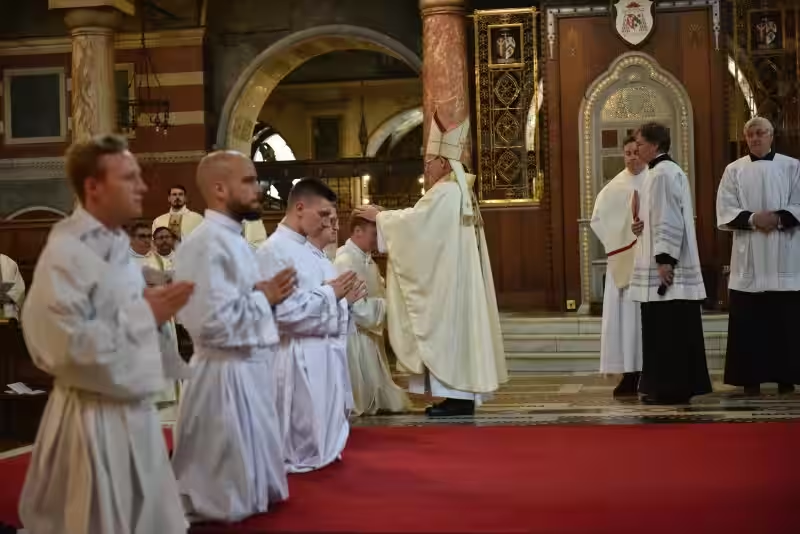
The completion of formal priest training marks not an end, but a commencement. The ordination ceremony is a public affirmation of dedication and a formal commissioning to serve. However, the journey of learning and growth continues throughout a priest’s life. The world is constantly evolving, and the challenges facing religious communities are ever-changing, necessitating a commitment to lifelong learning and adaptation.
The initial training provides the essential toolkit, but the true measure of a priest lies in their ongoing dedication to spiritual deepening, intellectual engagement, and compassionate service. This lifelong pursuit of understanding and ministry is what sustains them and allows them to continue to be a guiding light for their congregations, navigating the complexities of faith and life with wisdom and grace.
Frequently Asked Questions: Priest Training & Religion
What is the purpose of priest training?
Priest training aims to prepare individuals for a life of service within a religious tradition. This typically involves rigorous study of sacred texts, theological doctrines, church history, and pastoral care. The training also focuses on developing spiritual discipline, ethical conduct, and the skills necessary to lead worship, administer sacraments, and guide congregants.
What are the typical academic requirements for priesthood?
Academic requirements vary significantly by denomination and religious tradition. Many require a bachelor’s degree followed by several years of theological seminary education. This seminary program usually culminates in a Master of Divinity (M.Div.) degree or its equivalent, which includes coursework in biblical studies, theology, ethics, and practical ministry.
How long does priest training usually take?
The duration of priest training can range from a few years to over a decade, depending on the specific religious order or denomination. This often includes undergraduate studies, seminary, and a period of supervised ministry or diaconate.
What is the role of religion in society?
Religion plays a multifaceted role in society. It often provides individuals with a framework for understanding life’s meaning, purpose, and morality. Religions can foster community, offer support systems, and inspire acts of charity and social justice. They can also influence cultural norms, traditions, and artistic expression.
How do different religions view the concept of a priest or religious leader?
The concept of a priest or religious leader differs across religions. In some traditions, priests are seen as intermediaries between God and humanity, responsible for performing rituals and sacrifices. In others, religious leaders are primarily teachers, guides, or spiritual counselors. Titles and specific roles can vary widely, such as pastor, imam, rabbi, monk, or shaman.
What are some common ethical considerations in religious practice?
Common ethical considerations in religious practice often revolve around principles of compassion, justice, honesty, humility, and respect for life. Specific ethical guidelines are usually derived from sacred scriptures and the teachings of religious founders or traditions, guiding believers on how to live a virtuous life and interact with others.