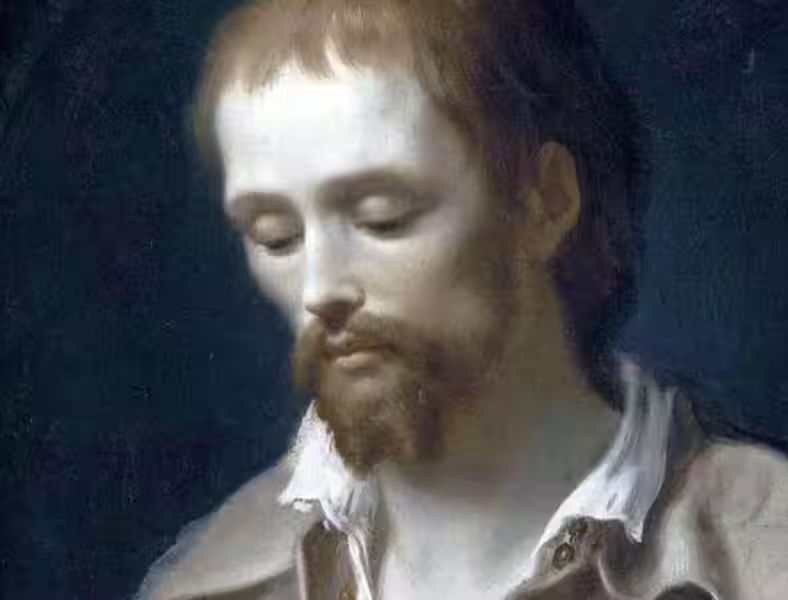
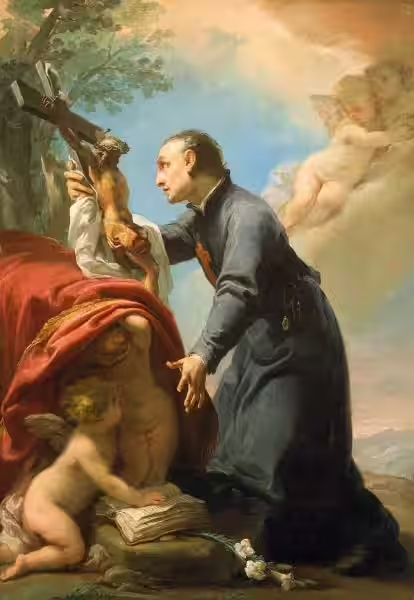
In the annals of religious history, certain figures stand out not for grand pronouncements or monumental achievements, but for their extraordinary commitment to a life of faith lived with unwavering simplicity and profound humility. Among these luminous souls is St. Joseph Labre, a 19th-century saint whose life serves as a powerful testament to the transformative power of religion and devotion. Born in 1748 in the small village of Amettes in France, Joseph was not destined for worldly acclaim. Instead, his path was one of deep spiritual yearning, marked by a desire to serve God through acts of penance, charity, and an unshakeable faith that touched the lives of those he encountered.
Joseph Labre’s early life was characterized by a quiet disposition and a fervent love for prayer. Unlike many who seek recognition or power, Joseph yearned for a life of religious austerity, a desire that would shape his entire existence. He felt a profound calling to dedicate himself to God, a calling that led him away from the conventional paths of marriage and a settled profession. His journey was not one of ease; rather, it was a deliberate embrace of hardship as a means of drawing closer to the divine. This commitment to a radical form of religious living, often misunderstood by his contemporaries, is what makes his legacy so compelling today.
A Life Dedicated to Pilgrimage and Penance
The defining characteristic of Joseph Labre’s religious life was his tireless pilgrimage. He was known as the “Saint of the Streets,” a pilgrim who traversed vast distances, often on foot, to visit the holy sites of Europe. His journeys were not mere sightseeing expeditions; they were deeply spiritual undertakings, infused with prayer, fasting, and acts of penance. He would travel with nothing more than the clothes on his back and a fervent prayer in his heart, relying entirely on divine providence for his sustenance and shelter. This radical reliance on God’s grace, a cornerstone of many religious traditions, became a hallmark of his public persona.
Imagine a modern individual deciding to walk across continents with no itinerary, no digital map, and no pre-booked accommodations, solely trusting that kindness and divine intervention will see them through. This was the reality for Joseph Labre. He understood that true religion wasn’t confined to the walls of a church but was a lived experience, a constant communion with the divine. His suffering, whether from hunger, exposure, or the ailments that plagued his physically demanding lifestyle, was embraced as an offering, a way to unite himself with the suffering of Christ. This profound understanding of penance as a path to spiritual purification is a concept deeply rooted in various religious doctrines.
The Humble Pilgrim’s Impact on Society
Despite his humble and often unkempt appearance, Joseph Labre possessed an extraordinary spiritual charisma. People were drawn to his genuine piety, his deep humility, and his unwavering faith. He would often be found in churches, praying for hours, his presence a quiet inspiration to those around him. He possessed a remarkable ability to sense the spiritual needs of others, offering words of comfort, encouragement, and, at times, gentle admonishment. His interactions, though brief, often left a lasting impression, prompting individuals to reflect on their own religious journeys and their relationship with God.
His reputation spread throughout the cities he visited, from Rome, where he spent much of his later life, to other religious centers across Europe. He was not seeking accolades, but his actions spoke volumes. He would tend to the sick, comfort the poor, and offer prayers for anyone who sought his intercession. This selfless dedication to his fellow human beings, rooted in his profound religious convictions, demonstrates the practical application of faith. The core tenets of many religions emphasize compassion and service, and Joseph Labre lived these tenets to their absolute fullest, making his life a living sermon for the world.
Joseph Labre’s life, though seemingly simple, offers profound lessons for anyone seeking a deeper connection with their religion or a more meaningful spiritual existence. His unwavering trust in God, his embrace of humility over worldly possessions, and his tireless dedication to prayer and penance are powerful reminders of what it means to live a life truly consecrated to the divine. He showed that religion is not about elaborate rituals or grand displays, but about a profound inner transformation and a commitment to living out one’s beliefs in every aspect of life.
His death in Rome in 1783, amidst the humble surroundings he had come to inhabit, was met with immediate reverence. The outpouring of devotion surrounding his passing further solidified his status as a saintly figure. The miracles attributed to his intercession, both during his life and after his death, only amplified his legend. St. Joseph Labre’s story continues to inspire countless individuals to re-examine their own religious practices and to consider how they can cultivate a more authentic and devoted spiritual life, proving that even the most unassuming among us can achieve spiritual greatness through unwavering faith and humble service.
Frequently Asked Questions about Saint Joseph Labre and Religion
Who was Saint Joseph Labre?
Saint Joseph Labre was a French peasant, born in 1748, who became known for his intense piety and ascetic lifestyle. He was a pilgrim who traveled extensively to major shrines in Europe, living in poverty and dedicating his life to prayer and penance.
What is Saint Joseph Labre’s religious affiliation?
What are Saint Joseph Labre’s main contributions or significance in religion?
Joseph Labre is significant as a model of sanctity through extreme asceticism, poverty, and unwavering devotion to God. He is venerated as a patron saint of the poor, beggars, and those who undertake difficult pilgrimages. His life demonstrates a radical commitment to living out one’s faith in the world, even amidst hardship.
What is the primary religion that venerates Saint Joseph Labre?
The Roman Catholic Church venerates Saint Joseph Labre.
What are some key religious practices or beliefs associated with Saint Joseph Labre?
Key religious practices associated with Joseph Labre include prayer, penance, fasting, pilgrimage, and embracing poverty as a spiritual discipline. His life is a testament to the Catholic belief in the power of self-denial and fervent prayer for spiritual growth and union with God.
Is Saint Joseph Labre a saint in any other religions besides Catholicism?
No, Saint Joseph Labre is recognized as a saint only within the Roman Catholic tradition.