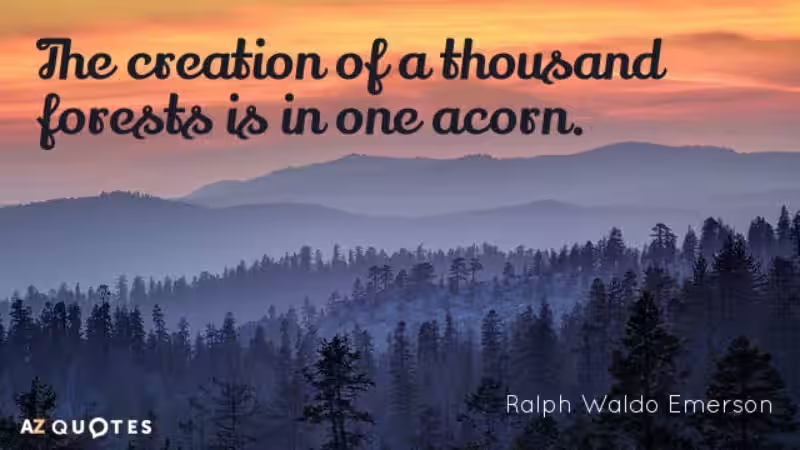
From the silent awe inspired by a starlit sky to the intricate patterns of a single snowflake, the concept of a beautiful creation is deeply woven into the fabric of religious belief across the globe. This inherent beauty isn’t merely aesthetic; it’s often perceived as a profound testament to the divine, a tangible whisper from the Creator, inviting us to contemplate its origins and meaning. For billions, the world around us, in all its breathtaking complexity and delicate balance, serves as a constant reminder of a power far greater than ourselves, a force that meticulously crafted every atom, every life form, and every cosmic dance.
This article will explore how various religions interpret and celebrate this beautiful creation, delving into the theological underpinnings, the ethical implications, and the personal resonance it holds for individuals. We will journey through different faith traditions to understand how they articulate the wonder of existence and our place within this grand, unfolding narrative. By examining this shared thread of appreciation for the beautiful creation, we can gain a deeper understanding of humanity’s perennial quest for meaning and connection.
Many religious traditions posit a singular, omnipotent deity as the ultimate architect of the universe. In this view, the intricate design and overwhelming beauty of nature are not accidental but deliberate expressions of divine artistry. Consider the human eye, an organ of astonishing complexity, capable of perceiving a spectrum of light and color, allowing us to witness the vibrant hues of a sunset or the subtle shades of a blooming flower. Religious perspectives often interpret such marvels as direct evidence of a beautiful creation, meticulously planned and executed with purpose and love. Think of the vastness of the cosmos, the billions of galaxies each containing billions of stars, a spectacle that dwarfs human comprehension, yet speaks volumes about the boundless power and imagination of the divine.
This concept of a divine artist extends beyond the grand scale to the microscopic. The elegant symmetry of a DNA molecule, the complex dance of subatomic particles, or the intricate ecosystems supporting life on Earth – all are seen as further proof of a beautiful creation. For instance, the symbiotic relationship between bees and flowers, where one cannot thrive without the other, is often cited as a prime example of divine ingenuity. This intricate interdependence, where seemingly simple organisms contribute to a grander, life-sustaining system, reinforces the idea of a meticulously crafted world, a testament to a beautiful creation that is both functional and awe-inspiring. This understanding fosters a sense of reverence and stewardship, encouraging believers to protect and cherish the divine artwork entrusted to their care.
Sacred Texts as Canvases of Creation
Religious scriptures, from the ancient Hebrew Bible to the Quran and beyond, are replete with narratives and poetry that celebrate the beautiful creation. These texts often serve as the primary source for understanding a religion’s theological framework regarding the origins of the universe and humanity’s role within it. The opening chapters of Genesis in the Judeo-Christian tradition, for example, meticulously detail the six days of creation, each stage culminating in a declaration of goodness. This narrative structure itself highlights a deliberate and ordered process, resulting in a beautiful creation that is declared “good” by the Creator. The descriptions of the Garden of Eden, a paradise teeming with life, further emphasize the inherent perfection and beauty that characterized the initial state of existence.
Similarly, the Quran speaks extensively of Allah’s signs in creation, urging believers to reflect upon them. Passages often draw attention to the heavens, the earth, the alternation of night and day, and the rain that brings life to barren lands as evidences of Allah’s power and mercy. These reminders serve as a constant invitation to witness the beautiful creation and to acknowledge the divine hand behind it. The richness of these scriptural accounts provides a deep well of inspiration, offering not just a historical account but a theological lens through which to perceive the world. They transform the mundane into the miraculous, allowing believers to see the divine fingerprint on every aspect of the beautiful creation, from the vast oceans to the smallest insect.
Humanity’s Role in the Grand Design
Within most religious frameworks, humanity is not merely an observer of the beautiful creation but an integral part of it, often with a unique and significant role. Many traditions view humans as having been created in the “image of God,” bestowing upon them a special dignity and responsibility. This elevated status, however, is frequently accompanied by the mandate to be stewards of the earth, to care for and protect the beautiful creation entrusted to them. This stewardship is not a burden but an honor, an opportunity to participate in the ongoing work of creation and to reflect the divine attributes of care and creativity.
The concept of stewardship also implies a deep connection and responsibility towards all living beings. If the divine artist has crafted such a beautiful creation, then it follows that all its inhabitants, from the towering redwood trees to the humble earthworm, possess an inherent value. This perspective often leads to ethical considerations regarding environmental protection, animal welfare, and the equitable distribution of resources. For example, many indigenous spiritual traditions hold a profound respect for the natural world, viewing themselves not as owners but as caretakers of the land. This understanding of humanity’s place within the beautiful creation fosters a sense of interconnectedness and humility, reminding us that we are part of a larger, divinely orchestrated symphony.
Ethical Imperatives for a Blessed World
The religious appreciation for a beautiful creation naturally translates into ethical imperatives. If the world is a divine gift, then its preservation and flourishing become a moral obligation. This principle underpins much of religious environmentalism, where actions that harm the planet are seen as directly contrary to divine will. Consider the concept of “tzedakah” (righteousness or charity) in Judaism, which extends beyond human interaction to encompass a responsibility for the well-being of the natural world. Likewise, Buddhist teachings on compassion (karuna) advocate for extending empathy and care to all sentient beings, recognizing their inherent worth within the beautiful creation.
Furthermore, the acknowledgment of a beautiful creation can inspire acts of selfless service and generosity. When we recognize the divine abundance that surrounds us, it can foster a spirit of gratitude and a desire to share that abundance with others. This can manifest in various ways, such as volunteering time to environmental restoration projects, advocating for policies that protect vulnerable ecosystems, or simply practicing mindful consumption to reduce one’s ecological footprint. The understanding that we are part of a beautiful creation encourages us to live in a way that honors that gift, both for ourselves and for future generations. It shifts our focus from mere acquisition to meaningful contribution, fostering a life of purpose and connection.
Experiencing the Divine Through Nature’s Canvas
For individuals of faith, the experience of the beautiful creation is often a direct pathway to encountering the divine. A walk through a serene forest, the observation of a bird in flight, or the contemplation of a mountain peak can evoke feelings of awe, wonder, and profound peace. These moments of connection with nature are not simply aesthetic experiences; they are often interpreted as encounters with the sacred, a glimpse of the divine presence that permeates all existence. The vibrant colors of a butterfly’s wings, the intricate patterns of frost on a windowpane, or the powerful surge of a waterfall can all serve as profound spiritual experiences, deepening faith and fostering a sense of gratitude for the beautiful creation.
This experiential aspect of faith is crucial. It moves beyond intellectual assent to a deeply felt understanding of the divine. Many religious practices, such as meditation, prayer, and pilgrimage, are designed to enhance this connection with the sacred. However, the beautiful creation itself offers a readily accessible sanctuary for spiritual reflection. It’s in these moments of quiet contemplation amidst nature’s grandeur that the overwhelming love and intricate design of the Creator can feel most palpable. The rustling leaves, the gentle breeze, the vast expanse of the ocean – all become silent sermons, reminding us of the boundless love and artistry that brought forth such a beautiful creation.
Finding Peace and Purpose in the Natural World
In our often chaotic and demanding modern lives, the beautiful creation offers a much-needed refuge and a source of profound peace. The simple act of spending time in nature can be incredibly restorative, calming the mind and nurturing the spirit. Religious teachings often encourage this engagement with the natural world, viewing it as a way to reconnect with one’s inner self and with the divine. Whether it’s the quiet solace found in a garden or the exhilarating majesty of a mountain range, the natural world provides a space for introspection and spiritual renewal. This inherent ability of nature to soothe and inspire is seen by many as another facet of its beautiful creation.
Moreover, the observation of the natural world can provide a renewed sense of purpose and perspective. Witnessing the resilience of a plant pushing through concrete or the unwavering cycle of the seasons can remind us of life’s enduring strength and the larger rhythms of existence. This can help us navigate our own challenges with greater equanimity, understanding that we are part of a grander, unfolding narrative. The very existence of such a beautiful creation, with its inherent order and interconnectedness, offers a powerful antidote to feelings of insignificance or despair, grounding us in a reality that is both wondrous and meaningful.
Frequently Asked Questions about Beautiful Creation and Religion
What is the concept of beautiful creation in religion?
Many religions view the universe, life, and all existence as a “beautiful creation” originating from a divine being or force. This concept often implies purposeful design, inherent goodness, and a sense of wonder and awe at the complexity and intricacy of the natural world. It suggests that creation is not random but a deliberate act of love, wisdom, or power.
How does religion interpret the beauty found in nature?
Religious perspectives often see the beauty in nature—the intricate patterns of a snowflake, the vibrant colors of a sunset, the diversity of species—as a reflection of the divine. This beauty is interpreted as a sign of God’s artistry, glory, and boundless creativity. It can serve as a source of spiritual inspiration, a reminder of the creator’s presence, and an invitation to appreciate and care for the world.
What is the role of humanity in a divinely beautiful creation?
In many religious traditions, humanity is seen as a unique and integral part of this beautiful creation, often endowed with a special status or purpose. This can include being created in the image of the divine, being given dominion over the earth (with the responsibility of stewardship), or being called to a particular relationship with the creator and fellow beings. The concept of humanity’s role is often tied to themes of responsibility, gratitude, and moral conduct.
How do different religions understand the origin of beautiful creation?
While the overarching theme of beautiful creation is common, the specific narratives and interpretations vary across religions. For instance, Abrahamic religions (Judaism, Christianity, Islam) often describe a single, omnipotent God who spoke the universe into existence. Eastern religions, such as Hinduism and Buddhism, may describe creation through cyclical processes, divine emanations, or the unfolding of cosmic consciousness. Despite the differences, the idea of a deliberate and often benevolent origin of existence remains central.
Does the concept of “beautiful creation” imply that everything is perfect?
While the term “beautiful creation” emphasizes the wonder and positive aspects of existence, it doesn’t necessarily mean that everything is perceived as perfect or without suffering. Religions often grapple with the existence of evil, suffering, and flaws within creation. Explanations vary, ranging from human free will and its consequences to divine mystery, or the idea that challenges are part of a larger, ultimately good, divine plan. The “beauty” is often found in the overall design and potential, rather than an absence of all difficulty.