The tapestry of global religions is rich and varied, each thread woven with unique beliefs, practices, and historical narratives. Within this vibrant spectrum, Islam stands as a monotheistic faith with a profound connection to figures revered across many traditions. Perhaps one of the most striking and often misunderstood aspects of Islamic theology is the high esteem in which Muslims believe Jesus is held. Far from being an outsider, Jesus, or Isa as he is known in Arabic, is a foundational prophet, a messenger of God, and a pivotal figure whose life and teachings resonate deeply within the Muslim worldview. This article aims to unravel the multifaceted understanding of Jesus within Islam, exploring his divine status, his miraculous birth, his prophetic role, and his anticipated return, offering a comprehensive and relatable perspective for anyone seeking to understand this crucial aspect of Islam.
For many outside the faith, the idea of Muslims believe Jesus as a revered prophet might come as a surprise. Often, the discourse surrounding Islam and Christianity centers on perceived differences. However, a closer examination reveals a significant common ground, particularly concerning the person of Jesus. Muslims do not merely acknowledge Jesus; they honor and respect him immensely, placing him among the most important of God’s messengers. This reverence is not a recent development but an integral part of Islamic doctrine since its inception. Understanding this deep-seated belief is key to appreciating the interconnectedness of Abrahamic faiths and the shared spiritual heritage that binds them.
In Islam, Jesus is known by his Arabic name, Isa ibn Maryam (Jesus, son of Mary). This designation itself highlights a key tenet: his absolute purity and the miraculous nature of his birth. The Quran, Islam’s holy book, dedicates considerable attention to Isa, outlining his life, miracles, and mission with a clarity that underscores his importance. For Muslims, believe Jesus is not just another prophet; he is one of the “ulu al-azm” or “prophets of steadfast resolve,” a select group known for their unwavering commitment to God’s message. This elevated status signifies a level of respect and divine selection that distinguishes him even among other esteemed prophets like Abraham, Moses, and Noah.
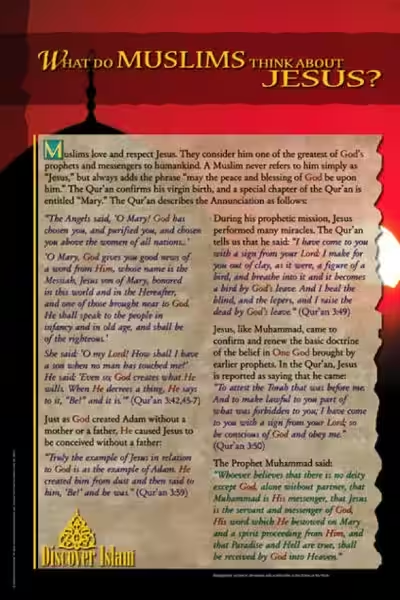
The narrative of Isa within the Quran is rich with detail, painting a picture of a deeply spiritual individual dedicated to guiding humanity towards the worship of one God. Muslims believe Jesus was born of a virgin, Mary (Maryam), through a divine act of creation, without a human father. This miracle is emphasized to highlight God’s power and to distinguish Jesus as a unique creation, a sign for humanity. His miraculous birth is not seen as a divine sonship in the Christian sense but as a testament to God’s omnipotence, a deliberate and extraordinary event to mark the arrival of a special messenger. The Quran states in Surah Al-Imran (3:45), “Behold! The angels said: ‘O Mary! Allah hath chosen thee and purified thee and chosen thee above all the women of the world.'” This verse encapsulates the profound honor bestowed upon Mary and, by extension, upon her son, Jesus.
The Miraculous Birth: A Sign of Divine Power
The birth of Jesus is a cornerstone of his identity in Islam, a narrative that emphasizes God’s absolute power over the natural order. Muslims believe Jesus was conceived by the Holy Spirit (Ruh al-Qudus), a divine breath that brought him into existence. This is not about a biological father but a direct intervention by God. The Quran recounts Mary’s astonishment and her subsequent isolation, and how, in her time of distress, the infant Jesus spoke from the cradle, proclaiming his prophethood and his mission. This is a truly astonishing event, underscoring the miraculous nature of his arrival.
This miraculous conception is crucial for Muslims believe Jesus as a pure and chosen servant of God. It sets him apart and signifies his unique role in divine history. The Quran speaks of this event in Surah Maryam (19:16-21): “And mention in the Book [the story of] Mary, when she withdrew from her family to an eastern place. And she took, from besides them, a veil. Then We sent to her Our Angel, and he took the form of a well-formed human. She said, ‘Indeed, I seek refuge in the Most Merciful from you, [if you are] God-fearing.’ He said, ‘I am only a messenger of your Lord to give you a gift of a pure boy.'” This narrative clearly articulates the divine origin of Jesus’s conception, a central tenet for Muslims believe Jesus as a divinely appointed prophet.
The Prophetic Mission: Guiding to the Truth
As a prophet of God, Jesus was entrusted with a divine message, a continuation and confirmation of the monotheistic lineage established by earlier prophets. Muslims believe Jesus was sent to the Children of Israel, calling them to worship the one true God – Allah – and to live righteous lives. His teachings, as understood by Muslims, emphasized compassion, humility, and adherence to God’s commandments. The Quran details many of Jesus’s miracles, which were not performed by his own power but by God’s permission, serving as signs to validate his prophethood.
These miracles include healing the sick, restoring sight to the blind, and even raising the dead. Muslims believe Jesus performed these acts as a testament to God’s grace and power, not as a display of personal divinity. For instance, the Quran mentions in Surah Al Maidah (5:110): “When Allah says, ‘O Jesus, son of Mary, recall My favor upon you and upon your mother when I supported you with the Pure Spirit [Jibril] and you spoke to people in the cradle and in maturity; and when I taught you the Book and wisdom and the Torah and the Gospel; and when you created from clay [the form of] a bird by My permission, then you breathed into it, and it became a bird by My permission, and you healed the blind and the leper by My permission; and when you brought forth the dead by My permission.'” These acts clearly demonstrate his role as a divinely empowered messenger, reinforcing that Muslims believe Jesus was a conduit for God’s power and mercy.
The Quranic Perspective: Jesus as a Word and Spirit from God
The Quran offers a unique theological perspective on the nature of Jesus. Surah An-Nisa (4:171) states, “…The Messiah, Jesus, the son of Mary, was not but a messenger of Allah and His Word which He bestowed upon Mary and a soul [spirit] from Him. So believe in Allah and His messengers. And do not say, ‘Three’; desist – it is better for you. Indeed, Allah is but one God. Exalted is He above having a son. To Him belongs whatever is in the heavens and whatever is on the earth. And sufficient is Allah as a Wakil [Trustee/Guardian].” This verse is profoundly significant in understanding how Muslims believe Jesus.
He is described as “His Word” (Kalimatuhu) and “a Spirit from Him” (Ruhun Minhu). For Muslims believe Jesus in this context means understanding him as divinely created, a manifestation of God’s will and command, and a spiritual being imbued with divine essence. This is distinct from the Christian concept of the Son of God or the Trinity. The emphasis remains on the absolute oneness of God (Tawhid), and Jesus’s role is to point humanity back to that singular divine entity. He is a creation, albeit a miraculous and highly honored one, not a co-equal deity.
“His Word”: This signifies Jesus’s existence as a result of God’s command: “Be,” and he was. It emphasizes his creation through divine utterance.
“A Spirit from Him”: This highlights the purity and divine origin of Jesus’s being, a special creation directly breathed into existence by God.
“Not but a messenger of Allah”: This is the definitive statement clarifying his role and limiting his status to that of a messenger, not a divine being himself.
This careful distinction is crucial for Muslims believe Jesus is a prophet who conveys God’s message accurately, without attributing divinity to him. His miracles are signs of God’s power, and his exceptional birth is a testament to God’s creative capacity.
The Gospel and its Role in Islamic Understanding
The Quran confirms that Jesus was given the Gospel (Injeel) by God. Muslims believe Jesus received divine revelation, and the original Gospel was a sacred scripture guiding humanity. However, Muslims believe that over time, the original Gospel was altered or lost, and its teachings were distorted. Therefore, while they hold the original revelation in high regard, they believe that the Quran is the final and complete revelation, superseding and correcting any previous scriptures that may have been misinterpreted or changed.
This understanding shapes how Muslims believe Jesus and his message fit into the broader scope of divine communication. They see a continuity of the monotheistic message from Adam to Noah, Abraham, Moses, Jesus, and finally Muhammad. Each prophet brought the same core message of submission to the one God, with varying laws and practices appropriate for their time and people. The Quran, therefore, is seen as the ultimate clarification and completion of this divine guidance, and the teachings of Jesus are respected as part of that continuum.
The Ascension and Anticipated Return: A Future Promise
A significant aspect of how Muslims believe Jesus is central to their faith is the belief in his ascension to heaven and his anticipated return. Unlike the Christian narrative of crucifixion and resurrection, Islamic belief holds that Jesus was neither crucified nor killed but was raised to heaven by God. The Quran mentions this in Surah An-Nisa (4:157-158): “And [for] their saying, ‘Indeed, we have killed the Messiah, Jesus, the son of Mary, the messenger of Allah.’ And they did not kill him, nor did they crucify him; but it was made to appear to them so. And indeed, those who differ over it are in doubt about it. They have no knowledge of it except the following of assumption. And they did not kill him, for certain. Rather, Allah raised him to Himself. And ever is Allah Exalted in Might and Wise.”
This belief in his physical ascension is a cornerstone of Islamic eschatology. Muslims believe Jesus is alive in heaven, awaiting God’s command to return to Earth. His return is prophesied to be a significant event, preceding the Day of Judgment. He will descend to Earth, not as a divine figure but as a follower of Prophet Muhammad, to defeat the Antichrist (Dajjal) and establish justice and peace. This future role further solidifies his importance in the Islamic narrative.
Ascension: Jesus was physically raised to heaven by God, a distinct event from his earthly life.
Awaiting Command: He remains in heaven, alive and well, awaiting God’s signal for his return.
Role in the End Times: His return will be a pivotal moment, marking the triumph of truth and justice before the final Day of Judgment.
This anticipation of his return underscores the enduring relevance of Jesus in the Islamic worldview. For Muslims believe Jesus is not just a historical figure but a living entity whose future actions will play a crucial role in the unfolding of divine destiny.
A Unifying Figure: Bridging Faiths
The deep reverence that Muslims believe Jesus is afforded can serve as a powerful bridge between Islam and Christianity. While theological differences exist, the shared respect for Jesus as a prophet of God, a bringer of divine message, and a figure of immense moral stature offers a common ground for dialogue and understanding. Recognizing that Muslims believe Jesus is a pivotal figure in their faith can foster greater empathy and reduce misconceptions.
The emphasis on Jesus’s virgin birth, his miracles, and his moral teachings are all points of connection. By understanding the Islamic perspective on Jesus, we can appreciate the richness of their faith and the profound respect they hold for this pivotal figure in human spiritual history. It’s a testament to the idea that even across different religious traditions, certain core figures and values can resonate deeply, fostering a sense of shared humanity and spiritual pursuit.
In conclusion, the belief that Muslims believe Jesus is a revered prophet, a messenger of God, and a central figure in divine history is a fundamental aspect of Islam. His miraculous birth, his prophetic mission, his divine appointment as the bearer of the Gospel, and his anticipated return all contribute to his elevated status. This understanding offers a valuable insight into the complex and beautiful tapestry of faith, highlighting the profound connections that can exist between different religious traditions.
Frequently Asked Questions: Jesus in Islam
Is Jesus considered a prophet in Islam?
Yes, Muslims believe Jesus (Isa in Arabic) is one of the most important prophets of God, revered and respected.
Do Muslims worship Jesus?
No, Muslims do not worship Jesus. They only worship Allah (God) alone. Jesus is considered a messenger of God, not God himself or a divine being.
What is the relationship between Jesus and Muhammad in Islam?
Muslims believe Jesus was a prophet who came before Muhammad. Muhammad is considered the final prophet in a line that includes Jesus, Moses, Abraham, and others.
What does the Quran say about Jesus?
The Quran mentions Jesus extensively, describing his miraculous birth, his role as a prophet, his teachings, and his ascension to heaven. It affirms his virgin birth and his ability to perform miracles by the permission of God.
Do Muslims believe Jesus performed miracles?
Yes, Muslims believe Jesus performed many miracles, such as healing the sick, raising the dead, and speaking as an infant, all by the will and power of God.
What do Muslims believe happened to Jesus?
Muslims believe Jesus was not crucified but was raised to heaven by God. They believe he is alive in heaven and will return to Earth before the Day of Judgment to establish justice.
Do Muslims believe Jesus is the Son of God?
No, Muslims do not believe Jesus is the literal Son of God. They believe that God has no partners or offspring and that Jesus is a human being, a prophet chosen by God.
Do Muslims celebrate Christmas?
Muslims do not celebrate Christmas as a religious holiday. While they respect Jesus as a prophet, Christmas is a Christian observance of Jesus’ birth, which is not part of Islamic tradition.