For many, the question of “how do churches get funding?” remains a bit of a mystery. We see the beautiful architecture, the vibrant community programs, the outreach efforts, and we naturally wonder about the resources that fuel these endeavors. It’s a question that delves into the heart of how religious institutions sustain themselves, serving their congregations and the wider world. Understanding this financial ecosystem isn’t just about curiosity; it’s about appreciating the dedication and commitment that underpins so many faith-based organizations.
The reality is that churches, like any organization, require financial support to operate. This funding isn’t just for maintaining buildings; it’s for paying staff, supporting missionaries, providing aid to those in need, developing educational materials, and a myriad of other essential functions. So, let’s pull back the curtain and explore the diverse and often deeply personal ways churches secure the resources they need to fulfill their spiritual and societal missions.
The most fundamental and historically significant method of church funding revolves around the practice of tithing. This ancient principle, rooted in religious texts, encourages adherents to dedicate a portion of their income – traditionally 10% – back to their faith community. This isn’t a rigid tax, but rather a voluntary act of faithfulness and generosity, an acknowledgment that everything we have comes from a higher source. For many congregants, tithing is an integral part of their spiritual discipline, a tangible way to express gratitude and support the work of their church.
Beyond the tithe, churches also receive offerings. These are often spontaneous acts of giving, motivated by specific needs, seasonal events (like Christmas or Easter appeals), or a heartfelt desire to contribute beyond the regular tithe. Offerings can be designated for particular ministries, such as a youth program, a building fund, or a mission trip, or they can be unrestricted, allowing the church leadership to allocate them where they believe the need is greatest. This combination of consistent tithing and flexible offerings forms the bedrock of most church budgets, enabling them to plan and execute their ministries with a degree of financial stability.
The Personal Connection to Giving
It’s crucial to remember that for most individuals, giving to their church is a deeply personal and spiritual decision. It’s not an obligation imposed from without, but a choice made from within, often driven by a sense of belonging, a desire to see the church thrive, and a belief in its positive impact. Imagine a small, rural church where the congregation is like an extended family. When they hear about a need to repair the roof, or support a local family struggling after a fire, their collective giving, even if modest individually, can make a significant difference. This personal connection transforms giving from a transaction into an act of shared purpose and love.
Furthermore, the act of giving is often accompanied by prayer and reflection. Congregants might pray about how much to give, seeking guidance and wisdom. This spiritual engagement reinforces the idea that church funding is not just about financial transactions, but about participating in God’s work through stewardship. For example, a young couple might decide to increase their tithe after experiencing a significant blessing, or a retired individual might set up a regular, automated donation to ensure ongoing support for their beloved church.
Beyond the Offering Plate: Diverse Revenue Streams
While tithes and offerings are paramount, many churches employ a variety of other funding methods to supplement their income and broaden their financial base. These additional revenue streams can provide crucial flexibility and allow for the expansion of ministry beyond what regular giving alone might support. It’s about creatively leveraging resources and opportunities to further the church’s mission.
These diversified income sources can range from rental income from church facilities for community events or weddings, to special fundraising campaigns for specific projects like new equipment or mission trips. Some churches may also operate thrift stores or bake sales, where proceeds directly benefit the church’s operations or outreach. Understanding these diverse approaches highlights the ingenuity and proactive nature of many faith communities in securing the resources they need to serve effectively.
Fundraising for Specific Projects and Ministries
Churches often engage in targeted fundraising initiatives for specific, tangible needs. This could be a capital campaign to build or renovate a sanctuary, a new educational wing, or a community outreach center. These campaigns are typically well-planned, with clear goals, timelines, and communication strategies to rally the congregation and potentially external supporters. Think of a church that decides to launch a major fundraiser to build a dedicated youth center; they’ll likely have vision casting events, pledge drives, and regular updates on their progress, fostering excitement and commitment.
Similarly, individual ministries or mission projects might have their own dedicated fundraisers. A church’s missions team, for instance, might organize a “Walk for Water” event to raise money for clean water initiatives in a developing country, or a group of young adults preparing for a service trip might hold a car wash. These focused efforts allow for greater transparency and engagement, enabling congregants to directly support causes they are passionate about, making their contributions feel even more impactful. The success of these campaigns often hinges on clear communication about the need and the anticipated positive outcomes.
Ancillary Businesses and Income-Generating Activities
Some churches, particularly larger ones with ample facilities, might engage in income-generating activities that are not directly tied to tithes or offerings. This could include renting out their fellowship halls for private events, school functions, or community meetings. Depending on local regulations and the church’s mission, some might even operate on-site bookstores, coffee shops, or daycare centers, with profits reinvested into church ministries. For example, a church with a large, well-equipped commercial kitchen might rent it out to local caterers during off-peak hours, generating a steady stream of income.
These ancillary ventures are often carefully considered to ensure they align with the church’s values and do not detract from its primary spiritual purpose. They can be a source of consistent, predictable income that helps to stabilize the church’s overall financial health, allowing for more robust long-term planning and ministry development. The key is to find activities that can be managed effectively and ethically, providing a benefit to the wider community while also supporting the church’s mission.
The Role of Grants and Endowments
While less common for day-to-day operations, some churches benefit from grants and endowments, particularly for specific projects, capital improvements, or long-term financial stability. Grants, often from foundations or philanthropic organizations that support religious or community initiatives, can provide significant funding for targeted programs. These grants typically require a detailed application process, demonstrating the church’s capacity to manage the funds effectively and achieve measurable outcomes.
Endowments, on the other hand, are funds invested for the long term, where only the interest or a portion of the earnings is used for expenditures, preserving the principal for future generations. These are often established through significant bequests or donations. A substantial endowment can provide a reliable source of income, ensuring the church’s financial security for decades to come, enabling it to weather economic downturns and continue its ministry unimpeded. Imagine a large, historic church receiving a significant bequest that is then invested as an endowment, ensuring its beautiful stained-glass windows can be maintained for centuries.
Securing External Grants and Partnerships
Churches actively involved in social justice, community development, or educational outreach may be eligible for grants from various foundations and government agencies. These grants are often highly competitive and require a strong proposal that clearly outlines the project’s goals, budget, and expected impact. Partnering with other non-profit organizations or community groups can also sometimes lead to shared grant opportunities. For instance, a church that runs a successful food pantry might apply for a grant from a local community foundation to expand its services and reach more families in need.
The process of securing grants often involves extensive research to identify suitable funding sources and a dedicated effort to craft compelling applications. Success in this area can significantly boost a church’s capacity to serve, enabling them to undertake larger, more impactful projects that might otherwise be out of reach. It’s a testament to the valuable role many churches play in the broader social fabric, attracting support from entities that recognize their positive contributions.
Building and Managing Endowments for Future Generations
Establishing and managing an endowment is a long-term financial strategy for churches seeking to ensure their sustainability. This involves setting aside funds that are invested, with the goal of generating ongoing income while preserving the principal value. These funds are often the result of planned giving, where individuals include the church in their wills or set up trusts that will benefit the church upon their passing. The careful stewardship of an endowment is crucial, often overseen by a dedicated finance committee or board of trustees who ensure responsible investment and adherence to the fund’s designated purpose.
A well-managed endowment can provide a predictable, passive income stream, offering a degree of financial security that allows the church to focus on its mission without constant worry about day-to-day operational costs. This long-term vision is particularly important for churches with a long history or a strong commitment to serving future generations, ensuring their legacy of faith and service continues unbroken. It’s a powerful way for individuals to leave a lasting impact on their faith community.
Transparency and Accountability in Church Finances
Regardless of how a church generates its funding, transparency and accountability are paramount. Congregants have a right to know how their contributions are being used, and churches have a spiritual and ethical obligation to manage their finances responsibly. This typically involves clear financial reporting, regular audits, and open communication about budgets and expenditures. Building trust through honest financial practices is essential for maintaining the confidence and continued support of the congregation.
Effective financial stewardship is not just about balancing the books; it’s about demonstrating wise and faithful management of resources entrusted to them. When churches are transparent about their finances, it allows congregants to feel confident that their generosity is making a tangible difference in furthering the church’s mission and serving the community. This open dialogue fosters a stronger sense of partnership between the church leadership and its members, reinforcing the shared commitment to the church’s vital work.
Communicating Financial Stewardship to the Congregation
Open and honest communication about church finances is a cornerstone of good stewardship. This often involves regular financial reports presented at congregational meetings or published in church newsletters. These reports should clearly outline income sources, major expenditures, and any budgetary challenges or successes. For example, a church might present a pie chart showing how each dollar of tithes and offerings is allocated – perhaps 30% to staff salaries, 25% to building maintenance, 20% to local outreach, and 25% to missions and benevolences.
Beyond formal reports, leaders often engage in ongoing dialogue about financial needs and priorities. This can include explaining the rationale behind budget decisions, celebrating financial milestones, and inviting congregational input. When the congregation understands the financial realities and feels involved in the decision-making process, they are more likely to feel invested in the church’s financial health and to continue their generous support. This proactive approach builds stronger relationships and a shared sense of responsibility.
The Importance of Audits and Financial Oversight
To ensure integrity and prevent mismanagement, many churches implement regular financial audits. These audits, often conducted by independent accounting firms or a dedicated internal audit committee, provide an objective review of the church’s financial records. An audit verifies that financial transactions are accurately recorded, that internal controls are in place, and that funds are being used in accordance with approved budgets and church policies. This process is a crucial component of financial accountability and good governance.
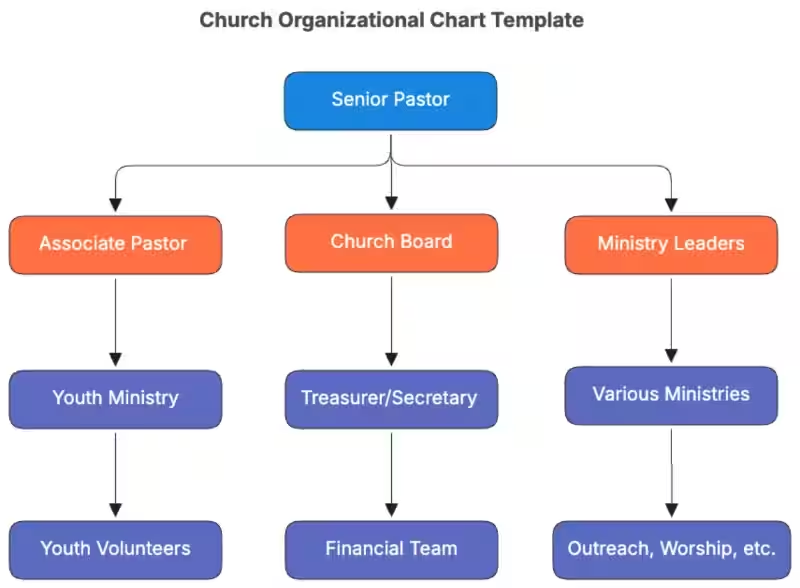
Furthermore, churches typically have a finance committee or board comprised of individuals with financial expertise who provide oversight and guidance to the church’s financial operations. This committee reviews budgets, monitors spending, and advises leadership on financial matters. This layered approach to oversight, from the audit process to the ongoing work of a finance committee, helps to safeguard the church’s financial resources and assures congregants that their contributions are being managed with the utmost care and integrity. It’s about ensuring that every dollar entrusted to the church is used effectively for its stated mission.
Frequently Asked Questions: How Churches Get Funding
What are some common ways churches receive funding?
Churches typically receive funding through a variety of methods. The most prevalent is through tithes and offerings from congregants, which are voluntary financial contributions. Churches may also receive donations from individuals, foundations, or other organizations. Some churches generate income through fundraising events, such as bake sales, concerts, or special appeals. Additionally, churches may receive income from renting out their facilities for events or other purposes, or from businesses or enterprises they operate. In some cases, churches may also benefit from legacies and bequests left by deceased members.
Are churches tax-exempt?
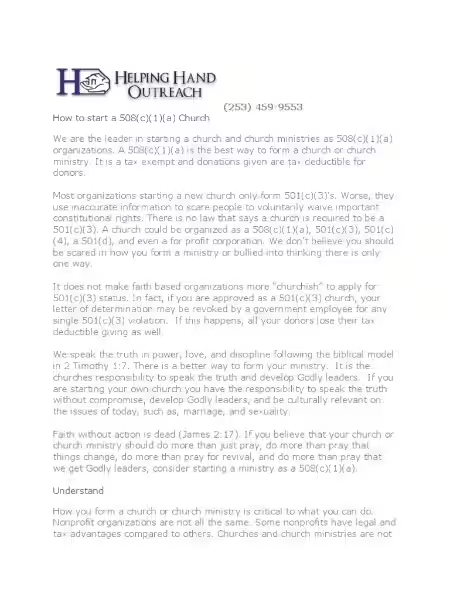
Yes, in many countries, churches and other religious organizations are granted tax-exempt status. This means they are generally not required to pay income tax on their earnings or property taxes on their buildings. This exemption is often based on the belief that religious institutions provide a public benefit. However, the specific regulations and requirements for maintaining tax-exempt status can vary significantly by jurisdiction.
Can churches accept donations from non-members?
Absolutely. Churches are almost always open to accepting donations from individuals who are not members of their congregation. These donations can come from people who support the church’s mission, its community outreach programs, or its charitable work, regardless of their personal religious affiliation.
Do churches have to disclose their financial information?
The requirements for financial disclosure vary widely depending on the country and the specific legal structure of the church. In some places, churches are required to file annual reports or make certain financial information publicly available. However, many churches, operating as non-profit organizations, have less stringent public disclosure requirements than for-profit businesses. It’s advisable to check the laws in your specific region for precise details.
What is the role of a church’s budget?
A church’s budget is a financial plan that outlines anticipated income and expenses over a specific period, usually a year. It helps the church leadership allocate funds responsibly for various ministries, operational costs (such as utilities, staff salaries if applicable, and building maintenance), outreach programs, and charitable contributions. The budget serves as a tool for accountability and ensures that financial resources are used effectively to fulfill the church’s mission.
Are there any restrictions on how churches can spend their money?
While churches generally have a degree of autonomy in how they spend their funds, there can be restrictions. If a donation is designated for a specific purpose by the donor, the church is typically expected to honor that designation. Furthermore, if a church operates under a tax-exempt status, its spending must align with the charitable and religious purposes for which it is recognized. Misusing funds or engaging in activities unrelated to its stated mission could jeopardize its tax-exempt status or lead to legal repercussions.